The Government of Canada says the recovery of wild Pacific salmon stocks is a key priority, but both Indigenous and non-Indigenous harvesters call foul.
They say if the government really wanted to rebuild wild salmon stocks, they would ban groundfish trawling.
“No sports fisherman and even no commercial fisherman can figure out why the government still allows draggers to go offshore and drag up the bottom of the ocean,” said Sam Vandervalk, owner of Ucluelet-based Salmon Eye Fishing Charters.
“It’s completely barbaric. It doesn’t do the fishery any good,” he said.
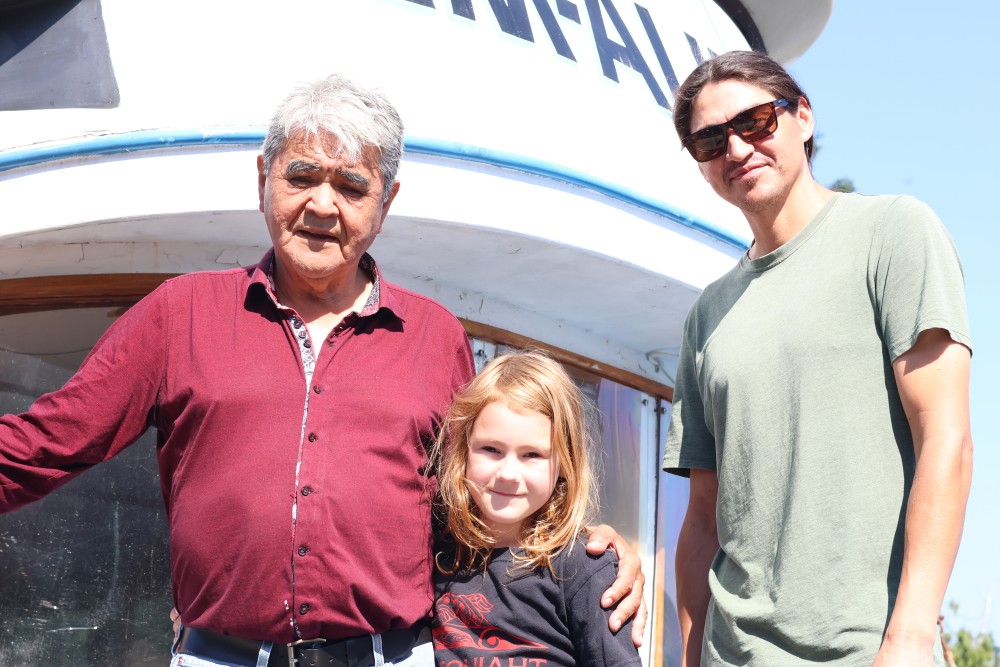
Hesquiaht commercial fisher Will Amos agrees.
“It’s very clear what the problem is. Bottom trawling should be banned. They wreck the bottom,” said Amos.
His dad Victor Amos (Vic), a longtime hook and line commercial fisher, showed him the ropes.
“They’ve destroyed whole lingcod areas by dragging. As soon as one of the draggers come along, fishing turned right off. It decreased by 60 per cent in some areas,” said Vic.
100 per cent monitoring
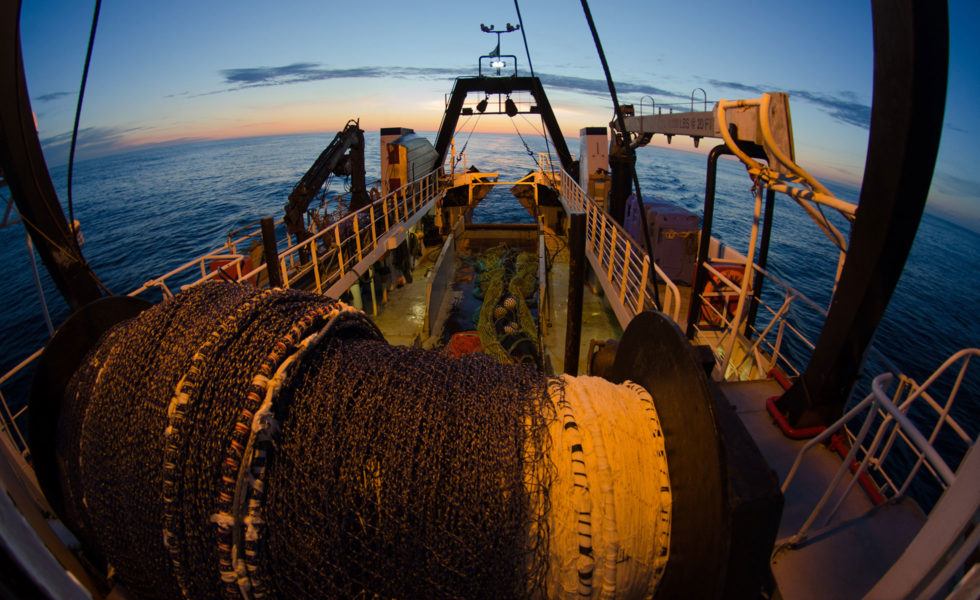
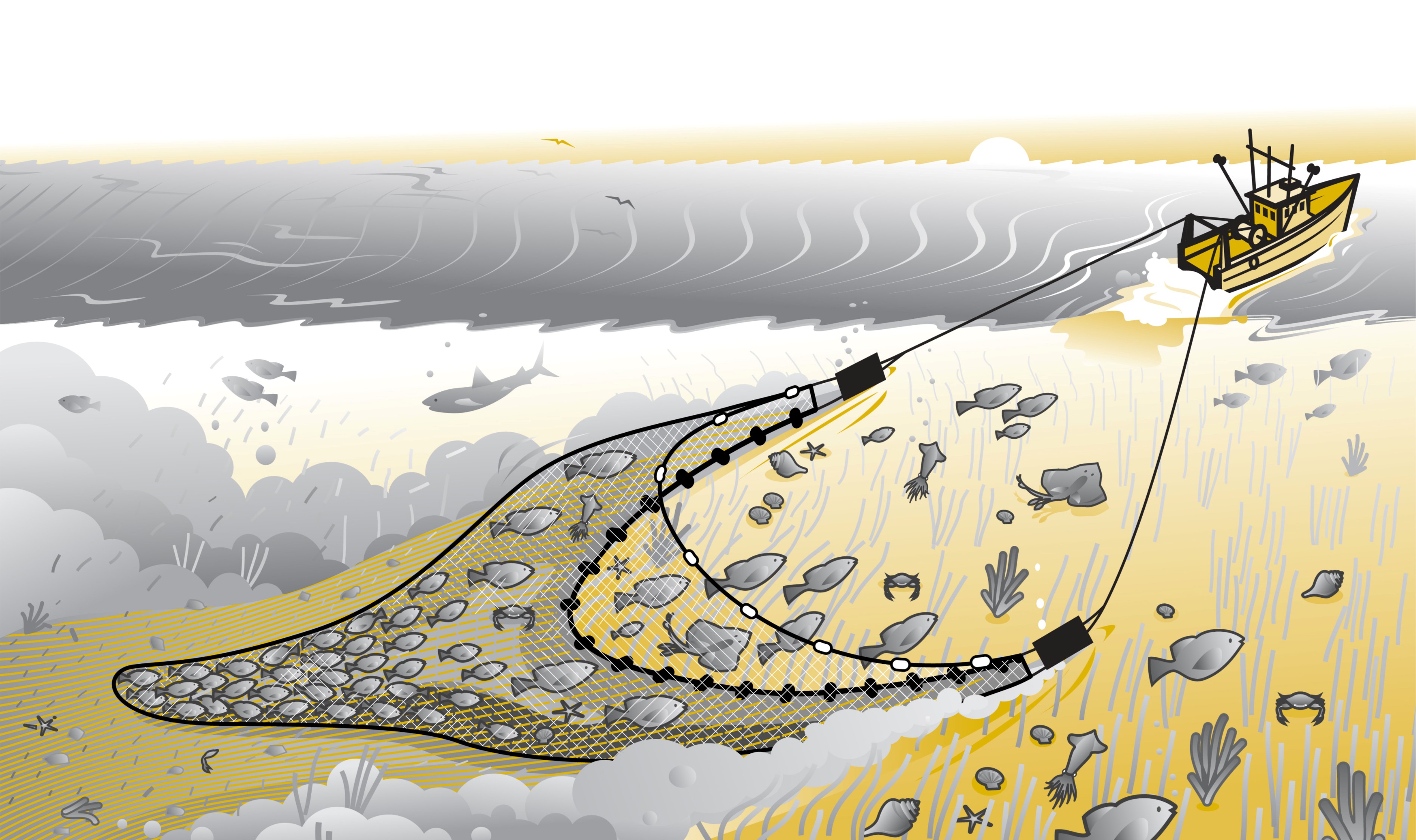
Bottom trawling is a non-selective fishing method that involves towing nets along the seafloor. It is also referred to as “dragging”.
The B.C. commercial groundfish trawl fishery is a limited entry fishery; there are currently 133 commercial Groundfish Trawl (T) licences and four First Nations Groundfish Trawl (FT) licences, according to the Department of Fisheries and Oceans Canada (DFO).
For the 2026 season from Feb. 21 to Sept. 8, DFO says there are 27 actively fishing trawl vessels, a number that could change as the season remains open.
There are seven distinct commercial groundfish sectors: Groundfish trawl, Halibut, Sablefish, Inside Rockfish, Outside Rockfish, Lingcod, and Dogfish fisheries. The groundfish fishery operates year-round; the season begins on February 21 and ends on February 20 of the following year.
The trawl fleet has 100 per cent at-sea monitoring, meaning every fishing trip is independently observed from the time the vessel leaves the harbour until it returns and the fish is validated at the offload with dockside observers.
“All monitoring footage is independently reviewed by a third party certified by DFO to ensure objective validation of catch data,” states the Deep Sea Trawlers Association of BC. “This ensures that all catch, including bycatch, is recorded accurately, supporting compliance, research, and ecosystem-based management. Vessels are also equipped with sensors to verify catch areas and ensure compliance with regulations.”
The Pacific groundfish trawl fishery is now managed under a fleet-wide bycatch cap of 9,500 Chinook salmon as part of the new management plan for the 2024/24 fishery and 2026/27 groundfish fishing season.
The Chinook salmon bycatch cap was developed after a DFO review of salmon bycatch in the Pacific Region groundfish trawl fishery. This review found that Chinook was the primary salmon species caught in the 2022/23 groundfish fishing year, with an estimated catch of 26,273 - representing 93 per cent of the total salmon collected by the trawlers.
Since the implementation of the Chinook bycatch cap, there was an estimated total of 7,527 salmon caught by the 2024/25 groundfish fishery, including 7,040 Chinook salmon, according to DFO.
Chinook salmon that are intercepted by trawling cannot be sold or retained for commercial gain; any Chinook incidentally caught are recorded and surrendered to DFO and then used strictly for scientific research and data collection to inform ongoing conservation measures, according to the DSTA.
“Vessels were required to bag heads separately for each tow, with a maximum of ten heads loosely packed in each bag to facilitate efficient species identification and counting,” said DFO.
“Chinook salmon heads were required to be bagged separately from other salmon species because they were the dominant species of salmon bycatch and the only species managed under a bycatch cap. At offload, bagged heads were examined and counted by dockside observers for independent validation of catch by species,” DFO continued.
Orcas are starving
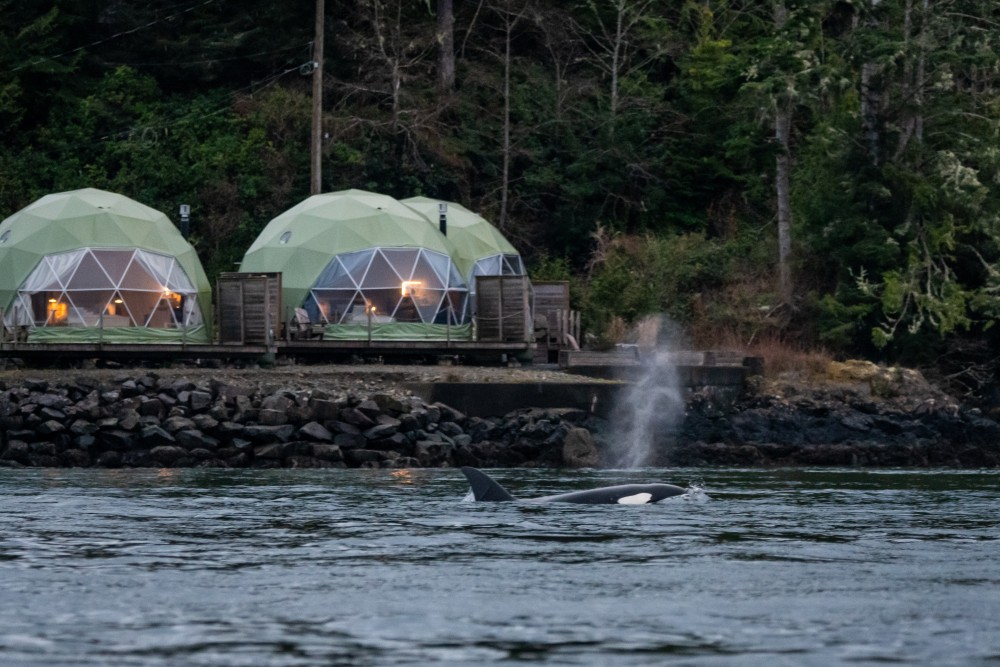
One of the casualties of our time are the endangered Southern Resident killer whales, or orcas, a species that rely heavily on Chinook salmon for food. With only about 75 individuals remaining, it has been widely reported that the orcas are starving – they don’t have enough Chinook salmon to keep calves alive and survive as adults.
Researchers are calling the death of the Southern Residents “bright extinction”, a term coined to represent the discontinuation of the species in plain sight, despite being the best studied cetaceans in the world.
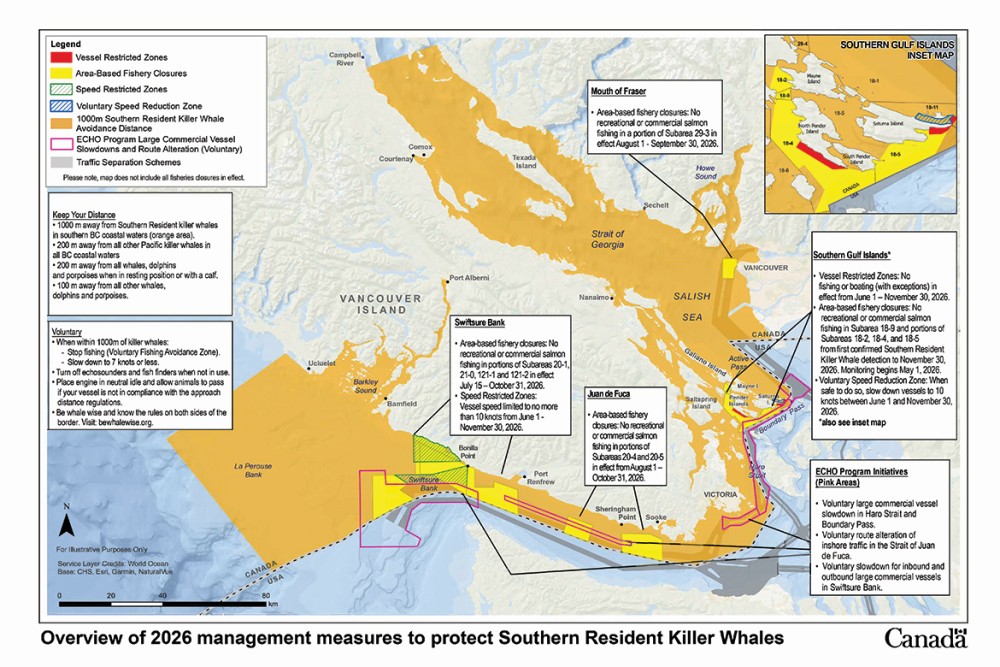
In April 2026, DFO released management measures, including salmon fishing closures that apply to recreational and commercial fisheries, to support the recovery of Southern Resident orcas by protecting access to Chinook salmon.
“The fishery closures to support Southern Resident killer whale recovery do not include the groundfish trawl fishery,” said DFO.
“The yellow areas shown on the map are salmon fishing closures that apply to recreational and commercial salmon fisheries,” they said. “Groundfish trawl fisheries are managed separately and are not subject to these Southern Resident salmon fishing closures.”
Research conducted by Pacific Wild indicates that over the last 13 years, nine trawlers have collectively fished an area larger than Ireland—totalling 89,700 square kilometres.
“Within this vast total, some ecologically sensitive areas have been targeted multiple times, hit again and again, compounding the damage to habitats that are vital for marine biodiversity and ecosystem health, with repeated fishing activity preventing these areas from recovering,” said Pacific Wild.
The Council of Haida Nation is fighting to permanently eliminate all commercial trawling (midwater and bottom) in Haida Gwaii waters. The nation says trawling is destructive to seafloors, impacts the sustainability of fish stocks and poses a threat to community food security. They say the trawl fishery provides “no economic benefit to Haida or Haida Gwaii’s communities.”
In an act of solidarity with the Haida Nation, the B.C. Assembly of First Nations passed a resolution at the March 2026 Special Chiefs Assembly to ban trawling in Pacific coast waters.
DFO acknowledged the calls to ban draggers but maintained that the Pacific groundfish trawl fisheries are managed with “regulatory and licensing tools which set out a comprehensive management framework for the fishery that supports the conservation of species and marine habitats.”
“Decisions related to fisheries management are informed by the best available science, Indigenous knowledge, conservation objectives, and input received from rights holders and stakeholders,” said DFO.
Up the coast in Alaska, the Alaskan Legislature is considering proposals to ban bottom trawling in state waters starting January 1, 2028.
The discard of salmon bycatch – and even killer whales – has long been a heated issue for Alaskans. In 2023, nine killer whales died in trawl fishing gear in Alaska’s waters, according to the National Oceanic and Atmospheric Administration’s National Marine Fisheries Service.
In August 2026, the B.C. groundfish trawl received Marine Stewardship Council (MSC) certification for 16 commercially harvested species. The MSC marketing label suggests the fishery is “environmentally sustainable”, but evidence suggests and many environmentalists argue that the MSC is a third-party certification scheme that deceives customers.
Zoe Ahnert, executive manager of the Deep Sea Trawlers Association of BC, defends this certification.
“MSC certification strengthens market opportunities for British Columbia seafood while recognizing the decades of collaboration and innovation that have made our fishery a global leader in sustainable harvesting,” she stated.
B.C. exports $1.3 billion worth of seafood to international markets each year, according to B.C. Government statistics, with China and Japan being the second- and third-largest export markets for B.C. seafood.
Vic Amos calls the shot from the galley of his fishing boat called Em-Ali.
“DFO bends a knee to big corporations,” he says.