Canada’s highest court has agreed to hear a case that tests the legal weight of the United Nations Declaration on the Rights of Indigenous Peoples in how it applies to B.C.’s mineral tenure system.
Expected to come before the Supreme Court of Canada in spring 2027, the case was brought forward by the B.C. government, after the province lost its argument in two lower courts. First petitioned by the Gitxaała and Ehattesaht to the B.C. Supreme Court in late 2022, the First Nations challenged B.C.’s existing regime of granting mineral exploration rights. The online system granted “free miner” permits for a $25 fee without any consent from the First Nations that occupy the area to be explored.
“Ehattesaht deals with significant mining pressure in their territory, including in an area of central importance for the exercise of Ehattesaht’s rights and adjacent to its main community,” stated the First Nation’s recent filing to the Supreme Court of Canada. “As of September 2022, shortly before Ehattesaht’s petition in this court matter was heard by the B.C. Supreme Court, there were 123 mineral claims registered in this core area of Ehattesaht territory. All were granted pursuant to the Mineral Tenure Act, without any consultation with Ehattesaht regarding impacts to their asserted rights and interests.”
The Gitxaała, who are from an area south of Prince Rupert, and the Ehattesaht, from northwestern Vancouver Island, argue that the mineral tenure system went against B.C.’s Declaration on the Rights of Indigenous Peoples Act, legislation that was unanimously passed in Victoria in 2019. DRIPA tasks the province to align its laws with the United Nations Declaration on the Rights of Indigenous Peoples, which carries the tenet of “free, prior and informed consent” to use or profit from Indigenous territory.
Two years after the B.C. Supreme Court ruled in the First Nations’ favour in 2023, the province introduced a new Mineral Claims Consultation Framework, bringing a notification and consultation period for local First Nations once an application is received by the provincial registry.
“The chief gold commissioner will determine whether the duty to consult has been met and if the claim should be registered, registered with accommodations, or denied,” stated the B.C. Ministry of Mining and Critical Minerals in a press release from March 2025. “All decisions will be published in the MTO system, ensuring the process remains fair and transparent for all parties involved.”
But this new framework was not met favourably by some Indigenous leaders. The First Nations Leadership Council said that the new framework “falls well short of the minimum human rights standards outlined in the UN Declaration”.
“In its current form, the MCCF will only serve to inundate First Nations with referrals to be responded to on short timelines absent the provision of adequate capacity funding,” stated Grand Chief Stewart Phillip, president of the Union of BC Indian Chiefs President, in a January 2025 FNLC press release.
“The MCCF, and the process that led to its development, only serve to illustrate the urgency of the government of B.C. undermining the good work to align the MTA with the UN Declaration in consultation and cooperation with First Nations,” Chief Phillip said.
The case went to the B.C. Court of Appeal, which on Dec. 5, 2025 ruled in a split decision that B.C.’s Mineral Tenure Act was inconsistent with DRIPA by failing to adequately consult with First Nations.
Now that the matter will be heard by Canada’s highest court, the province is emphasizing what Premier David Eby has voiced in recent months: that the courts ought to stay out of reconciliation work that should otherwise be dealt with by the government and First Nations.
“[B]y inserting the court, and the adversarial process, into what should be fundamentally a collaborative approach of law reform undertaken by the government and Indigenous peoples working together, the majority approach will lead to more litigation that distracts from the difficult but vitally important work of reconciliation,” stated the province’s submission to the Supreme Court of Canada.
Although MLAs unanimously voted in favour of DRIPA less than seven years ago, how this legislation has been interpreted since has “sown uncertainty among lower courts,” argues the province.
“Clarification from this court is clearly required,” stated the recent submission.
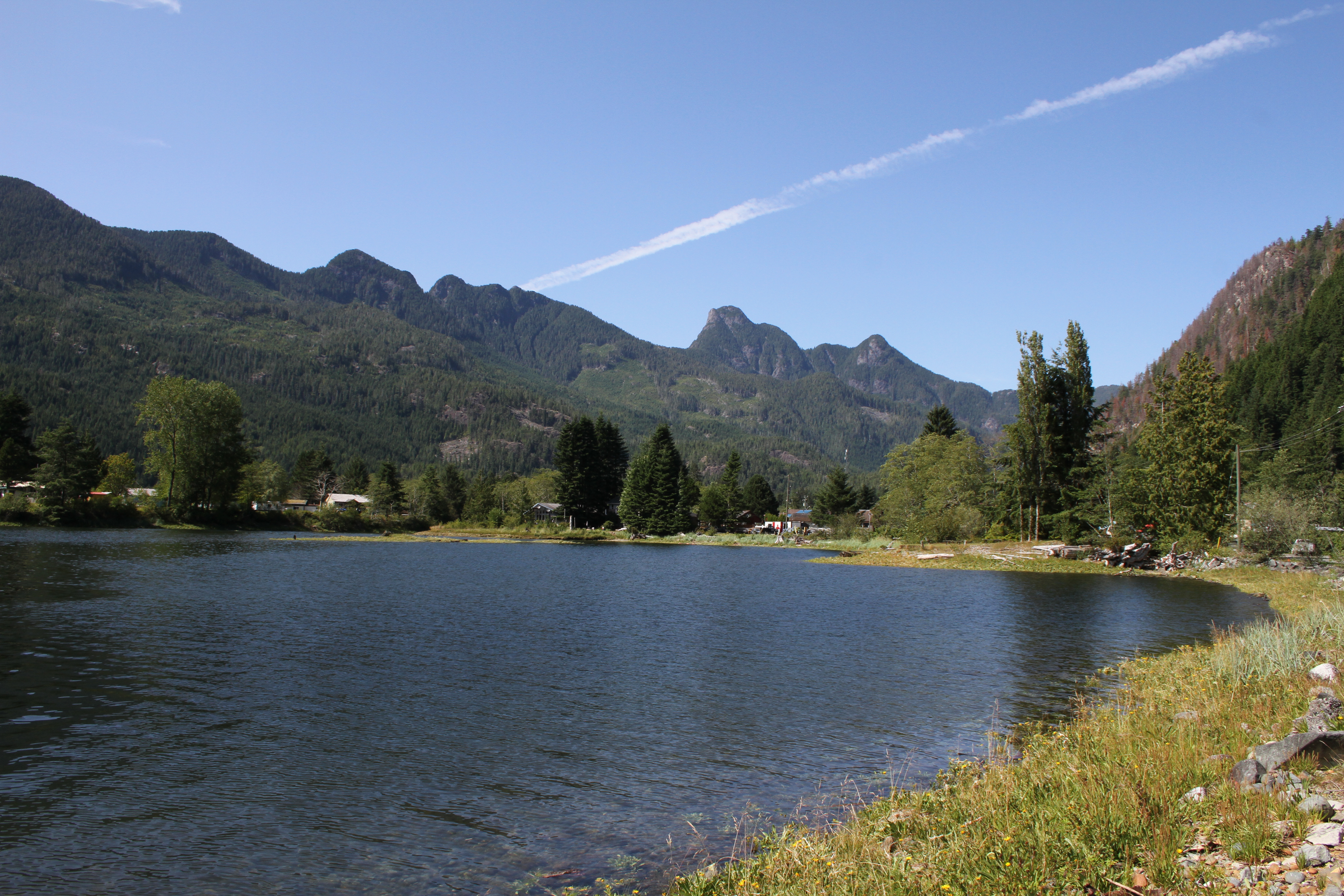
The case first emerged amid a resurgence of mining interests in the area around Zeballos, which is the territory of the Ehattesaht First Nation on northwestern Vancouver Island. From January 2020 to April 2022 there were 32 mineral claims registered in Ehattesaht territory, where the Village of Zeballos calls itself the “Golden Gate to the West Coast”. This is in reference to the “instant” town that was built in 1938 after prospectors discovered gold reserves in the surrounding hills.
The Ehattesaht’s 2022 filing to the B.C. Supreme Court stated that for many years the First Nation has witnessed the exploitation of resources in its Ha-Hahoulthee “without Ehattesaht’s consent and without recognition of Ehattesaht’s prior use and ownership.”
“Individually and cumulatively, resource development activities negatively affect the environment and animals on which Ehattesaht rely for the exercise of their Aboriginal rights,” continues the petition. “Gold mining is closely associated with the presence of quartz. Crystals are of central cultural and spiritual significance to Ehattesaht; and, according to their cultural and legal system, Ehattesaht are the caretakers of crystals in the Ha-Hahoulthee.”
*With files from Nora O’Malley