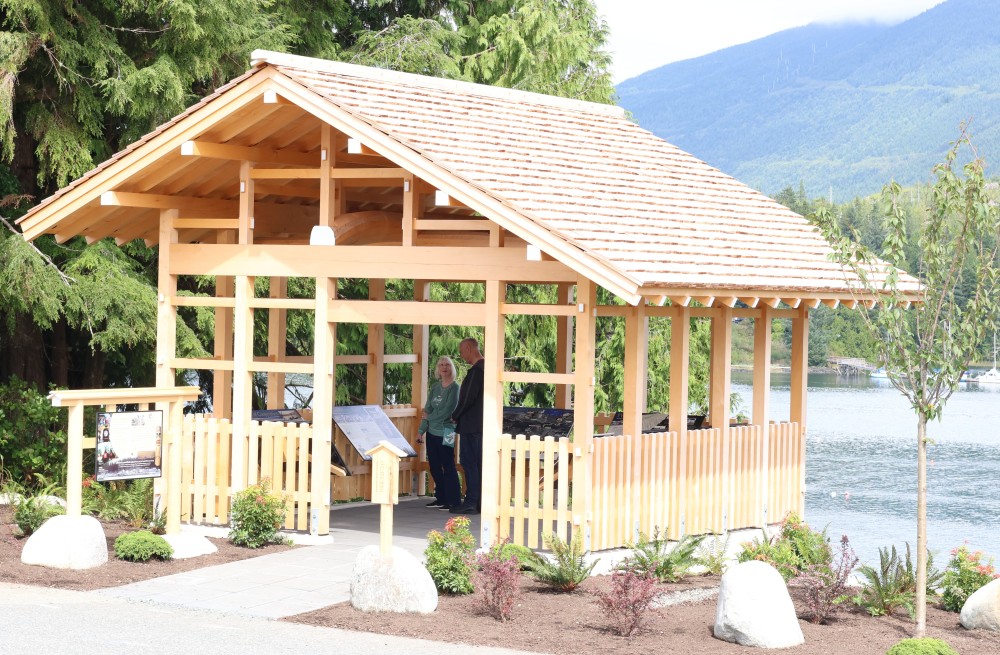
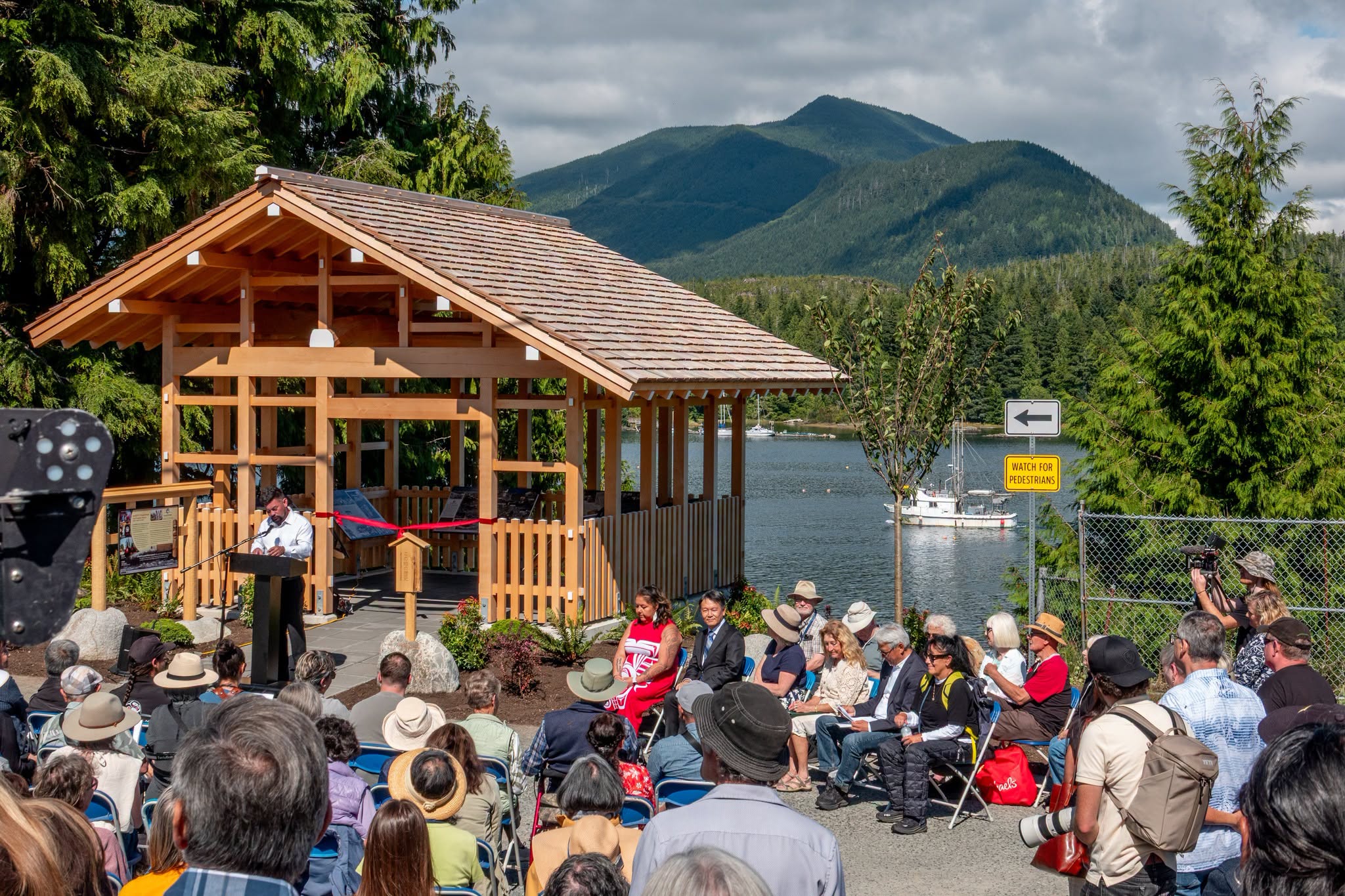
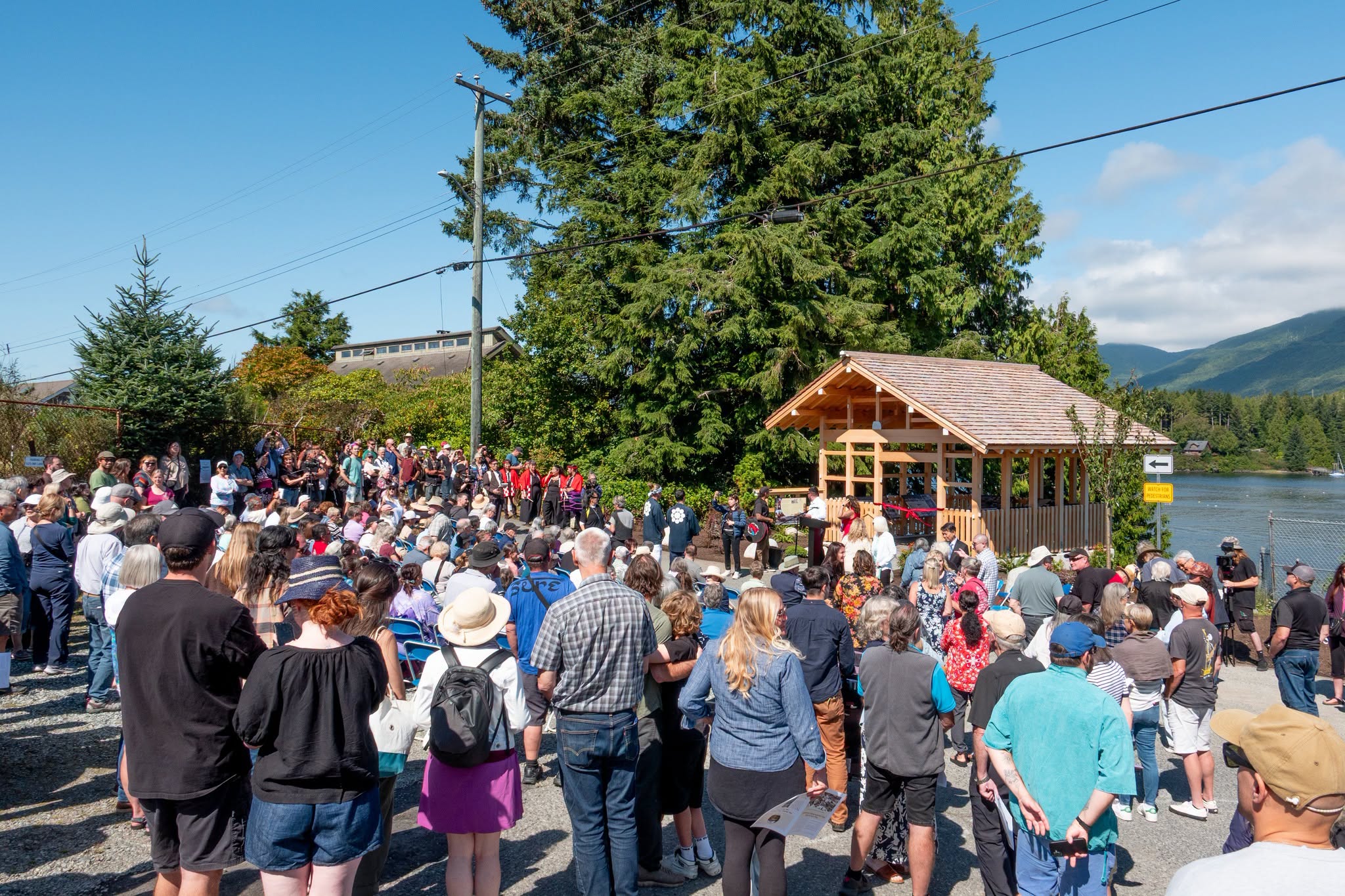
The Ucluelet Japanese Canadian History Pavilion officially opened on a sun-soaked Aug. 29 when 103-year-old Frances Nakagawa cut the red ribbon alongside four women who were also held in internment camps during the Second World War.
Nakagawa’s son Keith shared that his mom kept saying it was all “like a dream”.
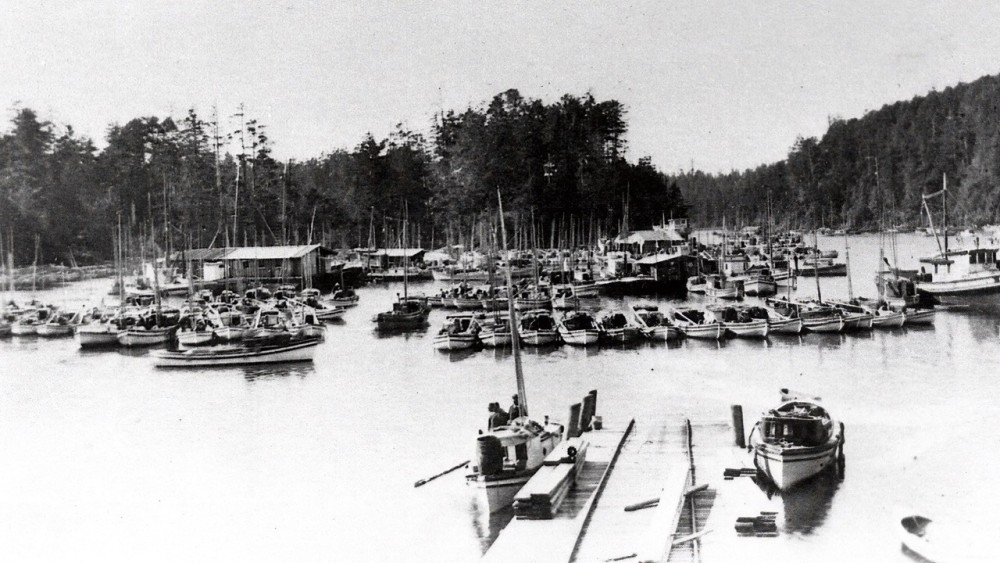
Located on the corner of Matterson Drive and Imperial Lane, the new interpretive site overlooks the Ucluelet Harbour; the very place where one of British Columbia's most significant Japanese Canadian fishing communities once flourished.
“During the 1930s, Japanese Canadian families made up half of Ucluelet's population, living close to Yuułuʔiłʔatḥ (Ucluelet First Nation) families and European settlers in a community connected by work, friendship and a shared dependence on the sea,” wrote Ucluelet historian Phil Hood.
The pavilion – created by Ucluelet & Area Historical Society (UAHS) and made possible through the support of the Japanese Canadian Legacies Society and the District of Ucluelet – celebrates those everyday cross-cultural relationships.
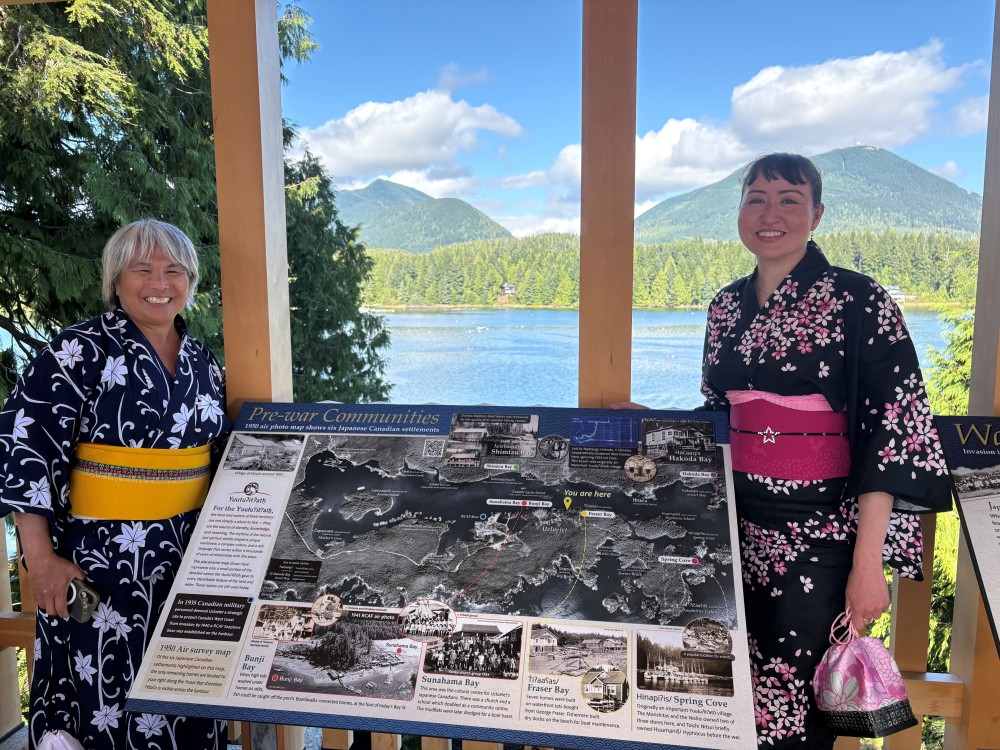
“Before you even enter the pavilion, there is this beautiful interpretive panel talking about the First Nations, who of course were here long before the Japanese, and who share similarities about how they were treated by the government,” said Shirley Martin, a lifelong Ucluelet resident and author of Calm Harbour, Turbulent Seas: A History of Ucluelet.
“During the war, the Japanese Canadians were supported really well by the First Nations. I mention on one of the boards that they actually used to share food; they would leave food for each other out on the dock sometimes,” said Martin.
“There are so many families who left during the war and never had the opportunity to come back. They will be coming and visiting, plus it’s just education for everyone to learn about this whole story that is so important to the West Coast,” she continued.
‘I feel like my roots are here’
Japanese Canadian Cathy Babyak travelled from Ontario for the opening ceremony. She reunited with her cousin Britt Moberg from Victoria at the event.
“I feel like my roots are here,” said Babyak.
“Our grandfather was a fisherman. He came to Canada in the 1900s with his father. They were fishermen before World War Two,” she said.
Following the attack on Pearl Harbor in December 1941, nearly 22,000 Japanese Canadians were forcibly removed from British Columbia's coast.
Babyak said her grandfather, Risuke Hamade, was detained at Vancouver’s Hastings Park temporary holding camp before being relocated to the Lemon Creek Internment Camp in B.C.’s Slocan Valley until the end of the war. After restrictions were lifted in 1949, he went to Winnipeg.
“Obviously, they would have liked to have chosen to go back to their home and their fishing and community, but that wasn’t really a choice for them,” said Moberg.
“When they came to Winnipeg, they were just in poverty. They couldn’t bring much with them to the internment sites. The boat, the house, were sold off by the government without their consent,” she shared.
Almost half of the Ucluelet community disappeared over night, according to UAHS, and the loss was felt far beyond the Japanese Canadian community.
Jeneva Touchie (Čakʷaasiqḥw̓iłim) is the manager of language services with the Yuułuʔiłʔatḥ Government (YG). She worked on the interpretive panel that relates First Nations history to Japanese Canadian history with Carey Cunneyworth, YG director of culture and heritage.
“My late grandma Barb often talked about how she remembered when the Japanese disappeared overnight,” said Touchie.
“My grandmother was always willing to share her knowledge, a trait which her daughter Vi took on after she had passed. It is amazing to see Vi's picture (in the pavilion), as Yuułuʔiłʔatḥ shares a similar history of hardship for our people as well as the Japanese,” said Touchie.
“It’s a dark part of history and (the historical society) really did their best to be true to it and not shy over the difficult parts,” she said.
In Winnipeg, Babyak said her grandfather went to work in a low-paying job at a concrete factory.
“Coming to Ucluelet, I just think, ‘what could have been?’ I take a breath of reflection. You dream… If my grandfather had been able to remain a fisherman, what would life be like?” said Babyak.
A small number of Japanese Canadian families were able to return home to the West Coast. Among them were Thomas and Mary Kimoto (formerly of Tofino), whose family became woven into the life of the Ucluelet community.
Mary Kimoto devoted decades to preserving the history of Ucluelet's Japanese Canadian community, serving as a founding member of the UAHS and continuing her work until her 100th birthday. Her vision inspired countless volunteers and supporters and ultimately helped make this pavilion possible, notes the UAHS.
“I felt like Mary Kimoto was here in spirit,” said Shirley. “She would have been so proud of Katsumi, her grandson, who was the master of ceremonies.”
Moberg says the pavilion is turning a really sad experience that her family went through into something positive.
“This was not something that was taught to me when I went to school. Beyond not really learning of residential schools and the Sixties Scoop, we also never learned about what happened to Japanese Canadians,” said Moberg.
“They were just people trying to raise their family and work in a community and be part of a community. They weren’t guilty about having actually committed any sort of crime,” she said.
Made with trees from Barkley Community Forest
Master craftsman Jason Sarri constructed the pavilion using traditional Japanese timber joinery techniques.
The project attracted international attention, with TV Tokyo documenting the project over several years and filming the official opening ceremony for broadcast to millions of viewers in Japan.
Sarri says the project began with choosing trees from the Barkley Community Forest.
“With each tree harvested, I performed the Shintō ritual of grafting the tree tip back into its stump,” Sarri said.
The log beams were shaped and smoothed with an ancient Japanese hand adze called a “chona”.
“Nowadays, it is often used for an aesthetic purpose of texturing,” Sarri shared.
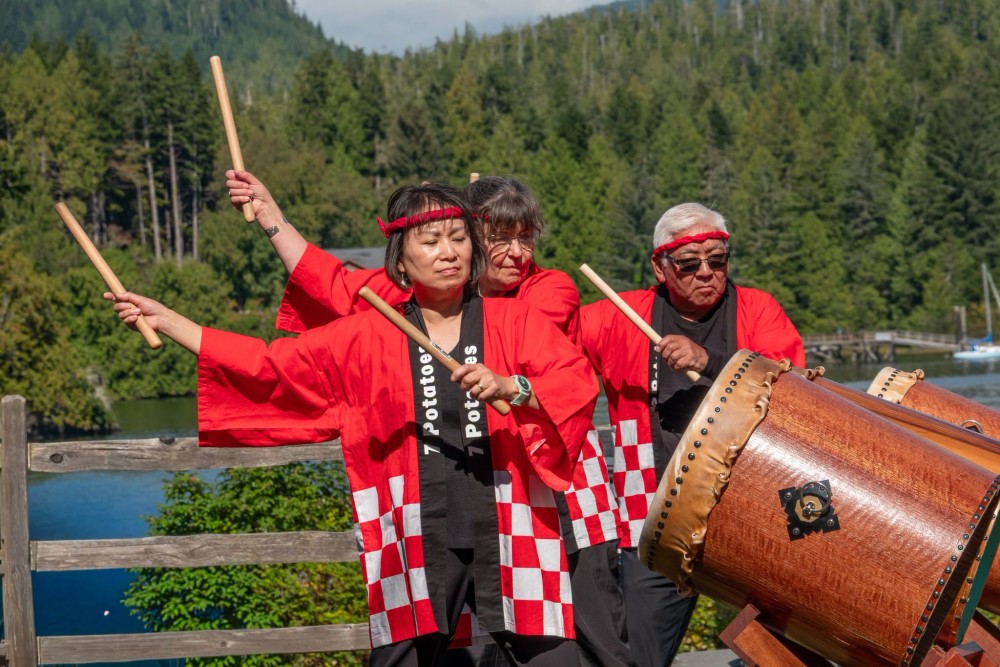
Following the ribbon cutting ceremony at the pavilion, Japanese Taiko drummers led the crowd of over 200 down to Ucluelet’s village green to continue the celebrations.