Budgets are stretched thin and food banks across Canada are seeing more people with full-time jobs accessing their services.
Food Banks Canada’s annual HungerCount project tracks and reports on food bank visits and client demographics. This year, the non-profit said food bank usage has nearly doubled since March 2019, and nearly 18 per cent of food bank clients reported having a job, compared to 12 per cent in 2019.
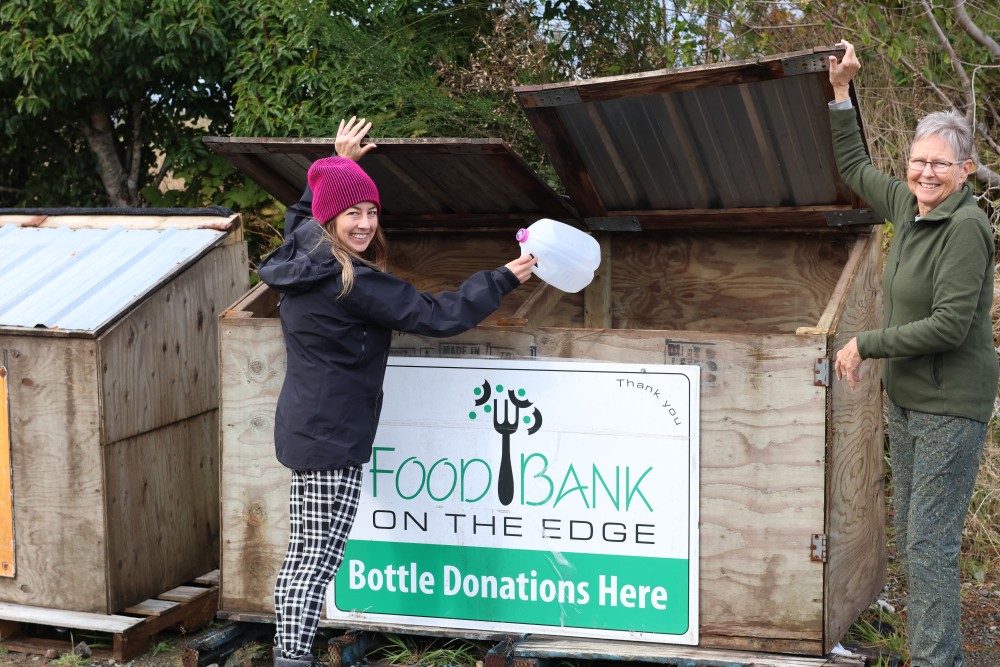
Food Bank on the Edge serves the west coast communities of Ucluelet, Tofino, Millstream, Port Albion, Hitacu, Opitsaht, Ty-Histanis/Esowista, Ahousaht, Hesquiaht and Toquaht. It is accredited under Food Banks Canada’s Standards of Excellence program, which sets the benchmark for safety, dignity and operational excellence in food banking.
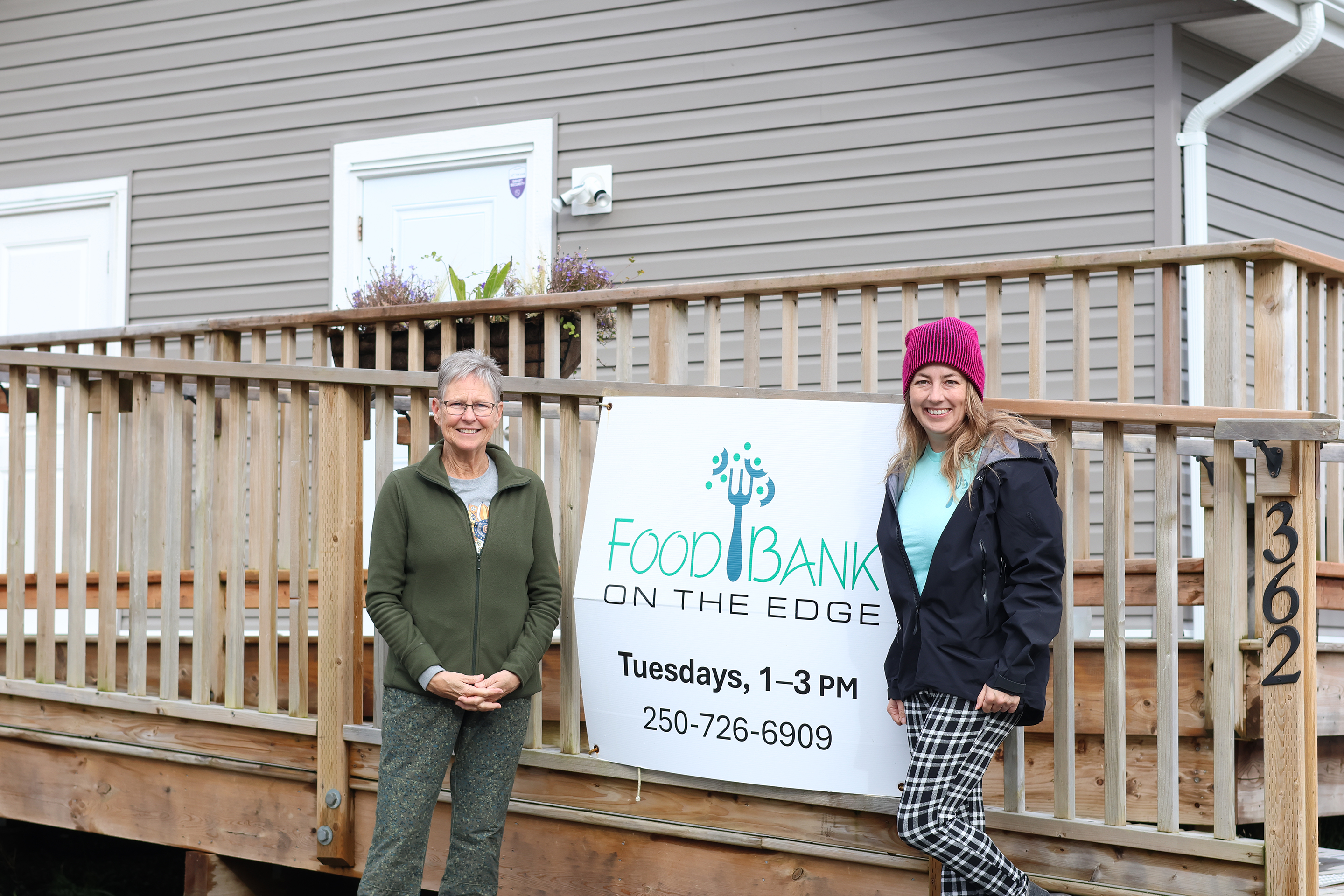
Last September 2025, the non-profit moved into a new facility at 362 Forbes Road in Ucluelet, moving the region’s food security hub up from a musty, low-lying space at the Seaplane base parking lot to high ground.
Over a cup of cinnamon spice tea, long-standing volunteer Cris Martin says it’s “shocking” how many more “working families” they are seeing come in.
“But that’s the reality,” said Martin. “You don’t know what people are coming to you with; it could be debt or medical expenses… (The food bank) is not a shameful place to come. There was always that cloud, especially with men. It doesn’t have to be that way. We are here to help and support,” she offered.
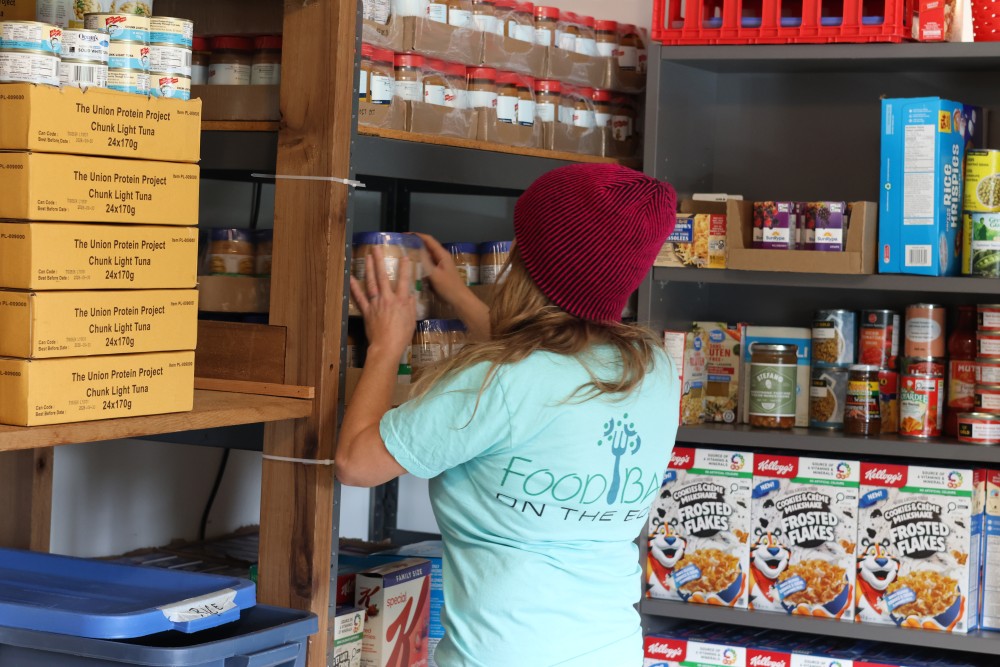
Rising costs have impacted the Food Bank on the Edge’s regular list of hamper items as well. The non-profit recently nixed coffee from their distribution list to save money.
“We did the math and a portion of coffee, which is usually about one pound, cost almost as much as hamburger meat,” said Martin, adding they don’t buy cheese anymore either.
Food Bank on the Edge is expanding operations to keep up with the “new normal”, according to Executive Director Carla Davis. She says Christmas hampers will be delivered throughout the west coast this year, and she put a call out to volunteers in the Tofino area.
“It’s going to be a huge undertaking. We will need a volunteer base in Tofino,” said Davis, who started the part-time role in September.
In the past, Christmas hampers were only given out to families living south of the Tofino-Ucluelet junction.
Serving remote communities
Unlike larger urban centres with several grocery stores to lean on, Food Bank on the Edge only collects from one grocery store, the Ucluelet Co-op. They also regularly deliver hampers directly to families within their area of service through a contract held by the Westcoast Community Resources Society (WCRS).
“We are servicing so many remote communities and our outreach workers that do the deliveries need more funding,” Davis said.
Ucluelet First Nation sends a delegate each month to pick up hampers for their members living in Hitacu, a role Davis said has helped with the “balancing act” of taking care of so many remote communities.
With just under 50 per cent of Food Bank on the Edge’s clients living in Nuu-chah-nulth communities, Davis says she would love to establish a monthly delivery contact with Tla-o-qui-aht, Ahousaht, Toquaht and Hesquiaht as well to streamline transportation costs.
“It’s difficult for people to get here,” she said.
Tla-o-qui-aht member Maria Clark is the Assistant General Manager at Tofino’s Tin Wis Resort, a Tla-o-qui-aht First Nations owned and operated accommodation provider.
Clark shared that Tin Wis recently conducted a labour market research study to learn what barriers Tla-o-qui-aht community members face when it comes to participating in the workforce.
“Being able to feed my family, today” was listed as the main priority for many respondents, according to Clark.
“Realistically, what we are considering living wages right now are still only getting some people paycheque to paycheque. It doesn’t include what the actual cost of daycare can be if your child isn’t in the $10-a-day program,” said Clark.
“Is it cheaper to stay home and not work and not pay daycare?” Clark continued.
In 2024, the living wage for a family of four in the Clayoquot Biosphere Region was $27.40, according to the Clayoquot Biosphere Trust. The living wage is based on expenses faced by two parents working 35 hours a week and two children under 10. It does not capture unique transportation expenses faced by families that rely on water taxis or personal boats for everyday activities.
Food Bank on the Edge clients peaked in 2020 during the pandemic with 3,296 people served. In 2024, the non-profit served 2,257 people and spent about $40,800 on groceries. In 2025 it served 2,093 clients and spent just under $45,000 on groceries. So far, 2026 has seen 1,549 people visit the food bank, but with November and December being the busiest time for the west coast food bank, Davis says the numbers will likely look the same as last year.
Partnership with Tofino Ucluelet Culinary Guild
Tofino Ucluelet Culinary Guild (TUCG) is helping with logistics, people power and sourcing products when it comes to collecting donations for the Christmas hamper expansion this year. TUCG is a collective that connects restauranteurs and community members to locally sourced ingredients.
“We want to help them reach more people,” said TUCG Executive Director Rob Renna.
He reflected on the rising cost of goods with a long sigh. From the price of diesel to packaging, he says everywhere they look, things are getting more expensive.
“Affordability is certainly a growing challenge. As a non-profit, we work hard to keep our operating costs as low as possible, while also recognizing the pressures facing local farmers and producers who are dealing with rising costs of their own. We’re seeing people become more cautious with their spending. The reality is that the rising cost of living is making things increasingly difficult for everyone on the coast, from farmers and food producers to local families,” said Renna.
“We are at the will of the world market that’s why, for us, we are really proud of supporting the small farmer on Vancouver Island and being able to get the products to chefs and individuals here,” he continued.
Davis encouraged anyone to reach out if they need a hamper, to make a donation or to volunteer: 250-726-6909 or foodbankedge@gmail.com.