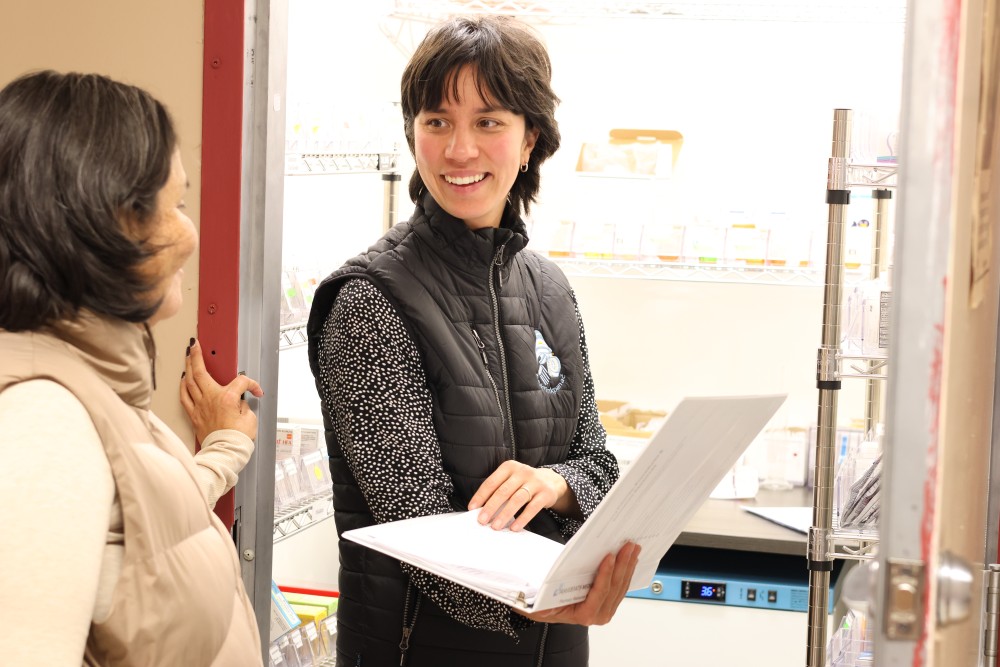
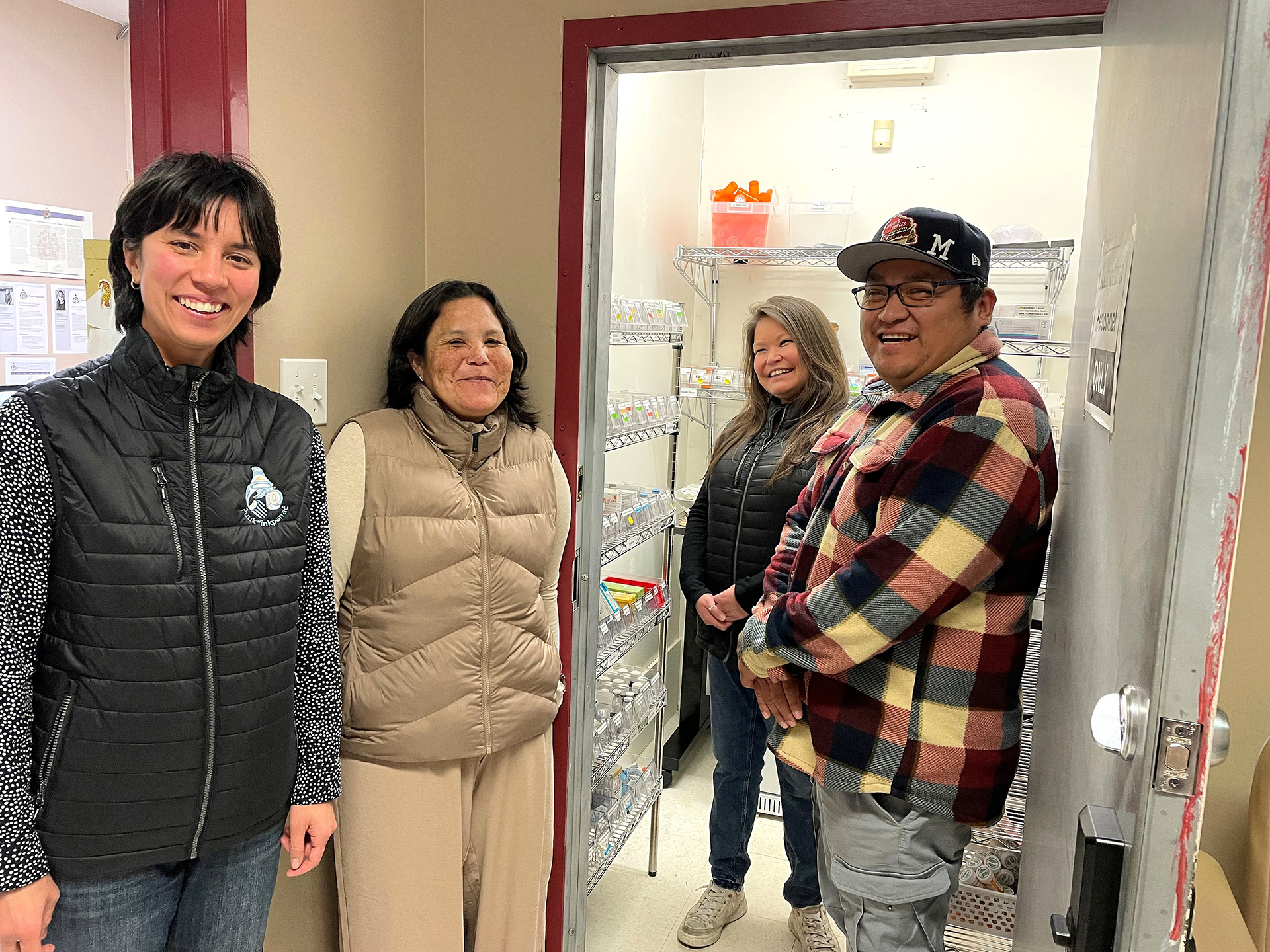
A new mini pharmacy in the remote Ahousaht First Nation community of Maaqtusiis on Flores Island is a game changer for its 1,200 residents.
Now, when people fall acutely unwell, the mini pharmacy eliminates the cost of return boat travel and the wait time between leaving Ahousaht, reaching the nearest pharmacy in Tofino and returning home. On a blue bird day, it takes the water taxi 30-minutes to reach Tofino’s First Street Dock from Maaqtusiis.
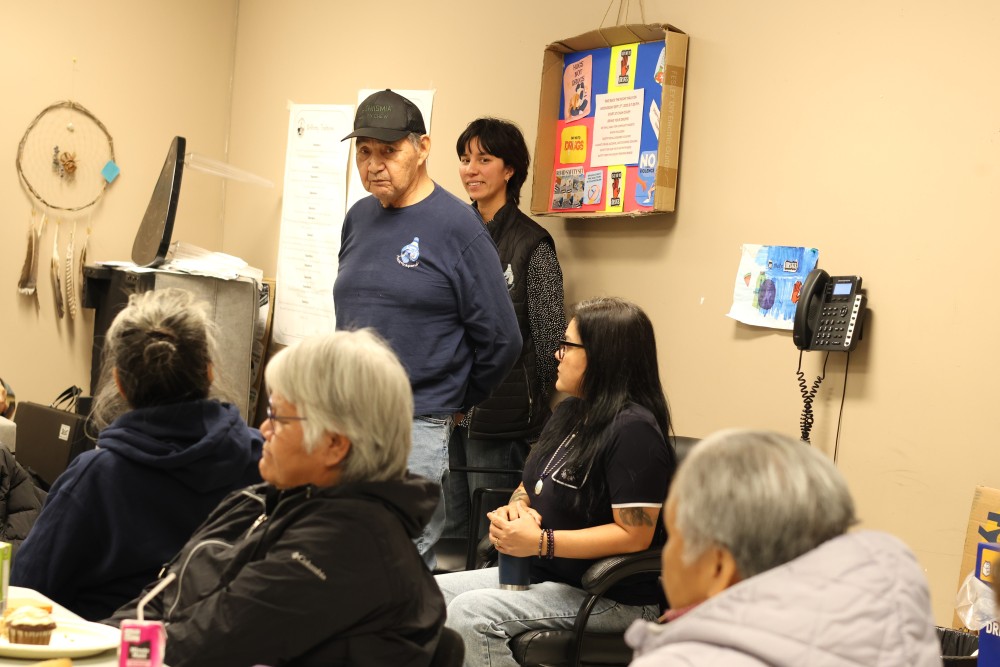
Officially launched on November 18 with an elder’s luncheon and naming ceremony, Ahousaht’s mini pharmacy or ʔuy̓aatłʔas (pronounced Oot-yaalth-us and translates to ‘a place where you’re given medicine’) is the second of its kind to exist in the Vancouver Island Health Region; the other is in Kingcome Inlet with Dzawada’enuxw First Nation, a place only accessible by boat or floatplane.
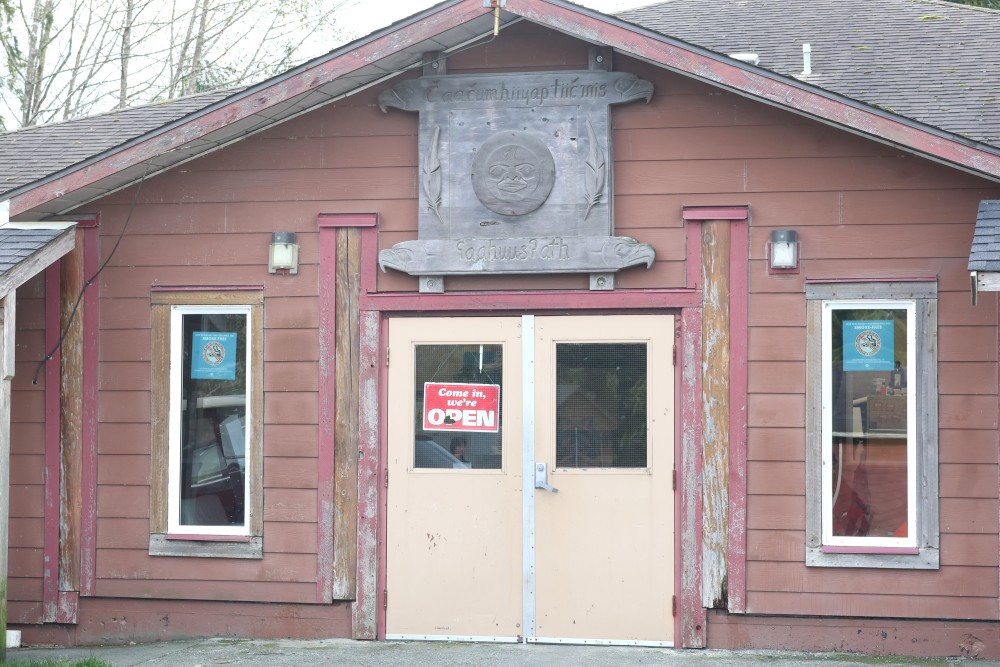
West Coast family physician Dr. George Saczek skippers his own boat from Tofino to the Chah Chum Hii Yup Tiic Mis health clinic on Flores Island for weekly rounds. He is currently the only doctor visiting Ahousaht.
Dr. Saczek shared that in 2018 when he first started visiting Ahousaht, a sick baby came in to Chah Chum Hii Yup with a respiratory infection commonly known as croup.
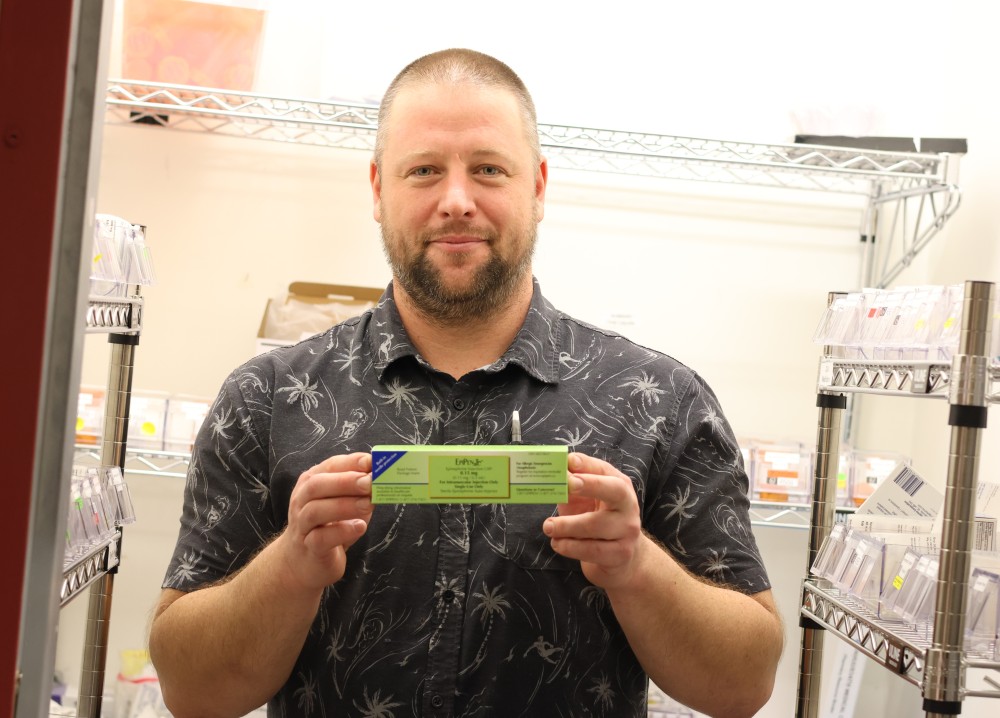
“I had nothing to give the baby. All that was available was a 45-minute boat ride,” said Dr. Saczek. “Usually, you would give the patients steroids right way, now we have an EpiPen inhaler.”
“It might be a small pharmacy, but it’s making a big impact. I’ve already used up a lot of medication. Just within the first week of having it, we are at the point where we are having to re-stock things. It was something that was needed. From a physician perspective, I am extremely grateful I can help patients right away,” Dr. Saczek continued.
Erica Keen is the clinical manager for the ʔuukʷinkpanac - West Coast Primary Care Initiative (WCPCI) health team, a relatively new health services provider that offers primary care to people living in the central Nuu-chah-nulth communities of Ahousaht, Hot Springs Cove, Opitsaht, Ty-Histanis, Esowista, Hitacu and Macoah.
With guidance from Ahousaht First Nation leadership, Keen says WCPCI consulted Vancouver Island Health Authority and First Nations Health Authority to make decisions around the mini pharmacy.
“ʔuy̓aatłʔas is available to members who make appointments through (Dr. Saczek) or a PCI nurse. There are over 95 western medications that you can access. This is amazing. We are also learning as we go. If there are other ones that are missing, we can add, or that aren’t being used, we can cut out,” said Keen, noting that medications are supplied by Island Health.
Ahousaht’s mini pharmacy initiative is “decades in the making”, says Keen, and the project originated from “many, many years ago” when elder Dave Frank was the manager of the health centre.
Frank is now a healer with Uut Uuštukyuu Society, a non-profit that facilitates access to Indigenous medicine in both reserve and urban communities across Vancouver Island and the Lower Mainland.
During the elder’s luncheon, Frank thanked the team from the Ahousaht and WCPCI for coming together to make the mini pharmacy real. He shared that there will be room for Indigenous medicines in the ʔuy̓aatłʔas as well.
“We have medicine makers here in Ahousaht that are going to contribute. It doesn’t cost anything from us. Our kuu-us (First Nations) medicines are always free. When you get it from here, you don’t have to pay and you get instructions on how to use it,” said Frank.
He went on the thank Myrtle Atleo and Walter Thomas, managers of the Chah Chum Hii Yup Tich Miss, for naming the space.
“Thank you for putting a spirit in the place. It’s important that we do that. Our ancestors would have done that,” said Frank.
Tanille Johnston, Indigenous Health director for Island Health North Island region, said the mini pharmacy will bring a better quality of life to the residents of Maaqtusiis.
“This partnership represents a blueprint for other rural and remote First Nation communities who may want to open a mini pharmacy in their health centers. A future goal is to incorporate traditional medicines into the mini pharmacy. We welcome anyone in Maaqtusiis to make an appointment to see doctors and primary care nurses and uut uustukyuu providers,” said Johnston in a WCPCI press release.
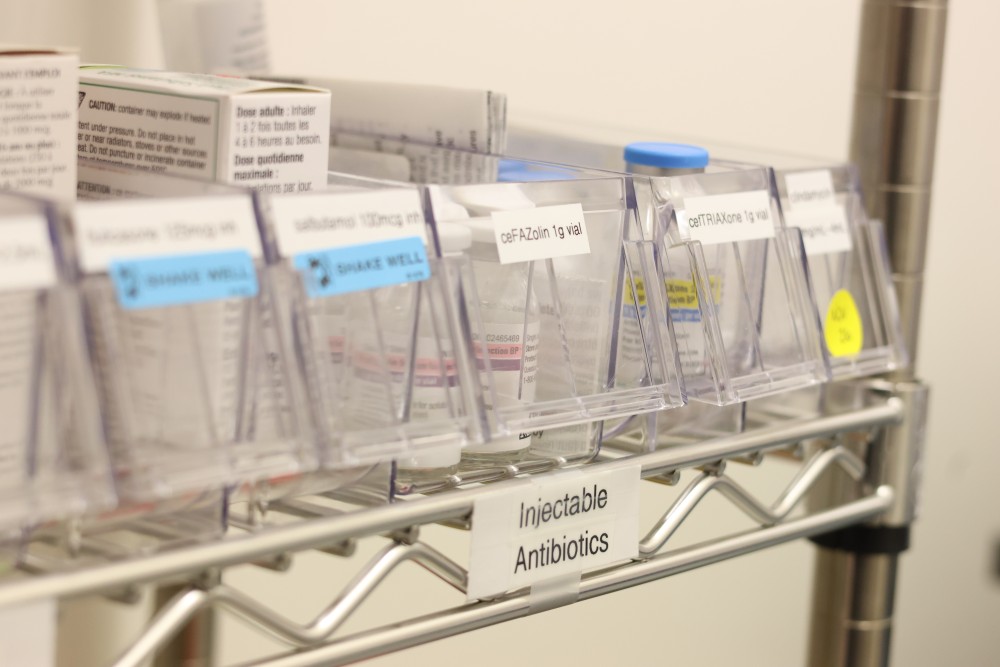
Currently, the mini pharmacy stocks diabetes medications, drugs for acute pain, antibiotic starter packs, birth control options and more. It is guarded with a lock and code, and it is not stocked with any opioids or benzos.
WCPCI is hiring for a pharmacist to serve all their partnering Nuu-chah-nulth communities, which include: Hesquiaht, Ahousaht, Tla-o-qui-aht, Ucluelet and Toquaht.