While results are preliminary and more analysis is needed, contamination is still being detected in Muchalaht Inlet’s crabs, 26 years after the closure of the Gold River Pulp Mill.
Commercial crab harvesting has been closed in the area since 1995, due to lingering concerns about the levels of toxins in the shellfish. The issue first alarmed Canada’s fisheries department in 1990, when crab harvesting was closed on the Muchalaht Inlet due to high levels of contamination. By 1995 these levels had declined, but were still present to the degree that warranted a warning. Commercial harvested remained closed, while smaller-scale crabbing was permitted with an advisory to consume no more than 70 grams of the crustacean’s hepatopancreas in a week, which is the organ in the shellfish used for detoxification and digestion.
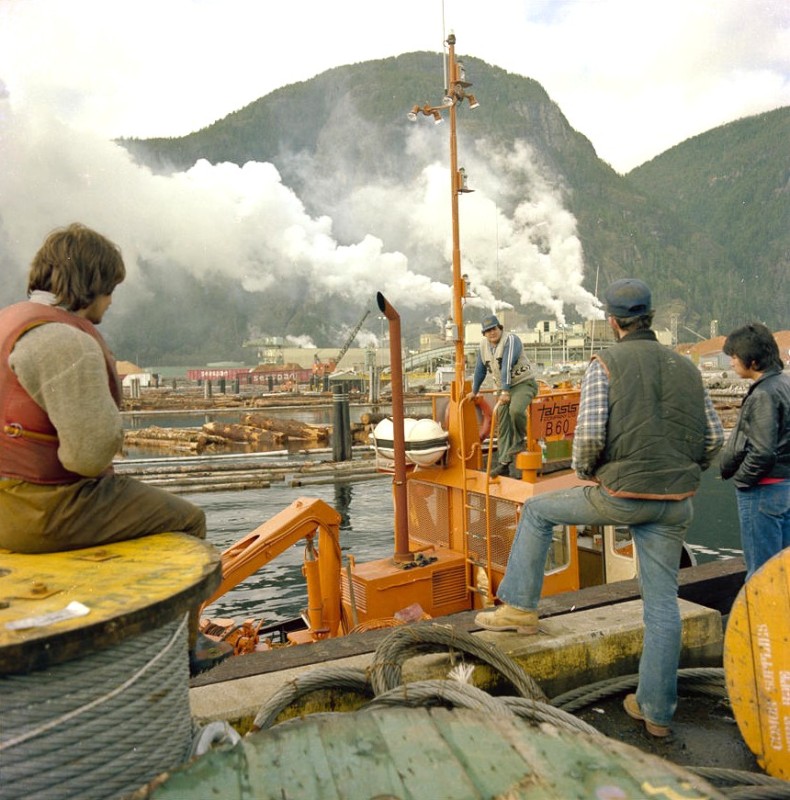
Meanwhile, the Gold River Pulp Mill continued to operate at the head of Muchalaht Inlet, where the salt water meets the Gold River. According to a pamphlet published by the Tahsis Company shortly after starting the mill in 1967, effluent waste was sent from the facility through a 1,700-foot tunnel into the main body of Muchalaht Inlet.
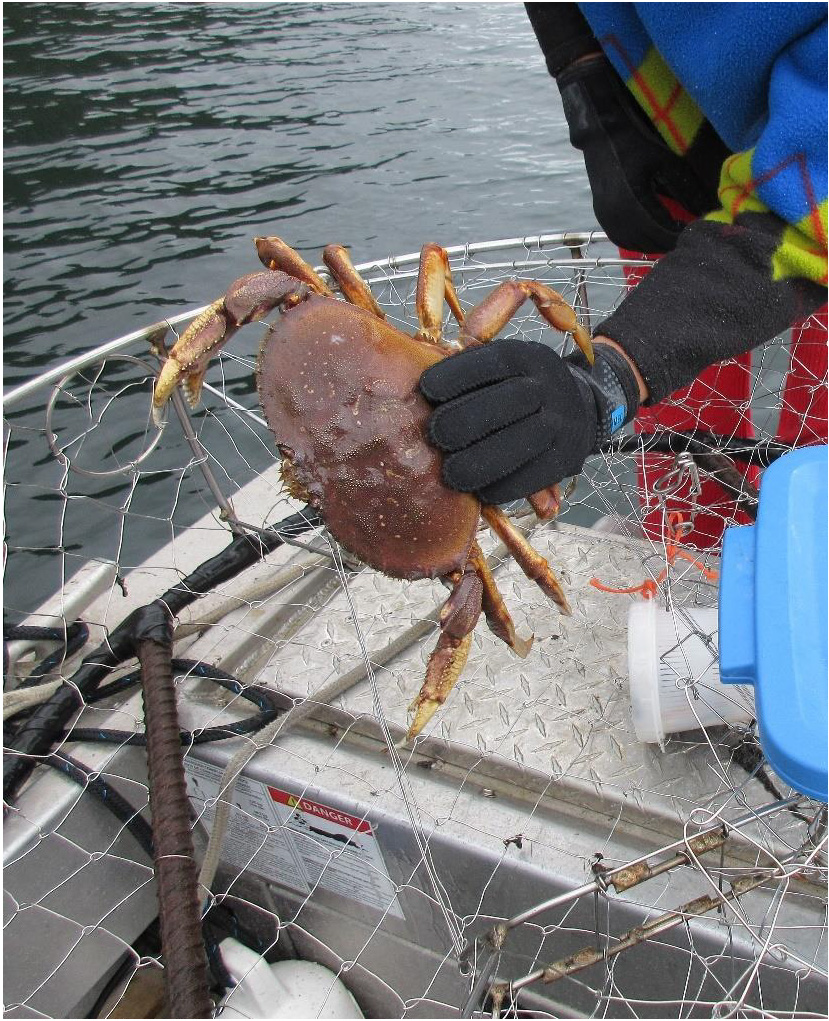
At the time Canada’s Department of Fisheries and Oceans considered the mixing of pulp effluent with the natural sea water safe, but monitoring in the area years later would suggest otherwise. By 1990 analysis of Muchalaht Inlet’s Dungeness crabs revealed a spike in dioxins, a chemical produced in pulp and paper manufacturing, leading DFO to close the area for harvesting the shellfish.
“When all pulp and paper mills were first operating there was a higher release of dioxins that resulted in the closure of many fisheries,” reflected Lisa Loseto, a research scientist with Fisheries and Oceans Canada, during a presentation to the Nuu-chah-nulth Council of Ha’wiih Forum on Fisheries in December.
Dioxins are highly toxic and can be detected in the environment decades after they are released, according to the World Health Organization. They can cause reproductive and developmental problems in humans, damage the immune system and lead to cancer, says the WHO.
Archie Little worked at the Gold River Pulp Mill for six years, and recalls seeing black effluent pouring out from the facility at all hours of the day and night.
“They drilled a tunnel to pour into the inlet, out of sight, out of mind,” said Little, who is now a councillor with the Nuchatlaht First Nation. “That stuff was going out 24-7, just pumping out. I often wondered where it went, how far it reached and what other resources it impacted, because we used to fish in the area. It makes you wonder what we were eating. Was it safe to eat?”
The pulp mill was built in the mid-1960s, leading to the construction of settlements 13 kilometres north to house the mill’s workforce. As the village of Gold River was in its infancy, the Mowachaht/Muchalaht First Nation’s main reserve was being moved from Yuquot at the southern shore of Nootka Island to Ahaminaquus on Muchalaht Bay – right across the road from the pulp mill. Under clouds of smoke and the screams of machinery, the First Nation would remain there until moving its main reserve to the current Tsaxana site north of Gold River.
Now the Mowachaht/Muchalaht are working with Loseto to determine the extent to which its territory continues to be affected by the legacy of the pulp mill, which closed in 1999.
“I do know it’s been a long time, I don’t know how much longer it’s going to be,” said Tyee Ha’wilth Mike Maquinna of the inlet’s contamination. “That’s the problem.”
By the 1990s pulp mills had introduced technology to decrease the amount of dioxins they were releasing into the environment, progress that aligns with the drop in levels tracked at Muchalat Inlet sites after 1990.
“And then there was an adaptation where the approach used to prepare the pulp and paper was mitigated so that that amount of dioxin was decreasing over time,” explained Loseto.
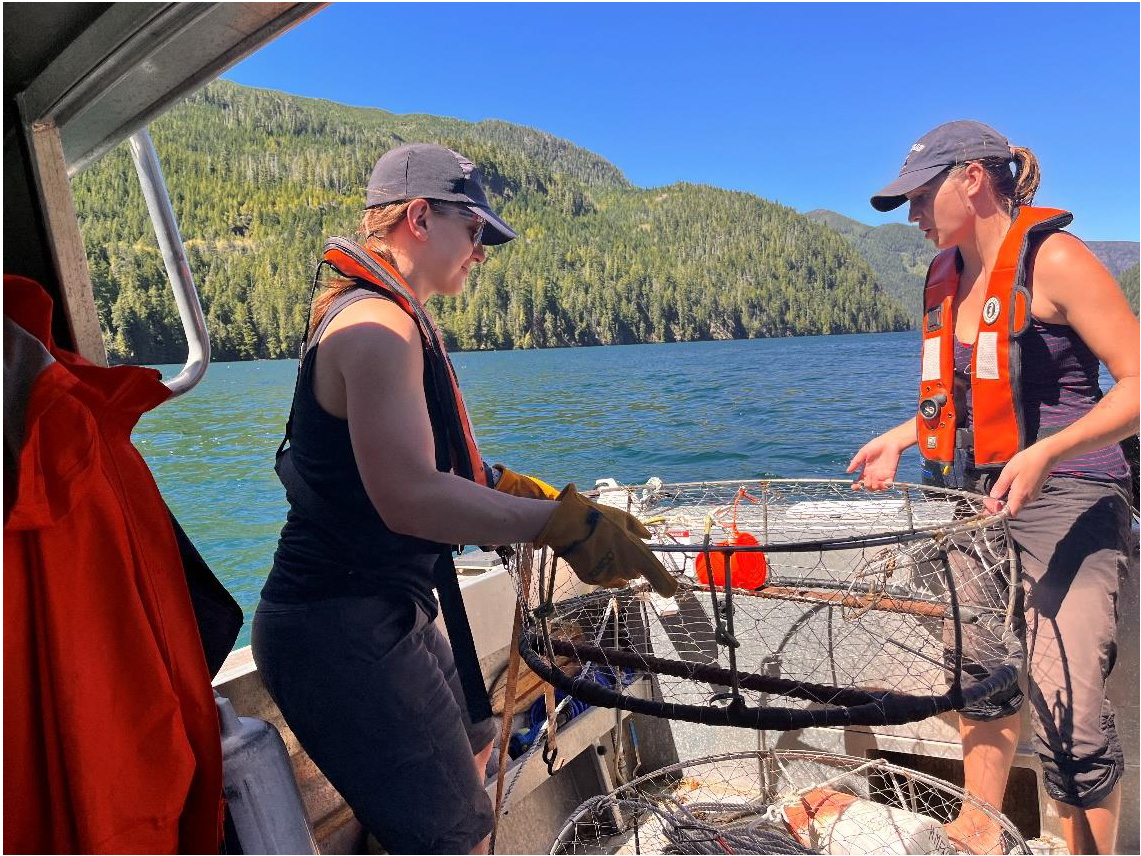
Last summer samples were collected for analysis for the first time since 1998, a partnership undertaken by DFO, the Mowachaht/Muchalaht and Uu-a-thluk, the Nuu-chah-nulth Tribal Council’s fisheries department. In August 2025 the biologists set 14 traps along Muchalaht Inlet, at depths between 20 and 90 metres beneath the ocean’s surface.
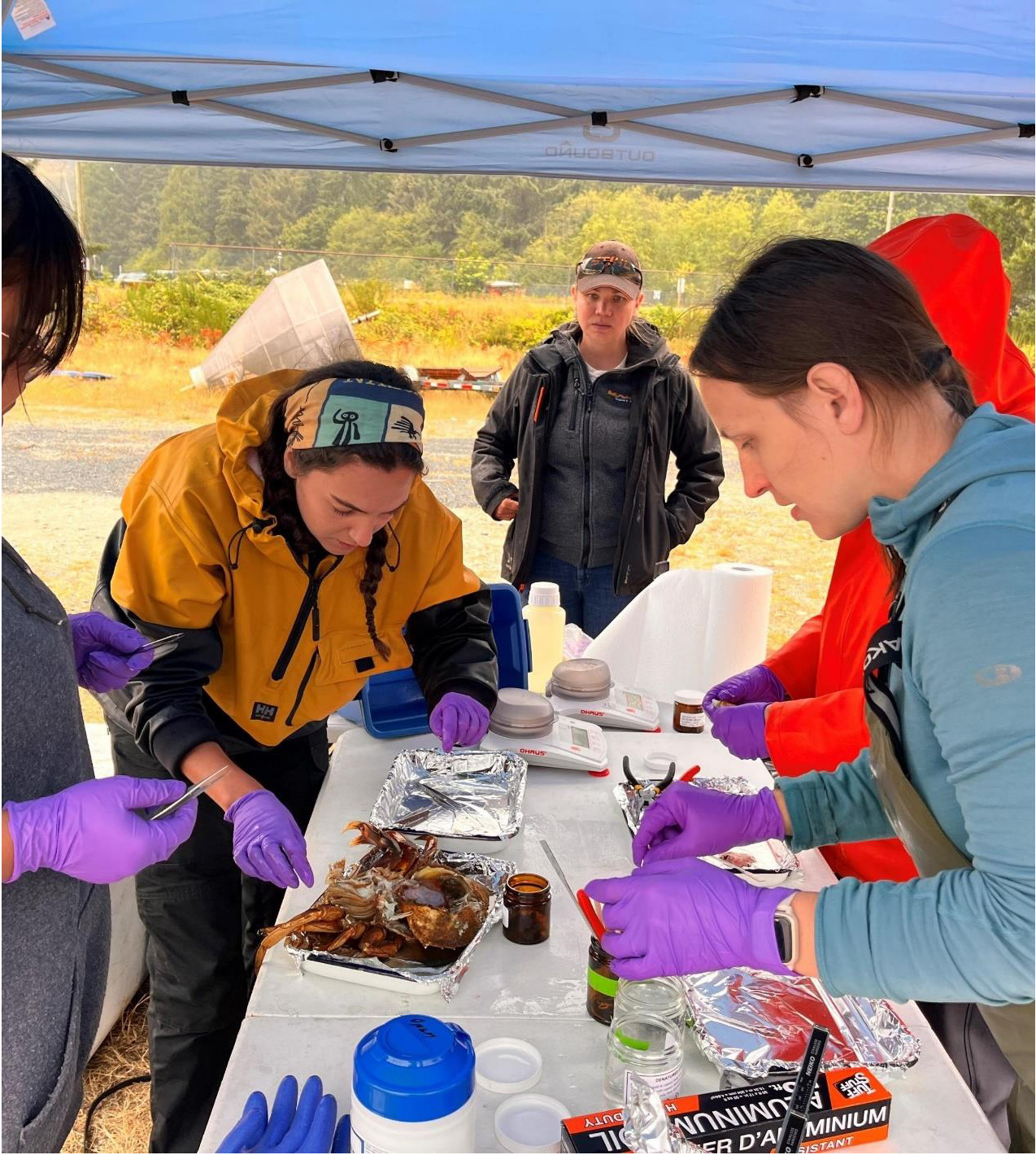
After a few days in the water four samples of Dungeness crab hepatopancreas were selected for analysis. One of these yielded elevated levels of dioxins, although a direct comparison could not be made from what was recorded at the site in the 1990s. Another sample from August shows dioxins three times lower than what was last measured from the site in 1998. Then another two samples of the crab organ show levels that would have been below a Health Canada threshold for safe consumption. This threshold is now considered outdated, and is under review by Health Canada’s Bureau of Chemical Safety.
“These approaches of the past are not ideal to be used anymore,” said Loseto, noting that the samples analyzed were far from where the pulp mill dumped effluent. “It would be nice to access samples closer to where the original source was.”
“We’re going to try to collect more samples again and do another test round, a little bit later in winter, probably in January, maybe in February to see if we have a greater chance of collecting more samples,” added Vanessa Moll, a biologist with the Mowachaht/Muchalaht First Nation.