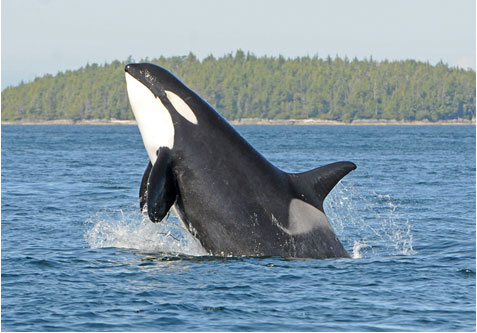
Commercial and recreational fishers could be facing more of a squeeze this year, as DFO considers adding to restrictions on salmon harvesting in areas used by southern resident killer whales.
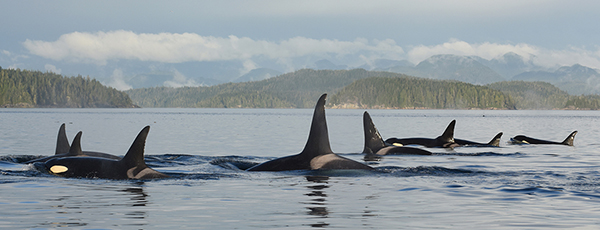
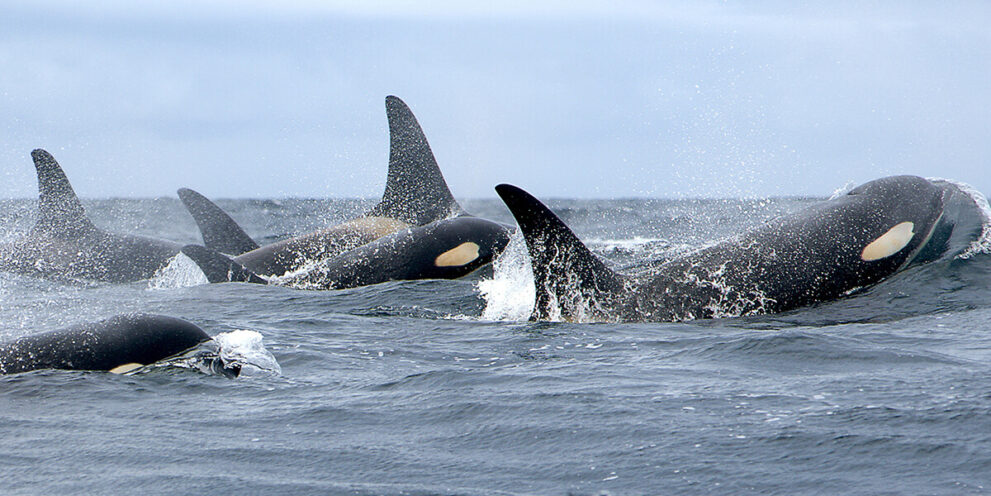
Listed as endangered under Canada’s Species At Risk Act, the number of southern resident orcas is currently believed to be 74, migrating in three pods throughout the coast of British Columbia, Washington and Oregon. During the warmer months the species primarily eats chinook salmon, leading Fisheries and Oceans Canada to consider more protections for areas off the west coast of Vancouver Island to enable the struggling orcas to forage.
The potential salmon fishing closures were presented to the Nuu-chah-nulth Council of Ha’wiih Forum on Fisheries, which was hosted by the Nuchatlaht First Nation in Campbell River in mid-February.
“Part of it is trying to reduce the competition between commercial and recreational fishers,” said Johanna Withers, a DFO marine mammal advisor, to the forum on Feb. 19. “We are aiming to create spaces where there could be more of their prey for them and less of that disturbance that can prevent them from accessing that prey.”
Besides threats to the chinook stocks that they feed on, other challenges for the southern resident orcas include contaminants from passing vessels as well as the physical and acoustic disturbances from boats, as this can disrupt the auditory sounding methods that the killer whales use to navigate and locate prey.
“The chinook closure piece was also looking at specific ways to provide access to the southern resident killer whale for their preferred prey, which predominantly is a couple specific stocks of chinook in those areas,” added Heather Brekke during the DFO presentation.
In recent years interim sanctuary zones have been established off North Pender Island and Saturna Island. No boats are permitted in these protected areas. There is also a speed reduction requirement of 10 knots around Swiftsure Bank, a nutrient-rich area located 15 miles west of where Nitinaht Lake meets the Pacific Ocean. These protection measures apply June 1 – Nov. 30.
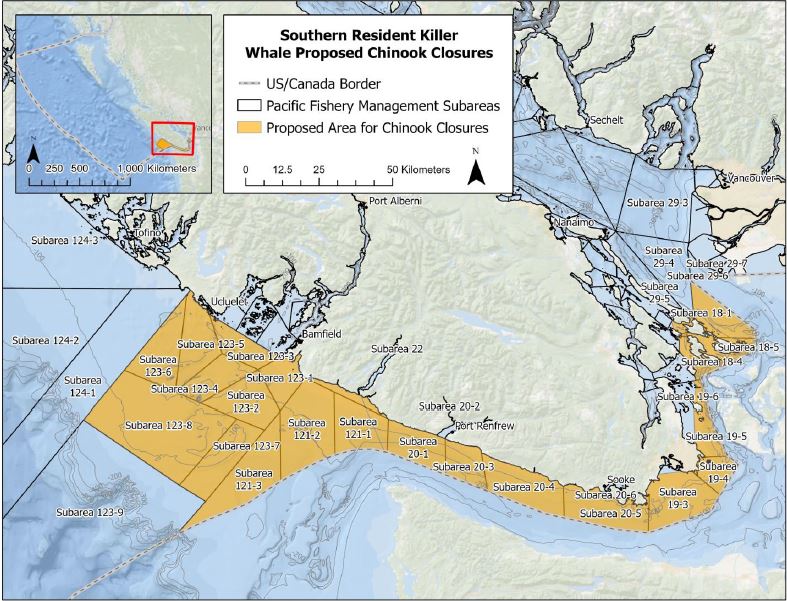
Since 2019 salmon fishing has also been prohibited in what DFO calls “key foraging areas” for southern residents off the southern coast of Vancouver Island. These include sections at the mouth of the Fraser River from Aug. 1 – Sept. 30, the Gulf Islands May 1 – Nov. 30, parts of the Juan de Fuca Strait Aug. 1 – Oct. 31 and sections around Swiftsure Bank July 15 – Oct. 31.
This year the Juan de Fuca and Swiftsure areas could have their salmon fishing closures start as early as June 1, if DFO decides to proceed with further measures to protect southern resident habitat. Also being considered is increasing the minimum vessel distance to 1,000 metres from the endangered orcas. Currently the limit is 400 metres along southern Vancouver Island, 200 metres elsewhere.
In addition to this is a proposed closure for catching any chinook off Vancouver Island’s southern coast, from Ucluelet on the west to the Gulf Islands - not including the Alberni Inlet and Somass River. Proposed to be in place June 1 – Aug. 31, this chinook closure would replace the existing prohibition on retaining chinook in the region, meaning that fishers were previously required to throw the king salmon back if the species ended up on their hooks or in nets.
These current and potential salmon fishing restrictions do not apply to First Nations’ harvest for food, social and ceremonial purposes, as they are intended to limit the commercial and recreational fisheries.
With the decision on the measures now in the hands of Fisheries Minister Joanne Thompson, any further restrictions bring the risk of adding fuel to a fire already burning in the West Coast fishing circles. This winter concerns have flared up amongst sports fishing groups, which face potential changes to their harvest limits as DFO undergoes a rewriting of the Salmon Allocation Policy. More restrictions off the Island’s southwest coast will create pressure elsewhere as boats look for places where they can legally fish, warned Nuu-chah-nulth representatives during the fisheries forum.
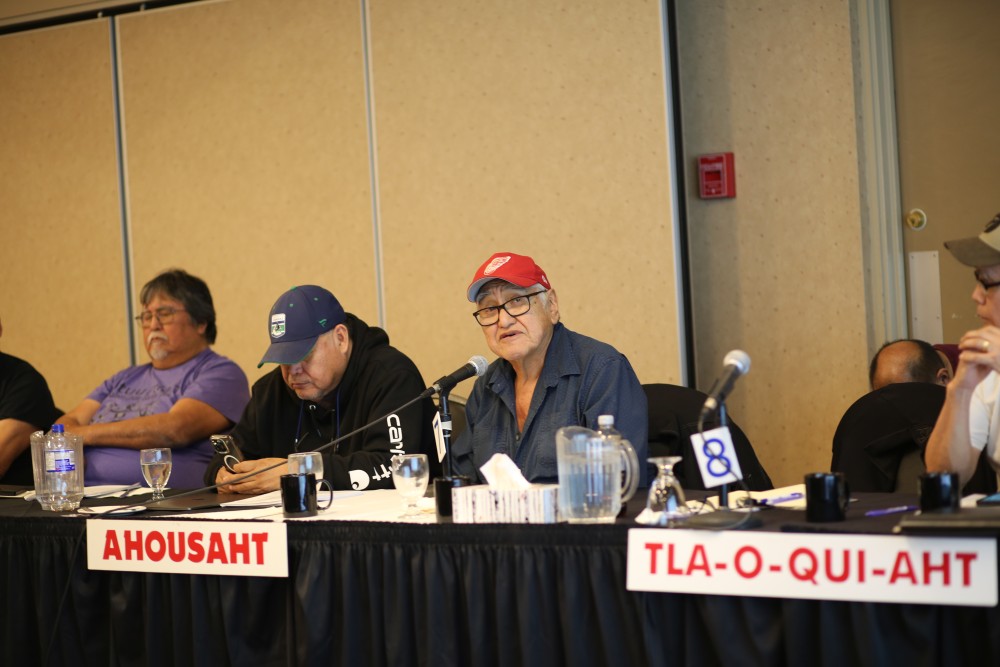
Tseshaht Councillor Les Sam cautioned that extending the salmon closures will “put another river at risk to feed the whales.”
“What you’re doing is congesting all of the fishermen right into the mouth of the Barkley Sound,” he said. There’s going to be a huge number of extra boats that are targeting our chinook going up the Somass.”
“All you’re going to be doing is relocating the sports fishery to the north island,” added Ahousaht member Andrew Webster, who has fished commercially for over 50 years.
Despite increased measures in recent years to protect their habitat, southern resident killer whales have shown little sign of a rebound, as the current number of 74 is close to a historic low since consistent population monitoring started in the early 1970s. After recording a count of 71 in 1974, the number gradually rose to 98 in 1995, according to the US-based Marine Mammal Commission. After falling for a few years, the most recent population peak was 89 in 2006.
This sharply contrasts with the Northern Resident killer whale, also a salmon eater that has steadily grown since the early ‘70s to over 300 between southeast Alaska and north Vancouver Island’s coasts. The marine-mammal-eating Bigg’s killer whale is also more stable with an estimated population of 400, ranging from Alaska to northern California.
Some blame the health of chinook for the Southern Resident orca’s meagre numbers, but the salmon stocks that southern residents feed on appear to have shown some improvement, according to a recent report from the Pacific Salmon Foundation. Its 2025 State of the Salmon report cites a 45 per cent increase in Fraser chinook and a 32 per cent rise in chinook stocks off the west coast of Vancouver Island compared to long-term averages.
“[S]outhern populations – west Vancouver Island, east Vancouver Island and mainland inlets, central coast and Fraser – are well above long-term averages,” states the salmon report.
While long-term solutions for the southern resident killer whale remain up for debate, Andy Webster wonders where the people who live off the ocean fit into these plans.
“We’re finding it harder and harder to make a living on the water because of all the pressures we face,” said the lifelong fisherman. “Salmon have been mismanaged to the point where killer whales are going to take priority over us. I find that really unacceptable.”