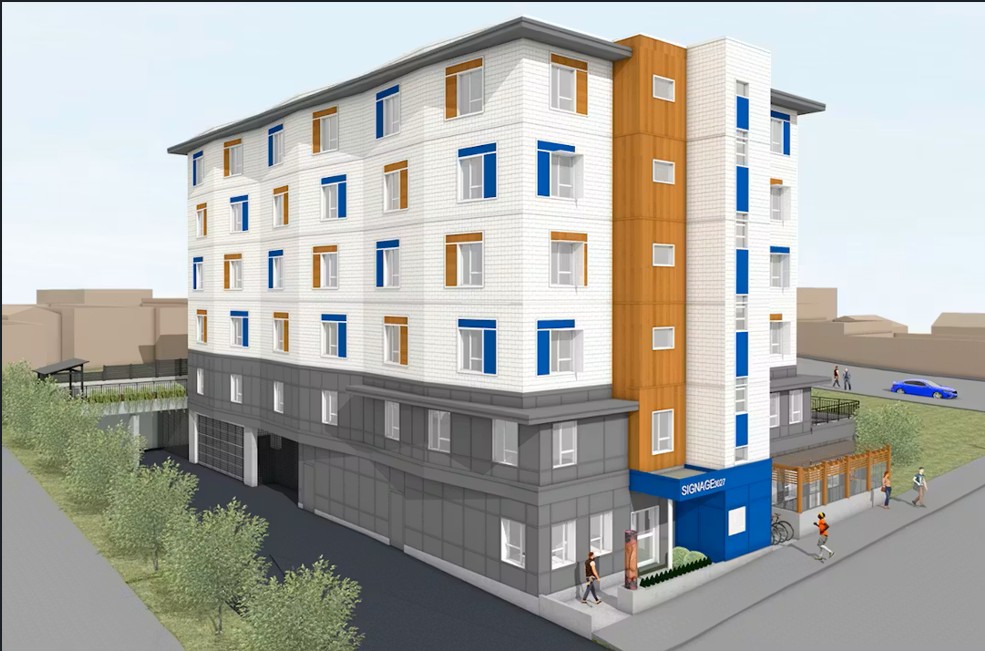
In the face of public dissent, Port Alberni Mayor Sharie Minions holds the line on the construction of a controversial 55-studio unit supportive housing complex in the Uptown core.
“I don’t for a second believe that housing people within a neighbourhood where they are currently homeless is going to make it worse. I think it will make it better, and I feel very strongly about that,” said Minions during the Feb. 9 regular council meeting question period.
City council approved rezoning of the site at 3027 and 3037 Second Avenue in February 2026 and lease negotiations with BC Housing are underway. BC Housing says construction on the low-barrier housing is expected to start this summer.
“I fully believe it will be a positive impact on the neighbourhood,” said Minions.
While Port Alberni’s recent Point-in-Time homeless count in April 2025 totaled 180 people, the proposed Second Avenue supportive housing building has drawn flurry of local criticism since letters were first sent out to neighbours and area businesses in Jan. 2025, announcing the project. Many folks who oppose the project say it’s far too dense, the location does not align with the city’s downtown revitalization goals and that finding qualified staff could be a challenge.
“Why are we putting it in our downtown core that we call the arts district and our revitalization area where our tourists walk?” said Roseanne Doiron, a realtor and the spokesperson for a community group called Right Place, Right Plan. They meet weekly on Thursdays at the SteamPunk Cafe.
“We’ve got all these people pouring their heart and soul into these businesses. Who gives you the right to put this right in the middle of all this when all these people are trying to revitalize it?” said Doiron, who was born and raised in Port Alberni within the homelands of the Tseshaht and Hupacasath First Nations.
Port Alberni’s Uptown District extends east to west from Sixth Avenue to the Harbour Quay, and north to south from Dunbar Street to Mar Street. Over the past few years, shops like Pinto Goods & Refillery, Wildflower Café and Cloud City Apparel have slowly transformed the vibe of the area from decrepit to cool.
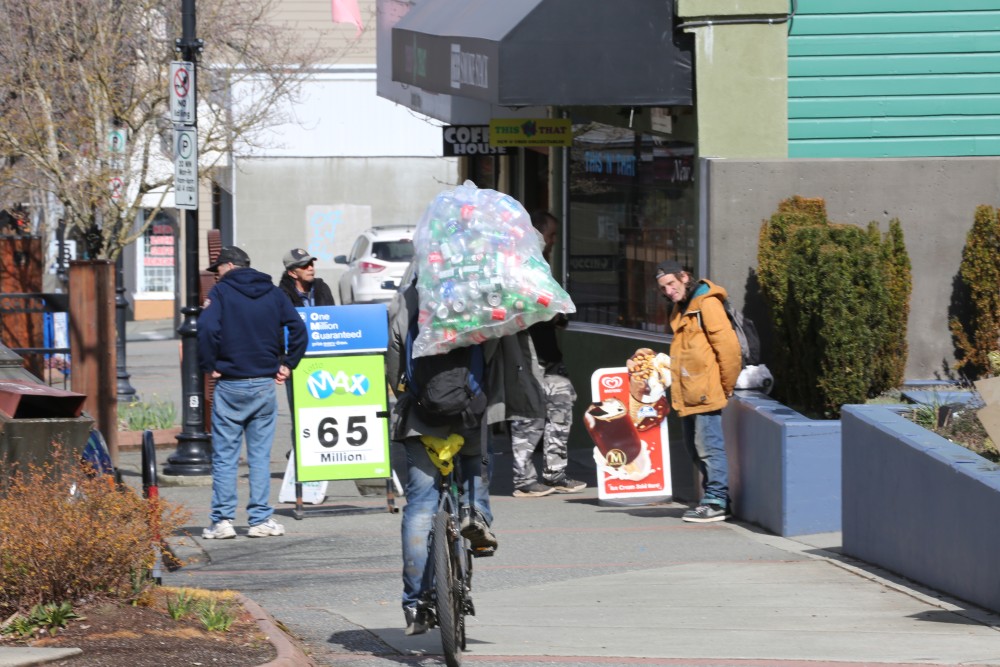
The Uptown District also acts as a services hub for people dealing with homelessness, addictions and mental health. Bread of Life soup kitchen is across the street from Dog Mountain Brewery, where folks can nurse a craft beer on the patio as they people-watch traffic coming and going from Harbourview Apartments, Port Alberni’s notorious nuisance property.
“It’s controversial,” said Doiron. “But I really want people to know that Right Place, Right Plan really want something for the homeless. It’s not that we are against and want to run them out of town. Let’s deal with it properly though.”
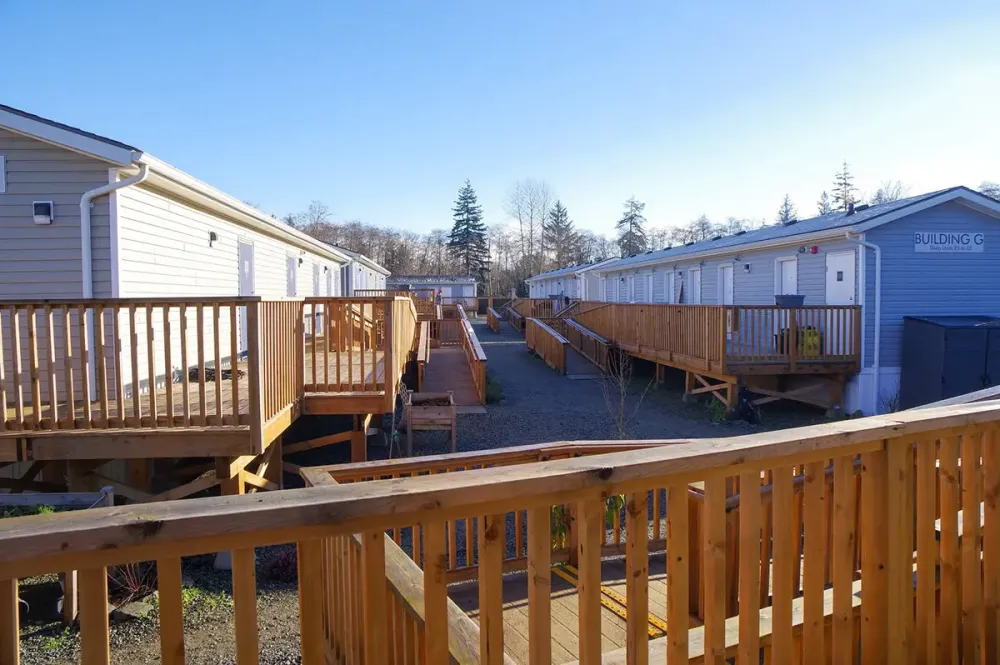
Port Alberni’s safe injection site and a low-barrier tiny home village managed by the Friendship Centre is a short walk down the hill from the Uptown core.
Janine Fraser recently moved from Edmonton, Alberta, to Port Alberni. She is the executive director of Sage Haven Society, a non-profit that provides safety and supports to women and children surviving intimate partner violence that has a bricks and mortar office right in the Uptown area.
On Feb. 28, the community came together for the annual Coldest Night of Year walk and raised over $55,000 for Sage Haven. Doiron participated in the walk alongside 160 other walkers, including local councillors Debbie Haggard, Dustin Dame and Charles Mealy and the NDP’s Gord Johns and Josie Osborne.
“I’m so thankful and grateful,” said Fraser. “The level of participation and generosity that we saw represents an overwhelming success, but it also really speaks to the compassion and the commitment of the Port Alberni community. That’s exactly what I saw when I first moved here.”
She encouraged the community to continue discussions around the Second Avenue supportive housing with the same spirit of humility, compassion and shared humanity they brought to the Coldest Night.
“There is some divisiveness, which is unfortunate. I understand where people are coming from, but at the end of the day, housing is a human right and we know that it’s a social determinant of health,” said Fraser.
“Safe, stable housing is critical foundation. It allows unhoused individuals and families to rebuild those lives with dignity and security,” she said.
Campbell River’s Homewood
Meanwhile in Campbell River, Mayor Kermit Dahl has taken a different approach for people experiencing homelessness by fast-tracking a BC Housing initiative located at 1299 Homewood Road, roughly 25-minutes’ walk from the downtown core.
Homewood was opened in Nov. 2024 after the city forced its community kitchen and drop-in centre Kwesa Place and Hem’?aelas Community Kitchen to close for redevelopment. The refreshed properties will include up to 200 residential rental units, as well as commercial and civic spaces. The city says a minimum of 10 per cent of the residential units will be dedicated to “affordable housing”.
The City of Campbell River also ramped up security patrols of the downtown core and adopted new zoning bylaws that prohibit the use of social care facilities, overdose prevention sites, escort services and massage parlors.
In a 2025 Citizen Satisfaction Survey, 71 per cent of Campbell River residents that took the survey said they felt “neutral, safe, or very safe downtown”, a significant jump from 52 per cent in 2023.
Nearly 600 Port Alberni residents included in an Uptown District revitalization survey conducted in 2020 to 2021 listed “personal safety/security” caused by “addictions/drug use” as the main reason for not visiting downtown or spending more time in the area.
Homewood was originally opened as a 40-unit temporary supportive housing project and has expanded to add eight new units. Funding is provided through the Province’s homeless and encampment response teams and temporary housing solutions (HEART and HEARTH), according to BC Housing.
“Residents of Homewood pay the provincial shelter rate of $500 to rent the private, secure sleeping units,” said BC Housing.
“The City of Campbell River owns the land and is leasing it to the Province for a nominal fee. Lookout Society operates the site. The Province, through BC Housing, has committed operating funding for a minimum of three years,” the statement from BC Housing continued.
Lookout Housing and Health Society
The Homewood site is managed by Lookout Housing and Health Society, which employs Tenant Support Workers (TSWs) on site 24/7. Residents receive hot meals, access to laundry and several support services, including: training for life skills, employment skills, referrals to other community services and access to health supports.
“Direct service staff have a combination of education and prior experience working with vulnerable populations,” said Megan Kriger, director of development for Lookout Housing and Health Society.
“Additionally, they receive training that includes, but is not limited to: First Aid, Non-Violent Crisis Intervention, Trauma-Informed Practice, Cultural Safety, Mental Health First Aid, Respectful Workplace, Medication, and Suicide Prevention,” she said, adding that the safety and security of both tenants and staff is a priority.
“Lookout supports the use of cameras to monitor common and exterior spaces on site, and these are within the other supportive housing sites we operate,” said Kriger.
BC Housing has also contracted Lookout Society to operate Port Alberni’s proposed Second Avenue supportive housing building. Tenants will also be charged the provincial shelter fee.
Drug use is of a particular concern for residents who oppose the Second Avenue project. Both Homewood and Second Avenue are considered “wet housing”, which means tenants are allowed to consume alcohol on-site and use drugs.
“Lookout Housing and Health Society aims to meet people where they are at, to build trust and connect residents with healthcare, rather than turning them away for substance use,” said Kriger.
“Our experience shows that once individuals are out of survival mode and their basic needs are met, they often reduce or stop using altogether. It’s also important to note that these are mixed communities, and many of our residents do not use substances,” Kriger continued.
Jacqueline Spies manages the Homewood site. She has been working in community wellness for over 20 years.
“So far (the location) is positive,” she said. “We are respectful of the businesses around us. Really, it’s just about providing a good environment and getting people that are homeless off the street and giving them an opportunity to move forward.”
“We’ve proven over and over again that it works. It’s just meeting people where they are. Everybody is treated the same. There are people that are active in addictions here. They don’t do it out in the yard. They stick to their room or they go off the property,” said Spies.
Right Place, Right Plan is advocating that the city put restrictions on the lease with BC Housing and to cut the density of the build in half.
“I don’t think it needs to be wet housing. I just don’t. The only way I think wet housing can work is if there are definite rules and support in the building and good management. I even think there should be a curfew on the door,” said Doiron.
In 2023, a 16-room supportive housing facility managed by Lookout Society made headlines when a 28-year-old man died from an overdose – and wasn’t discovered for five days.
“That was the most difficult thing I’ve ever gone through in my life,” said the man’s father Erick Soestmeyer in an interview with Global News.
“They shouldn’t have left him alone, especially in a room full of drug stuff. There was meth pipes all over. There was needles all over,” he said.
Fraser reminds us that no one grows up with the hope that one day, they will be an addict.
“There is always something behind it. These people come with trauma,” said Fraser.
In effort to gather more information and understand the impacts of low-barrier housing on surrounding neighbourhoods, Port Alberni mayor and council are planning to tour supportive housing sites around the Island.