In the wake of a call from the provincial health officer for stronger regulations to curb drinking in British Columbia, Nuu-chah-nulth leaders are stressing the urgency to address alcohol abuse in their communities.
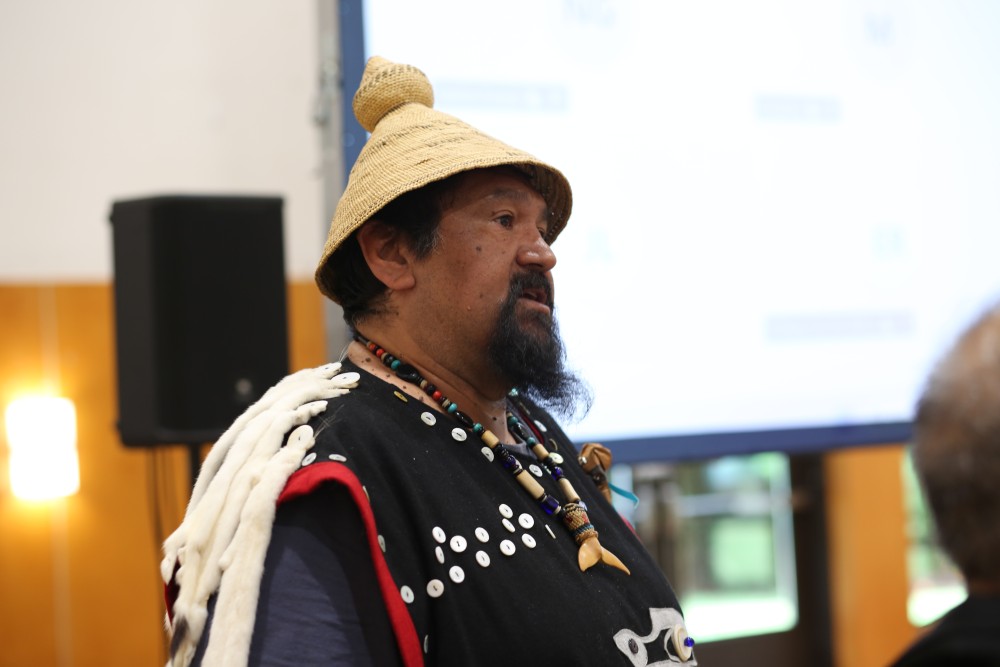
“The weight is coming down on us,” said Hasheukumiss, Ahousaht’s acting Tyee Ha’wilth, on June 2, after his on-reserve community suffered two alcohol-related deaths in one week, including the passing of a 25-year-old member from liver failure.
He noted that a cemetery Ahousaht opened less than a decade ago is now full, with many burials of young people lost due to alcohol-related issues.
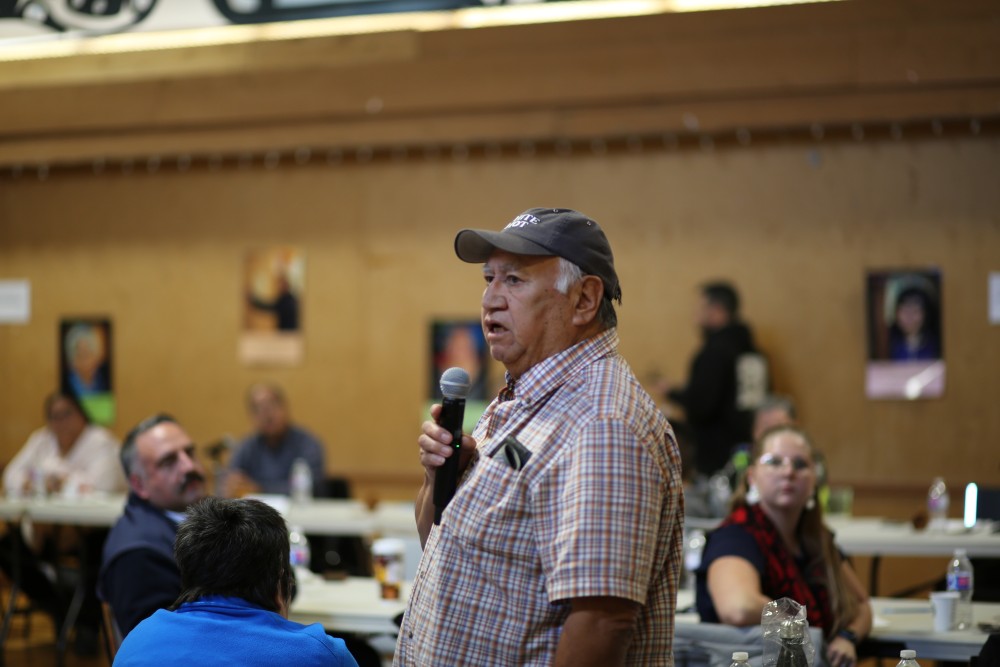
“We have to do something,” said Nuchatlaht Councillor Archie Little, who joined the chorus of concerns at the beginning of a Nuu-chah-nulth Council of Ha’wiih Forum on Fisheries. “We’re killing our young people, we’re killing our fishermen. Pretty soon this table won’t be here.”
The fisheries forum was hosted in Port Alberni on June 2-3 by the Hupacasath First Nation. As delegates shared concerns over how alcohol continues to affect their respective communities, Hupacasath Ha’wilth Alton Watts expressed the frustration of regularly seeing open drinking and drug use on Port Alberni’s main streets.
“There’s absolutely no policing left around here,” said the hereditary chief. “You can sit there and watch people shoot up, smoke their crack, it’s all right out there for everybody to see.”
Approximately 1,000 people live in Ahousaht’s village of Maaqtusiis, which is located on Flores Island, a 45-minute boat ride from Tofino. Over 20 years ago the First Nation passed a bylaw prohibiting alcohol from being brought into the reserve community, but enforcement proved to be a challenge, and binge drinking persisted.
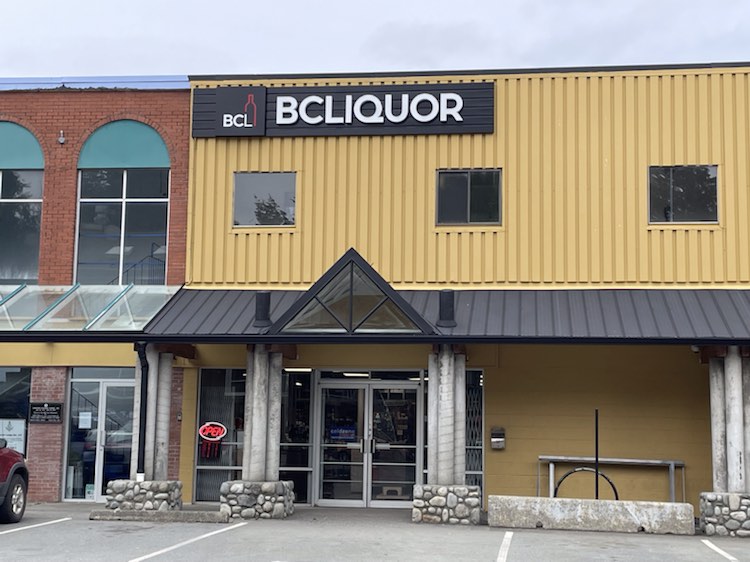
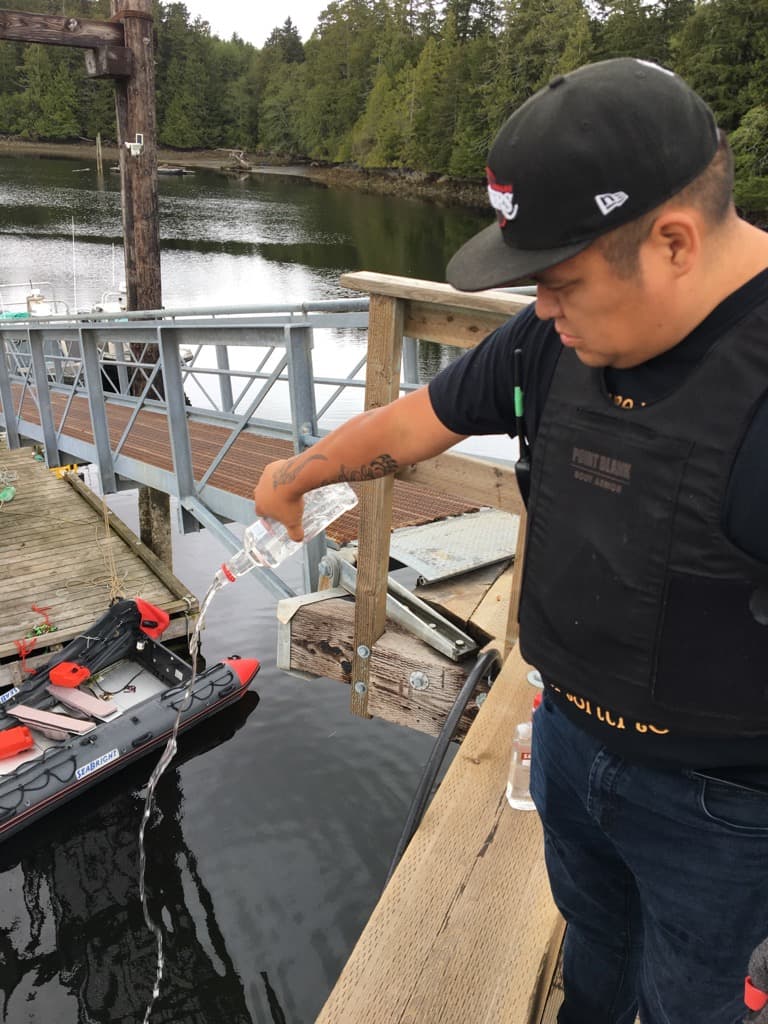
Bootlegging has continued to be a concern – particularly plastic vodka bottles that are known locally as “red cap”. In 2024 Hasheukumiss brought the issue to the provincial government, resulting in a limit for Tofino’s government-owned BC Liquor Store. The retailer now restricts purchases to no more than four liquor bottles at a time if they are sold in plastic containers.
“It didn’t really solve our situation, but it slowed it down,” said Hasheukumiss, noting that bootleggers have continued to stock up on 26-ounce bottles purchased from Ucluelet, Port Alberni and Nanaimo. “There’s four cases every Friday purchased by four different people. These are 26ers.”
Hasheukumiss wants a B.C.- wide restriction on the number of liquor bottles that someone can purchase.
“Whether it be Indigenous or non-Indigenous, there’s a lot of hurt going on,” said the chief. “It’s not just the Indigenous that are going through this, it’s a coast-wide non-Indigenous issue.”
These comments come one week after a report was released on B.C.’s drinking habits by the office of Dr. Bonnie Henry, the provincial health officer. At an average of 8.8 standard drinks a week, alcohol use is actually at a 20-year low in the province, a decline from when it peaked at 10 drinks a week in 2021 at the height of the COVID-19 pandemic. The most recent average is based on data from 2024.
But B.C. residents are drinking more than the Canadian average of 8.8 per week, while Vancouver Islanders are having just over 10 alcoholic beverages in a typical seven-day period, according to the report. Senior men are the age group consuming the most with 15 drinks a week on average, while those aged 18 to 34 are drinking less alcohol with eight drinks. However, the report notes that those under 50 are more likely than seniors to binge drink, which is five in one sitting for males and four for females. Almost one quarter of those under 50 reported consuming this much at least once a month over the previous year.
Henry’s report estimates that alcohol use led to six per cent of B.C.’s deaths in 2023, with the leading causes being cardiovascular conditions, cancer and unintended injuries. The document recommends a provincial alcohol strategy, shifting to minimum unit pricing that better reflects the alcohol content in drinks, warning labels on beverages, an awareness campaign and stronger intervention from the health care system for those with an alcohol use disorder.
The report notes that Indigenous people “face disproportionate harms related to alcohol”, although no data is presented to back up this statement. Instead, multiple advocacy calls are listed from Aboriginal organizations, including a 2023 resolution from the B.C. Assembly of First Nations to “reduce alcohol-related harms”.
Several Nuu-chah-nulth nations are in the Alberni-Clayoquot health area, which spans from the Alberni valley to the west coast, from Bamfield to Hesquiaht. In 2023 residents in this region consumed the equivalent of 13.6 litres of pure alcohol – more than the B.C. average of 8.6 litres, according to Island Health, and in 2019 Alberni-Clayoquot had double the rate of alcohol-related hospital admissions than the rest of the province.
During the recent fisheries meeting Hesquiaht Councillor Kayla Lucas stressed that “Alcohol and drug abuse is a symptom of trauma.”
“It can’t just happen overnight, we need to get to the root,” she said on approaches to treatment. “We need to look at that person, what hurt them?”
“It’s now time to sit with out people and give them a compassionate ear, get them away from the chaos that’s going on,” added Hasheukumiss.
Hesquiaht elder Tim Paul shared the struggles of his son, who he lost just two weeks previously at the age of 47 due to an alcohol-related health condition. Despite his struggles, Paul said that Tom never stopped trying to quit.
“’I accept what you are’,” recalled Paul saying to his son. “’You’re an alcoholic and I accept that, but you’re my son’.”
“I knew clearly that his life was limited in years in how he conducted himself,” he added.
With the hope of not losing more Nuu-chah-nulth-aht to alcohol, Paul announced the need for a cultural gathering in the fall, something that was supported by other leaders at the fisheries meeting.
“We need to get together in ceremony, to celebrate, to sing our songs to bring ourselves up,” said Paul. “We need to step into our grandfathers’ way of doing things. We never let go of any of our children, any of our young people until they’re well.”