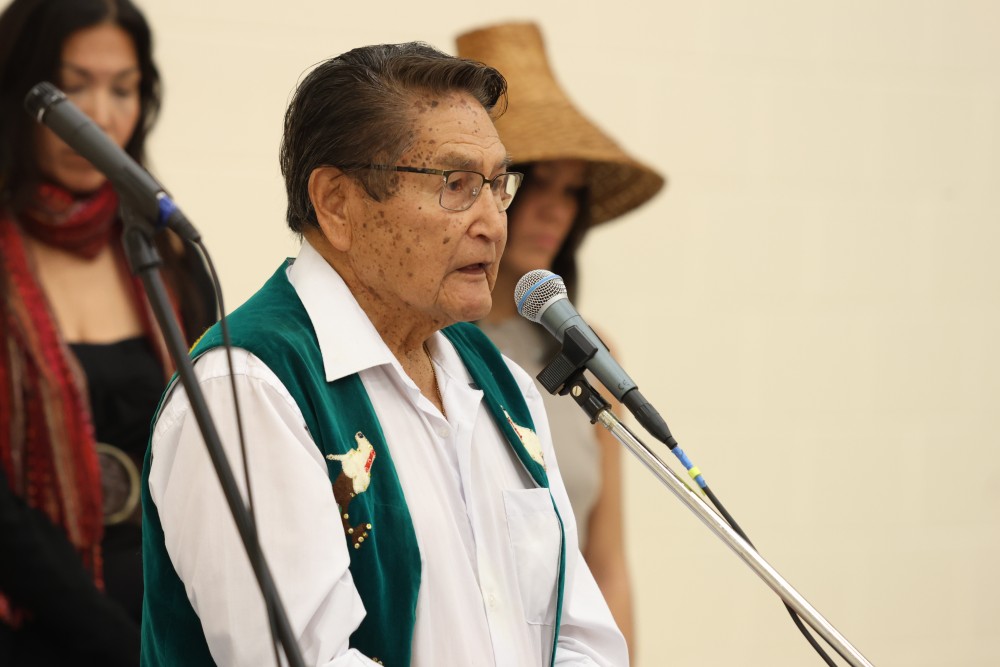
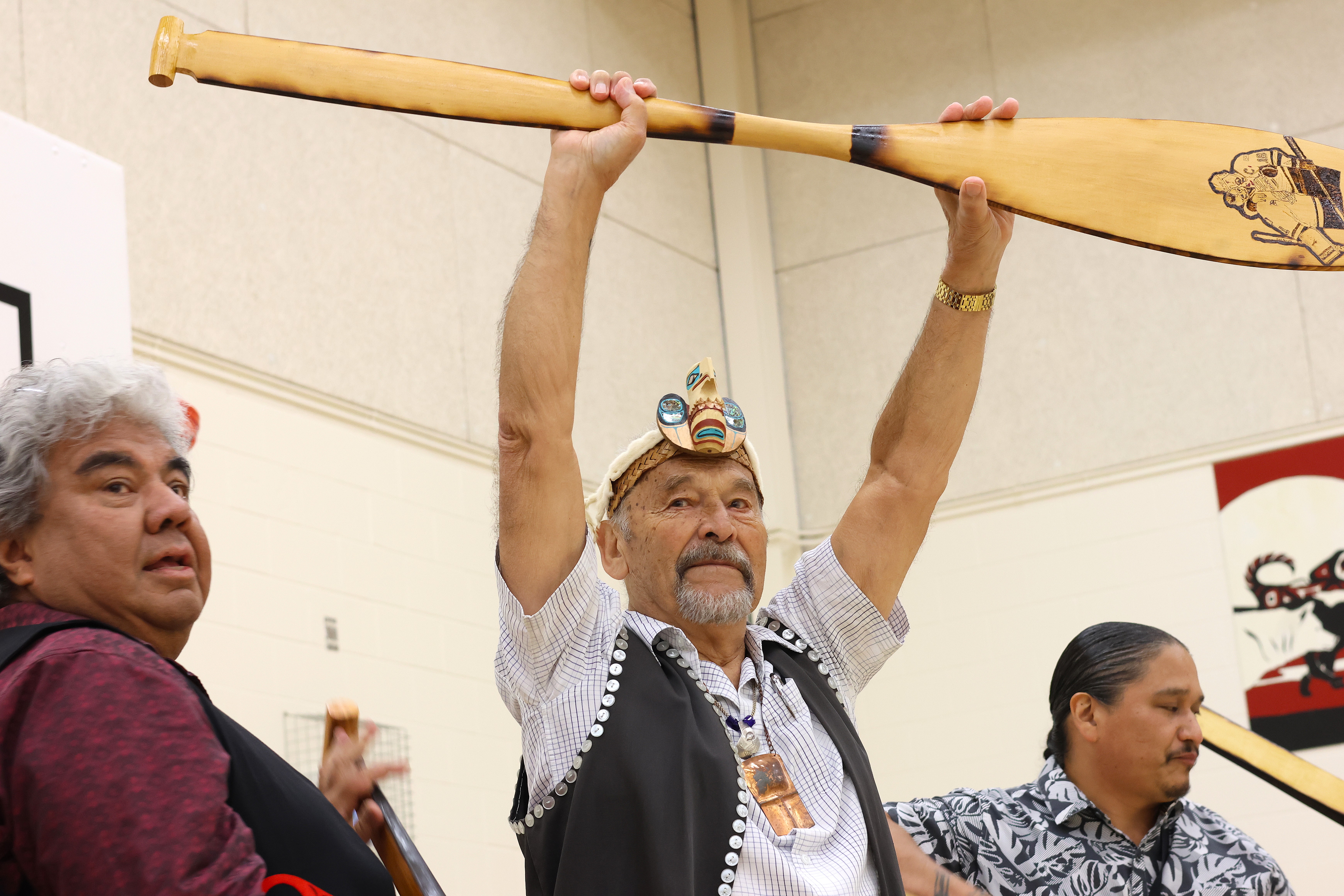
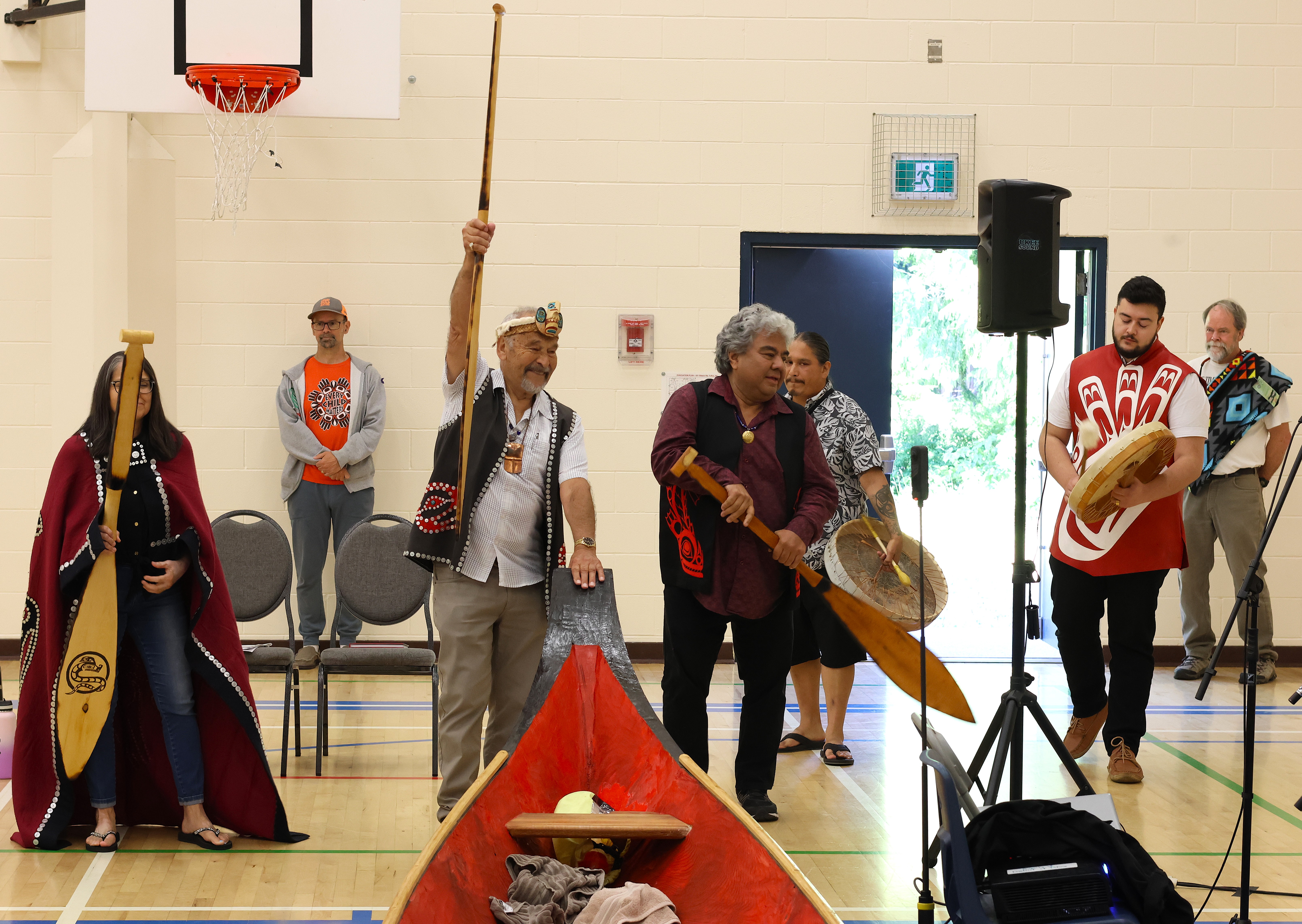
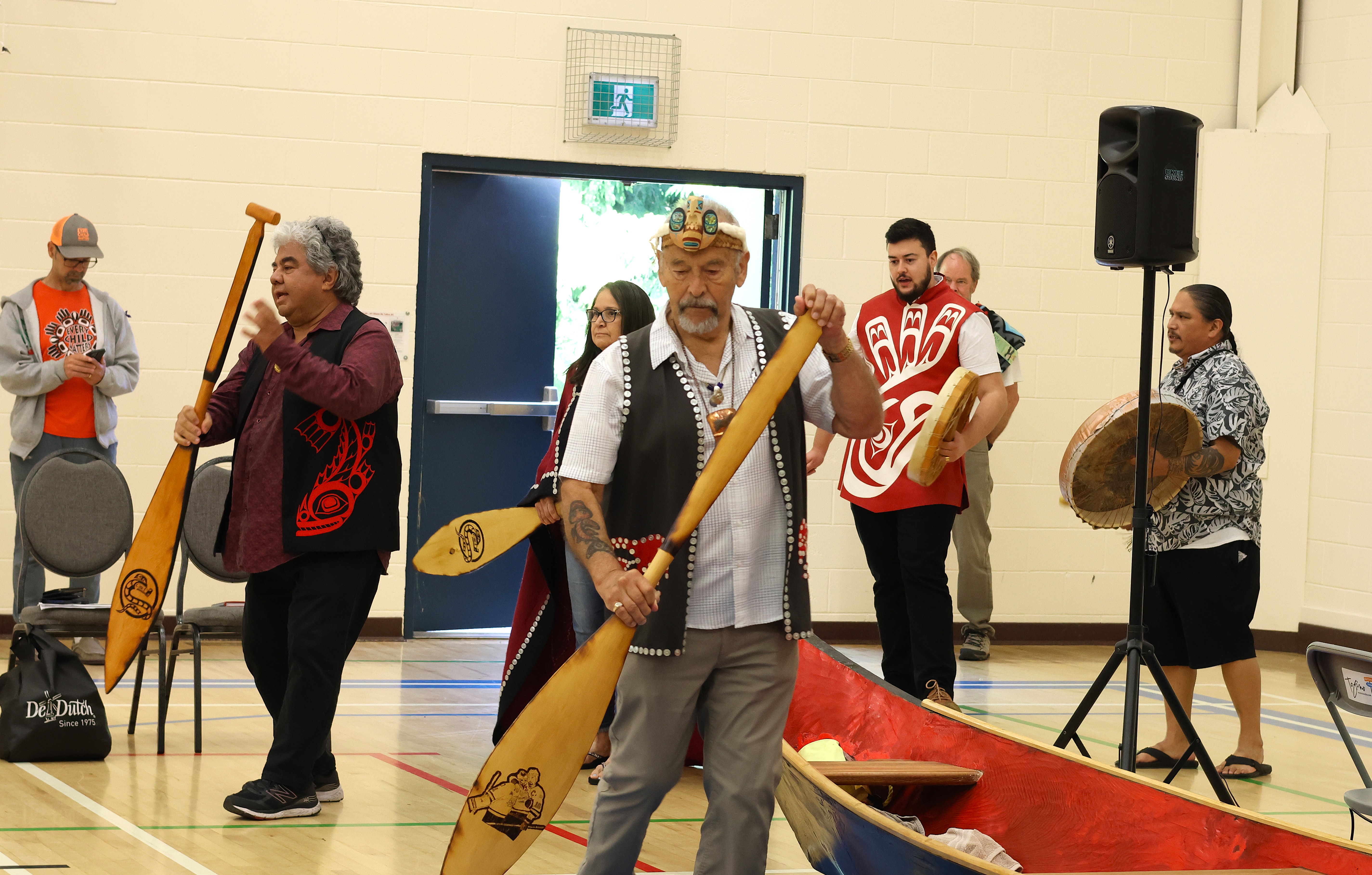
Wearing the same green velvet vest he wore 43 years ago when he took a stand against forestry companies from harvesting the old trees on Meares Island (Wanačas Hiłḥuuʔis), former elected Tla-o-qui-aht chief Moses Martin was excited to share June 21, National Indigenous Peoples Day, with so many friends, families and First Nations who joined him in the fight.
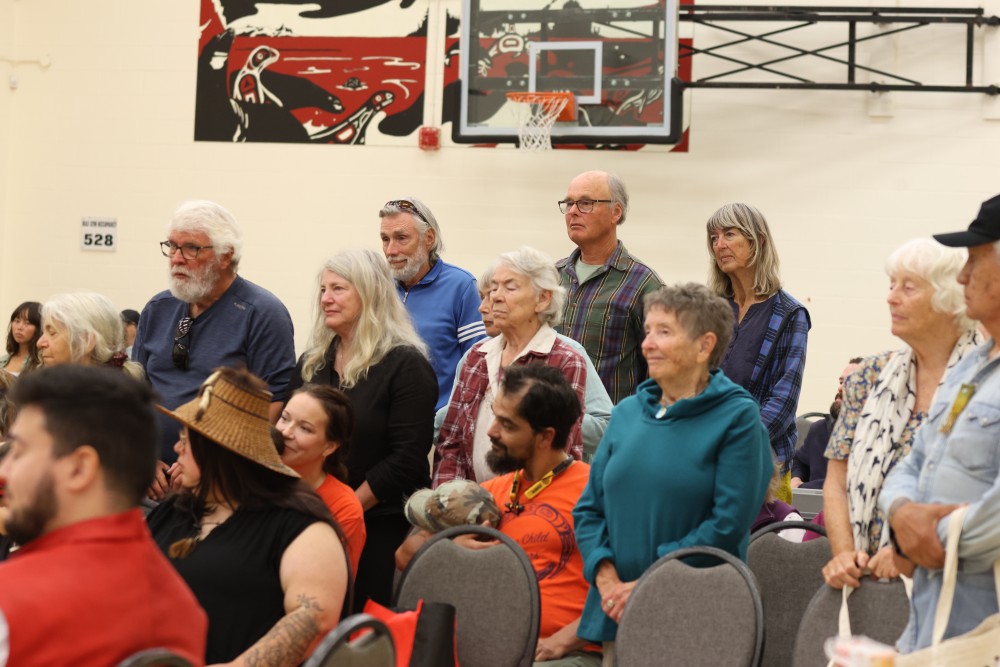
“We didn’t do it alone,” he said, inviting individuals who were there in 1984 to stand up and accept a thunder of applause from the crowd gathered at Tofino’s Wickaninnish Community School.
“Thank you all so much for being here today. Continue to be strong. We find ourselves facing the same struggle as before. Now, we face another challenge with the mining,” he said.
In February 2026, the B.C. provincial government renewed mineral exploration permits to Imperial Metals to dig for goldwithin the Tla-o-qui-aht Trabal Parks – against the wishes of the First Nation.
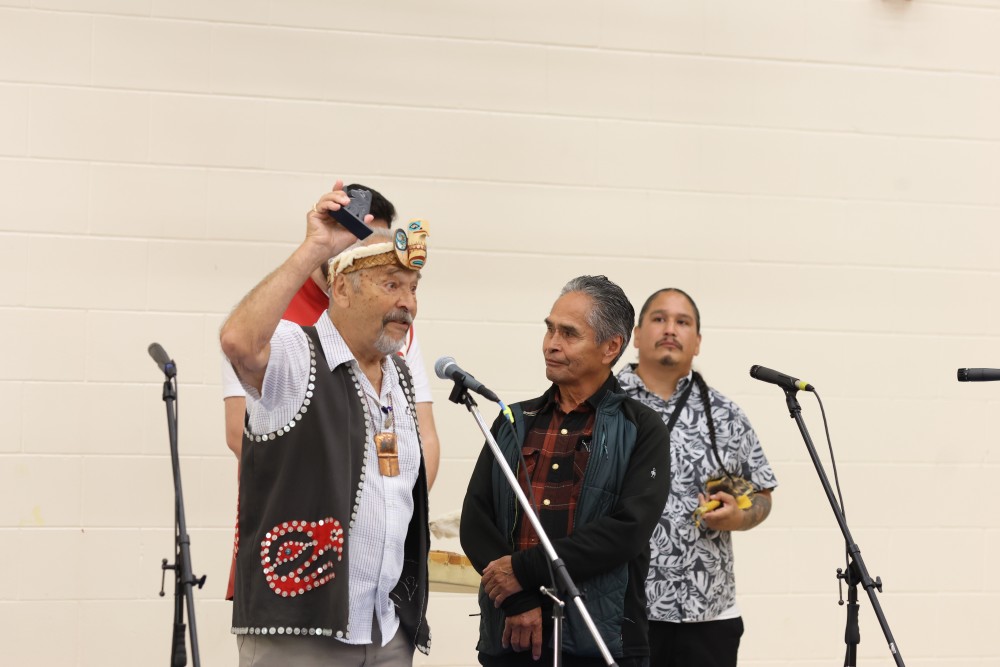
Miles Richardson, who was president of the Haida Nation during the Clayoquot logging protests, stood with Tla-o-qui-aht in 1984 when they made the Meares Island Tribal Park Declaration. He spoke on behalf of the Haida delegation on June 21, expressing their continued support and admiration to Tla-o-qui-aht.
Moses honoured Richardson with a beautiful cedar canoe, carved by his nephew Joe Martin and finished by his son Mike.
“When we made the Meares Island Tribal Park Declaration in April 1984, Miles and many of his community members joined us in this gym to witness and support us on that momentous day. And because that day was so busy and so huge, I forgot to acknowledge and thank them,” said Moses.
“Canoes have carried our people and our treasures in and out of each other’s homes for over 10,000 years. For you and for your people, this one carries our apologies and our gratitude,” he said.
Richardson said they would proudly paddle her home to Haida Gwaii.
“It’s important to go forward together, shoulder to shoulder, into the future united,” said Richardson. “We are standing on the shoulders of those who came before us and there are other generations who are going to come behind us that are going to need the clarity that we lived.”
“In many senses you have built a canoe for the young ones; for future generations. It’s going to help shine light on the changes we need to make as humankind so that we can properly deal with the challenges of climate change and biodiversity loss,” he said.
Haida delegate Derek Edenshaw spoke on behalf of Haida Hereditary Chief Guujaaw.
“Unfortunately, the fight is not over. There are more fights to happen on the water. That ocean that we look at, that we share, that ocean is affecting our villages. That high tide mark is getting higher,” said Edenshaw.
“We have to remind human beings on how to be human beings again and how to live with Mother Earth. I’m really grateful for the steps that everybody took in Meares Island and Moresby, but that was 1980. Now we have to take more steps to protect the water,” he said on behalf of Guujaaw.
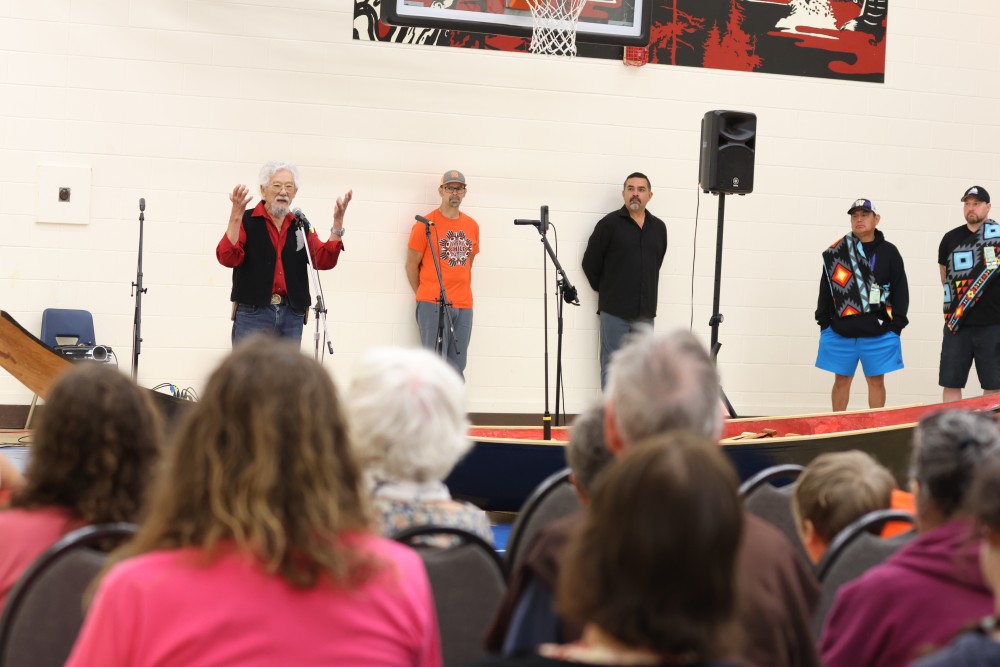
Canadian icon and lifelong environmental activist Dr. David Suzuki sat with the Haida delegation during the National Indigenous Peoples Day gathering. Suzuki’s family was married into the Haida Nation. He was invited to the microphone during the event.
“I’m just so grateful to you here and the fight over your land and what the Haida had done. In struggling to protect that land, you are sharing with us the way that you see your relationship with earth, and that is filled with responsibility,” said Suzuki.
“If we are the recipients of the generosity of Mother Earth, we have a responsibility that must come before everything else to ensure that it is passed on to future generations. So, I thank you, the Haida, for setting an example and I thank you for following that,” he said.
Carla Moss, Moses’s wife, honoured the women who participated in the Clayoquot logging blockades.
“At times, systemic violence was directed at mothers. We heard, you were threatened to lose children if you went to the blockade lines,” said Carla.
Joined by Tla-o-qui-aht women, Carla led a song called Treasuring Our Children. The song is sung to small children and babies to express love.
June 21 was also the summer solstice and Father’s Day.
“Because it is Father’s Day, I want to thank all the men and the men from past generations for upholding our potlatch laws,” said Gisele Martin, who is the daughter of carver Joe.
She wished the Haida delegates smooth sailing.
“There is a lot of spirit in these canoes. These canoes are incredible allies and friends. I hope the spirit of our ancestors continue in your work on Haida Gwaii,” said Gisele.