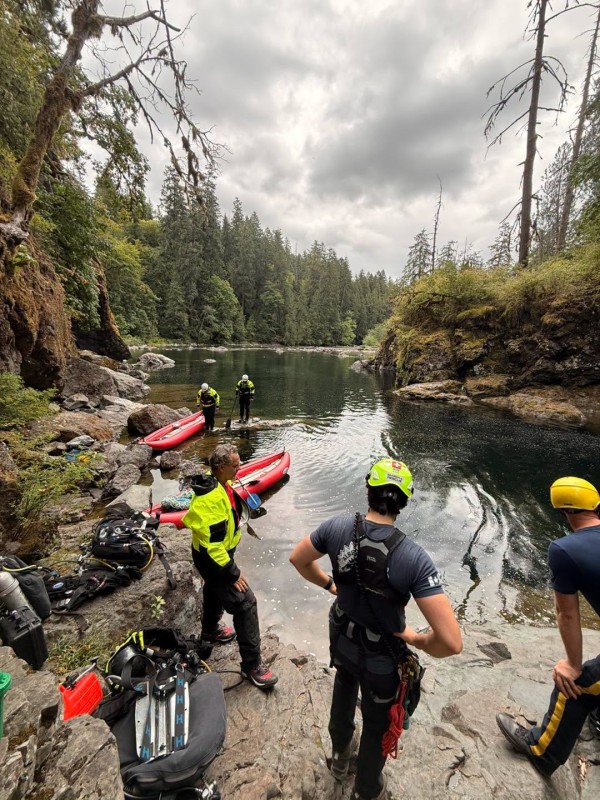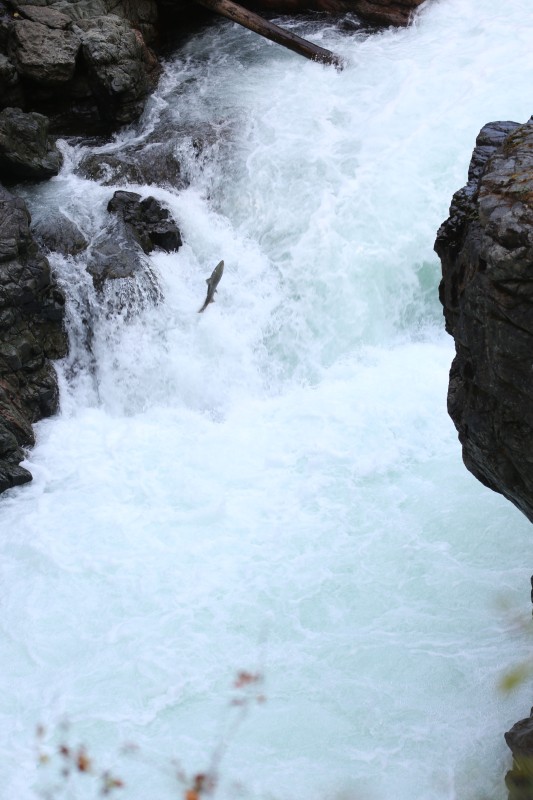
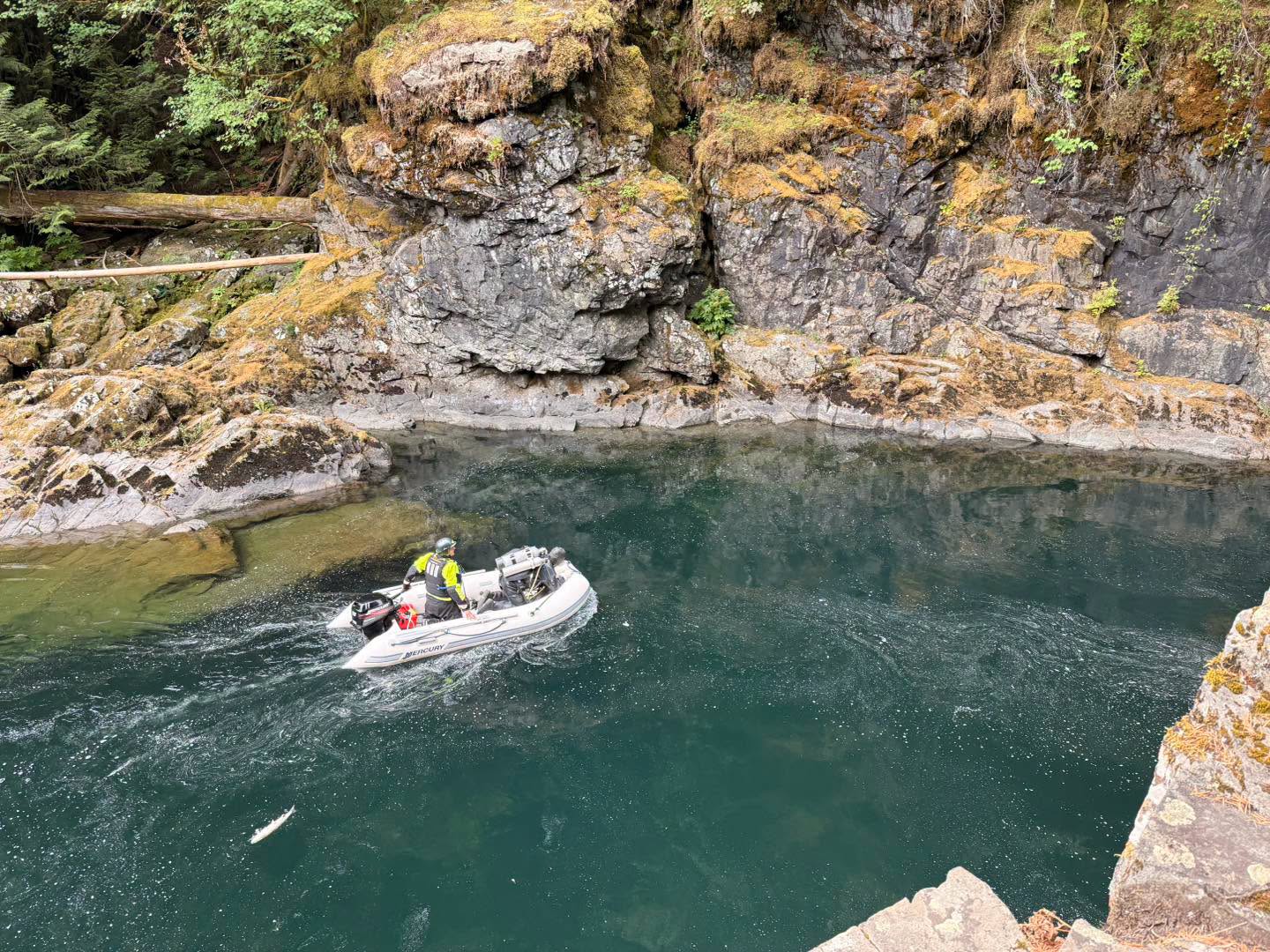
On July 9 search efforts for the missing swimmer who went over Stamp Falls were paused. Tragically, the female swimmer was swept away by the current when swimming at Stamp River Provincial Park near Port Alberni on Sunday, July 5.
“[July 10] was an incredibly difficult day for everyone involved, as search efforts are being paused for the time being,” reads a post on Alberni Valley Rescue Squad’s Facebook page. “Most importantly our thoughts are with the family and loved ones affected by this tragedy. We cannot imagine what they are going through and we are holding them in our thoughts during this devastating time.”
The swimmer was originally reported missing at 5:30 p.m. on July 5. Emergency responders conducted a search, but have not located her, according to Port Alberni RCMP.
The Rescue Squad’s post went on to acknowledge Arrowsmith Search and Rescue, RCMP Dive Team, Port Alberni Fire Department, Beaver Creek Volunteer Fire Department, [BC Emergency Health Services], Airspan, and the RCMP for supporting the search.
“We are also deeply grateful to every search and rescue volunteer who responded with professionalism, compassion, and teamwork,” the post reads. “Incidents like this have significant impact on responders and we are reminded of the importance of CISM, peer support and taking time to debrief and care for one another during difficult calls.”
“We’ve seen the news articles and are very concerned for this woman and her loved ones,” said Lenea Grace, executive director of the Lifesaving Society’s BC/YK Branch, in an interview with Ha-Shilth-Sa. “I think that the young people in this group had placed themselves in a dangerous situation.”
“Unfortunately people often overestimate their abilities or they underestimate the power and the hazard of moving water,” she said. “It creates a very unsafe environment. Our hearts are really going out for this person's family.”
Grace shared that though there are still some unconfirmed drowning fatalities, like with the situation at Stamp Falls, 2026 has so far seen 29 deaths in B.C. this year. The year before there were 21 drowning deaths.
“[Lifesaving Society’s] mission is to prevent drowning and aquatic related injury,” said Grace. “This is critical especially this year as we’ve seen an alarming spike in the number of drownings in British Columbia.”
According to Lifesaving Society B.C./YK branch, 37 per cent of drownings happen in rivers, 24 per cent in lakes and ponds, and 14 per cent in the ocean. Sixty-one per cent of drownings happen between the months of May through to September.
Grace advised that people choose swimming spots that are supervised by lifeguards, and to swim and boat with a buddy. Parents are advised to actively supervise their children, to keep small ones within arms reach, look for natural hazards such as steep drop offs and to stay close to shore.
“But when you are assessing your swim spot, is it an area that is commonly swam at?” Grace said. “Make sure you are not swimming in areas where there are warnings issued against swimming at that beach [or] park.”
“Avoid swimming in waterfalls or rivers that may have currents or other hazards,” she said. “One example of that could be a strainer, which is a log in the water that you could get caught under or different pockets that can suck you in.”
“Studies show that many people who drown never had the intention of going in the water in the first place,” she added.
Starting on July 19, it is National Drowning Prevention Week. Lifesaving Society Branch BC/YK will be sharing water safety messaging throughout the week on their website, www.lifesaving.bc.ca/
The number one tip that Lifesaving Society B.C./YK branch is advising for this year is to wear a lifejacket when boating.
“That goes for all ages [and] all abilities, whether you are on a power boat, a kayak, a canoe, or a paddle board, wear your life jacket,” Grace said. “If you do get into trouble, seconds can matter and that life jacket can mean the difference between life and death.”
“We want them to keep themselves and their loved ones safe on the water,” she said. “Drowning is preventable and there are steps people can take to protect themselves.”