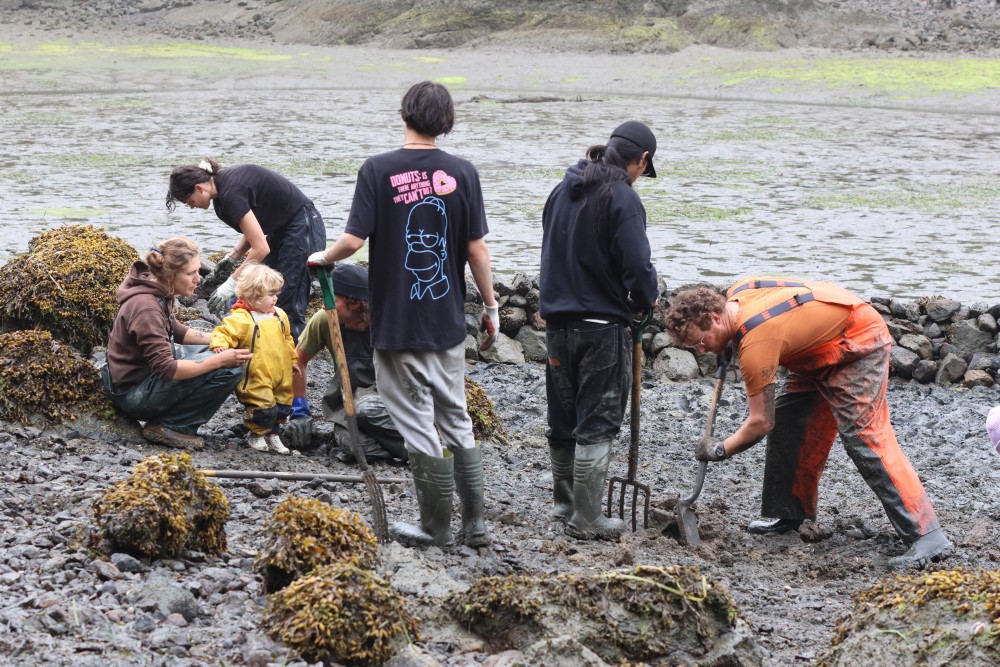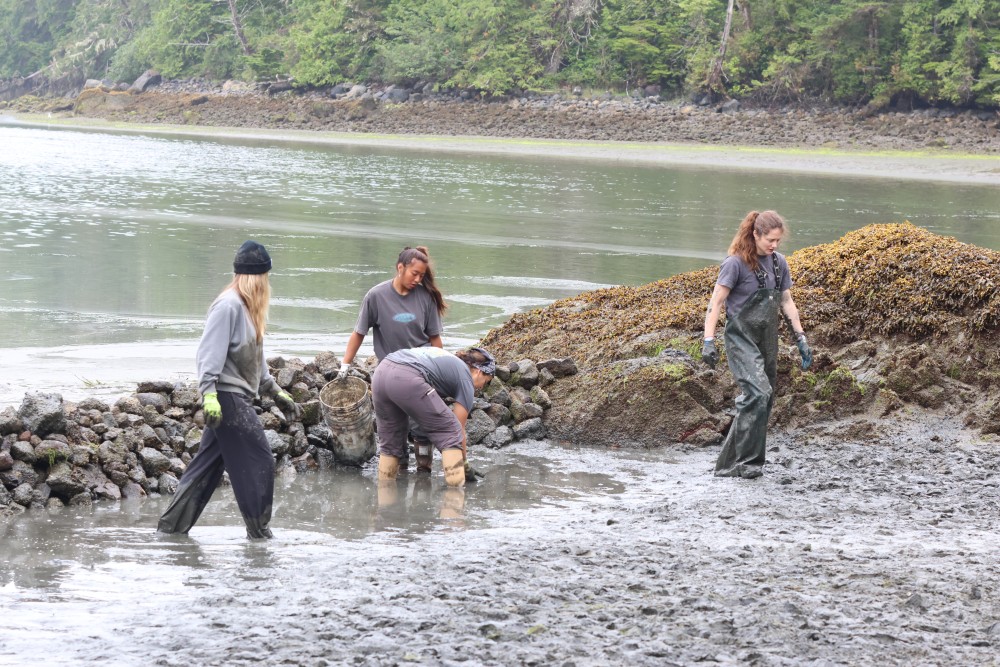
The volunteers showed up on time and in gumboots at Tofino’s First Street Dock for a 7 a.m. boat ride.
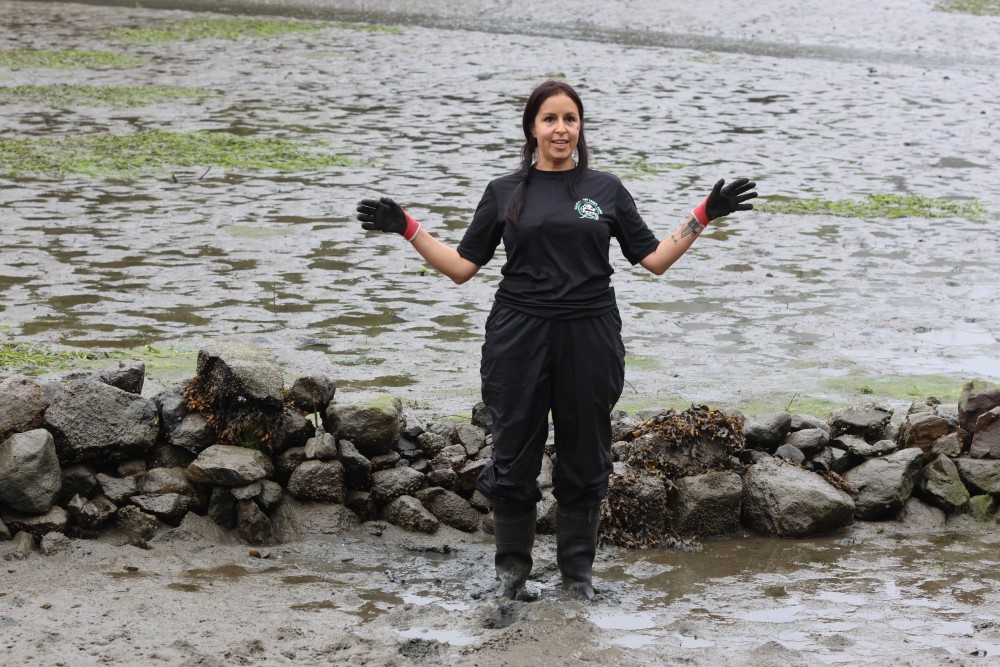
After the Tofino Water Taxi dropped the humble group at the special location in Clayoquot Sound, Tla-o-qui-aht First Nation sisters Gisele and Tsimka Martin welcomed the 25 or so participants to their territory and thanked them for helping build the rock wall that would form a clam garden.
Historically, rock walls, or arches as they are often called, represent an ancient system of mariculture in Nuu-chah-nulth First Nations culture. The rock walls help retain the clam spawn, which increases clam productivity.
Over the past few years, the Nuu-chah-nulth Youth Warrior Family Society alongside Tla-o-qui-aht Tribal Park Guardians have been developing clam gardens throughout coastal Vancouver Island to support food security.
Tla-o-qui-aht’s village of Opitsaht, which is located across the harbour from Tofino, used to have over 200 longhouses, each home about 50 to 100 people, Gisele told the volunteers.
“I’ve heard that the land was so wealthy we only had to work two or three days a week and the rest of the time was for spirituality, art and ceremony,” said Gisele.
Opitsaht’s village was burned down in 1791-92 by American Captain Robert Gray. The smallpox epidemic would later decimate Tla-o-qui-aht’s population.
Gisele shared with the volunteers that’s why she often feels “overwhelmed” by the amount of work there is to do; that it feels like she’s working the job of three or four people.
“We all need the help, and the clams need the help,” said Gisele.
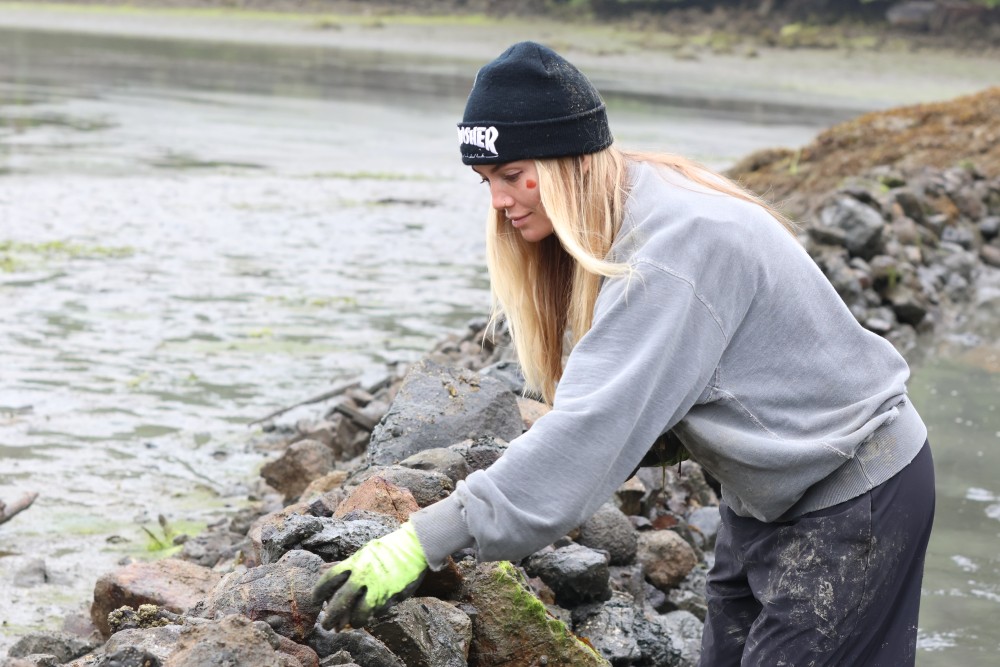
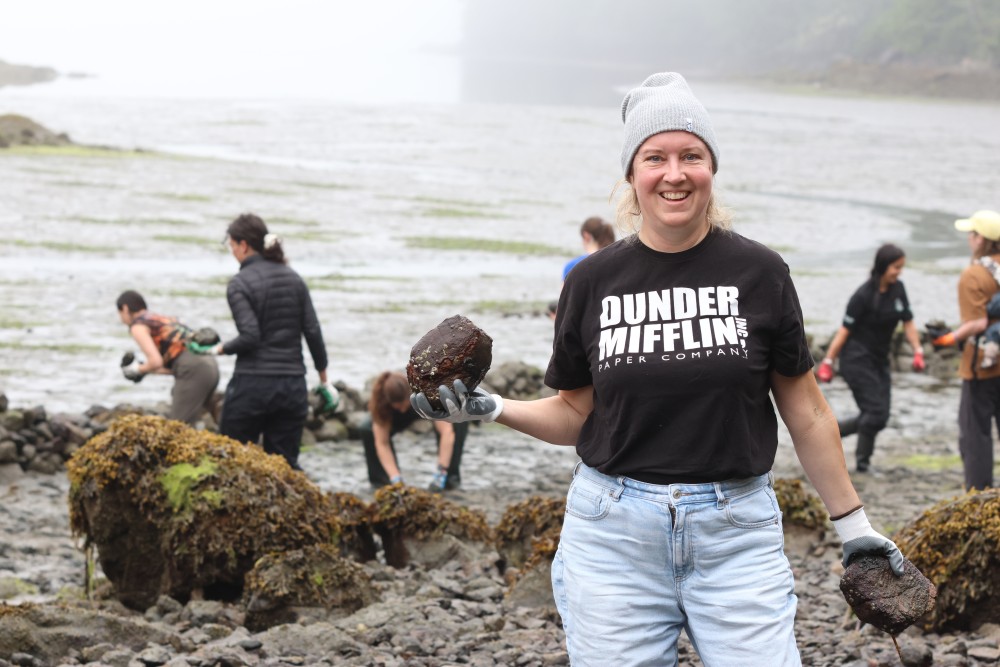
Working with a low summer tide, the volunteers spent the next couple of hours constructing the rock wall within the intertidal zone of the special location. Some used shovels to dig out rocks from inside the wall to create space for the clams to breathe.
Tourism Tofino’s brand manager Samantha Fyleris joined the mid-August clam gardening volunteer group.
“I’d like to do it again. You can see the results,” said Fyleris.
“I learned a lot about the history of Tla-o-qui-aht and how these gardens used to be very plentiful because people were consistently taking care of them. That’s coming back ever so slowly with the help of everyone who can help,” she said.
Regenerative tourism is a concept that involves restoring ecosystems for future generations to enjoy. In 2025, Tourism Tofino launched a destination stewardship plan, in partnership with Tla-o-qui-aht First Nation and the District of Tofino, that embraces this concept of giving back to the environment.
Tourism Tofino’s stewardship plan called 'ʔiisaak - Tofino Stands For Respect' aims to transform Tofino into a “beacon of respect” and imagines a future where “Tofino is a living example of Indigenous environmental leadership for the world to follow.”
Tourism Tofino’s goal is by 2030, every visitor, resident and business will take the ʔiisaak Pledge.
The ʔiisaak Pledge introduces four Tla-o-qui-aht teachings and laws that have helped protect and shape this beautiful place, the haḥuułi (Territory) of the Tla-o-qui-aht ḥaw̓iiḥ (Hereditary Chiefs), and its people over many generations.
Europeans Ondrej and Anna Sebestik planned their visit to Tofino around the clam gardening morning with Gisele and Tsimka. Stationed in Whistler, the Czech Republic couple said they’re nearing the tail end of a working holiday visa that expires in October.
“We wanted to be part of something real, of a community, and also to help make this habitat real. Because as a tourist, I don’t know, I don’t feel that good as just a tourist on specifically on sites like Tofino there are a lot of people, and you see there could be a potential damage,” said Ondrej.
“To be able to maybe help to grow something is interesting and it’s more real than just like wandering around and having a good sight and that’s it. So, this is for us is probably a good way how to participate and be part of something real,” he continued.
“It’s an amazing place. It was so interesting to see all of the people come here and make such a big difference just within a couple of hours,” Anna said.
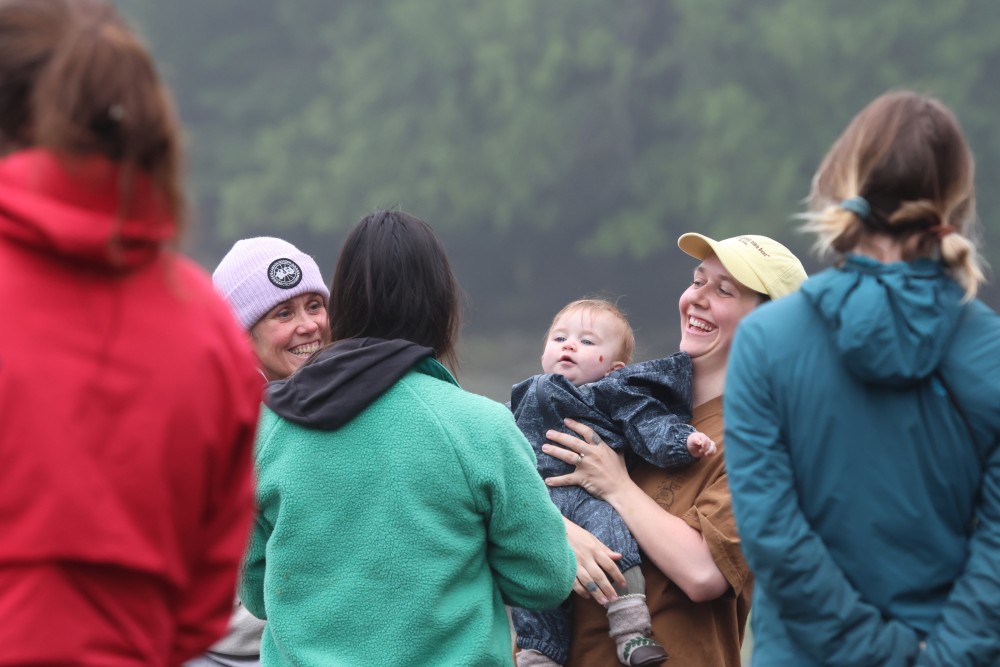
Carrying her eight-month-old baby girl Mazzy on her back as she placed rocks along the arch, Rachel Leghissa said the clam gardening experience gave her a new understanding of the local ecosystem.
“I had no idea that clam gardens were even a thing, so to be able to see it in person and really understand their environment is really, really cool,” said Leghissa.
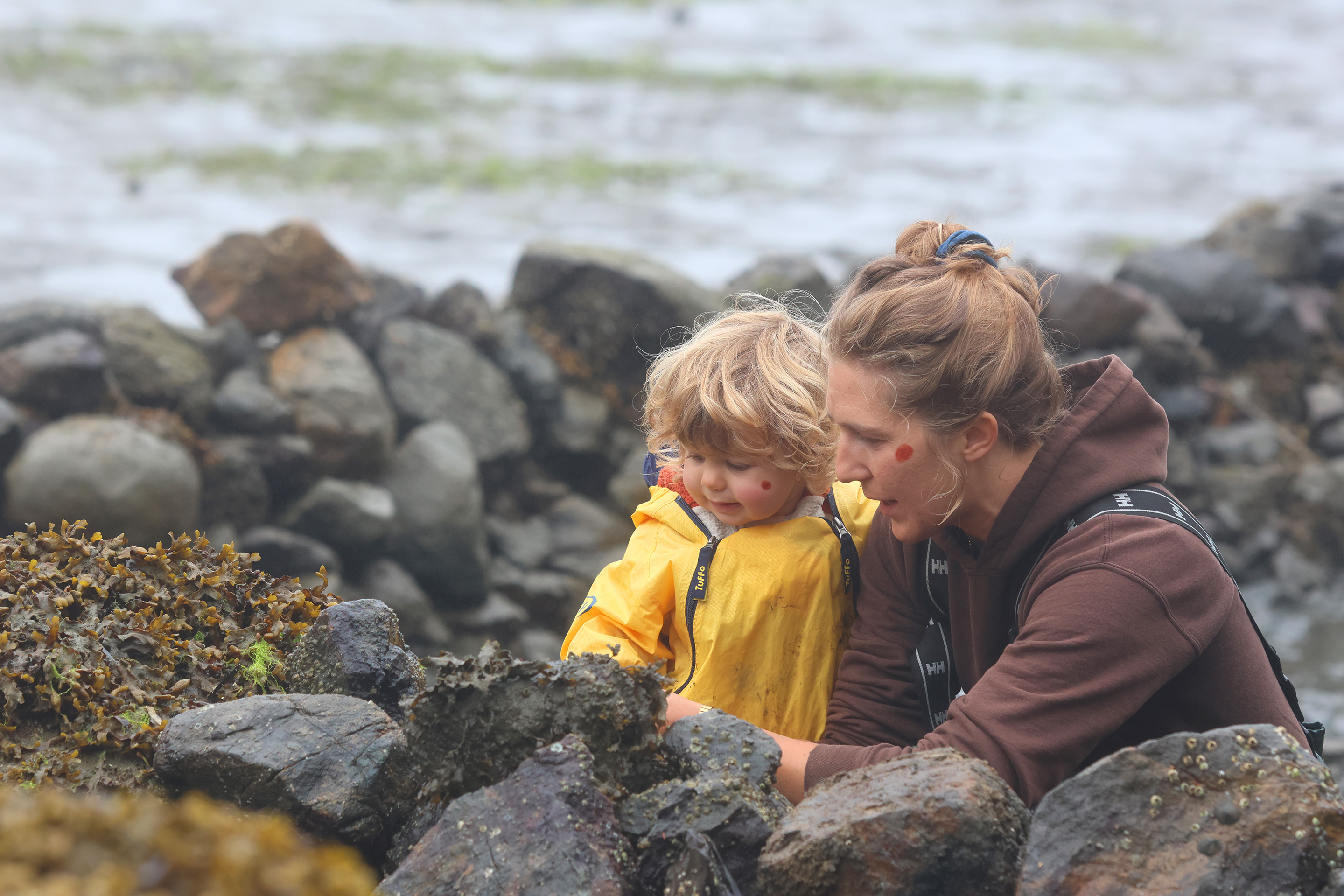
“Seeing all the different animals that are here, the crabs, shrimps, and understanding that this is going to make a difference with climate change and food security, is really interesting,” she said.
Leghissa loved having her baby along for the ride.
“I can tell her one day that she participated in restoration of the clam gardens. It was great having my mom here as well; three generations of women,” said Leghissa.
Thanks to favourable tides, the August clam gardening experience was a unique addition to the annual Tla-o-qui-aht Days schedule of events. It was free to participate and Surfrider Foundation Canada provided snacks.