
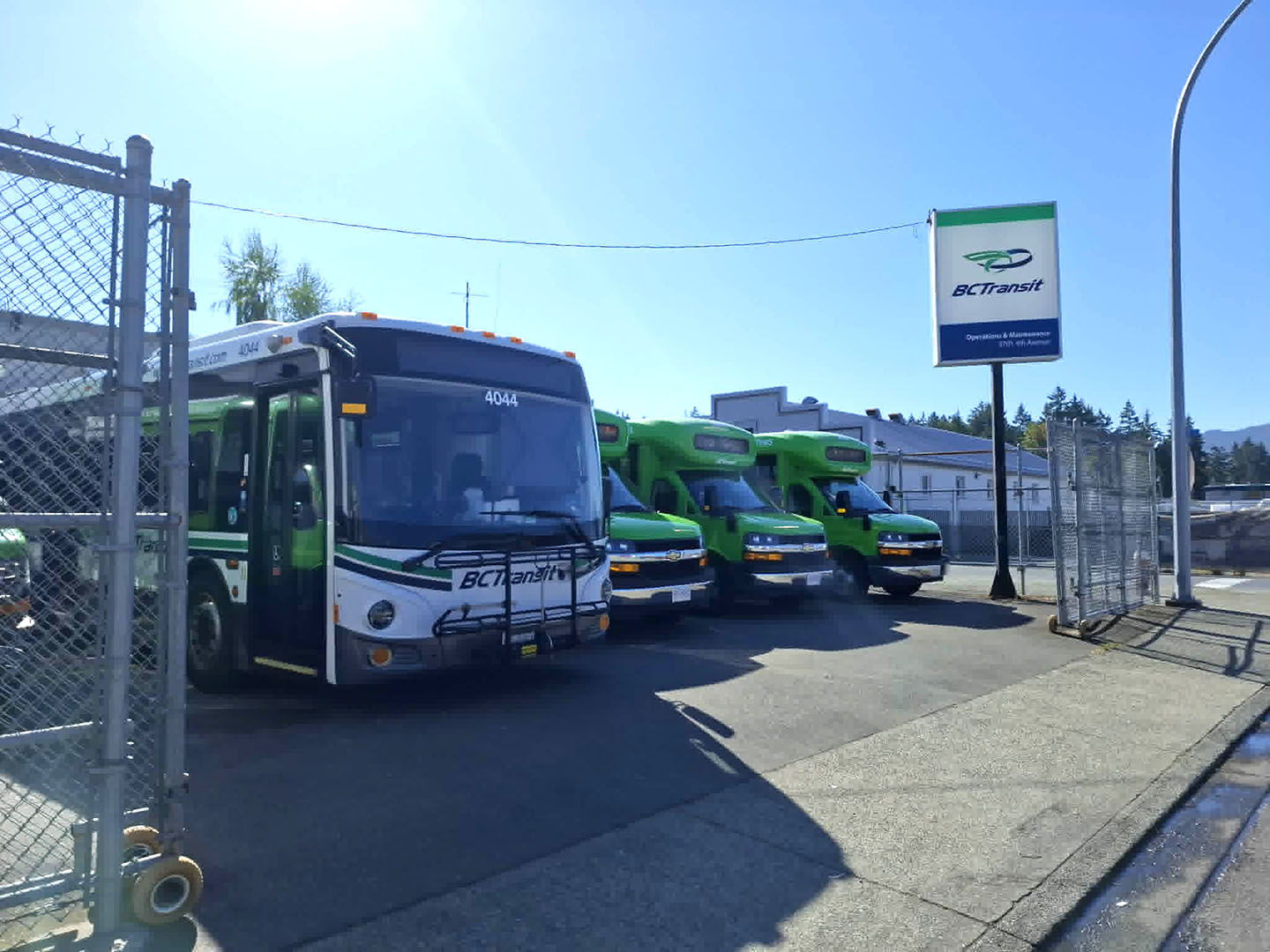
BC Transit has announced plans to replace the five medium-duty buses that currently serve Port Alberni, with new light duty models. Starting with two later this month, the rollout is expected to have the entire fleet replaced by late fall.
An overall reduction in operational costs, such as greater availability of replacement parts for maintenance and reduced fuel expenses, are motivating factors behind the decision. Tessa Humphries, speaking as a representative for BC Transit, explained.
“BC Transit regularly reviews fleet requirements to ensure each community has the right type of bus for its service needs,” she said. “Following a 2025 assessment of our medium-duty fleet, we found that the market for new medium-duty buses is no longer viable. Continuing to purchase medium-duty buses would introduce significant risks related to services, cost, and long-term support.”
Ease of maintenance and repair, reducing downtime and service interruptions are a net-positive for the residents of Port Alberni, however the updated light-duty models have a seating capacity of only 18 passengers. Some critics question the strain from smaller buses will have on a community that is reliant on public transit for day-to-day living.
“The replacement assessment for Port Alberni considered several factors, including ridership levels, passenger demand, operating conditions, road infrastructure, maintenance requirements, financial costs, and the long-term sustainability of the fleet,” stated BC Transit. “Based on that review, replacing the five medium-duty buses with five light-duty buses was identified as the best fit for the Port Alberni Transit System.”
Local residents see it a different way.
“I think it will have effect on First Nation residents,” said Tseshaht member Tammy Taylor. “A lot of people in town that use transit to get to appointments, [to] go grocery shopping etc, what happens if there’s no room? I don’t think they had the best interests of locals in mind when they decided to do this.”
Despite BC Transit’s statement that it extensively studied ridership before deciding to change the bus fleet to smaller models, it still leaves some locals wondering what will happen during peak hours.
“I think it will be hard for people to adjust to the limited space,” Louise Martin, a Tla-o-qui-aht elder who is a weekly transit rider. “A lot of people don’t like each other, I have noticed that from riding the bus. People like space from people they don’t get along with.”
“I think it is better to keep the longer buses instead of the shorter buses,” she continued. “I am an elder and I don’t have problems with people. If I don’t like them I will still respect them and give them their space. I will be okay riding the short, but not everyone is like that. The short bus will be okay for some routes but people going on the exchange to the mall, the Walmart, needs the bigger bus.”
Although there are no public records indicating the annual numbers of confrontational incidents on Port Alberni transit routes, the potential for exacerbated conflict with delayed travel plans due to reduced seating availability is another concern.
The mayor’s office was unable to be reached for comment on the changes.
“[We] will continue to monitor ridership and work with our local operating and government partners to make adjustments to service or fleet requirements if travel demand changes over time,” states BC Transit.
This suggests that additional buses could be considered to shorten wait times, should these issues prove to be disruptive to the daily commutes of local residents.


