Just when everyone thought the plan to build a pipeline carrying bitumen from Alberta to the B.C. coast was buried for good, Alberta Premier Danielle Smith and Canadian Prime Minister Mark Carney announced the signing of an agreement that reinvigorates the old plans with the promise of shared ownership and benefits to B.C. and Alberta First Nations.
The MOU, titled Agreement to strengthen energy collaboration and build a stronger, more competitive, and more sustainable economy, was signed November 27, 2025. It outlines the commitments of both Canada and the province of Alberta. For example, “Alberta commits to act as proponent for advancing the development of a bitumen pipeline to Asian markets, that offers the opportunity for Indigenous co-ownership and other forms of economic benefits, for designation and authorization under the Building Canada Act.”
But British Columbia’s First Nations are not sold on the idea. The 1989 Exxon Valdez oil spill and clean up remains fresh on the minds of Indigenous leaders, who saw for themselves the devastation that thick oil washing ashore caused to seabirds, coastal mammals and the environment.
The Exxon Valdez oil spill was a major environmental disaster that occurred in Alaska's Prince William Sound on March 24, 1989. According to NOAA, 11 million gallons of crude oil spilled into the North Pacific when the tanker ran aground.
The spilled oil affected more than 2,100 kilometres of coastline as far south as the west coast of Vancouver Island. The oil killed an estimated 250,000 seabirds, 2,800 sea otters, 300 harbor seals, 250 bald eagles, 22 killer whales and billions of salmon and herring eggs.
The MOU between Alberta and Canada proposes to develop the construction of a project that would bring the total from all westbound pipelines to “at least one million barrels a day of low-emission Alberta bitumen with a route that increases export access to Asian markets as a priority.”
The proposed new pipeline, to be financed by private sector investors with Indigenous Peoples’ “co-ownership and economic benefits” would be added to the expansion of the Trans Mountain pipeline for an additional 300,000 to 400,000 barrels of oil going through northern British Columbia to be shipped to Asian markets.
If the pipeline project goes ahead, Canada has committed to suspending clean energy regulations and will not implement the oil and gas emissions cap in Alberta. For British Columbia, Canada will further reduce its environmental protection measures by enabling the export of bitumen from deep-water ports to Asian markets, “including, if necessary through an appropriate adjustment to the Oil Tanker Moratorium Act,” as stated in the MOU.
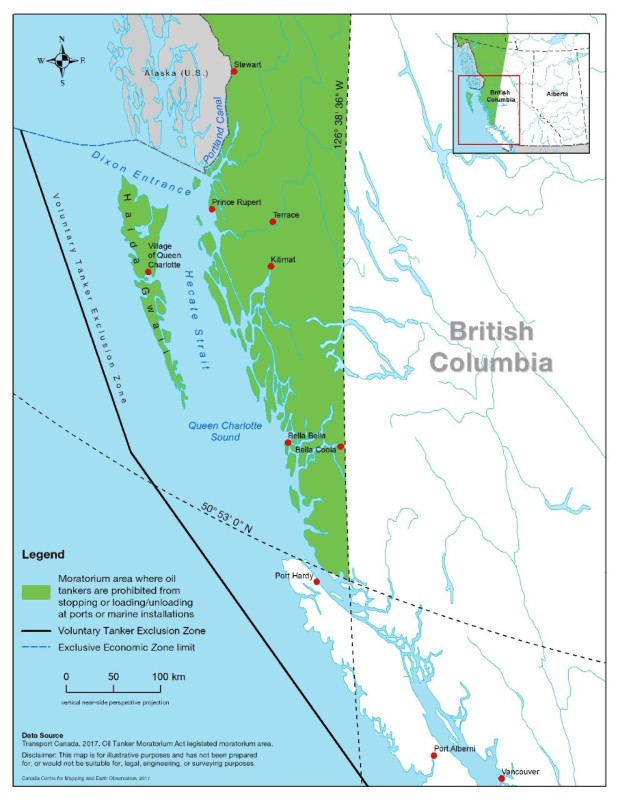
This means that Canada will “appropriately adjust” the British Columbia Oil Tanker Moratorium Act, legislation from 2019 that prohibits oil tankers carrying more than 12,500 metric tonnes of crude oil or persistent oil products as cargo from stopping, loading, or unloading at ports or marine installations north of Vancouver Island.
The B.C. Assembly of First Nations is calling on all governments to abandon the pipeline project, “and work instead toward sustainable, First Nations-led solutions that honour their rights and ensure the survival of the land and all its peoples,” wrote the organization in a Nov. 27 statement.
The BCAFN statement goes on to say that the MOU between the federal government and the Province of Alberta exposes a fundamental contradiction and ongoing disregard for the rights, laws and sovereignty of First Nations on whose territories the proposed bitumen pipeline is proposed to be built.
“Canada’s words of commitment to reconciliation and climate action are weakened and deceptive as they make plans to prioritize a project that poses profound risks to First Nations’ lands, waters, and communities, risks that many First Nations strongly oppose,” said the AFN.
Opposition has also emerged in Nuu-chah-nulth territory. At its People’s Assembly on Nov. 21, members of the Huu-ay-aht First Nations unanimously voted against lifting the tanker moratorium.
But there is Indigenous support for the project in Alberta. The Indigenous Opportunities Corporation (AIOC) announced that it has been named as a key partner in the MOU for the proposed pipeline. In their Nov. 28 statement the AIOC said it would facilitate loan guarantees to support Indigenous investment as a key cornerstone of this project.
They say their experience and leadership in economic reconciliation has helped to advance Indigenous partnership and has shifted the expectation of equity ownership as the new standard.
"AIOC remains committed to supporting Indigenous Nations and groups as they pursue ownership on their own terms and shape a future built on collaboration and shared prosperity," stated the corporation.
“The work AIOC has done to date has directly supported 43 Indigenous Nations and groups across nine deals – representing over $745 million in loan guarantees. It is a proven model that facilitates access to capital and supports capacity building,” added the AIOC.
The BCAFN says that true reconciliation demands that Canada and Alberta fully respect First Nations’ sovereignty and laws.
“Ignoring the will of First Nations violates the United Declaration on the Rights of Indigenous Peoples (UNDRIP), the British Columbia Declaration on the Rights of Indigenous Peoples Act (DRIPA) and First Nations laws, which emphasize free, prior and informed consent as a non-negotiable foundation for any development impacting their territories. Economic incentives, co-ownership, and piecemeal consultation processes do not replace genuine consent, nor do they absolve governments from their legal and ethical commitments,” stated the BCAFN.
Long-time Liberal Party cabinet member Steven Guilbeault and two government climate advisors resigned over the MOU.
Nature Canada issued a statement about the resignation on Nov. 27.
“Steven Guilbeault’s departure from Cabinet is truly a loss for both the government and for Canada,” said the advocacy group. “It should be a wakeup call to the Prime Minister that Mr. Guilbeault now feels unable to remain part of his Cabinet, as the government undermines environmental protections, its obligations to Indigenous peoples, and its responsibilities to all Canadians.”
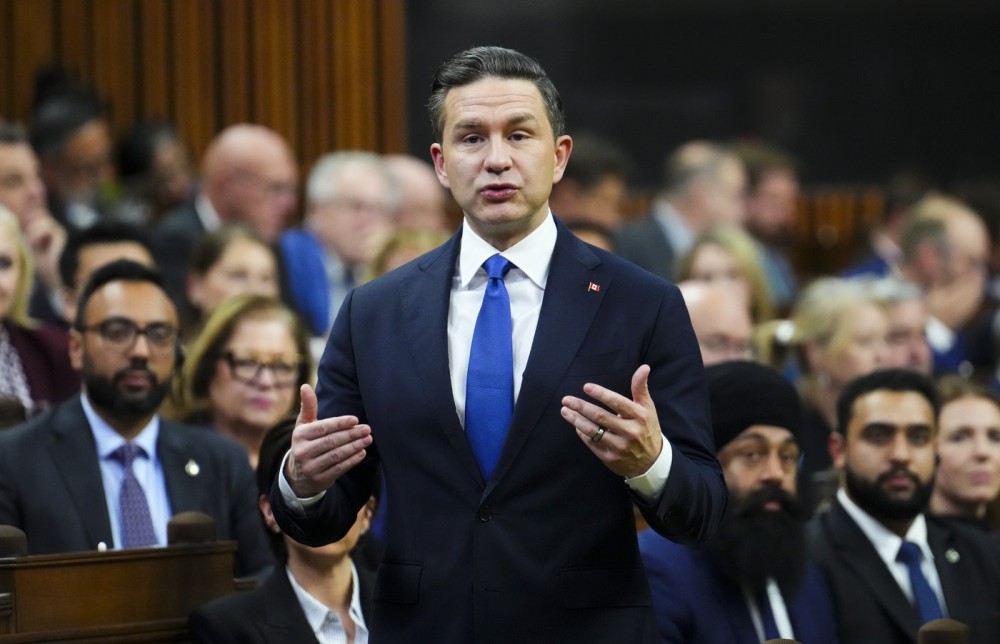
Conservative Party Leader Pierre Poilievre announced that the House of Commons will debate and vote on a Conservative motion, “for a new oil pipeline to the Pacific coast, overriding the tanker ban, to ship bitumen to Asia.”
The House of Commons will meet for the motion on Tuesday, December 9, 2025.
The Conservatives say that the Liberal Party is not aligned on the issue. They also say that Premier David Eby has stated that the pipeline will never be built.
“I am not in favour of shipping raw bitumen through our coast by lifting the oil tanker ban,” said the B.C. premier.
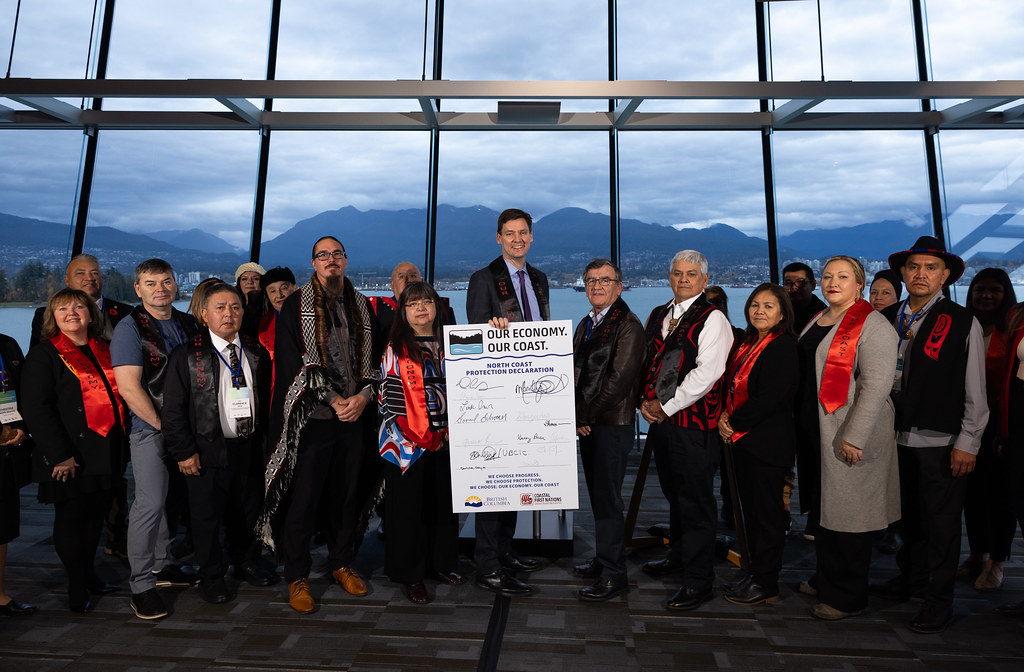
On Nov. 5 Eby, along with Chief Marilyn Slett, president of the Coastal First Nations, Mayor Garry Reece of Lax Kw’alaams, Jason Alsop, president of the Haida Nation, Paula Amos of Indigenous Tourism B.C. and hereditary elder Clarence Innis all signed the North Coast Protection Declaration.
The declaration speaks to the value the province and First Nations place on jobs and economic development that exist because of the natural beauty and renewable resource economy of British Columbia.
“Protecting our coast is not a barrier to economic prosperity – it is the source of it,” said Eby in a social media post.