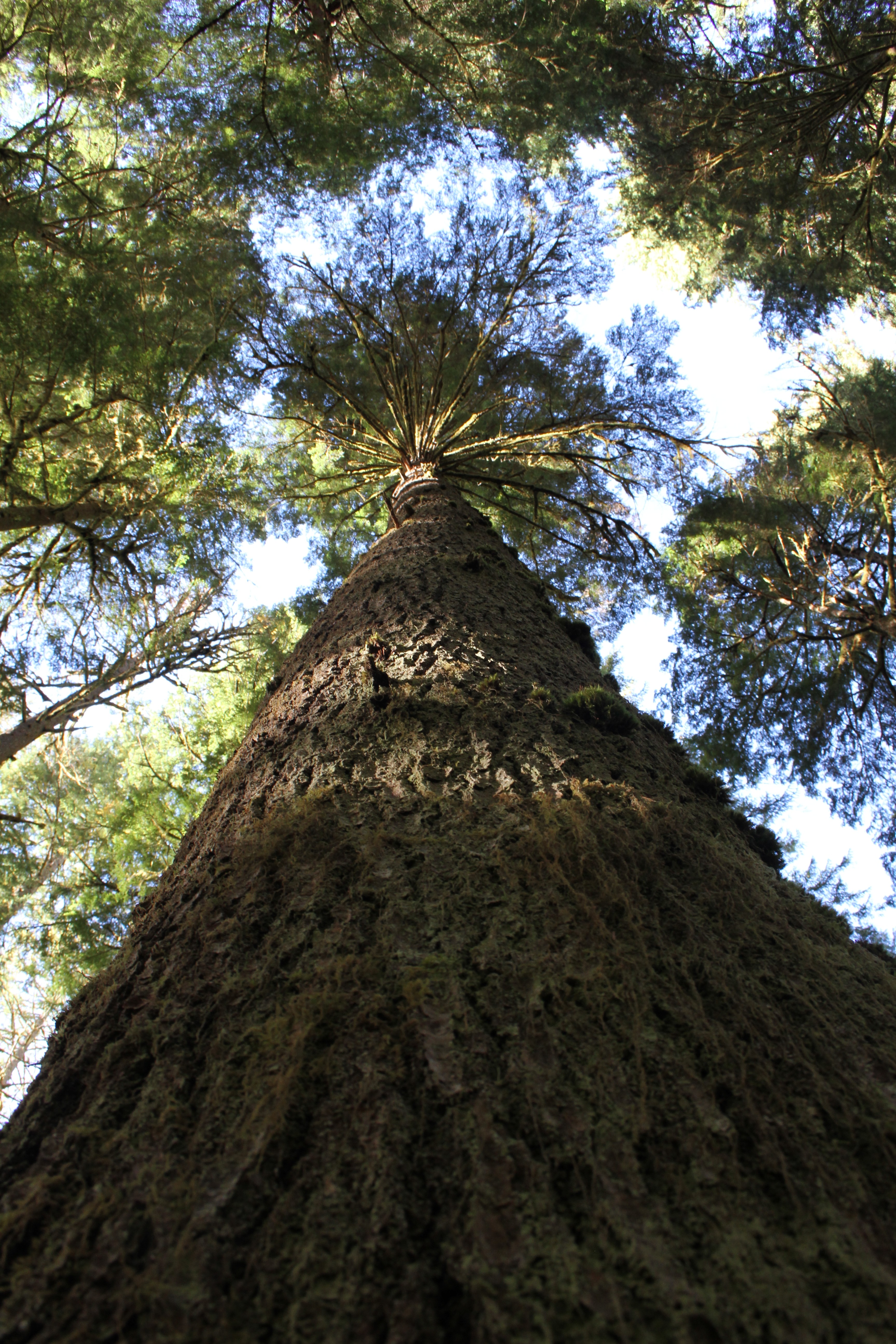
This has not been a good year for forestry as the industry continues to feel the pain from escalating tariffs, mill closures and job losses. But in Nootka Sound a First Nation is looking to a future where trees have a higher value staying in the ground.
Announced in early December, the closure of a pulp and paper mill in Crofton is the latest casualty for the coastal forestry industry, affecting 350 people employed at the sprawling operation on southern Vancouver Island. The owning company Domtar blamed a lack of available fibre and poor prices in global pulp markets for the mill’s shutdown. This comes at the end of a year that saw US tariffs on Canadian lumber triple to 45 per cent – further disrupting an already strained relationship with B.C.’s major trading partner for forestry products.
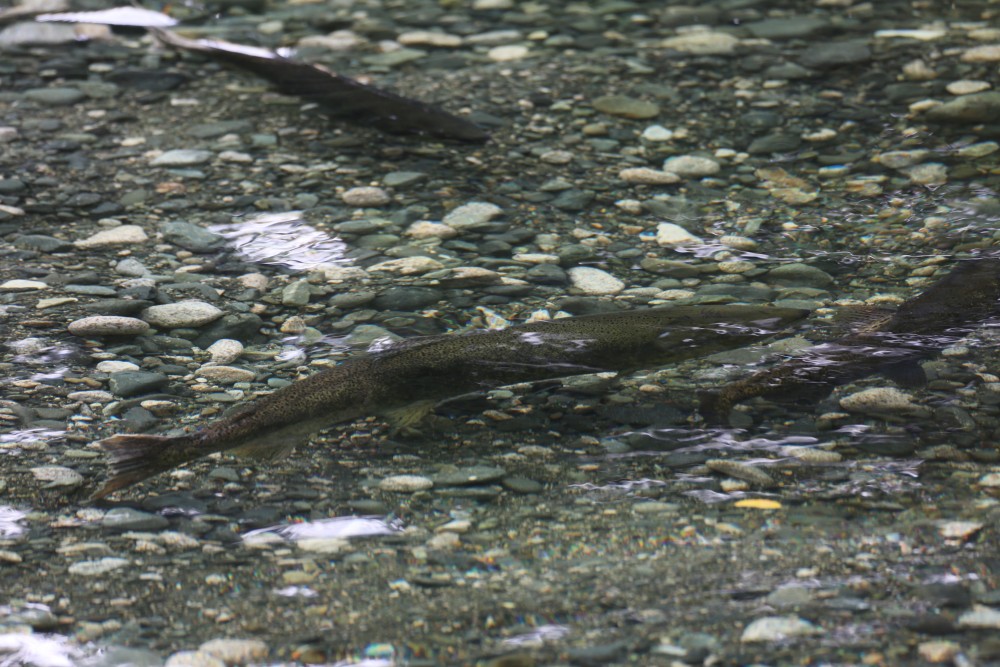
Meanwhile, on the other side of Vancouver Island, the Mowachaht/Muchalaht First Nation is looking at an entirely different economic approach to managing its territorial forests and waters in Nootka Sound. The First Nation’s Salmon Parks project aims to have 66,595 hectares, comprising approximately 20 per cent of its land territory, under a protected designation by 2030. The initiative strictly limits industrial activity within the Salmon Parks – particularly old growth logging – with hopes of eventually allowing nature to heal itself to the point that salmon runs rebound from the headwaters to the ocean.
Since he moved from the ancient village site of Yuquot as a child in the late 1960s, it’s been painfully clear to Anthony Dick that the resources within his nation’s territory have been mismanaged. This is particularly evident on Nootka Island, where Yuquot is situated at the southern tip.
“We’ve lost a lot of streams where we used to get a lot of our fishing,” observed Dick. “A lot of the places are dried up.”
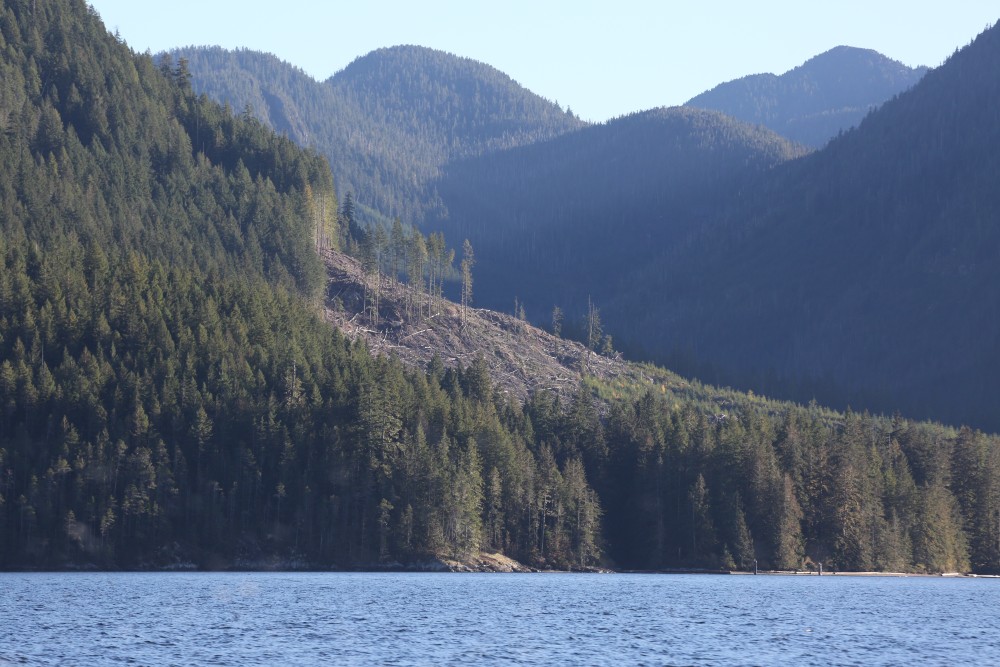
Mowachaht/Muchalaht Tyee Ha’wilth Mike Maquinna has seen continued encroachment in his Ḥahahuułi, from industrial logging of the forest to salmon farms and guided fishing tours on the ocean.
“Whatever decisions were made, they weren’t made by us, it was all made by the B.C. government,” said Maquinna, who believes that had it not been for his members observing industrial activity in the vast territory, more would have been logged in Nootka Sound. “Those islands would have been harvested, had it not been for us – and a couple of other watersheds and elk corridors.”
“We’ve been experiencing a lot of push back in the forest harvesting aspects because it’s not set up for protection,” added the hereditary chief. “It’s set up for industry. It’s very concerning.”
‘Critical salmon ecosystems’
According to the province’s Vancouver Island Land Use Plan, Nootka Island currently falls “under standard integrated resource management strategies of the Forest Practices Code”. Most of the rest of Mowachaht/Muchalaht territory is designated as “Enhanced Forestry”, meaning the areas are to be “managed to produce higher volumes and values of timber while respecting environmental protection standards.”
But the Salmon Parks initiative determined that this wouldn’t be enough to ensure a future for the Ḥahahuułi. In fact, according to the project description, if the past rate of logging was maintained, all old growth in the Salmon Parks area would be gone in 15 years. The project also noted that Nootka Sound’s salmon populations have declined as industrial forestry expanded - with some going extinct - and warned that more of the wild species will be gone in 20 years without serious intervention.
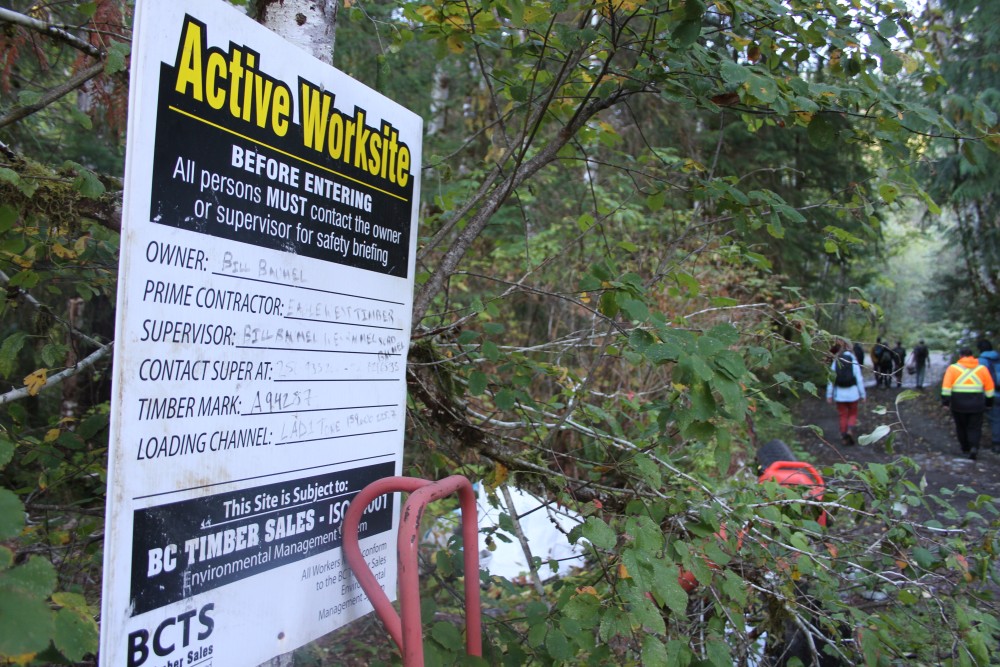
Those warnings helped Salmon Parks gain a $15 million injection of funding from the federal government in October 2023. This has enabled the initiative to protect almost 39,000 hectares, an area that contains “critical salmon ecosystems”, according to the application sent to Canada’s Ministry of Environment and Climate Change. Approximately $12.5 million of this funding is being used for land acquisitions costs, which entail buying out tenures that forestry companies held under B.C. law. Currently the only industrial logging within Salmon Parks is occurring near the Burman River by BC Timber Sales, which was approved by the government before Salmon Parks were declared in 2023.
Other funding has come in from a long list of environmental organizations, such as the Ancient Forest Alliance, the Endangered Ecosystem Alliance, the Indigenous Watershed Watch Initiative, the Nature-based Solutions Foundation, Nature United and the Sitka Foundation. The project now employs four full-time and four part-time staff, five of whom are Mowachaht/Muchalaht members, plus two part-time contractors.
Despite all this, Salmon Parks are not recognized as a protected area by the B.C. government.
“We’re one of several nations across B.C. that are in a similar situation, waiting for the province to provide a mandate for its Water, Lands and Resource Stewardship department to negotiate,” said Eric Angel, general manager of the Salmon Parks Stewardship Society. “Now we’re actually starting on drafting a management plan for the Salmon Parks. The original idea was that we were going to do that in collaboration with the province, assuming that we would have some sort of agreement around what form of designation that would take, but because we haven’t got there with them, we’re going ahead with doing the management plan ourselves.”
The entire Salmon Parks have been scanned with LiDar, which uses a pulsating laser delivered from aircraft to produce a detailed 3-D map of the area. This helped to inform the project’s zoning, which sets aside a small portion for sacred spiritual sites with highly restricted access, and another 15 per cent for what the project calls “sustainable forestry”.
Angel explains that this entails longer harvesting rotations, with smaller areas that are selectively cut.
“We’re going to have much more varied second growth,” he said. “Right now the prescriptions on cutting close to streams only apply to the larger streams in a watershed. We want to look at carrying those protections right through to the small ones.”
Maquinna noted that the First Nation’s approach is not to halt forestry entirely, as people’s livelihoods still rely on the industry.
“But it’s not needed at the active rate that it’s been harvested. We need to put more thought and sense into how it is to be harvested, than just going and clearcutting it all of the time,” he said. “As a sustainable resource, it could not be sustainable if they continued harvesting at the rate that they do, and that’s not good for our future or our children’s future.”
A ‘conservation economy’
As the project seeks an economic future, the Salmon Parks initiative is looking at the economic value of keeping trees standing by selling carbon credits. Worth the equivalent of one tonne of carbon dioxide that would be emitted into the atmosphere, a carbon credit is a tradeable commodity on the international market which acts like a permit for a company or government to release greenhouse gases. These credits are verified by lands stewards and technology before being sold to industrial emitters.
“Most of the trees in the Salmon Parks would be harvested, especially the old growth sections,” explained Angel. “By not harvesting we essentially create what’s called a carbon offset. Those are worth money we can sell through a number of different markets.”
According to the World Bank Group, carbon credits have become an important tool in large-scale finance and development.
“Today, about 28 per cent of global greenhouse gas emissions are covered by a direct carbon price, and jurisdictions representing two-thirds of global GDP have adopted carbon taxes or emissions trading systems,” states the international organization.
“It’s actually worth more than harvesting trees under current economic conditions,” said Angel. “Carbon is an economic driver. What we’re actually looking at doing is finally trying to put in place this new kind of conservation economy that people have been talking about for decades now.”