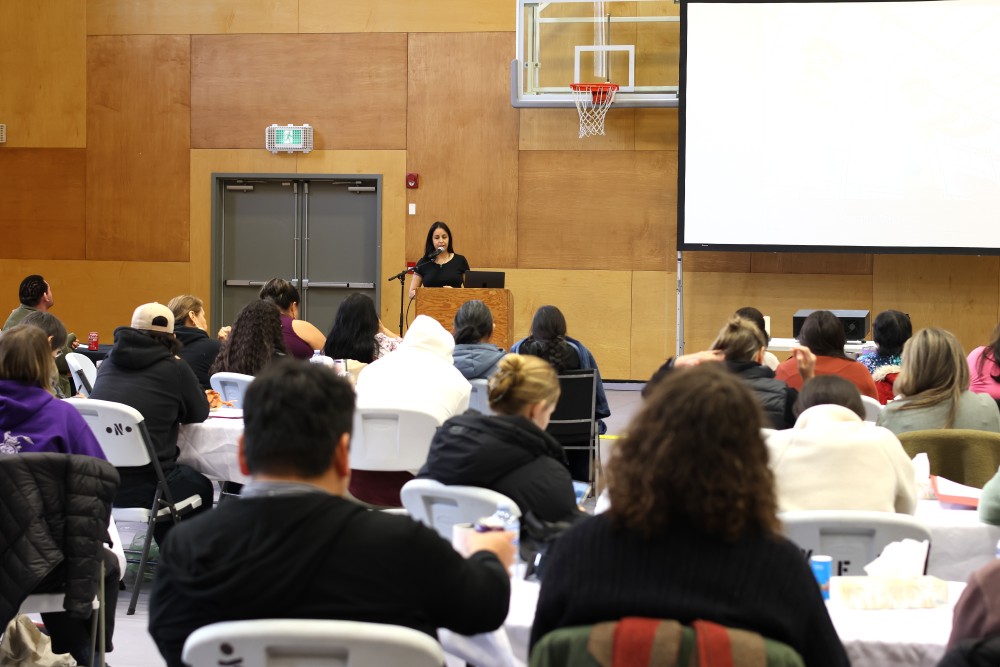
Yuułuʔiłʔatḥ Government’s education department held an uplifting professional development day on Feb. 13 at the Cixʷatin Centre in Hitacu.
Manager of education services Jennifer Touchie said about 90 West Coasters from Ahousaht, Tla-o-qui-aht, Huu-ay-aht, School District 70 and Pacific Rim Hospice attended the full-day event, which centered around ‘Moving through trauma by connecting to culture, language and traditional foods’.
“I was really happy to see SD70 and community participate,” said Touchie. “Maybe this will open up new roads for reconnecting with our children in a different way, and (I was happy) to have teachers be a part of our culture and be a part of our language; that it is open to everybody to learn.”
In the morning, Nuu-chah-nulth counsellor and owner of Tiičmis Wellness Anita-Charleson Touchie gave a meaningful presentation about understanding trauma and reconnecting with language, which was followed by a language lesson led by Jeneva Touchie.
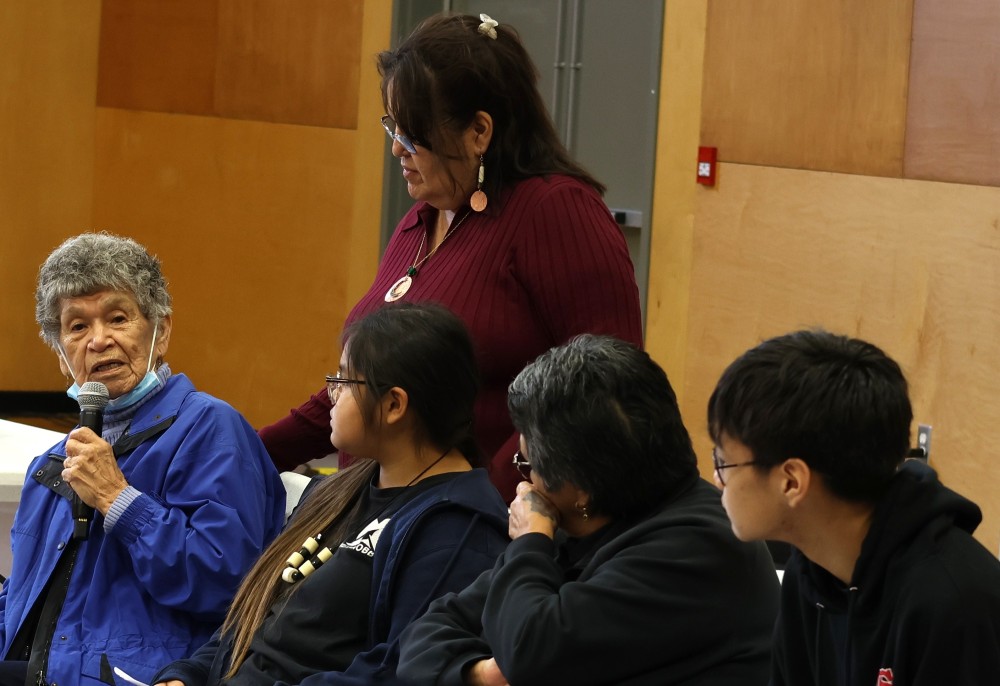
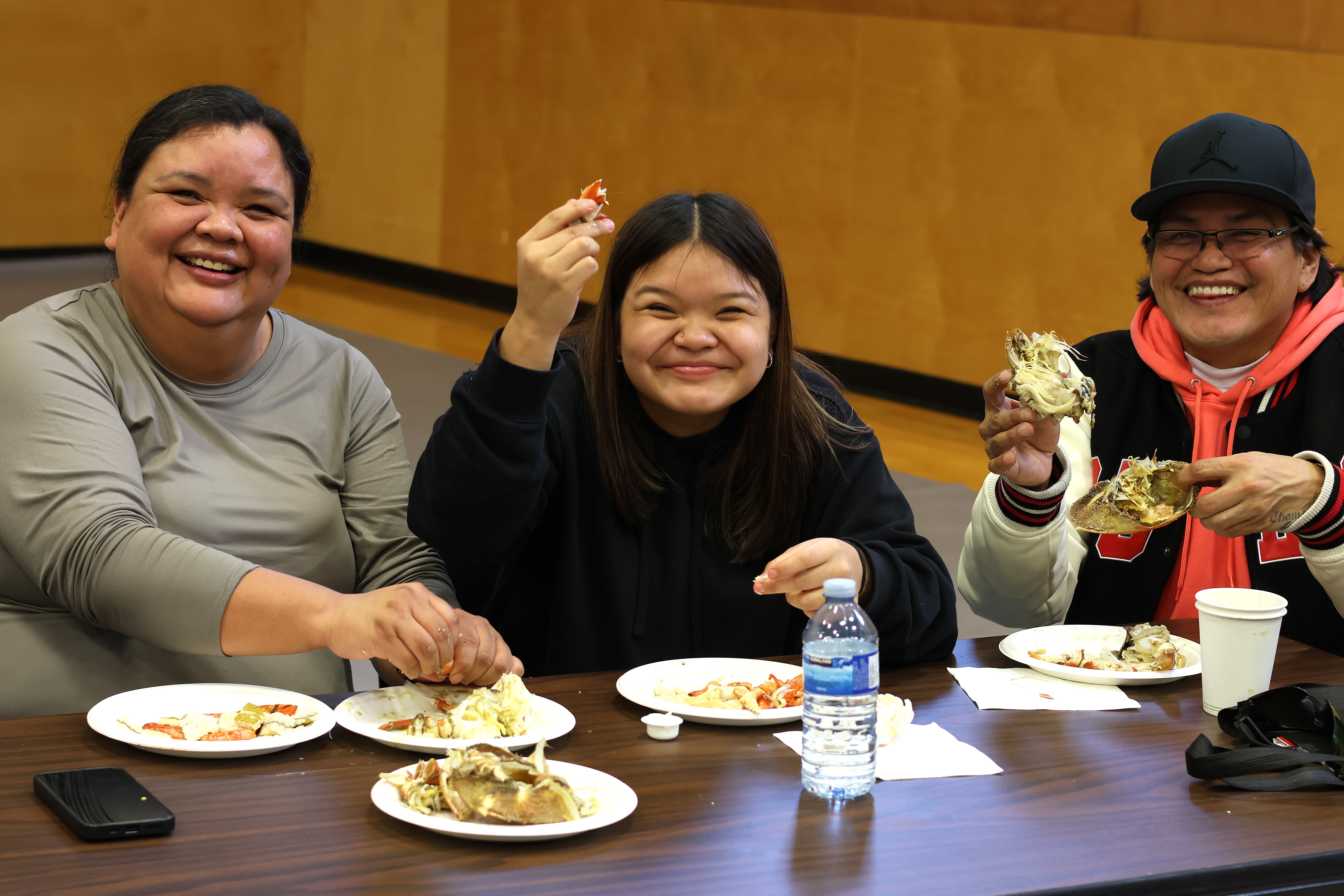
After a seafood lunch of Dungeness crab, prawns, salmon and fish roe, Touchie brought two elders and two youth to the front of the hall for a panel discussion about traditional food and reconnecting with culture.
When asked how to preserve Indigenous language, youth panel member Matthew Touchie said, “I think there could be more one-on-one work between elders and youth to keep our language alive. Slowly teach them words, day by day. Learn and keep it consistent.”
In the afternoon, Tla-o-qui-aht First Nation member Gisele Martin gave an interesting talk and slideshow about traditional foods.
“It’s not just what we eat, it’s which part of the fish we eat. When we are young, the youngest eat the tail because there are no bones, but also that’s the hardest working part of the salmon and young people have their whole life ahead of them, so they need that force for the work ahead of them,” Martin shared.
“And then as you get older, you might get the belly parts of the salmon that are richer and better for you. And when you are really old, you get the best part… you get the head! My dad used to split the head with me when I was a kid, I was so lucky. He would give me one eye and he would eat the other eye,” she said.
The overarching message within Martin’s presentation was the need for Nuu-chah-nulth to become more self-sufficient in getting their own food whether it be by restoring clam gardens, building root gardens or learning how to properly care for and sustainably harvest plants, seaweed and mushrooms.
Tseshaht First Nation member Lisa Watts wrapped the education day with a presentation about the importance of culture and the significance of having a traditional name.
“I really wanted to make sure I chose Nuu-chah-nulth speakers because we are here and we know all this. We have experience and knowledge to share and how important it is to do that,” said Touchie.
She thanked all the speakers and the crew of people who put together the amazing traditional feast: Audrey and Dawn Edgar, Gale Hayes, Neptune Packers for the crab and prawns, and Yuułuʔiłʔatḥ lands and resources for the fish.