Entrepreneurs who come from a long line of commercial fishers are capitalizing on an ocean harvest that has nothing to do with catching fish.
Kelp is presenting growing possibilities on international markets, contributing a valuable, self-regenerating ingredient to agriculture, food products and even the skin care industry.
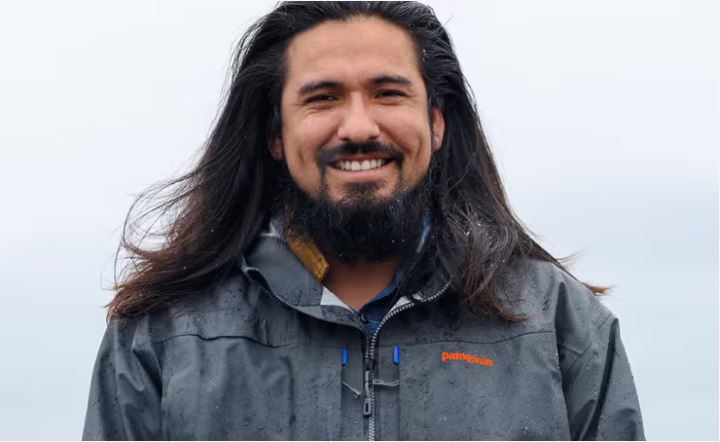
Stevie Dennis has been fishing on boats since the age of 14, when he learned from fellow Ahousaht member Lewis Frank. In 2021 he founded Naas Foods, which operates a store in Tofino as well as online sales. They process and sell fish caught from T’aaq-wiihak, a rights-based commercial fishery run by the Ahousaht, Tla-o-qui-aht, Hesquiaht, Ehattesaht/Chinehkint and Mowachaht/Muchalaht First Nations, and process fish from the recreational sector as well.
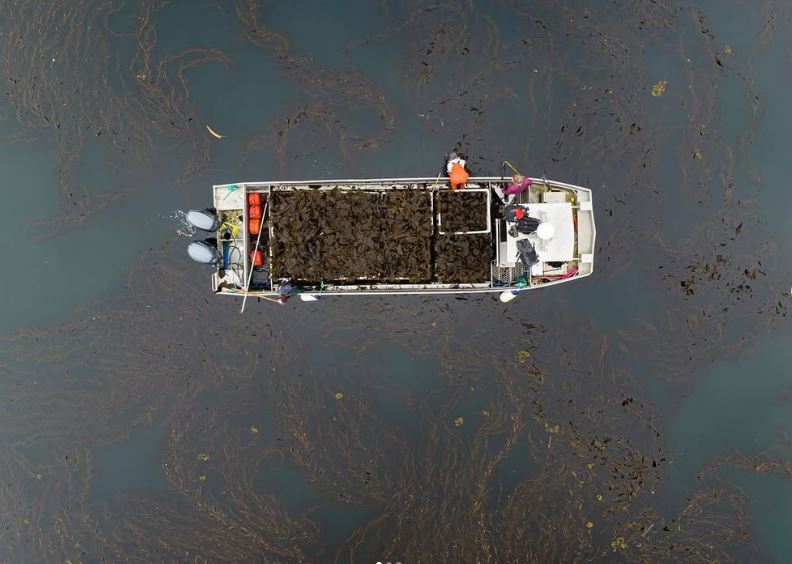
For the last one and a half years Naas Foods have also operated a kelp farm. Encompassing 40 hectares in Ahousaht territory north of Tofino, Dennis says the kelp farm is the largest in British Columbia, and last year brought in one fifth of the company’s revenue.
“We did a 100 tonnes of kelp last year, we’re going to probably project to do the same this year, but building out our markets is where we’re at right now,” said Dennis, who presented the progress of his business to the Indigenous Seafood Conference in Parksville in early February. “I foresee kelp this year probably hitting 40-50 per cent of revenue for the business.”
The kelp is dried and smoked, sold in flakes for eating and seasoning dishes. Besides the Naas Foods store in Tofino, the product is sold in over a dozen locations on the B.C. coast, as well as through online sales in North America.
“We make a dried and smoked line that we put into 52-gram tins,” added Dennis. “It’s a shelf-stable product.”
This year the business is looking to expand by opening a processing facility in Ahousaht, bringing a handful of valuable jobs to the remote community. Dennis expects that the operation will employ under 10 people over its first year, but could grow to 40 if the kelp farm reaches full operations.
“We’re choosing to do this in Ahousaht because it’s the right thing to do,” said the business owner. “That’s where my family comes from. We need economic development, people need something to wake up for.”
The processing facility will operate out of several shipping containers set up on the Flores Island community.
“It will be one for the product coming in, processing, one for drying and smoking, one for freezer storage and one for dry storage,” explained Dennis. “We just need to get going, it’s no more waiting. The reason we’re pushing so hard is I don’t want to start somewhere else. I don’t want to go to Ucluelet, Tofino already said no more industrial work.”
‘Like picking fruit from a tree’
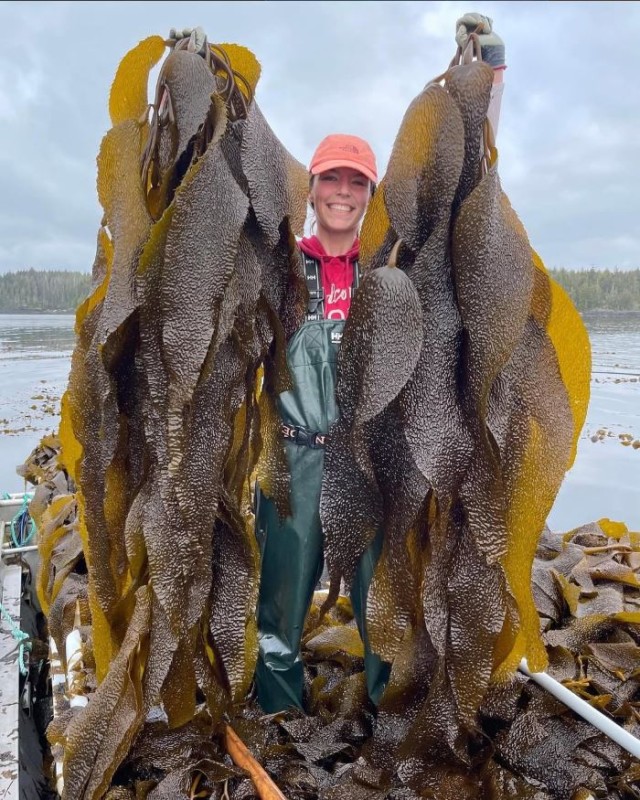
On the other side of Vancouver Island at the northeast tip, Shaelynne Bood has been harvesting wild kelp in her home Kwagiulth First Nation’s territory for the last several years. Marc Peeler, her father and a commercial salmon and herring fisherman, picked kelp from the territory for decades, and convinced Bood to get into the Port Hardy-based operation after she finished high school.
Bood also made a presentation about her kelp business at the Indigenous Seafood Conference, which was put on Feb. 3-5 in Parksville by the Nuu-chah-nulth Economic Development Corporation, the Native Fishing Association and the Ha’oom Fisheries Society.
“I took over his kelp harvesting operation, and now I’m managing it,” said Bood. “I love being on the water and I love being on boats, but I don’t think fishing is really where my passion lies. I joke that I’m a vegan fisherman because all of my catch, for the most part, is plant matter.”
The majority of Bood’s harvest is used for what the industry calls a “bio-stimulant”.
“It goes to vegetable farms all over the world,” she said. “It’s also marketed as plant food for house plants.”
The nutrient-rich plants have also gained a presence in the skin care industry, securing Bood a deal with La Mer, which makes beauty products under Estée Lauder. The Port Hardy boat captain even took a group of internet influencers and actors associated with the skin care product out on the water to show them where the ingredient comes from.
“The fact that this multibillion-dollar company still is putting in the effort to get kelp to put as the first ingredient in their product shows me that it works,” said Bood. “It’s causing plant cells to grow faster, it’s causing things to regenerate faster, why would it not do that to your skin cells?”
In B.C. aquatic plant harvesting is regulated by the provincial government, which requires a plan with maps of where kelp will be picked, plus a record of how much of each species is removed from the ocean.
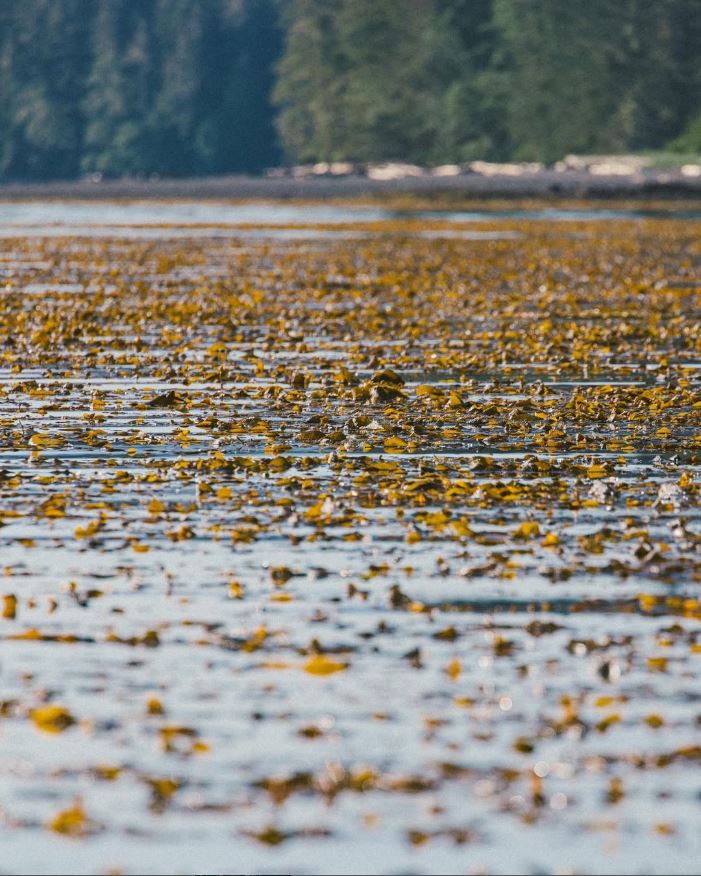
While the commercial fishing industry is constrained by complex conservation measures and ever-tightening catch quotas, Bood sees kelp harvesting as a sustainable practice that actually promotes growth among the plants that are picked. She takes her boats and crew out at low tide to target the portion of the plant floating above the water’s surface where the kelp canopy spreads.
“We cut it right where it starts to go down so that we get as much of that canopy as we’re able,” said Bood, whose operation include two small skiff vessels and a larger boat. “In the places where we’re harvesting our 10 per cent, we’re noticing a lot more fresh growth throughout the season.”
“We have to harvest 33 centimetres up from the stipe, that leaves a foot of blade so the kelp can keep growing,” explained Dennis. “Bull kelp grows 10 centimetres a day in summer conditions. In a month, you come back and it’s already a metre long. It has that opportunity to keep growing, reproduce and doing all the things it needs to do, just like picking fruit from a tree.”
Coastal economic diversification
The kelp industry isn’t new, in fact North America’s first farm was founded in 1982 in Bamfield, and Canadian Kelp Resources still sells its food products to this day. But growth over the last decade is noteworthy, according to a recent report from Greenwave, a network of ocean farmers. Greenwave reports that in 2015 there were only a handful of kelp farms on North America’s Atlantic and Pacific coasts, but this has since grown to almost 250 sites that cover a combined 2,535 hectares, with dozens more awaiting permits. Only 0.5 per cent of land farms around world use kelp as a bio-stimulant, but this is projected to grow by 10 per cent each year from 2022-30, according to a 2023 report from the World Bank.
But getting behind ocean farming can still seem risky and unpredictable to some investors.
“Banks and traditional lenders are not well-versed in the nuances of ocean farming, including its non-traditional collateral and seasonal cash flows, which don’t align with standard underwriting models,” cautioned the 2026 State of the Kelp Industry report. “Limited historical data and uncertain market pricing make lenders reluctant to offer flexible, affordable financing tailored to the realities of kelp farming.”
While some backers remain skeptical, a growing number of B.C. coastal operations are tapping into the kelp market, such as the Sydney-based Cascadia Seaweed. The company harvests through partnerships with several First Nations, including Tsawout, Uchucklesaht, Tseshaht, Ahousaht and the Metlakatla Development Corporation, and last year sold 100,000 litres of bio-stimulants for agriculture.
Greenwave states that First Nations have a stake in a significant share of B.C.’s kelp industry, part of an emerging trend in the economic diversification of coastal communities.
“Kelp is becoming less prominently featured on the package as a hero ingredient,” stated the report. “Instead, its role is shifting to a problem-solving functional ingredient behind the scenes, the starting point for a wide range of everyday food and personal care products, delivering health and performance benefits while often displacing legacy petroleum-based ingredients.”