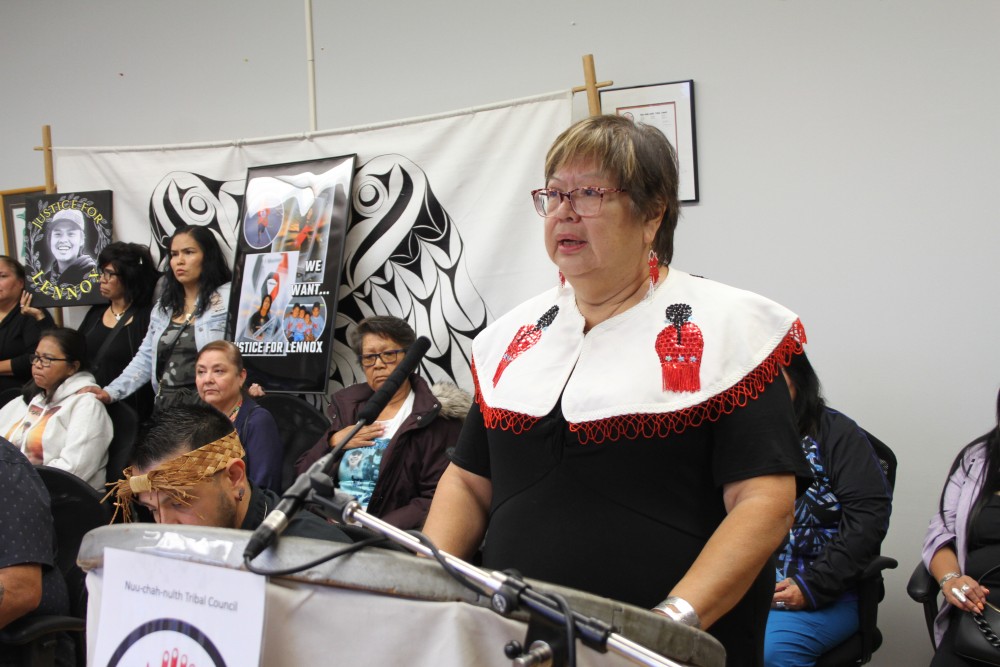
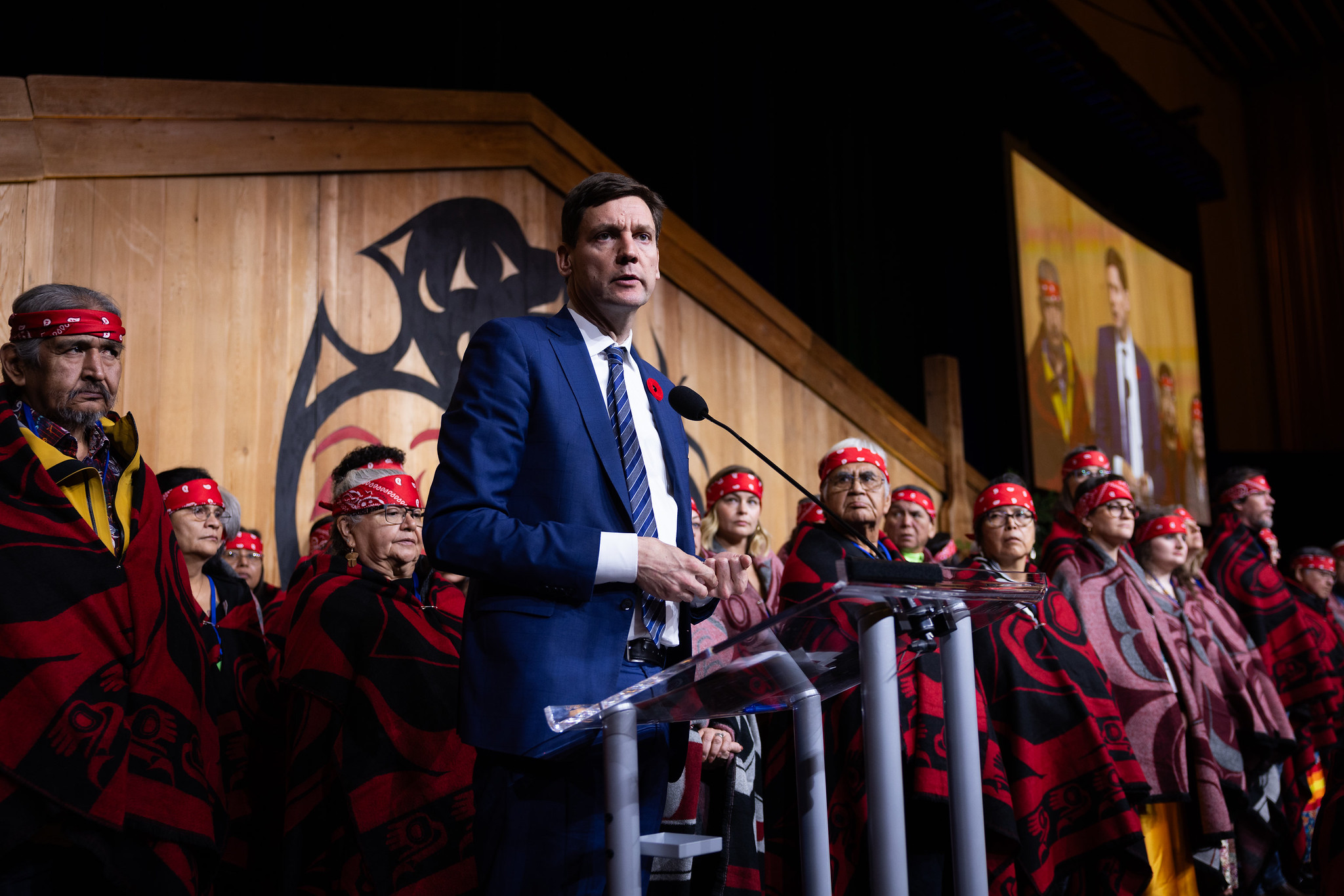
Nuu-chah-nulth Tribal Council President Judith Sayers is not a huge fan of British Columbia Premier David Eby these days.
Earlier this month Eby detailed his plans to temporarily suspend, for up to three years, various sections of the Declaration on the Rights of Indigenous Peoples Act, which is often simply called DRIPA.
Passed unanimously in the B.C. legislature in 2019, DRIPA requires the province to align its laws with the United Nations Declaration on the Rights of Indigenous Peoples - an international call to action that specifies the importance of a government gaining “free, prior and informed consent” from Indigenous communities before decisions are made that will affect their land or people. UNDRIP was adopted by the UN General Assembly in 2007.
DRIPA was to be enacted over a period of several years, but in recent months the legislation has faced the prospect of being amended. This came after some landmark court decisions in 2025 sparked public concerns over how Aboriginal title will affect the rights of private landowners, while the cash-strapped provincial government has fretted over how it will attract natural resource investment while honouring obligations to gain consent from First Nations.
In an interview with Ha-Shilth-Sa in December, Minister of Indigenous Relations and Reconciliation Spencer Chandra Herbert addressed the Ehattesaht and Gitxaala Appeal Court decision, which determined that updates are needed to the Mineral Tenure Act. Herbert wholly agreed that the act needed to be updated, but expressed concerns that the ruling would lead to a “scattergun” approach to legislated reconciliation led by court direction, rather than a methodical approach of partnering First Nations.
“It could launch a whole bunch of lawsuits” that would “bring any forward movement and negotiation to a standstill,” he said of the ruling.
Sayers said First Nations leaders originally heard that Eby was planning to make changes to DRIPA this past December.
“That totally caught us off guard,” Sayers told Ha-Shilth-Sa in a phone interview this past Thursday.
After considering amendments to the legislation, on April 2 Eby announced plans to suspend sections of the act until May 31, 2029.
The B.C. First Nations Leadership Council called this “a unilateral betrayal and an abandonment of the province’s commitment to principled reconciliation” that will “neutralize” any further DRIPA obligations until the next government is formed.
“He had plans to amend DRIPA one way or the other. That's what he said was non-negotiable,” said Sayers. “He's just planning on suspending the same sections that he wanted to amend.”
“First Nations cannot be expected to take a leap of faith when suspension renders the Declaration Act ineffective immediately and paves the way for its inevitable repeal,” stated Terry Teegee, regional chief of the B.C. Assembly of First Nations, which is part of the First Nations Leadership Council.
Meanwhile Eby’s NDP government sits with a slim one-seat majority in the legislative assembly, with calls from the opposition Conservatives to repeal DRIPA altogether.
“Reconciliation existed before 2019, and it will continue long after David Eby’s failed implementation of DRIPA is gone,” stated Trevor Halford, interim leader of the opposition B.C. Conservatives. “British Columbians can support reconciliation and demand certainty at the same time.”
Eby was hoping to introduce legislation this week to begin the suspension on portions of DRIPA, but some of his own MLAs have opposed this, casting uncertainty on how the government will deal with DRIPA in its current state.
“Our position is we don't want DRIPA changed,” Sayers said. “We've set out a course of action. We did it collaboratively.”
Sayers said she was uncertain of next steps with this issue as Eby seemed reluctant to meet with First Nations leaders.
“He's not even asking for a response from us,” she said. “So, I don't know what the next steps are. I think the chiefs are going to have to meet and decide from there.”
If legislation is tabled, Sayers said that with various readings approval to suspend DRIPA could happen by June, which signifies the end of the legislative sitting.
Sayers also said that the relationship between Eby and herself and other First Nations leaders has changed significantly since December.
“We've all been working with the premier under different things,” she said. “I've been working really hard on the Heritage Conservation Act. We’ve been doing different things and people have been looking at shared decision making. There's been all kinds of initiatives under DRIPA, achieving some good things and looking forward to doing more.
Sayers now describes the relationship between the premier and First Nations leaders as “very rocky.”
“I don't think I have much confidence in the premier anymore to carry this out,” she said. “I think he's looking more to the general B.C. population who elects him and seeing what they're doing as opposed to trying to educate people as to our rights. DRIPA is about our human rights. Whose human rights get suspended for three years?”
Sayers said the premier’s recent actions have also hindered reconciliation efforts.
“This puts us on very, very shaky grounds. First Nations are trying really hard in economic development, education, health. There are all these wonderful things that are happening and are they going to happen anymore? Will they be put on hold? We just don't know what that future is going to hold.”
-With files from Nora O’Malley