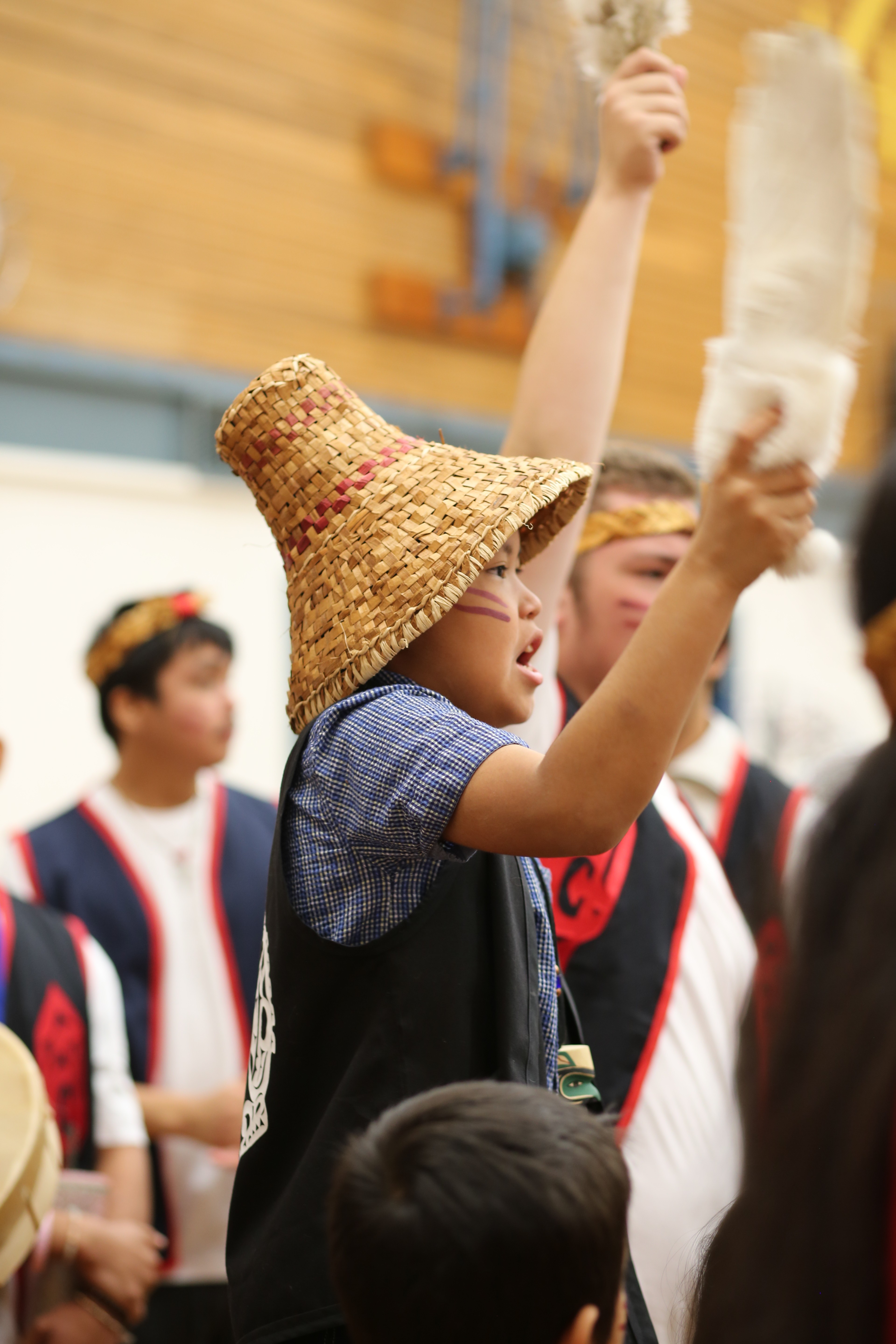
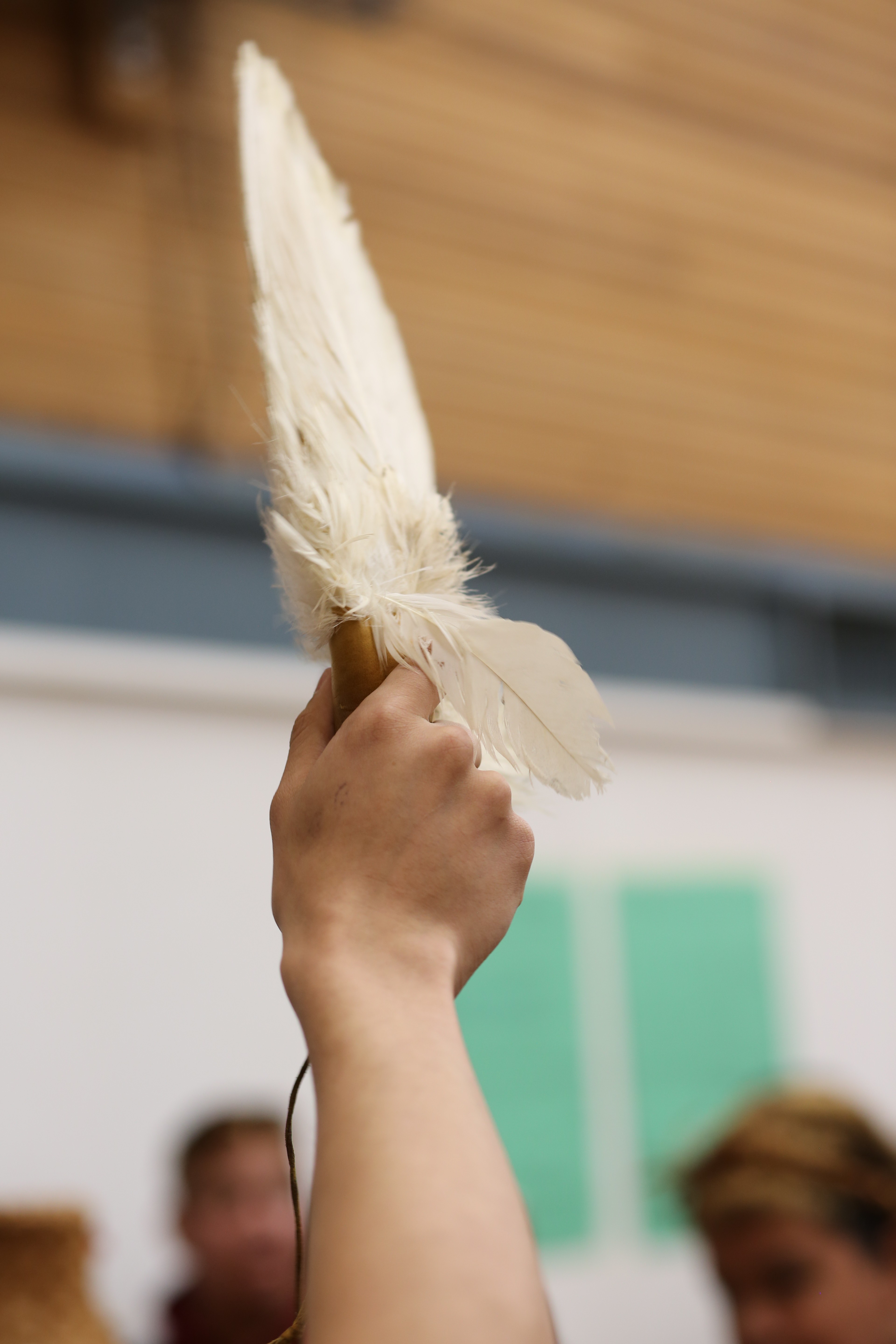
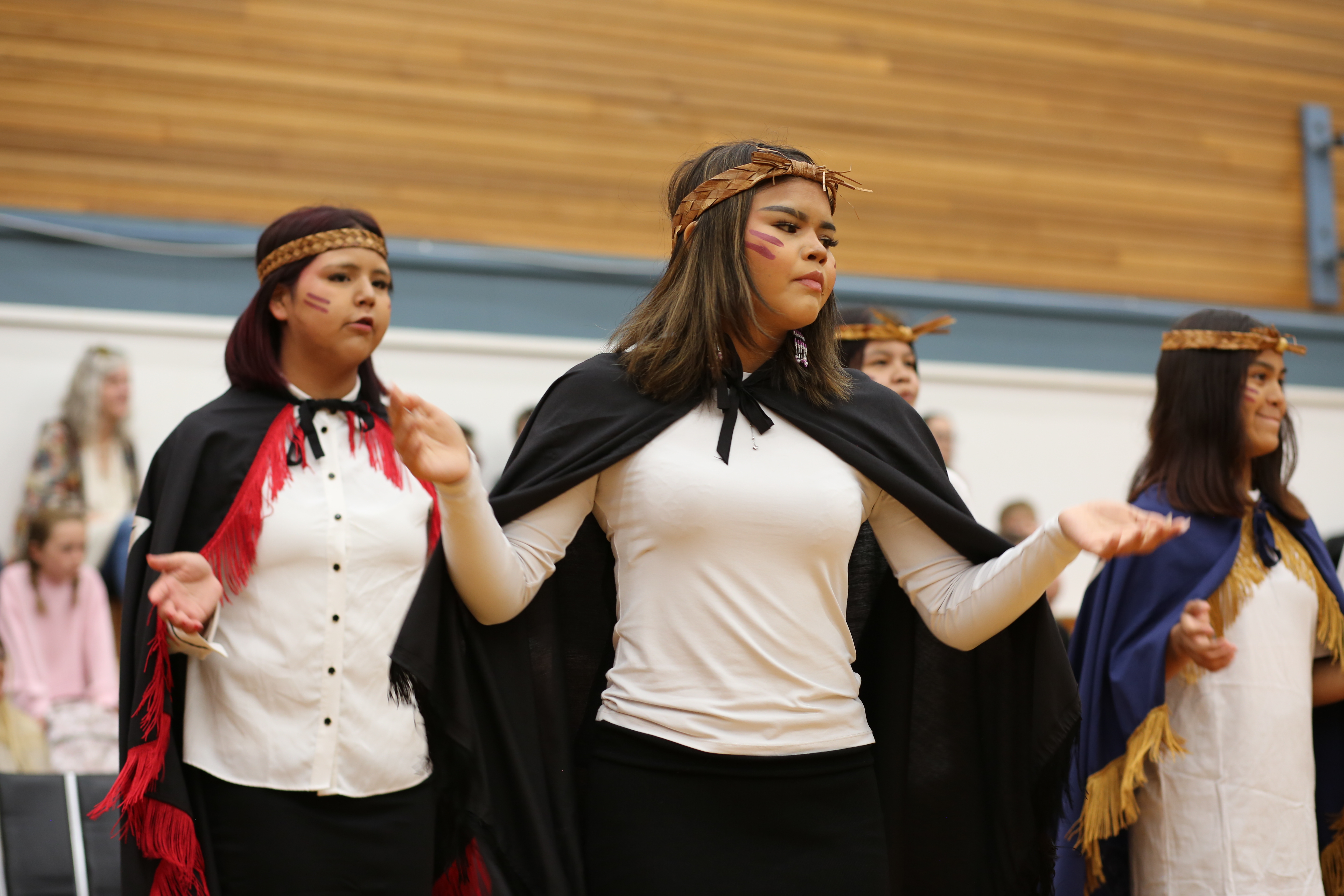
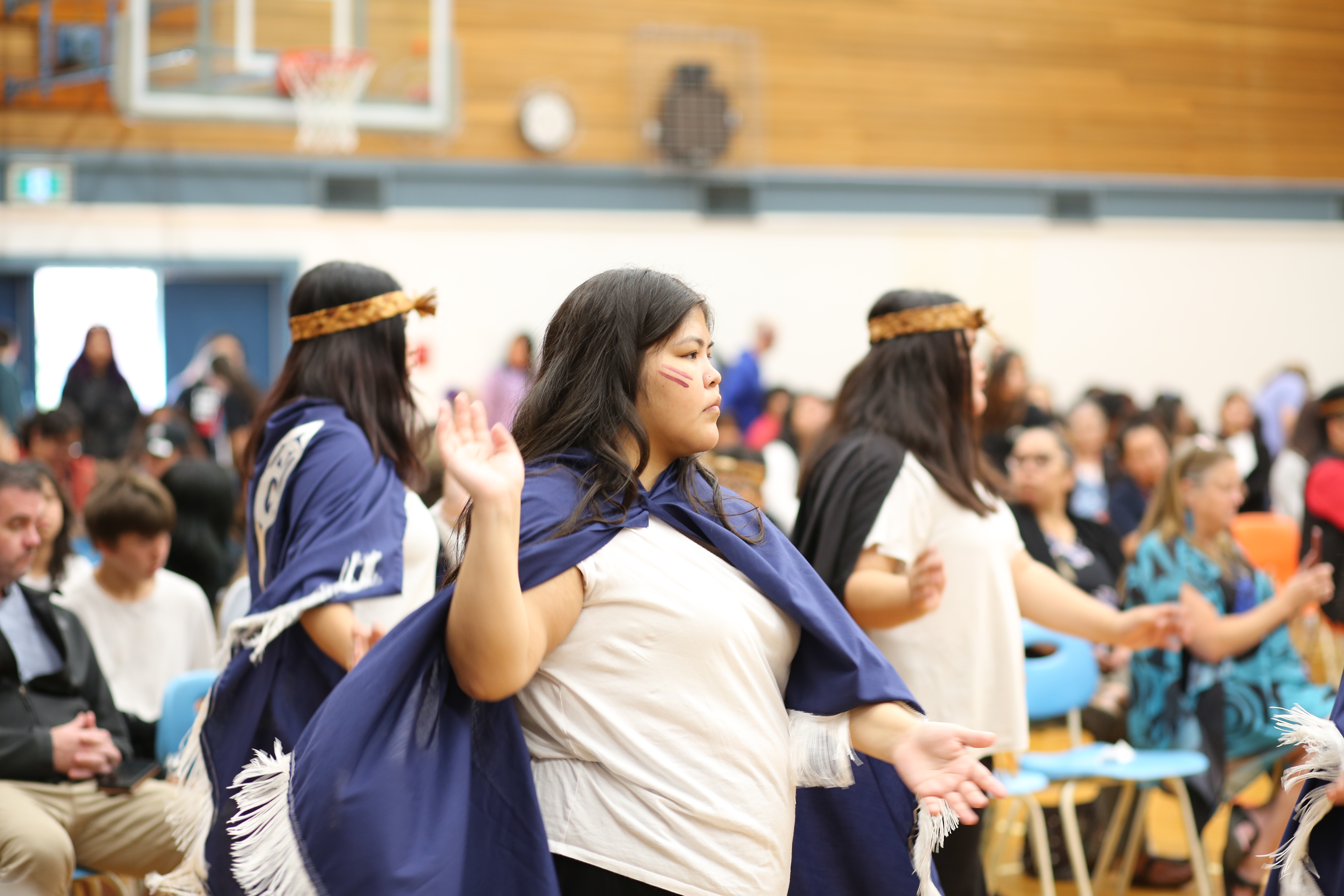
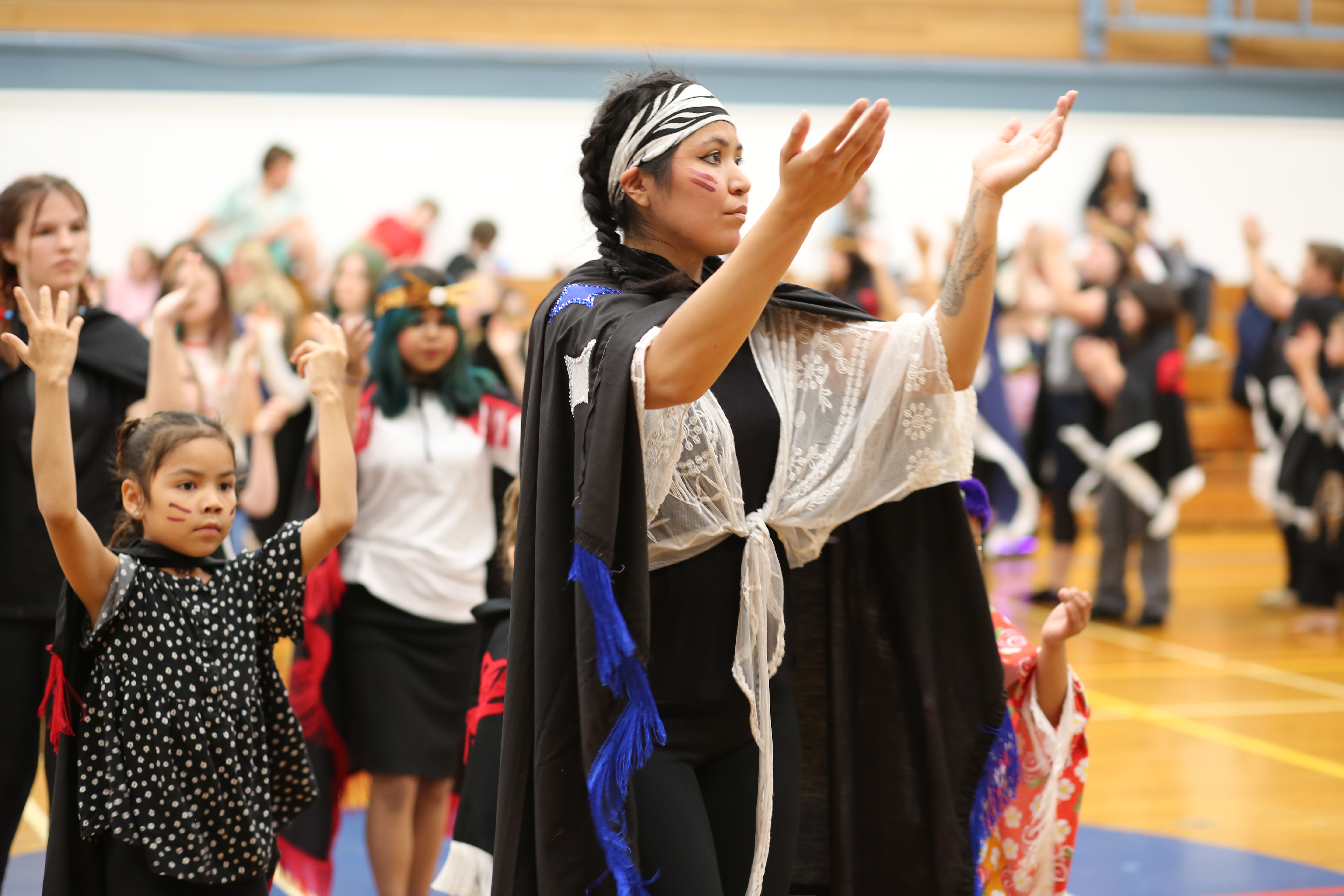
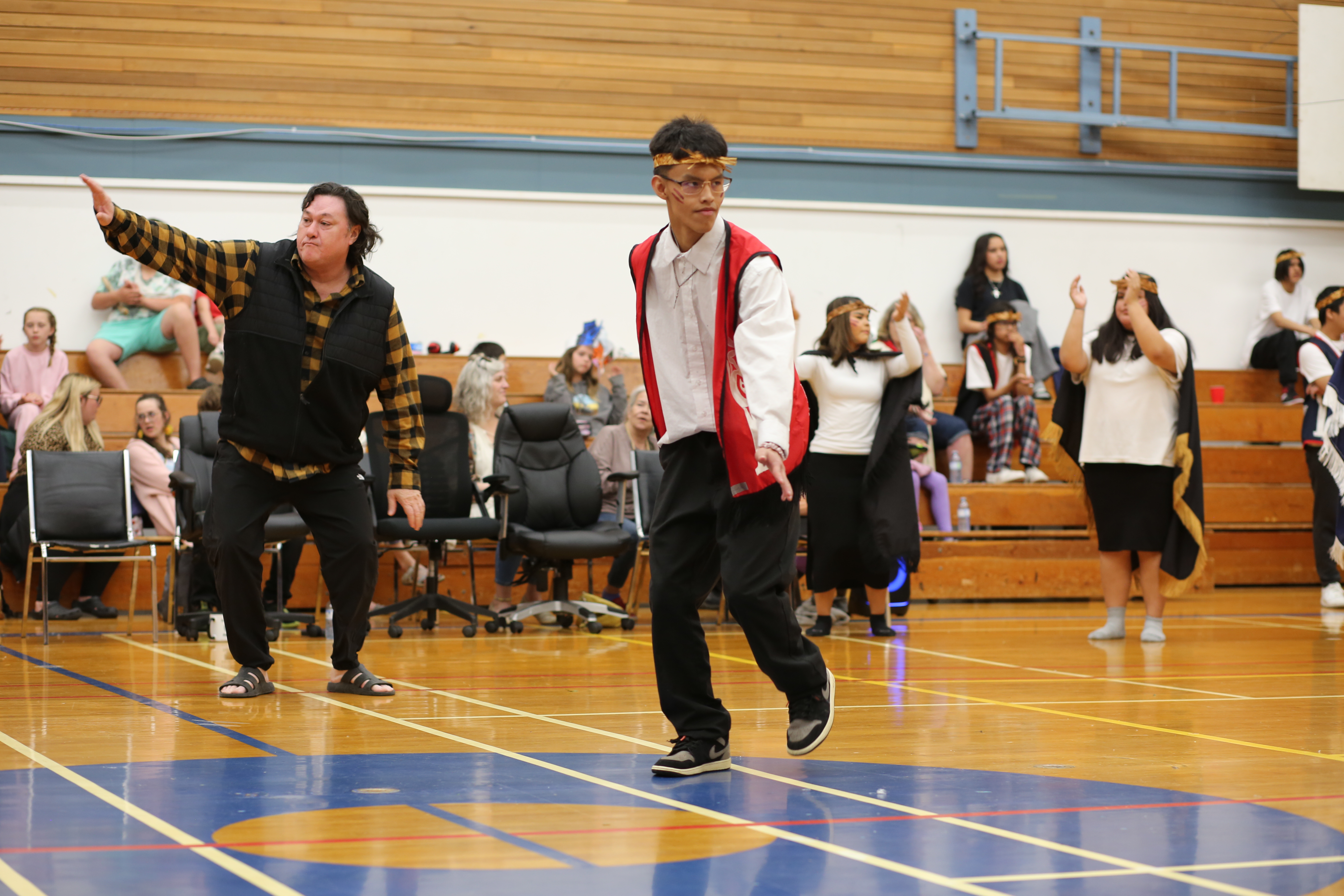
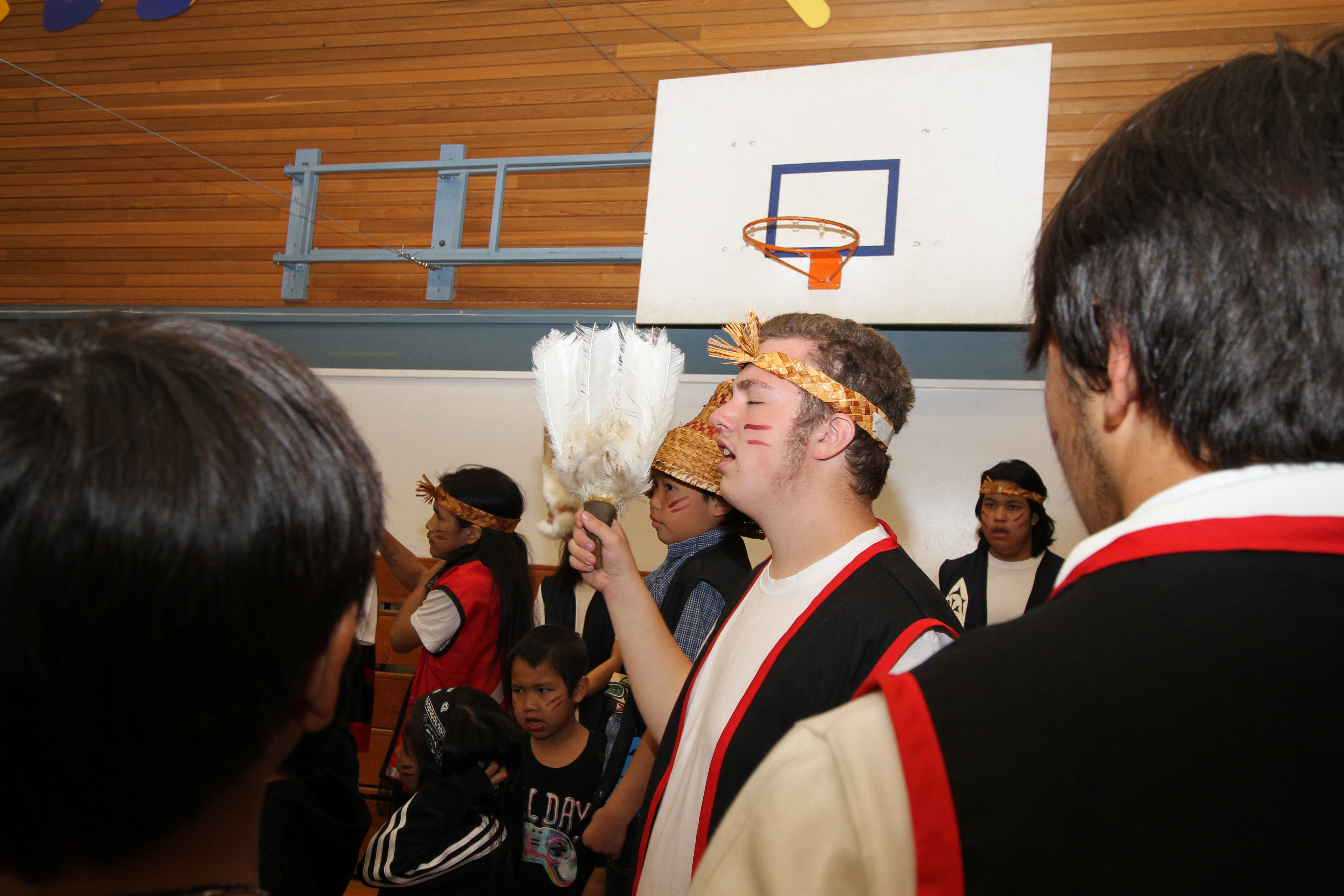
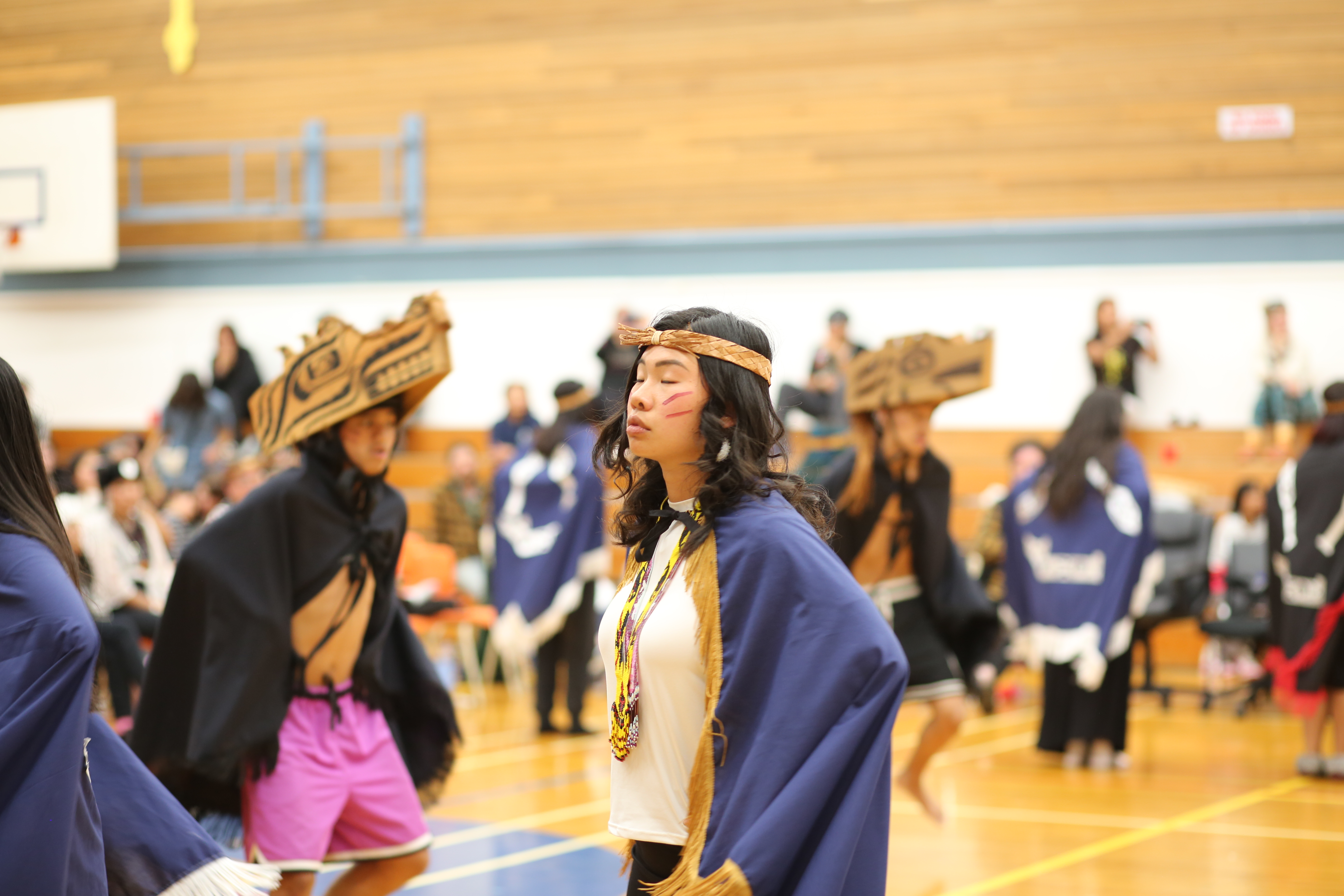
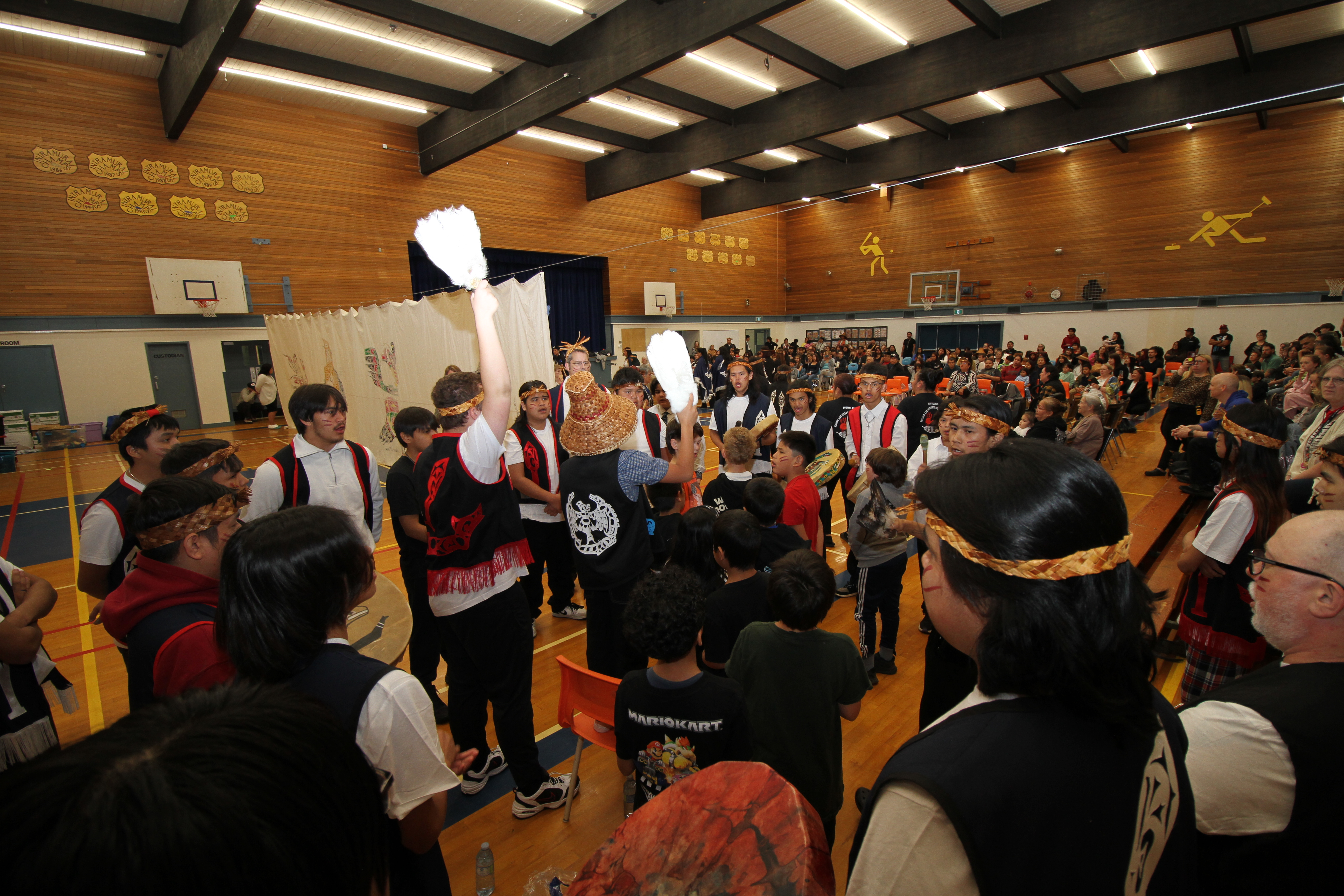
An annual tradition amongst Vancouver Island’s northwest school district continued this month with a spring potlatch at Gold River Secondary.
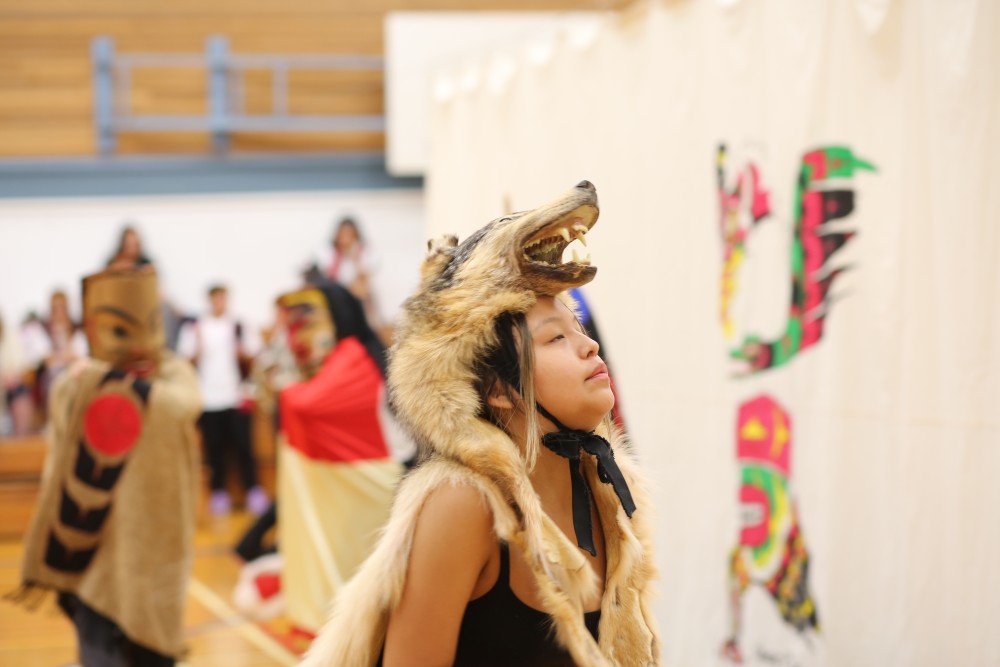
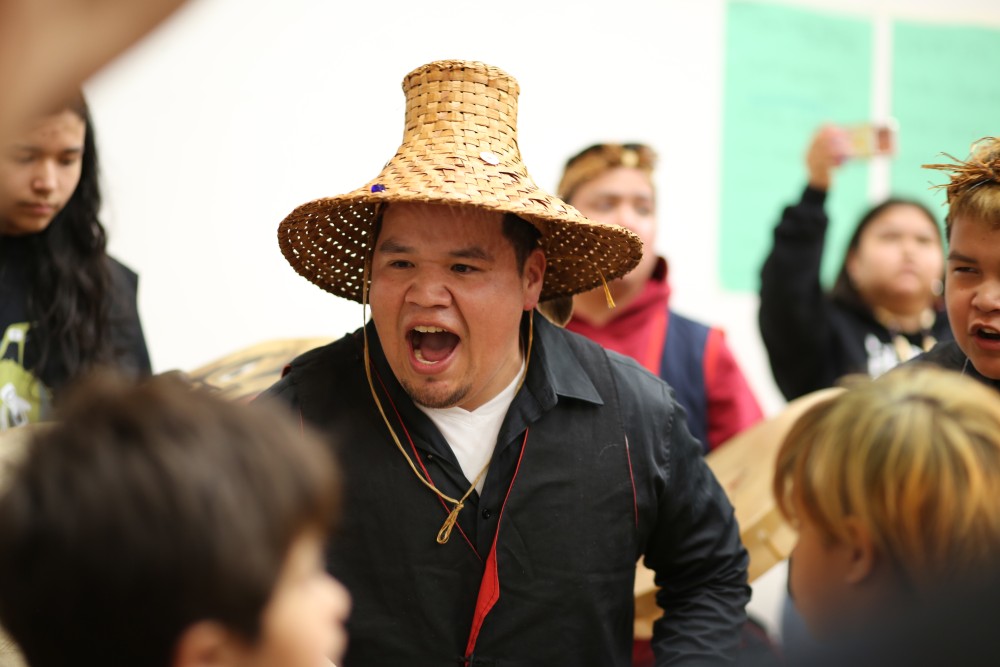
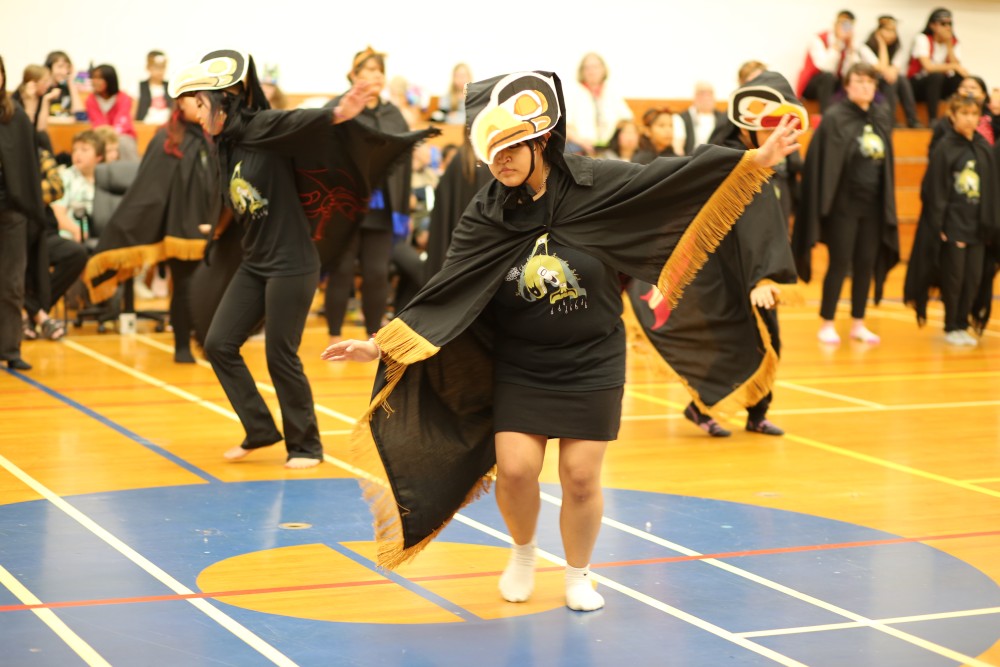
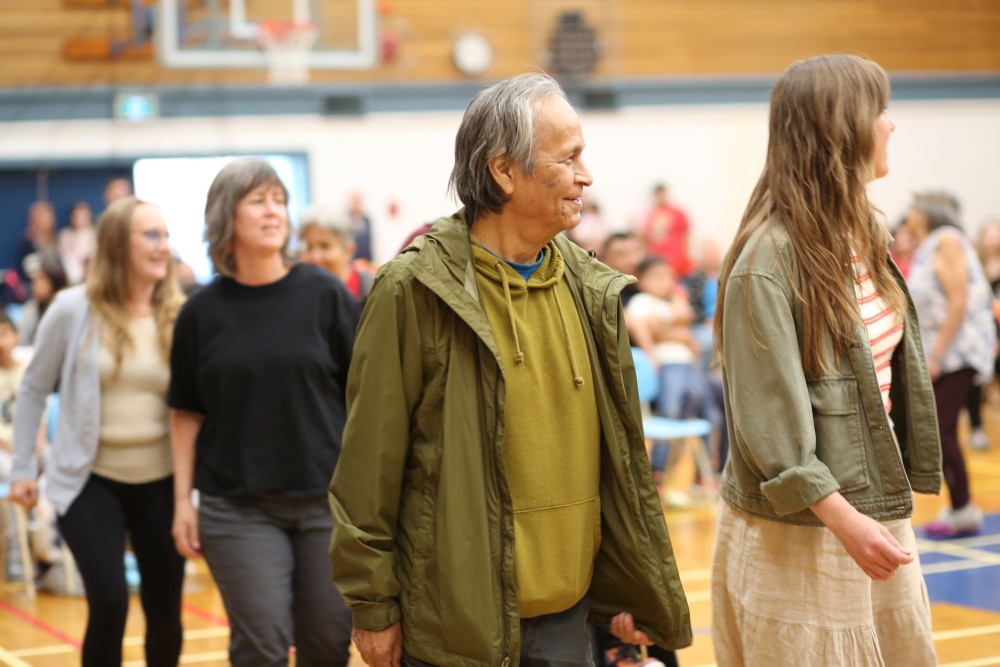
On May 12 the high school’s gymnasium was packed for a day of cultural performances in the territory of the Mowachaht/Muchalaht First Nation. Among those in the select seats by the dance floor was Mowachaht/Muchalaht Tyee Ha’wilth Mike Maquinna, who observed a generation shift in how School District 84 has come to embrace the Indigenous heritage of the region - something he didn’t encounter during his youth.
According to the B.C. Ministry of Education, 52 of Gold River Secondary’s 88 students identify as Indigenous – a majority that is reflective of the northwestern school district. About half of the high school participated in the potlatch, including several non-Indigenous students, said principal Jeff Rockwell.
“I thought it was a beautiful day,” he reflected as the gym emptied later in the afternoon. “There was a real spirit of unity. Song and dance really catches your heart and brings people together, lifts them up in a good way. It’s nice to see kids of all tribes, native and non-native, coming together. It’s a beautiful way to engage kids, break down barriers.”
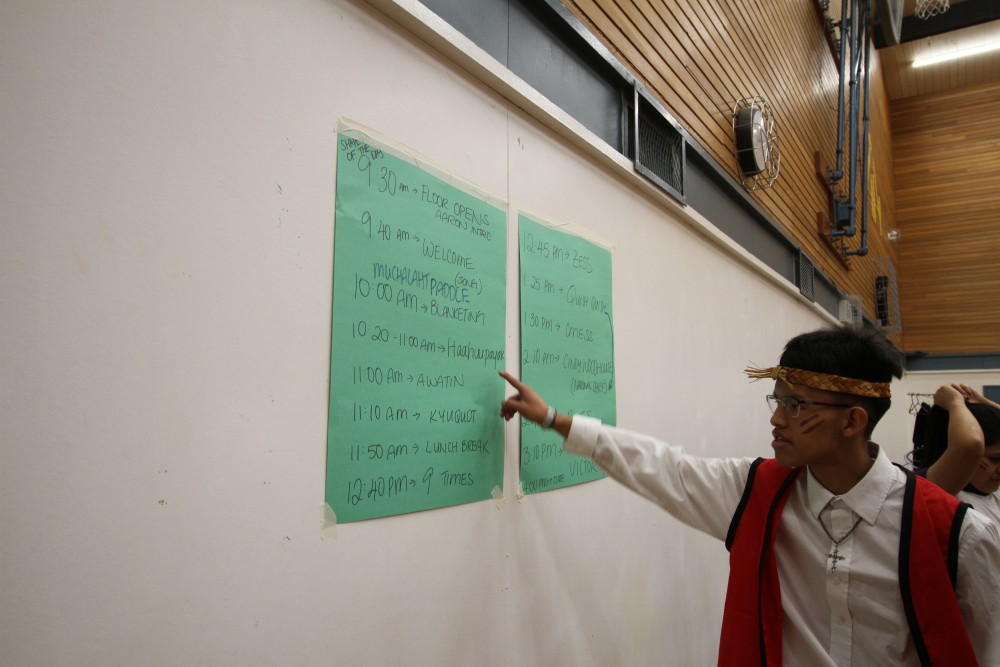
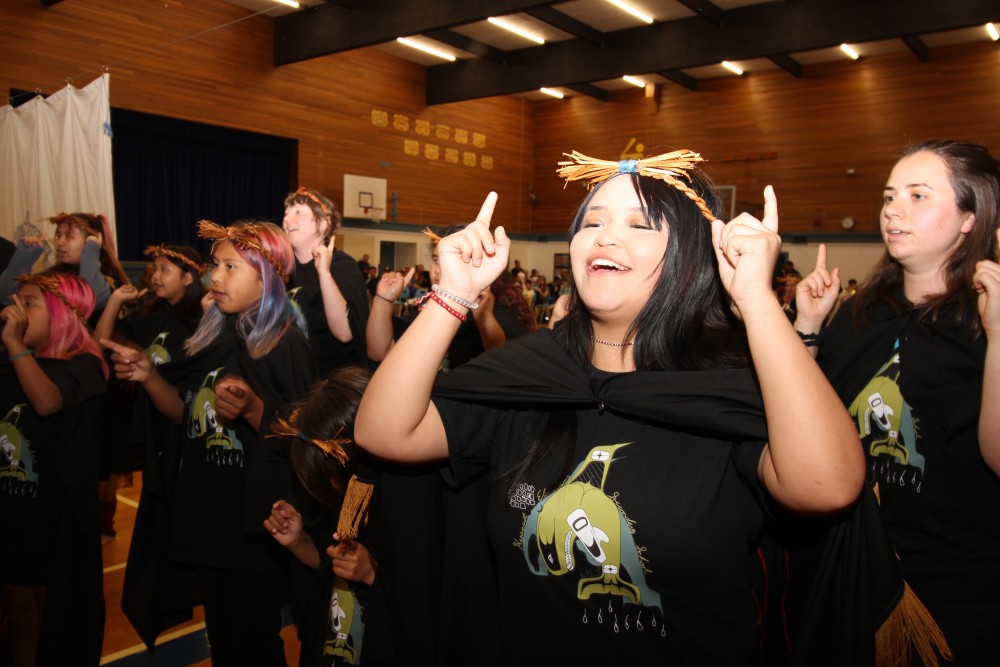
Students from Gold River’s Ray Watkins Elementary were also there to contribute to the singing and dancing, as were school groups who travelled from Kyuquot, Zeballos, Tahsis and Port Alberni’s Haahuupayak Elementary School.
“Sometimes we need to believe in things that we cannot touch or explain,” said Haahuupayak teacher Trevor Little to the audience.
Travelling from their location on the Tseshaht First Nation reserve, the Haahuupayak students gave several performances, including some wearing masks and regalia depicting animals.
“We are part of this world, we’re not on top,” commented Little during the performance. “It’s a reminder of our responsibility as human beings.”
Rockwell admitted that it can be more of a challenge to get youngsters involved as they approach adolescence.
“As soon as they hit puberty everything becomes more about self image and people are a little bit shy,” he said. “We don’t force people. This is a sacred beautiful thing, and we open the door for anybody who wants to.”
A large group came from Kyuquot, further north on the Island’s west coast, who practice every Monday and Wednesday. The youngsters benefit from the teachings of Daisy Hansen.
“Grandma Daisy usually talks to everyone before we start, how to be respectful and all that, and the rules for the potlatch,” said 16-year-old Brian Gibson.
Lake many boys in the group, 17-year-old Blake John has been singing since the age of 3. Despite over a decade of practice, he notices the difference if a session is missed.
“If you miss practices you won’t get the drum beat right or the singing properly,” said John.
“If you miss too many you won’t be able to go on trips,” added 14-year-old Quentin Hansen, whose group ventured to perform in Prince Rupert last winter.
“I like the feeling I get when I’m singing. It feels good and soothing,” said John, noting that troubling thoughts disappear when the drumming starts. “When I start singing it just goes away.”
The school potlatch is the result of months of preparation, and Rockwell has seen how becoming involved in the celebration of Nuu-chah-nulth culture lifts some teenagers out of depression and even substance use.
“For some of them, it’s a lifeline. This is really grounding for them,” said the principal. “It’s medicine for a lot of our kids. It gives them a sense of dignity and pride. You can see by the way that they carry themselves.”
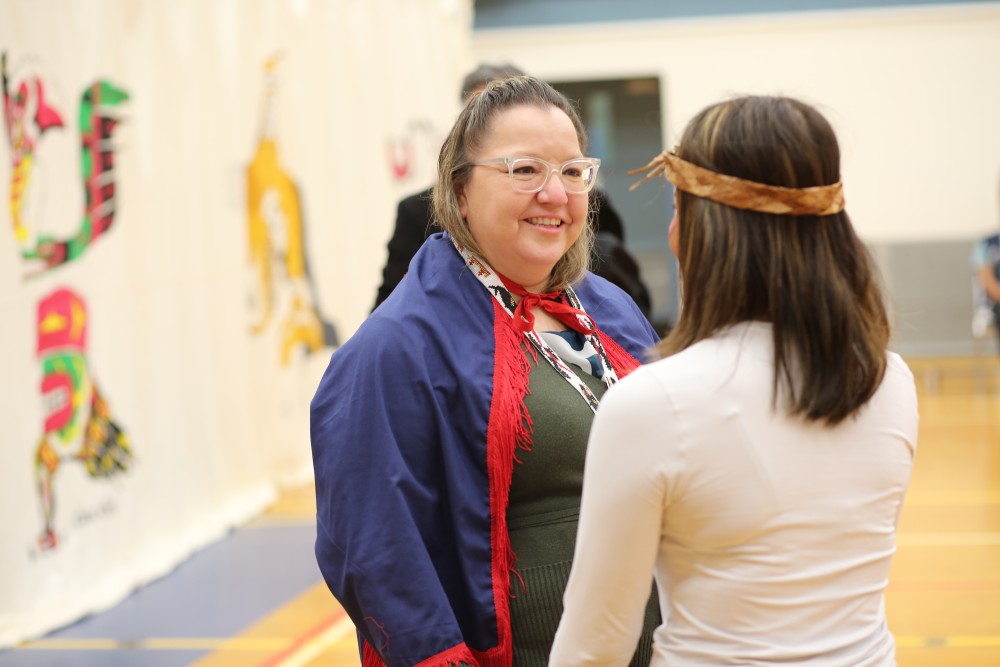
This year the school potlatch saw a visit from a high-profile figure in the national advocacy of First Nations interests. During her visit to Gold River Cindy Woodhouse Nepinak, national chief of the Assembly of First Nations, came to watch the performances at Gold River Secondary in the mid afternoon. She was honoured with a shawl gifted by Mowachaht/Muchalaht members.
School District 84 has hosted annual potlatches for over 15 years, rotating amongst SD84’s schools in Gold River, Tahsis, Kyuquot and Zeballos.