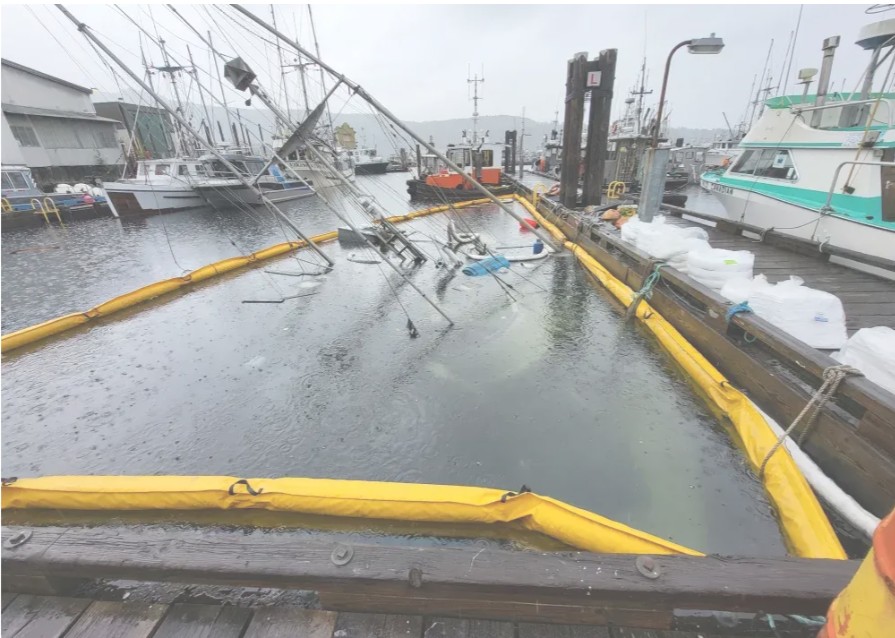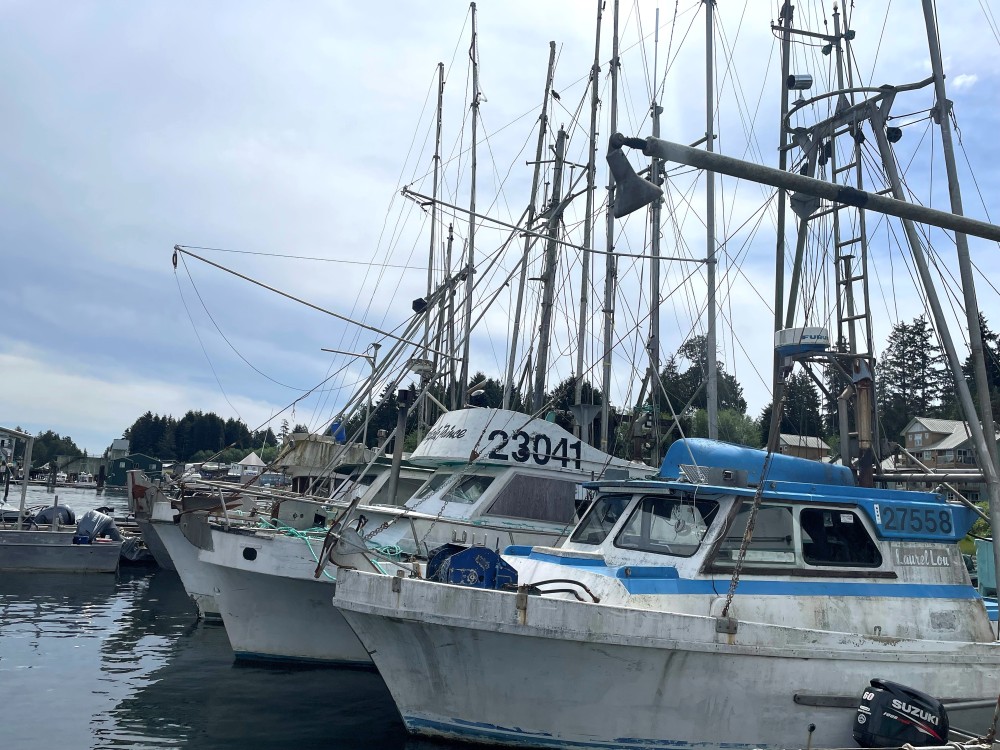
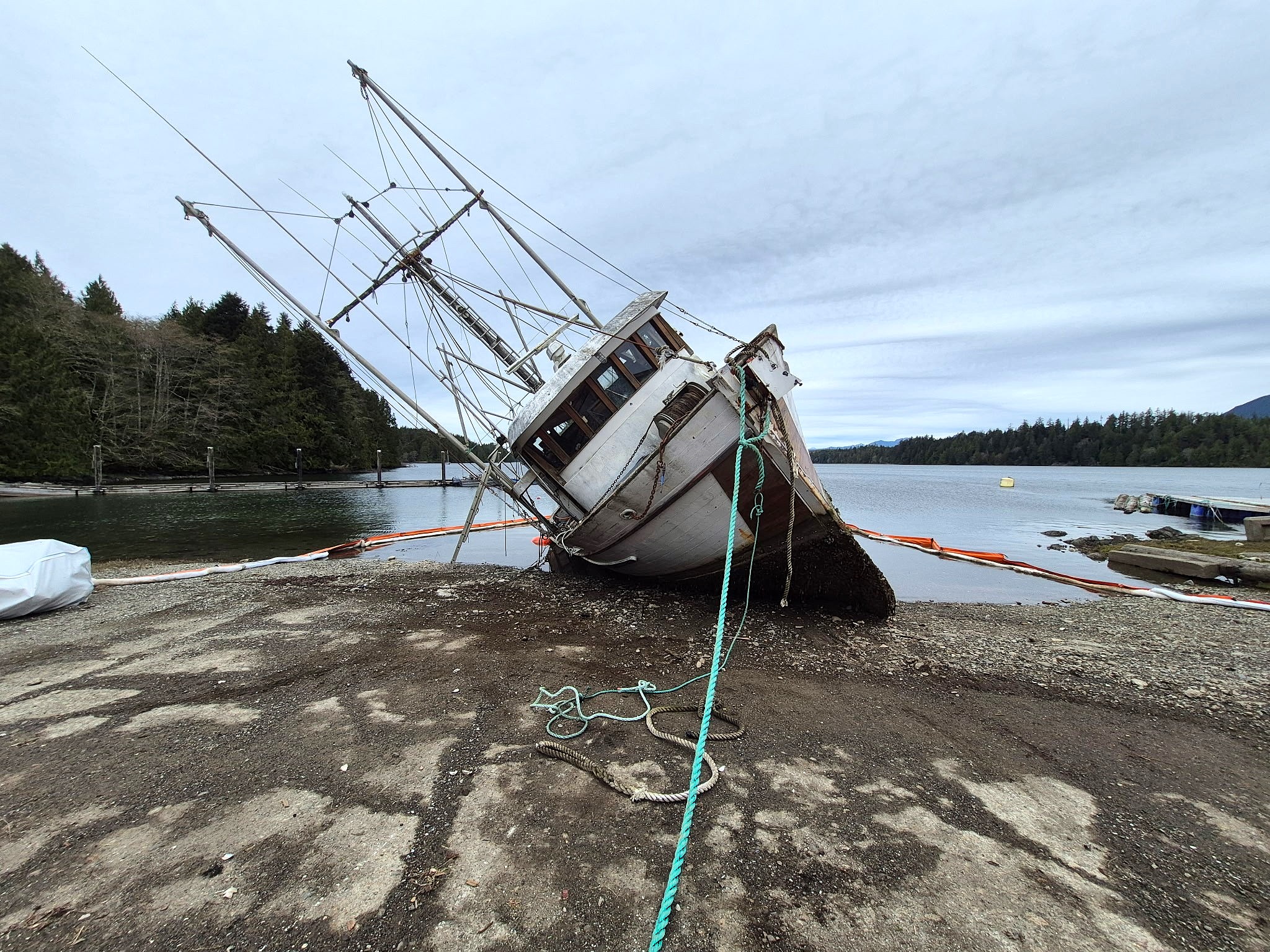
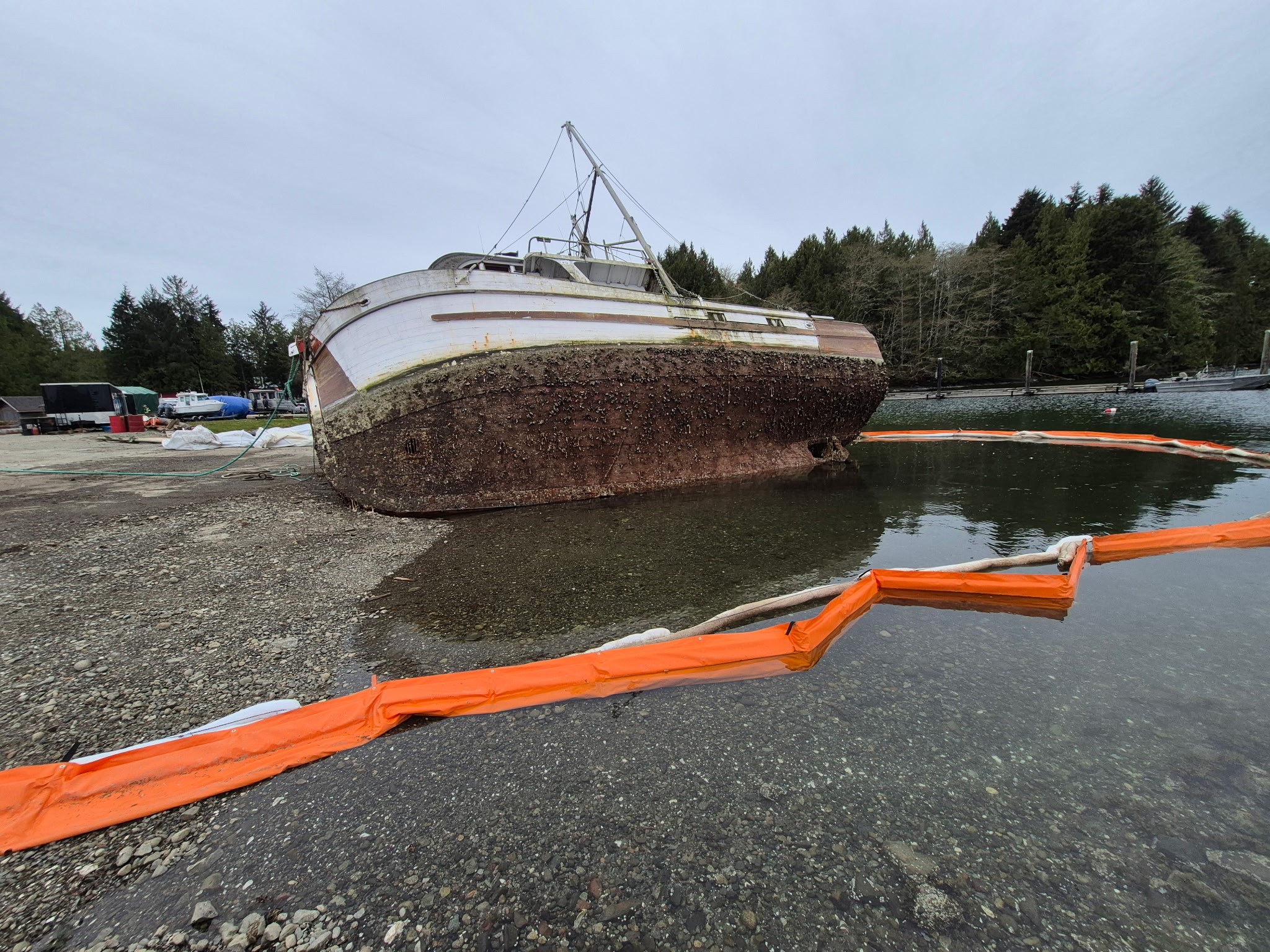
Down the dock of broken dreams lies a fleet of old fishing boats that are the end of their life – and there’s next to no money left in federal or provincial coffers to do anything with them.
The federal Abandoned Boats Program (ABP), which was launched in 2017 with an initial investment of $6.4 million, was not renewed.
“There is no more funding for ABP at this time,” said Transport Canada in a May 29 email.
The program disposed of 223 abandoned and wrecked vessels in Canadian waters.
Provincially, the Clean Coast, Clean Waters initiative (CCCW) that funded derelict vessel removal projects in Tofino, Ucluelet, Opitsaht, Tla-o-qui-aht and Ahousaht, removing a combined 65 vessels from these communities, is also closed.
“There is currently no funding allocated for CCCW and no organizations will be receiving funding through this program in 2026,” said the Ministry of Environment and Parks.
The ministry recommended exploring federal programs, “as the federal government holds primary responsibility for managing derelict, wrecked and abandoned vessels.”
Fisheries and Oceans Canada (DFO) has the Abandoned and Wrecked Vessels Removal Program (AWVRP), which has removed and disposed of 259 vessels across the country since its inception in 2017, including 131 in DFO’s Pacific Region.
But AWVRP is limited in scope as it’s available only to vessels located on DFO small craft harbour property and its annual budget is only $250,000 to support applications submitted by harbour authorities nationwide.
“That’s five decent size boats,” said Ben Boulton, project manager and vessel captain with the Rugged Coast Research Society.
DFO says the cost for the removal and disposal of vessels can vary significantly, from less than $10,000 to $50,000. In the previous fiscal year (2025-26) the program secured additional funding, enabling the removal and environmentally responsible disposal of 40 vessels – 33 of those boats were removed from harbour authorities in B.C., according to DFO.
Launched in 2017, Rugged Coast started out by mapping coastline for marine debris. From that, the society found the need for clean-ups, which led to wrecked vessel removals. They have since removed 95 wrecked or abandoned boats from B.C. waters.
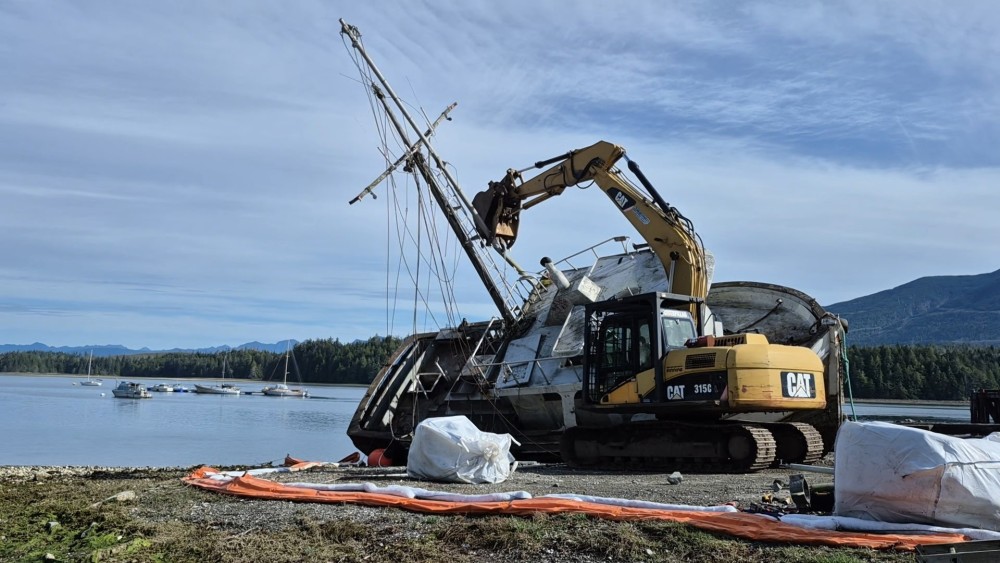
Recently in April, Rugged Coast removed a vessel called the Mikley from Tofino’s Fourth Street Harbour for roughly $50,000. Harbour manager Momtchil Momtchilov reported that the removal of the 40-foot wooden fishing boat with a 15-foot beam was funded under DFOs Abandoned and Wrecked Vessel Removal Program.
“We’re dealing with higher costs out on the West Coast. East side (of Vancouver Island), it’s a lot easier because we have boat lifts, but we don’t have that infrastructure here,” said Boulton.
Due to the lack of space and the absence of a boat lift at Tofino’s harbour, Rugged Coast towed the Mikley down the peninsula to Ucluelet where it was bridled with rope, pulled to land on the highest tide with an excavator and demolished; some parts were salvaged and recycled, but all the rotting wood went to the West Coast Landfill.
Boulton says the tipping fee, which was worked into their budget, was over $5,000.
“Coast Guard pulled off 5,000 litres of fuel and there was still another 500-litre tank hidden,” he said.
Environmental impacts
Wrecked and abandoned vessels pose a serious risk to the environment and traditional food harvesting. In a 2025 report written by the House of Commons Standing Committee on Fisheries and Oceans, chaired by Member of Parliament Patrick Weiler, several B.C. First Nations leaders raised concerns about derelict boats leaching fuel or other toxins - like heavy metals from lead paint - into the marine environment. The toxins can poison clam and oyster beds and damage Pacific salmon stocks.
Chief Lenora Joe of shíshálh (Sechelt) First Nation stated, “food security is huge in our community. The fact that we are unable to collect food in the way our ancestors did is very concerning and serious.”
The national inventory of wrecked, abandoned or hazardous vessels lists 935 entries in British Columbia (filtered from 1,355 total entries). Of those 935 entries, 175 are classified as fishing vessels.
“We have all the old fishing fleet that is aging out and we have no plan for it,” said Boulton. “Where do we send these boats? You look at any harbour and we have half a dozen vessels that are nearing the end of life.”
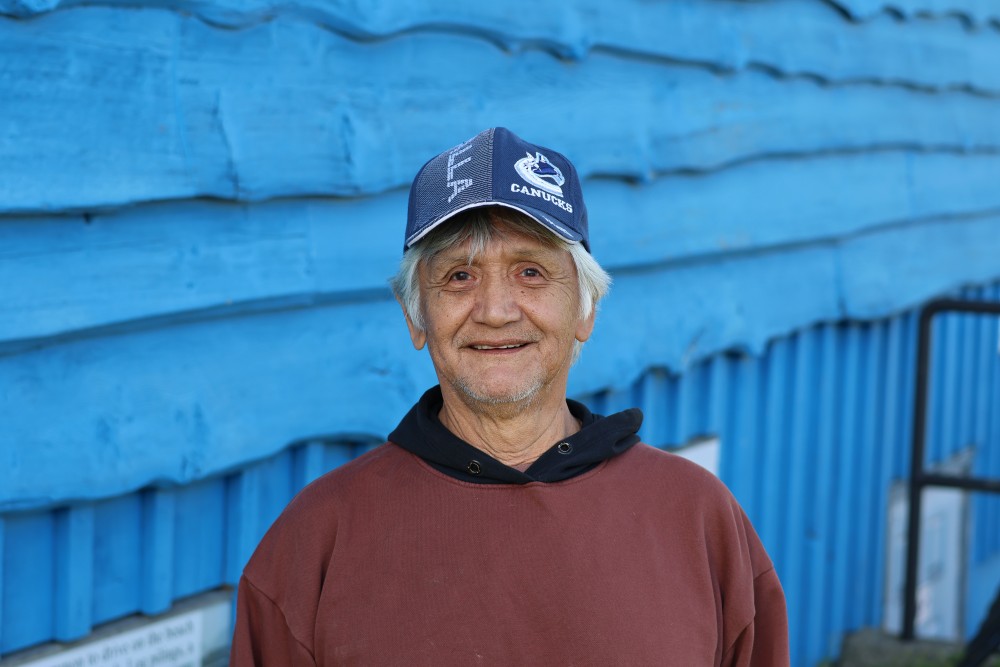
Joe David is a Tla-o-qui-aht First Nation elder and ex-fisherman. He says there are “no less than 10 boats on the Ty-Histanis reserve that should be disposed of.”
Ty-Histanis is located about a 15-minute drive south of Tofino within the Pacific Rim National Park Reserve.
“I believe (boat disposal) should be done yearly. We shouldn’t even have 10. We shouldn’t even have one,” said David. “With our new council in place, I think those things could be re-addressed, especially with contaminants on some of the boats. It doesn’t justify even having one on the beach with contaminants inside them.”
In Maaqtusiis, Ahousaht First Nation’s main village about a 45-minute boat ride from Tofino’s Fourth Street Dock, former harbour manager Kurt John says they have around 20 fiberglass speed boats littering the community and a couple of wooden vessels that are “taking up space at the dock”.
“Boats hold a lot of sentimental value. People can’t let go,” said John.
He said over the years he was Ahousaht’s harbour manager, they removed about 50 vessels and cleaned up the seafloor at the dock, which cost upwards of $250,000 because they had to barge all the boats out.
Buying a boat for $1
Boulton shared that boat owners tend to give away old boats for free or for $1 to avoid paying for proper disposal.
“If you are buying a boat for a dollar then there must be something wrong with it. Don’t ever buy a wooden vessel. Think for the future; aluminum or fiberglass vessels,” said John.
In 2019, the Government of Canada created the Wrecked, Abandoned and Hazardous Vessels Act (WAHVA) for irresponsible management to address vessels of concern. Under the Act, individuals can receive monetary penalties of up to $50,000 while corporations could be issued fines up to $250,000. It also gives authority to the Ministry of Transport to transfer an abandoned vessel to a third-party to dispose of the wreck.
“Imagine someone that has bought a boat for a dollar. They don’t have $50,000 to dispose of a boat,” said Boulton.
The Clean Coasts Act (Bill-C244) is new legislation introduced in 2025 that attempts to amend WAHVA by prohibiting the transfer of vessels to people who boat owners know can’t safely maintain or dispose of them. It also amends the Canadian Environmental Protection Act so polluters are held legally liable for marine dumping and hazardous leaks without requiring proof of intentional dumping. The legislation passed its second reading and is currently under consideration from the standing committee.
In Washington State, the Department of Natural Resources has a Vessel Turn-In Program with the goal of removing boats before they become abandoned or derelict. If boat owners qualify, the disposal is free.
Boulton says Washington State’s boat removal process is exceptional because it looks ahead at the end of a vessel’s life. He would like to see a portion of money received through boat registry allocated to a vessel removal program.
“We need a program that funds itself,” he said.