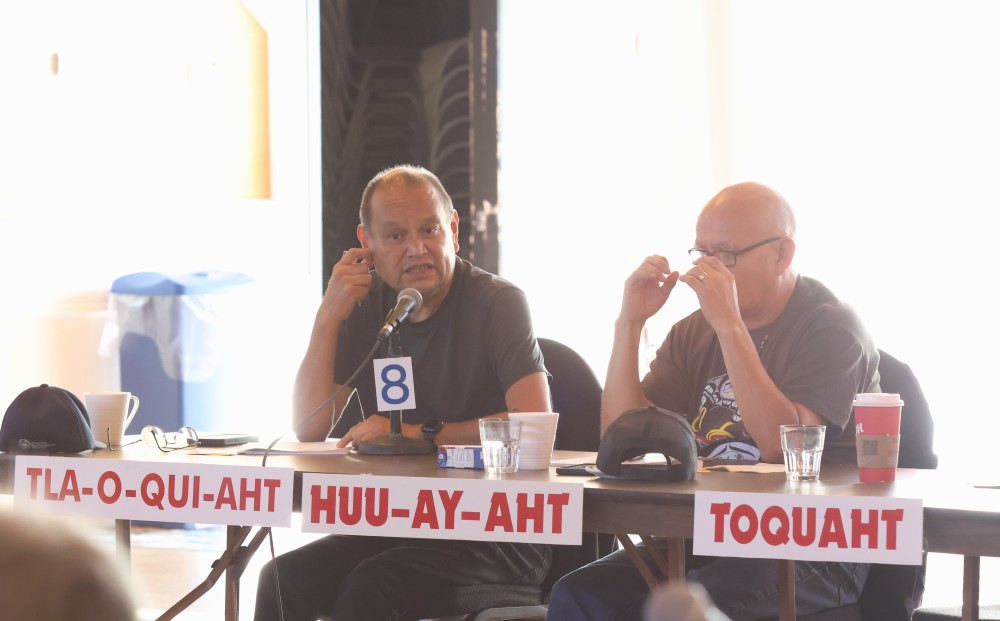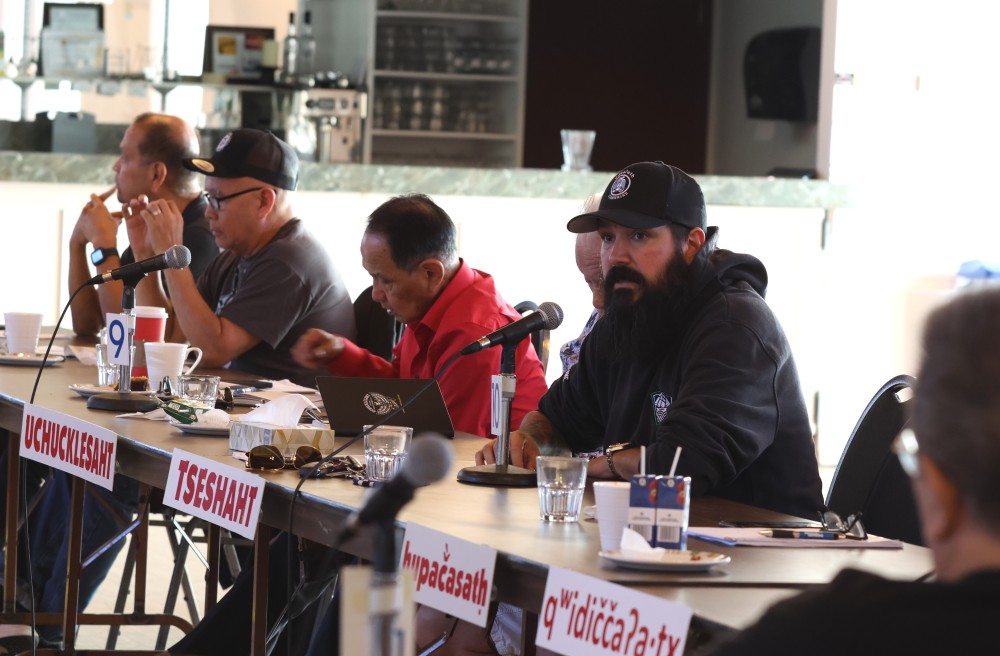
The Council of Ha'wiih (hereditary chiefs) and their representatives from 14 Nuu-chah-nulth Nations gathered at the Italian Hall in Port Alberni Oct. 7 and Oct. 8 to discuss several priority fisheries issues.
The two-day Ha’wiih fisheries forum was hosted by Tla-o-qui-aht First Nation and chaired by Wickaninnish (Cliff Atleo Sr.) of Ahousaht First Nation.
Once again, the Council of Ha’wiih responded to industry pressure to reopen the west coast herring fishery.
“We have been the ones that have watched that slow progression to improvement. Yes, it’s starting to come back, but it needs to be like that every season. We are the ones that have been keeping the department to tow the line in terms of resource management. We are not opposed to it, we are just saying do it right. Manage it properly,” said Wickaninnish.
Tla-o-qui-aht fisheries manager Andrew Jackson weighed in.
“We need to continue to keep it closed. We need to hold the line. We can’t say it’s recovered yet because herring is just starting to show up in our territory,” said Jackson.
Under the Department of Fisheries and Oceans Canada (DFO) management plans, the west coast of Vancouver Island has been closed for a commercial herring roe fishery since 2005 – with the exception of 2014 and 2015. In those respective years a Nuu-chah-nulth-led court injunction blocked the commercial catch, followed by a meagre season in 2015 that yielded no significant harvest.
DFO’s Pacific Herring Science Team presented spawn data to the Council of Ha’wiih on Oct. 8. The department estimates 2027 will yield 44,300 tonnes of pre-fishery spawning biomass for a maximum Total Allowable Catch of 4,430 tonnes or a 10 per cent harvest rate.
However, as Nuchatlaht elder and councillor Archie Little pointed out, El Niño events could disrupt how marine species are distributed along the entire west coast.
Scientists at the National Oceanic and Atmospheric Administration (NOAA) are currently working to observe and forecast how the 2026–2027 El Niño event will impact fisheries and a team of researchers at the University of British Columbia found that extreme events, like marine heatwaves, can abruptly disrupt marine food webs and the productivity of fish stocks.
DFO Pacific Herring Science Team was unable to clearly answer Little as to whether or not the departments’ west coast of Vancouver Island herring analysis factored in the forecasted El Niño, although they stated it was “definitely a consideration”.
James LaFlamme, Tseshaht fisheries manager, spoke about rebuilding kelp forests to renew herring abundance.
“One of the things we found is the urchins were the problem. The urchins are coming in and they are grazing down the kelp. Their predators are not prevalent in the (Broken Group Islands) and there is a large sea star die off up the coast as well,” said LaFlamme.
“These urchins are perpetual problem for rebuilding these forests, and I think that rebuilding these forests helps not only the future of herring, the future of roe on kelp, but the future of the ocean as a whole,” he continued.
“Increasing that ocean survivability is a big part of it. It all trickles back to kelp,” said LaFlamme.
Acting Ahousaht tyee ha’wiih Hasheukumiss (Richard George) spoke about revisiting traditional practices to rebuild the herring stocks.
“That’s nation-to-nation, community led harvest planning; a rebuilding plan. These herring can be transplanted. Ahousaht has a really good herring stock at the moment. We had 20 days that were completely flooded. Where we really want to go forward to at the moment is continuing our stewardship programs with other nations,” said Hasheukumiss.
He invited all Nuu-chah-nulth nations that don’t have an abundance of herring in their territory to send their guardians over.
“We rebuild it ourselves. We want to gift to you the gift of herring to bring back to your territories to start our rebuilding and to show the government that this is possible,” he said.
Andy Webster, a lifetime fisher who represented Ahousaht at the forum, thinks it’s still too soon to open the commercial herring fishery.
“I’ve seen the resource collapse three times in my lifetime. That’s unacceptable,” said Webster.
“The big boys are starving that’s why there’s a big push to open it. To me, it’s not the time from what I’ve seen out on the water,” he said.
Larry Johnson, chair of the Maa-nulth Fisheries Committee and president of the Nuu-chah-nulth Seafood Development Corporation, suggested working towards an open pond fishery.
“If we are forced to make a decision, I would recommend we support open pond,” said Johnson.
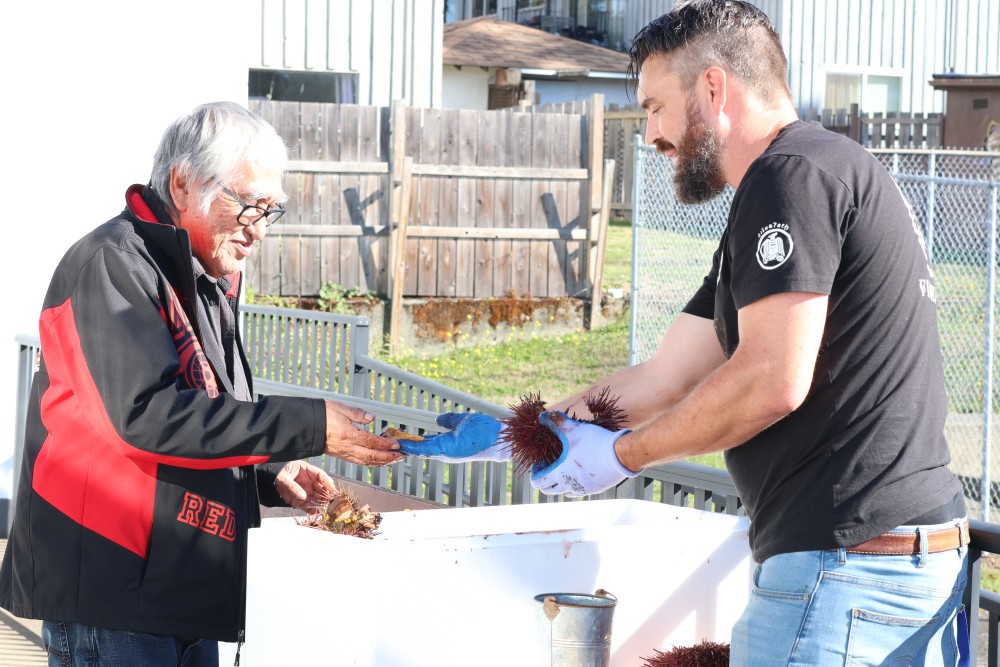
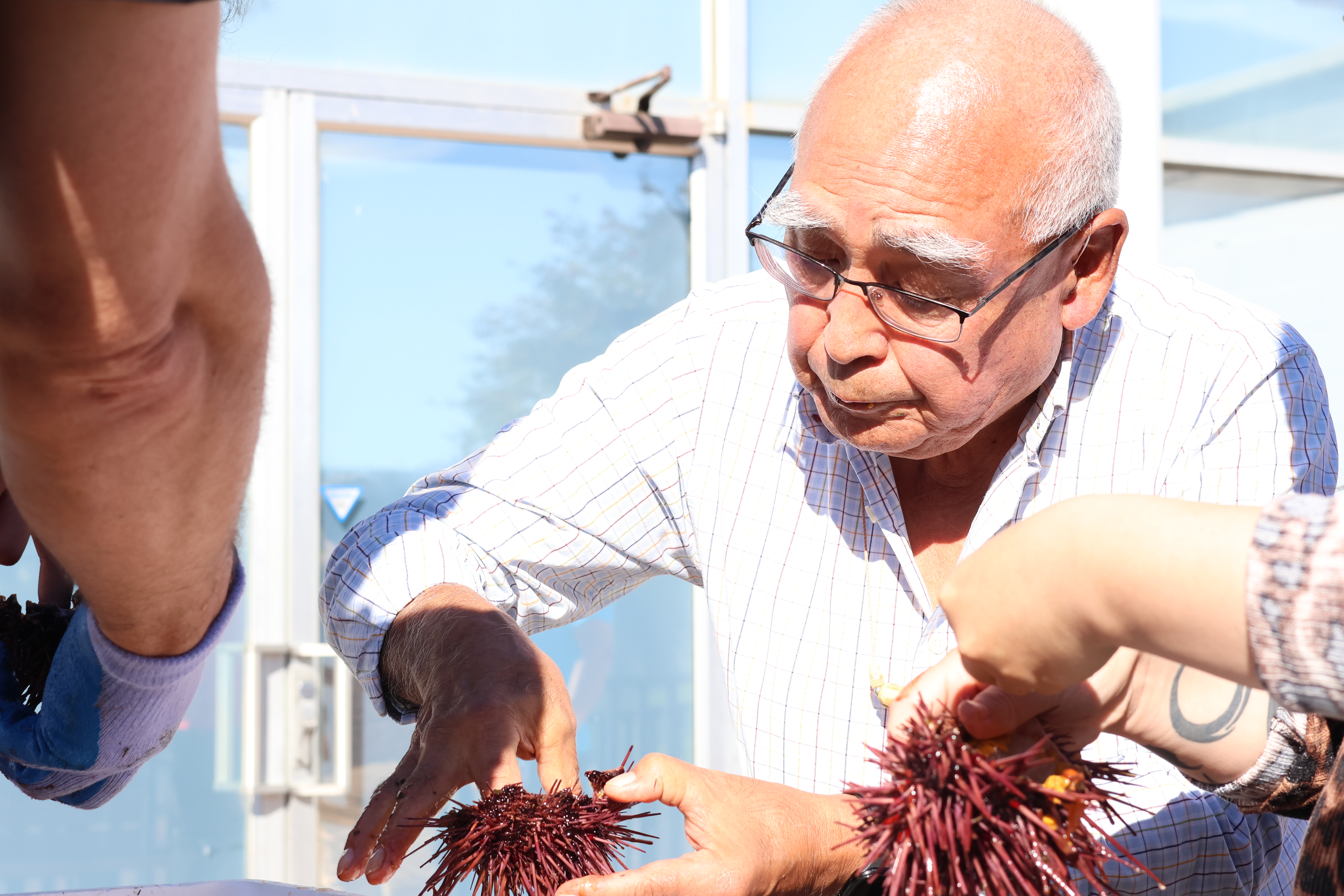
Discussions on herring were paused when Tseshaht fisheries delivered fresh t̓uc̓ap (sea urchin) from Useless Inlet near the Broken Group Islands for the ha’wiih to feast on.
At the tail end of the fisheries forum, Hupačasath tyee ha’wiih Tsu-tsii-in (Alton Watts) spoke about connection.
“Out of everything, we have to work together to get to where we want to be again,” said Tsu-tsii-in.
Nuu-chah-nulth Uu-a-thluk director of fisheries Jim Lane is preparing a letter for DFO which outlines the Council of Ha’wiih’s key messages regarding herring. Lane says it is up to the ministry to make the call on whether to open or not, and a decision may come as early as January 2027.
- With a file from Eric Plummer