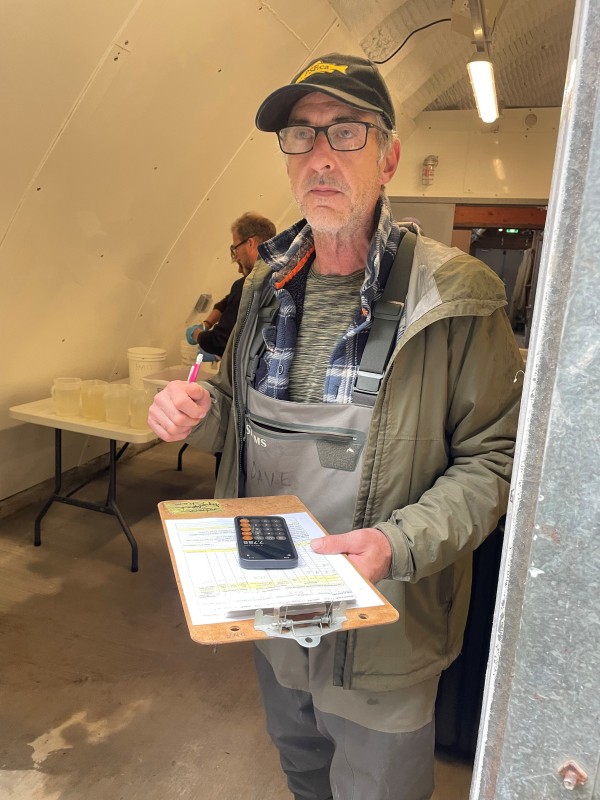
Thornton Creek Hatchery manager Dave Hurwitz is piping mad.
This fall, Hurwitz witnessed a crew from the Department of Fisheries and Oceans Canada (DFO) shut down a salmon enhancement project at Salmon Creek in Barkley Sound during a critical time in the chum river-run. Instead of completing the job, he said DFO left a migratory barrier at the site – and a lot of unanswered questions.
“How could they leave this stream to die on the operating table? What was the showstopper? I’d like to know,” Hurwitz cussed.
A couple years ago on October 19, 2024, Hurwitz said a “catastrophic” rainfall event caused the fish ladder to fail at Salmon Creek, a spot in Yuułuʔiłʔatḥ territory known as Glukamukus Creek. Thornton Creek staff made urgent repairs to the ladder system that same week, and plans were initiated with DFO to replace the aging infrastructure.
Summer 2025 came and went, and Hurwitz says DFO “couldn’t do anything” about Salmon Creek that year due to capacity limitations. Then summer 2026 arrived and DFO showed up with a crew at Salmon Creek to build a new fish ladder that would assist the fish in accessing a culvert that leads to their spawning grounds.
“Before the road went in you didn’t need a culvert. The river just flowed. Once we built the road, we needed a culvert so the fish can get up. Once we build something we have to take care of it,” he said.
On Sept. 11, Hurwitz said he went to check on the site and saw DFO shutting the project down.
“I don’t know who stuck a fork in it,” said Hurwitz. “I don’t really know why they stopped. They still had a couple days in the fisheries window. There was no rain coming for a few days and they were right there. Like, why didn’t they get it done?”
The site was left in such a state that the chum salmon would need to make a three- to four-foot jump to access the culvert.
James Costello, Thornton Creek Hatchery operation manager, says there’s no way a chum can jump that high.
“Chum are poor jumpers. Anything over about a foot or two they are not going to be able to get up. They are very strong, but they are terrible jumpers,” said Costello.
Silver lining
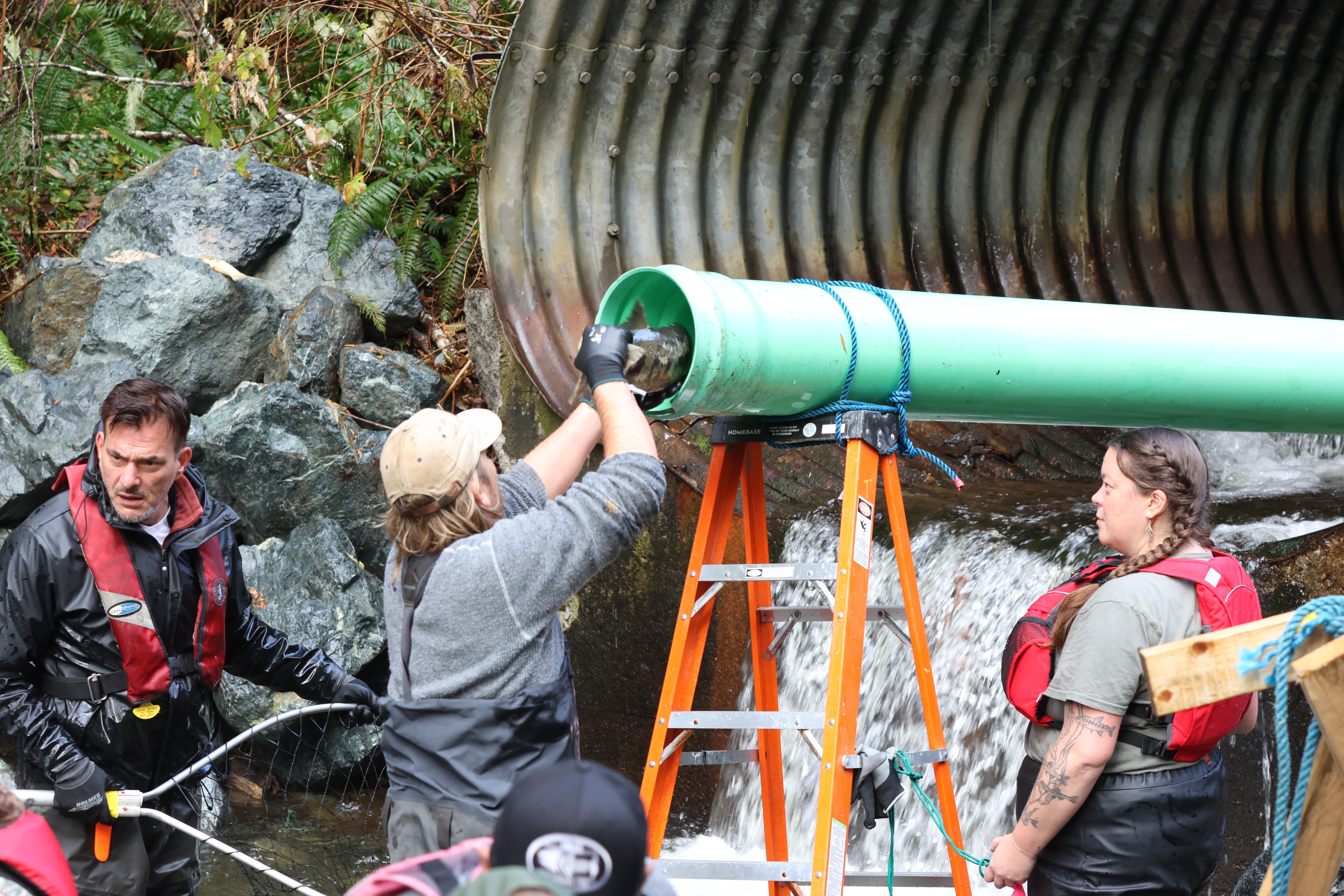
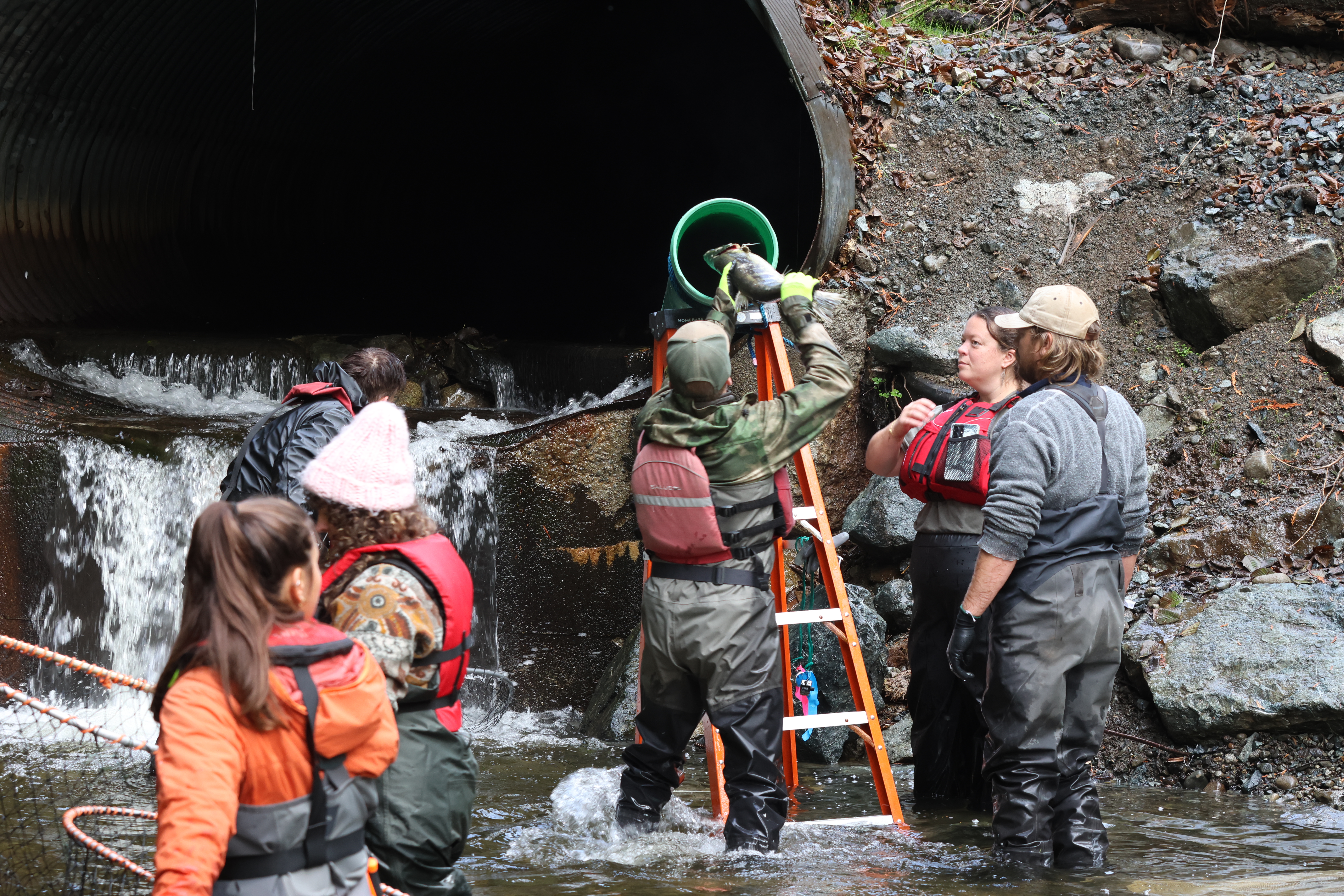
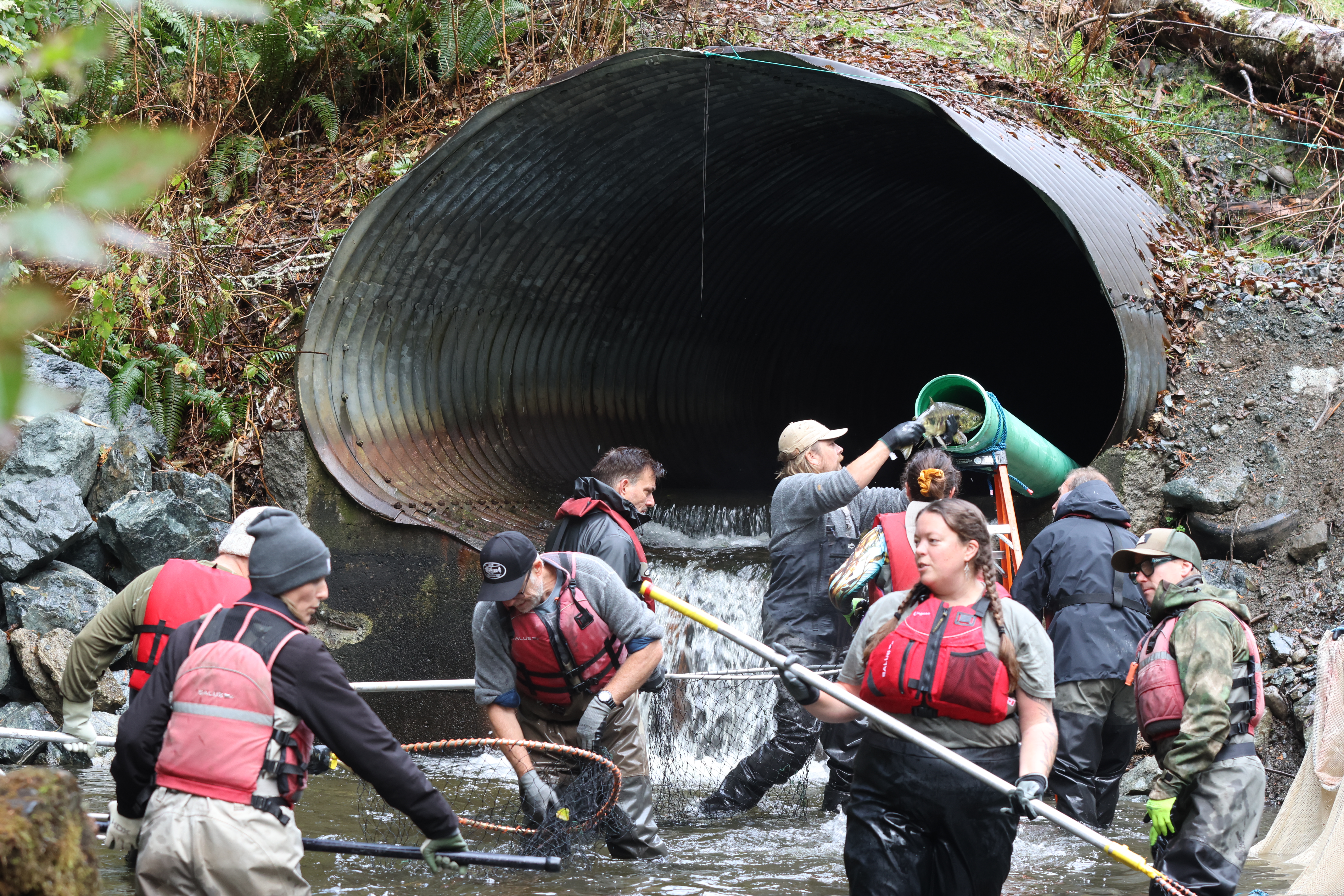
The silver lining to this story is the crew of volunteers that came together to move thousands of fish up into the culvert by hand. It’s been a team effort with folks from Toquaht Nation, Ucluelet First Nation, Redd Fish Restoration and other friends showing up to help, Hurwitz said.
“It speaks to people working together to help make the world better,” said Hurwitz. “It’s been a ton of work, but it’s turned into a great community initiative. People have rallied around this. It’s been a great opportunity for us to show gentle fish handling.”
Costello says it’s “unfortunate” that the timing of the abandoned ladder project lined up with a strong chum return; he says there’s been over 3,000 fish in the run this year.
Without the assistance from volunteers, Costello says the chum would have only been able to use three quarters of the creek system, and the fish would have “timed out downstream”, dumping their eggs or dying with their eggs inside them.
“We are so happy to have the assistance from the community. It’s a lot of manual labour. It’s a labour of love,” Costello notes.
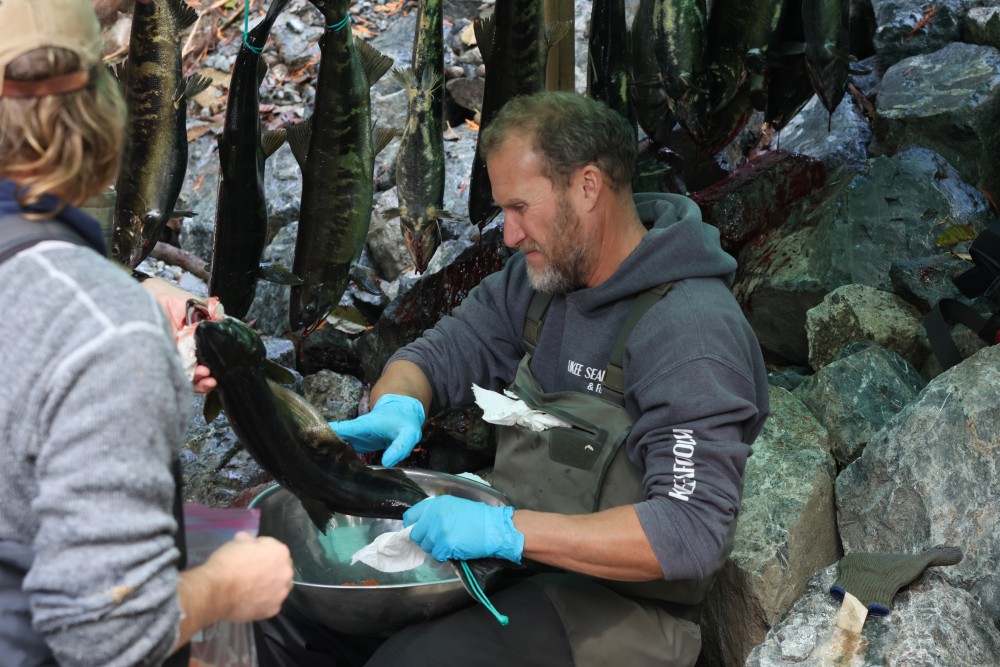
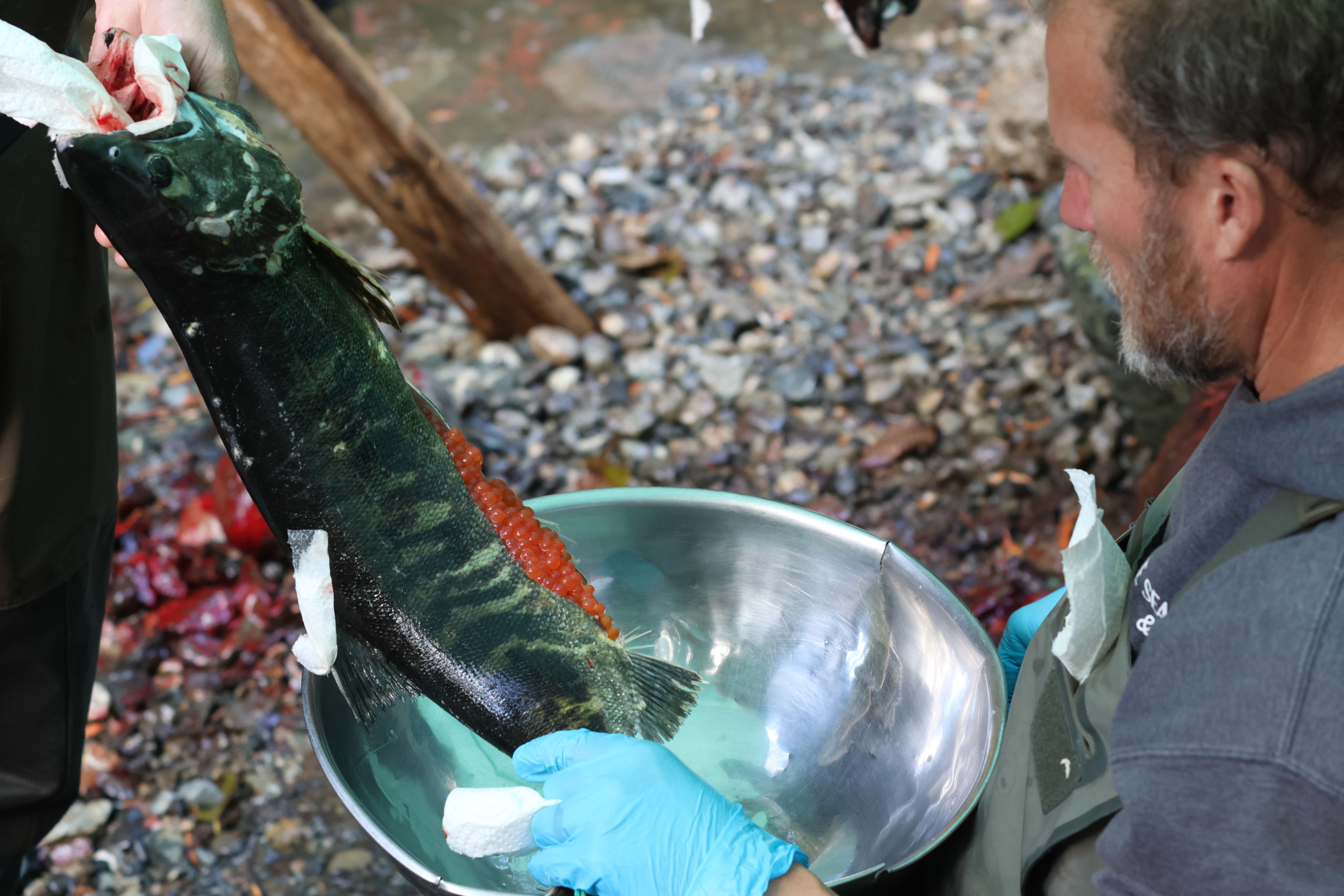
Ucluelet-based marine biologist Dane Stabel spent a couple days volunteering at Salmon Creek. Alongside 15 or so others, Stabel netted salmon and then dropped them by hand into a pipe that flowed into the culvert. They also gathered a subset of brood stock for the Thornton Creek Hatchery’s spawning program.
“It’s beautiful that there are so many people that care about fish and salmon. Sometimes the charismatic mammals get all the attention, but I find salmon are a good ambassador for fish,” said Stabel.
“(Salmon) are very important to the ecosystem and the culture here. It pretty much feeds everything. They are incredibly interesting. It’s hard not to root for an animal that goes through such a crazy journey just to spawn. There are very few animals who work as hard as these guys to get the next generation going,” he said.
DFO said that the installation of the concrete fish ladder, or rock weirs, could not be completed at the time “due to unsafe work conditions”.
“The second and final phase of construction is scheduled for the late summer 2027 fisheries timing window, and the rock weirs will be installed,” said DFO in a written statement to the Ha-Shilth-Sa News.
“Once completed, the rock weirs will improve fish passage and support salmon migration under natural watershed conditions, provided sufficient flow is available within the system,” they said.
Hurwitz is shaking his head in disbelief. He hopes something like this never happens again.
“When you’re dealing with live animals, you can’t make mistakes. You can’t screw it up. It’s not carpentry. If we screw something up, we are robbing Mother Nature,” he said.
As of Nov. 2, Hurwitz says the volunteer team has moved 2,587 chum salmon through the culvert up to their spawning grounds.