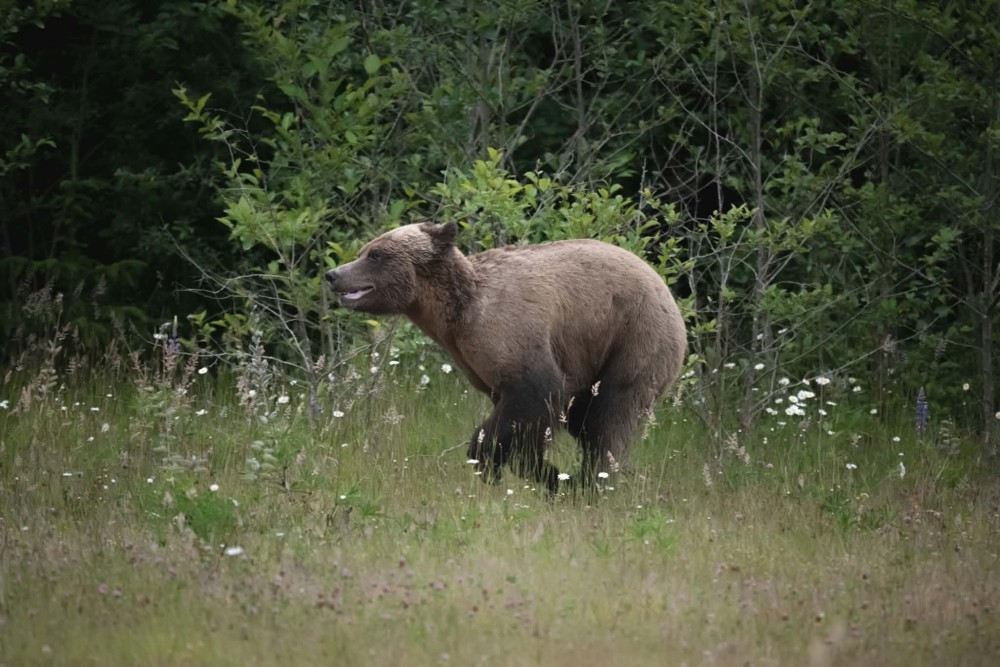
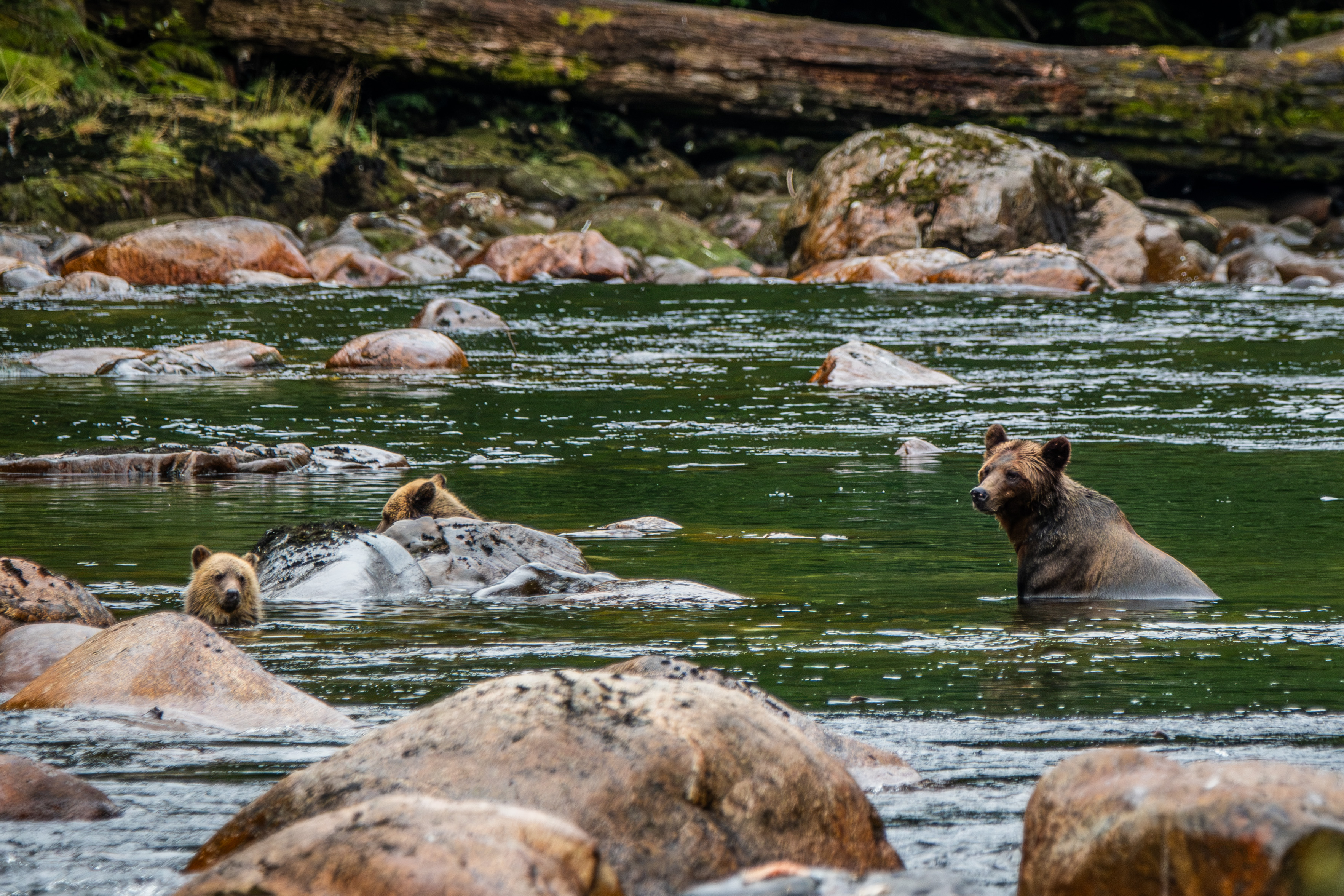
A juvenile grizzly bear was spotted dashing across the Zeballos Logging Road on northern Vancouver Island, B.C. at the end of September.
Ehattesaht-Chinehkint councillor Ernie Smith saw the young brown bear with a large hump on its back about six of seven kilometres down the logging road off Highway 19.
“We were driving home and all of sudden this grizzly bear ran across the road in front of us. We got a quick little video of it, but it was really fast. The grizzly bear ran into the bush. It was very afraid of us,” said Smith.
“We called conservation right away. They were glad it ran away so fast,” he said.
Grizzly bear sightings on the east coast of northern Vancouver Island are becoming more common. This summer, the Village of Sayward issued a public warning after a grizzly was sighted within the community in early May. Sayward is accessed by Highway 19, roughly four hours driving distance from Victoria.
In the summer of 2025, a wayward grizzly bear made Texada Island home after swimming to the island from Powell River. Texada Island is the largest of the Gulf Islands. The Texada grizzly was shot and killed illegally.
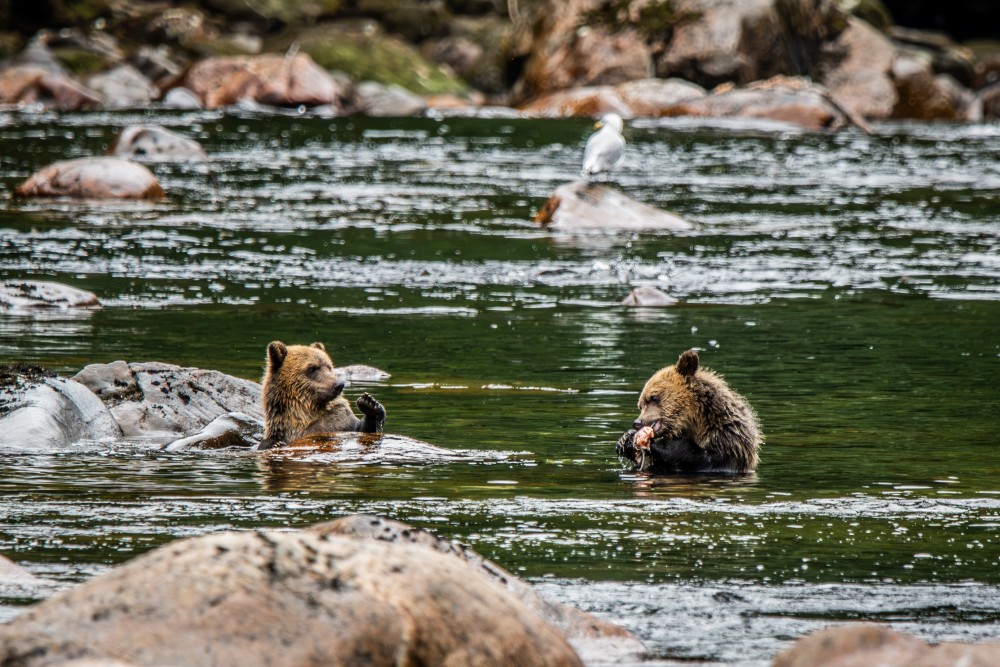
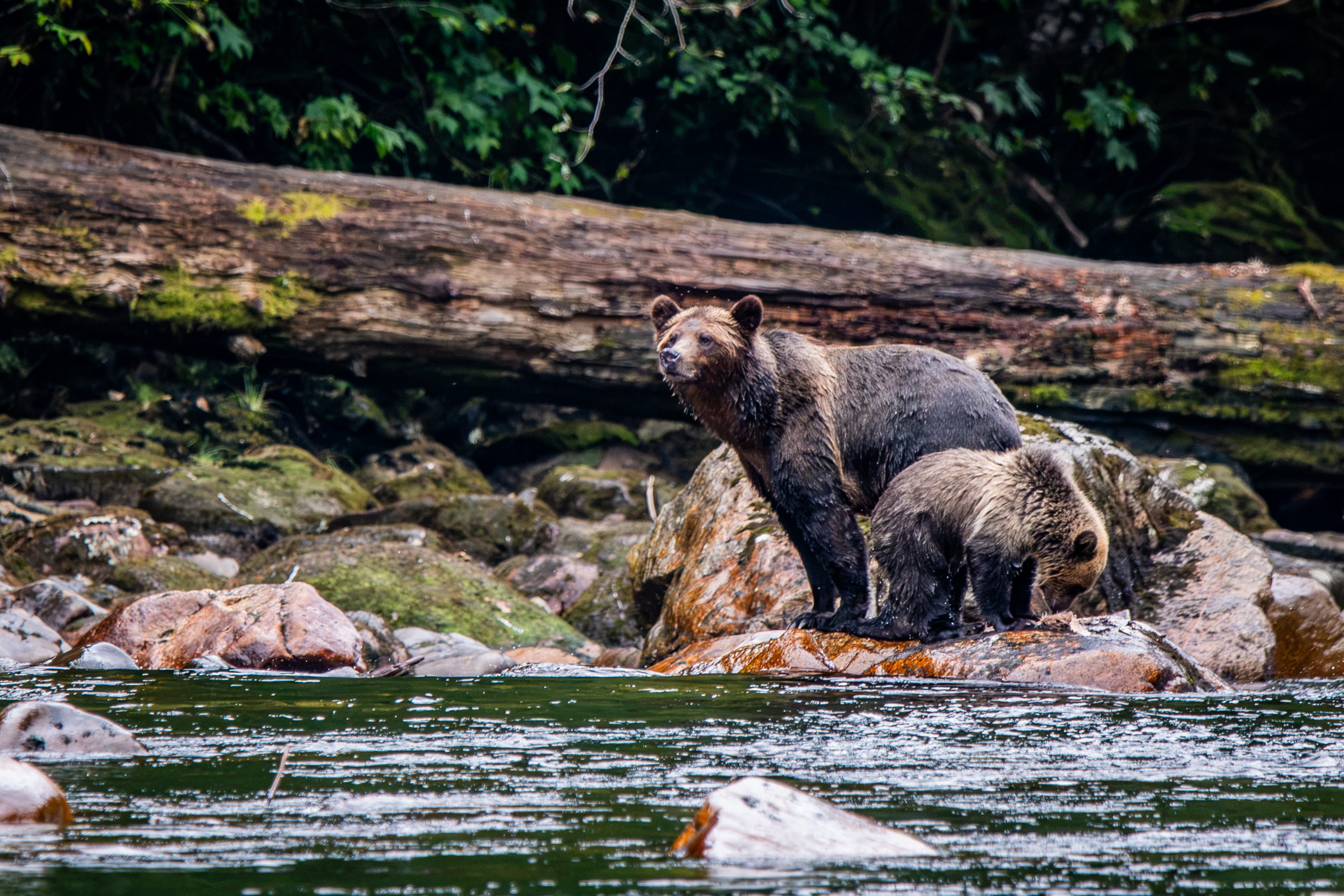
Kwakwa̱ka̱ʼwakw and Coast Salish wildlife photographer Tia Laughington has also been documenting a North Island grizzly family for a few years. Her tribe's crest is the grizzly bear, and she grew up in Alert Bay learning ’Námgis cultural traditions, which she says gave her a deep, ancestral relationship with these animals.
Laughington suspects that the young grizzly Smith saw is one “very adventurous”, bold male in a litter of three cubs she witnessed get “the boot” from their mother at the end of June. She said the grizzly cubs were born and raised right on Vancouver Island.
“Their mother was fairly small when she first gave birth to her three COY (cubs of the year), but as the seasons passed, she and the cubs gained an incredible amount of weight. Remarkably, all three cubs had a 100 per cent survival rate, which is extraordinarily rare and historic for Vancouver Island. For context, most coastal grizzly cubs in B.C. face a high mortality rate, with only about a 50 per cent survival rate in their first year,” said Laughington in an email.
“As these young bears disperse, they will have to look for specific habitats that are vastly different from what a black bear requires, especially for winter hibernation. For instance, coastal grizzlies will typically den on north-facing mountain slopes at a minimum elevation of 3,000 feet. They selectively choose these spots to reduce the risk of winter floods or avalanches, and to ensure deep snow cover for natural insulation,” she continued.
Smith shared that while he’s seen grizzlies close to Sayward in the past, he’s never spotted one that close to Ehattesaht-Chinehkint territory on Vancouver Island’s northwest. The traditional territories of Ehattesaht-Chinehkint include Esperanza Inlet, Zeballos Inlet and part of Espinosa Inlet. Smith said the top of his territory is in the mountains, flowing towards ‘Namgis territory, with boundaries meeting roughly around Mason’s Falls.
“There are a lot of them moving over to the Island now. They are definitely coming over this way,” said Smith.
“I think in the old days there used to be grizzly bears here because Ehatis has a grizzly bear song. It’s been in our nation for probably hundreds of years. The grizzly bear was probably here before contact; before colonizers came into our territory. They probably got hunted out, but they are slowly making their way back, I guess,” he said.
Nicholas Scapillati is the executive director of the Grizzly Bear Foundation, a Canadian charity dedicated to the welfare of grizzly bears across North America.
Historically, western scientists have said there were never grizzly bears on Vancouver Island according to Scapillati.
“But I’ve always been interested in the other side of the story; what do the nations on the Island say? A lot of the nations in the Broughton Archipelago, they have songs about grizzlies,” said Scapillati, conceding that “maybe” western science has it wrong.
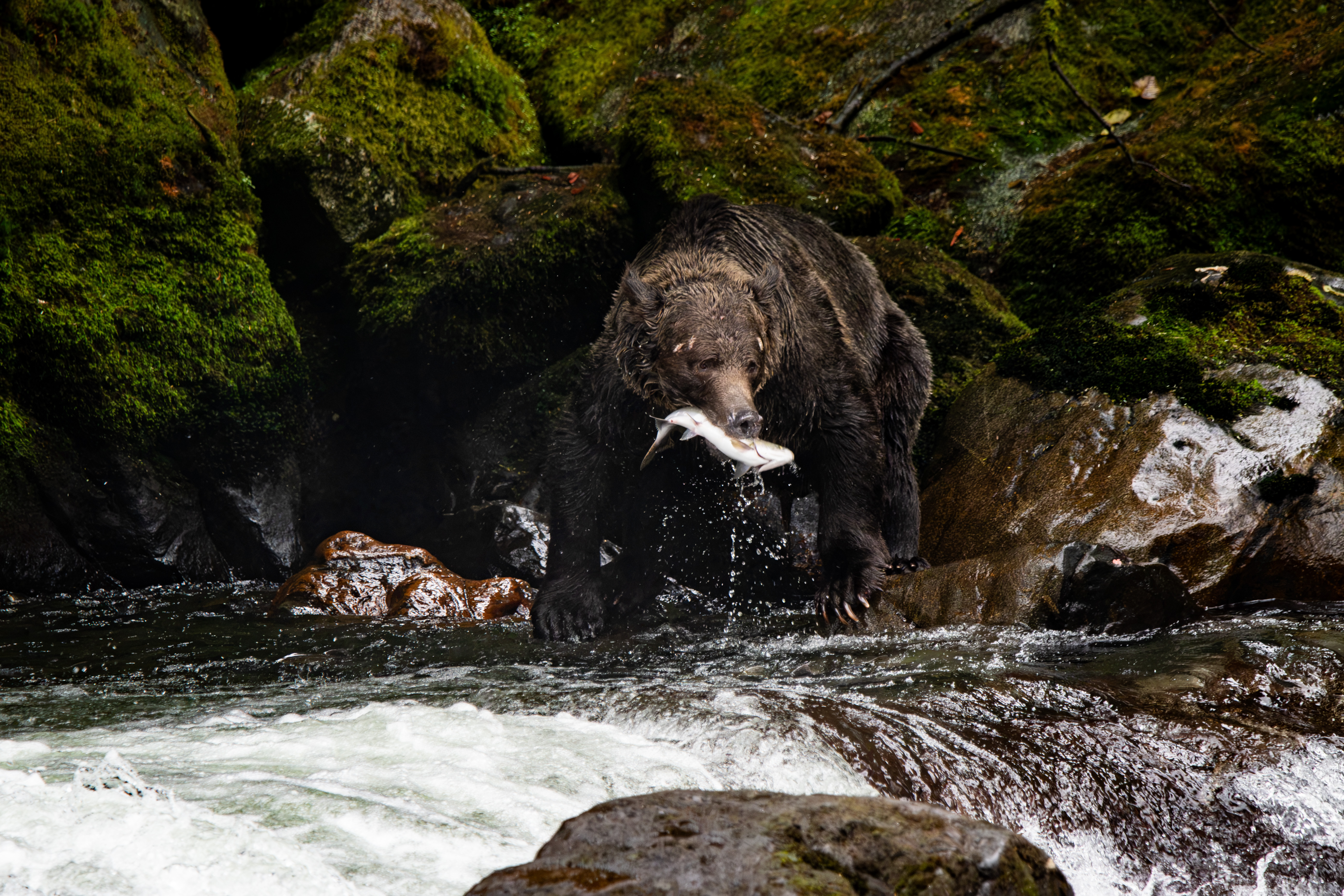
Grizzlies are setting up shop on the Island because of the “great habitat”, including salmon streams and berries, said Scapillati.
“Grizzly bears are very curious. They like to roam and they are great swimmers and they can travel great distances. Biologically they can expand their range,” he said.
A keystone species, Scapillati says grizzly bears have a big impact on an ecosystem and could help with recovering Vancouver Island terrain.
“Having grizzly bears on the Island means more salmon is going to get transported into the forest and the forest is going to get fertilized and produce bigger trees. They are going to cultivate the alpine because they love glacier lilies. They are going to eat 200,000 huckleberries in a day and then poop that out back into the landscape and basically creating massive habitats with berry fertilizer,” he shared.
Grizzly bear hybrids
While there are several incidences of grizzly bears mating with polar bears in the Arctic, producing hybrid offspring called ‘grolars’ or ‘pizzly’ bears, Scapillati says grizzlies can not mate with black bears.
“They predate on black bears. There are no reports of grizzlies mating with black bears,” he said.
He says since we don’t know how many grizzlies live on Vancouver Island, it’s hard to tell what sort of long-term presence they will have.
“They are the slowest reproducing land mammal in North America other than the muskox,” Scapillati continued. “It takes them a long time between babies. Young ones stay with them for two to three years. The population grows very slowly.”
The provincial government ended the grizzly bear hunt in 2017, but in some parts of British Columbia Scapillati says hunters haven’t been able to kill a grizzly since the 1960s.
There are an estimated 15,000 grizzly bears in British Columbia, according to government records.
Smith thinks the grizzly he saw was probably headed to wherever the fish are.
“We were kind of worried he was coming this way because they are dangerous, but then again, I wouldn’t want to see anyone hunt it. There aren’t too many of them here,” said Smith.
Scapillati points out that a lot of the fear and misunderstanding tied to grizzly bears comes from folklore and myths perpetrated by Hollywood.
“People shouldn’t be afraid of grizzlies because you already have the skills on how to be safe and how to co-exist if you live with black bears,” he said.
“When you look at Indigenous stories and myths, the fear doesn’t exist. The western culture has made people afraid,” he continued.
Mike Willie is the founder of Sea Wolf Adventures, an Indigenous-owned and operated ecotourism company based in Port McNeill and Kwakwaka’wakw territory. In a blog post, Willie explains how Indigenous knowledge shapes every wildlife encounter with Sea Wolf Adventures:
“In Kwakwaka’wakw culture, the grizzly bear holds a place of profound respect. The bear is not merely an animal to be observed; it is a being whose strength, patience, and seasonal rhythms carry teachings that apply to human life. To witness a grizzly in its territory is to receive something; it is not a transaction but a gift,” Willie writes.
A grizzly query directed to the B.C. Conservation Officer Service could not be returned due to the ongoing provincial election campaign.