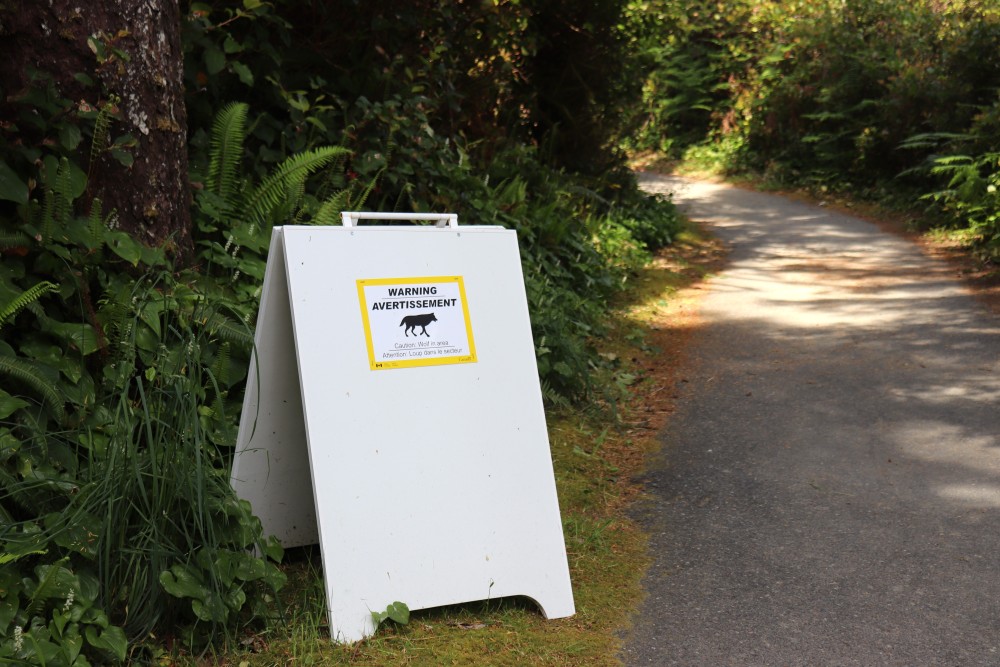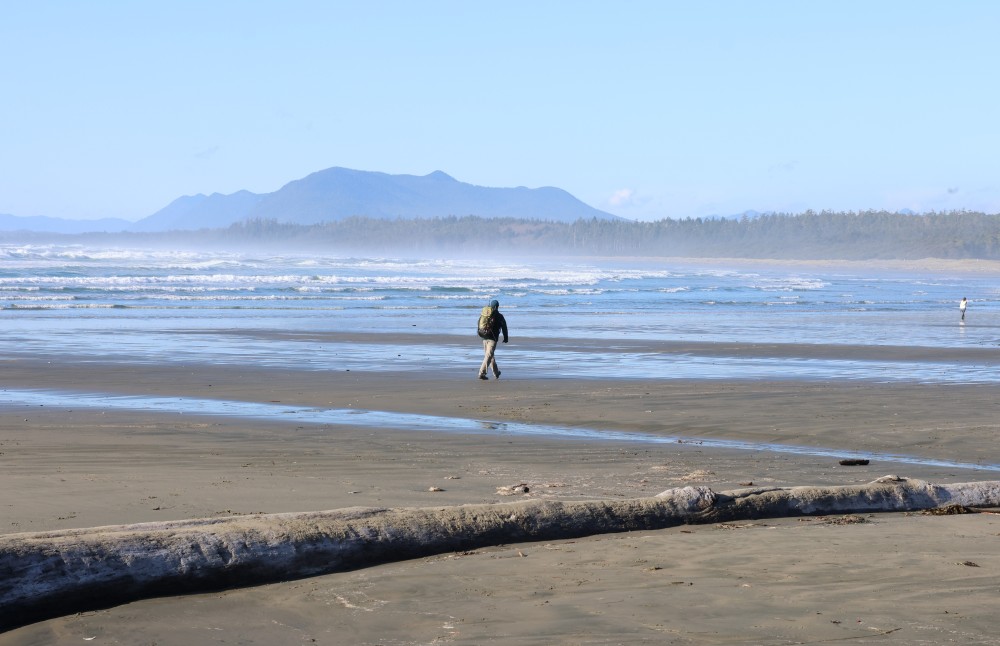
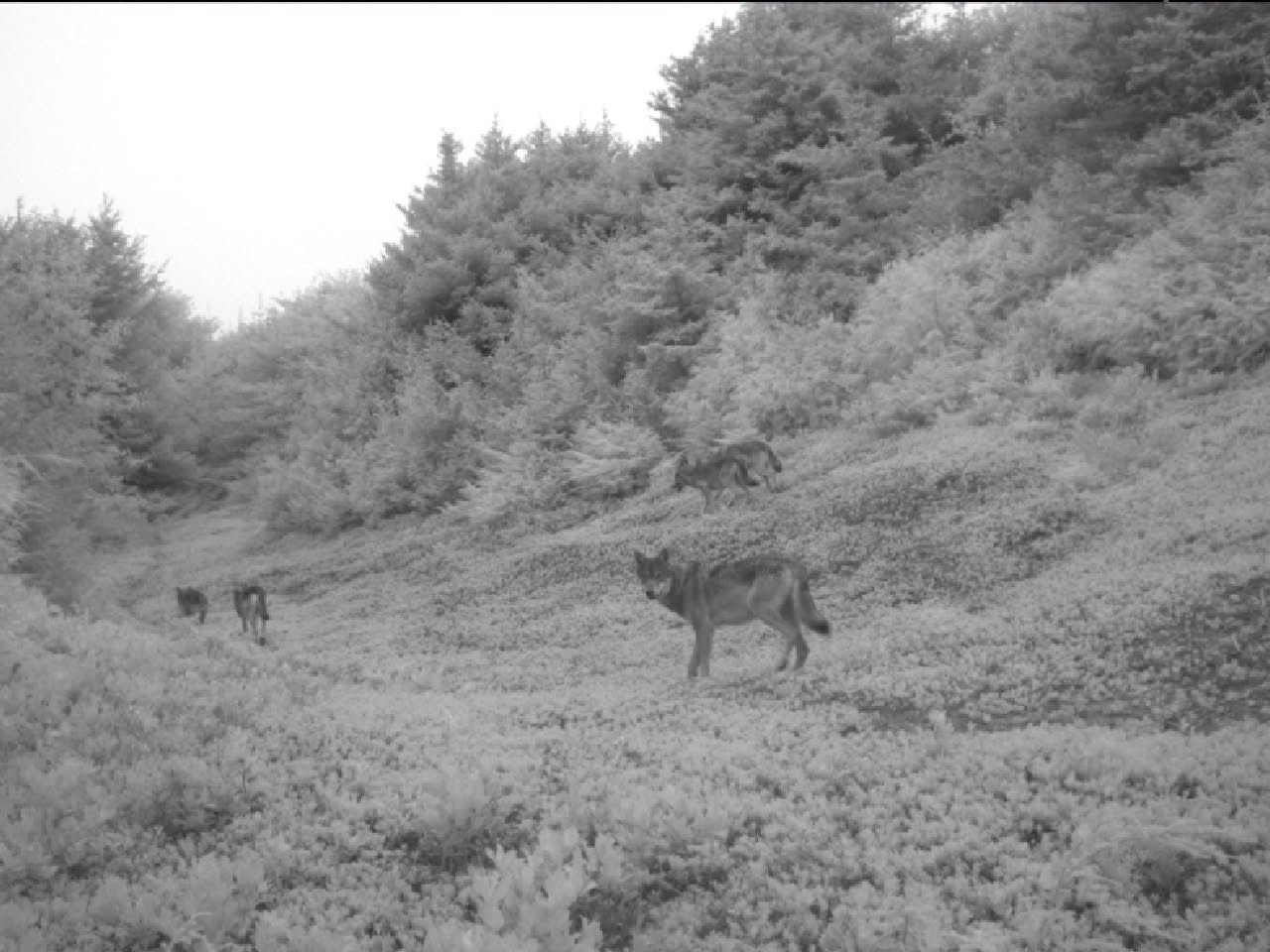
A family of five coastal wolves is still active in the Long Beach Unit of the Pacific Rim National Park Reserve (PRNPR) and Parks Canada says the dog ban in coastal areas and trails between the Green Point Rocks and Willowbrae Trail remains in place until further notice.
The wolf pack includes two adults and three 18-month-old yearlings.
Parks Canada first announced the dog ban roughly 10 months ago on February 13, 2026. The dog prohibited areas include: Wickaninnish Beach, South Beach, the former Gold Mine Trail, Florencia Beach (north and south) and the Willowbrae Trail/Half Moon Bay.
“We are constantly monitoring the wildlife activity and types of encounters. It’s really valuable for people to call in to our dispatch number and let us know if they do have a wolf encounter,” said PRNPR human-wildlife coexistence team lead Todd Windle.
So far this year, Windle says there have been 44 wolf encounters or interactions. In 2025, Parks Canada recorded 42 encounters, there were 18 interactions in 2024 and in 2023 only seven recorded encounters.
“These are minimum numbers; we can only record what we hear about, and they include encounters both inside and outside the Park Reserve. Additionally, there are also observations of wolves that we do not classify as encounters,” Windle shared.
He said PRNPR and partners at Yuułuʔiłʔatḥ Government and Tla-o-qui-aht First Nation are constantly re-evaluating closures and prohibitions and that it’s hard to know what the future brings.
“(The yearlings) are fully grown mature adult wolves at this point. We will see over the coming months and year if those animals end up staying in their family unit or if some of them end up what we call dispersing. They can go sometimes hundreds or even thousands of kilometres away to try to seek out starting their own family or joining another family,” said Windle.
One year ago in November 2025, Parks Canada issued a ‘Wolves in Area Warning’ and temporarily closed the Wickaninnish Dunes to the public after the adult male and female wolf established the dunes as their core area. Parks later lifted the Wick Dunes closure after they witnessed a change in behavioural patterns, according to Windle.
He said shooting the animals is “not up for discussion or on the table”. With upwards of one million visitors in the PRNPR each year, Windle stressed that co-existence is always the goal.
He reminded people to keep giving the wolves their space by not seeking interactions and to make sure dogs are kept on a leash and under control at places where you’re still allowed to bring them.
“All those things add up and make a difference to the life of the wolves. It’s a privilege for us to be here and potentially observe these animals. There’s a responsibility for us to treat not just wolves but all animals with respect,” he said.
Yuułuʔiłʔatḥ-based wildlife photographer Sam Rose Phillips recently finished filming a documentary about co-existing with wildlife called qʷayac̓iik: way of the wolf. Pronounced ‘qwa-ya-tseek’, the word means wolf in Nuu-chah-nulth language.
Phillips says this coastal wolf family is particularly dear to her because they are the first new family to settle in the area since two habituated wolves were put down in 2017. She shared that so much work has been done over the last 10 years in the surrounding communities to better understand co-existing with wolves.
She says working on the qʷayac̓iik documentary, which is set to be released in the spring of 2027, has taught her to look at things through the wolf’s eyes.
“It must be so confusing for them how much the landscape here changes over the seasons. They are doing their best to survive with all of these shifting dynamics that happen around them and so it’s our job to do our best and to learn from this moment to do better; to put their needs first,” she said.
“I hope that people move forward with more understanding about how they could be contributing to harming (the wolves),” she continued.
A wolf warning also remains in place for the spot known locally as Wyndansea after an off-leash dog was killed by wolves on April 7, 2026. Wyndansea is located outside of the PRNPR boundaries and south of the Tofino-Ucluelet junction.
Windle thanked people for their ongoing support and positivity toward the dog prohibition areas.
“Hopefully we can keep that momentum going,” he said.
Failing to obey leash laws, area closures, or dog prohibition areas can result in charges under the Canada National Parks Act, with a maximum penalty of $25,000.
If you see or encounter a wolf in the PRNPR, Windle says to communicate with them in a clear way by yelling, clapping, honking horns and backing away slowly. Report encounters by calling Parks Canada dispatch at: 1-877-852-3100.