The 66th annual All Native Basketball Tournament (ANBT), which is always held in Prince Rupert, B.C., will run from Feb.14 to 21.
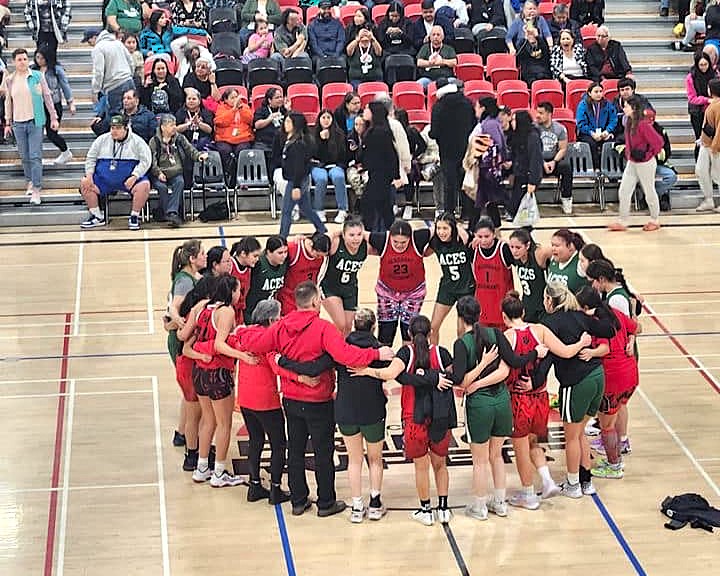
For the second year in a row, the Hesquiaht Descendants women’s team are the lone Nuu-chah-nulth sqad entered. Their first game is on Feb. 14 at 1 p.m. against Lax Kw’alaams.
“It’s a difficult trip to make,” said Mariah Charleson, Hesquiaht’s team captain. “People have families, jobs, and it’s a long travel. Also Prince Rupert is a small town. If you don’t book your accommodation within the first few days that the tournament is announced, you will not have a place to stay.”
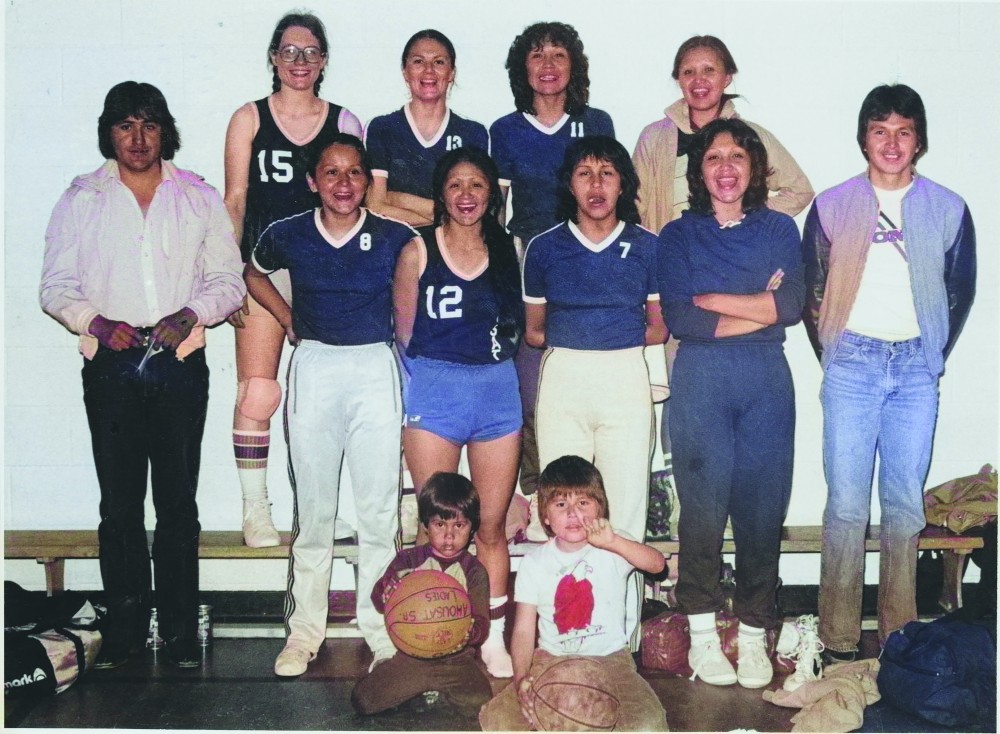
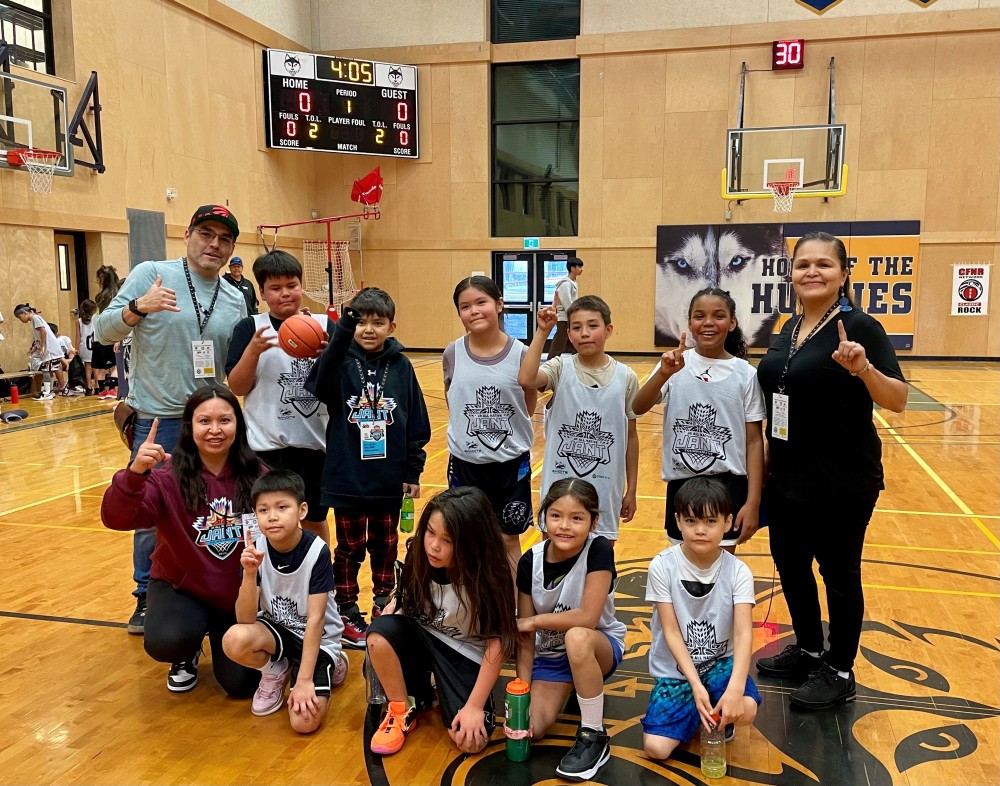
Elder Harvey Robinson went up many times as an Ahousaht coach for the Maaqtusiis Suns men’s squad and the Pacific Breeze women’s team. He says his three sons were all good players, but they’ve moved on to raising their own families and are coaching teams training for the Junior All Native Tournament (JANT) in mid-March.
“Nowadays it’s harder to get a team together. Ahousaht members are all over the place. I haven’t been (to ANBT) for years and years. It was expensive then; it’s probably three times as much now. When Ahousaht stopped going it wasn’t the same anymore,” said Robinson.
“We have our rooms booked for JANT,” he adds, noting that he’s excited to watch his granddaughter play.
Yuułuʔiłʔatḥ (Ucluelet) First Nation’s Tyson Touchie will be coaching the Hitacu Itty Bitty Ballers 10U team and the Yuułuʔiłʔatḥ 13U girls squad at JANT this year. Touchie shared that he went to the Rupert All Natives once in the late ‘90s as a player for the Hitacu Guardians when the tournament was “peaking” and a few times as a coach.
“There was so much interest. Less people are going now and there are less teams and less fans,” said Touchie. “Even in the final last year, there was emptiness in the gym. It’s such a strain, going up to Rupert, not only money-wise but time and work.”
“Our experience up there was, we met a lot of people who were curious about who we were because we look different. We’re shorter, our game was faster and more defensive. I think we were deceiving. A lot of people didn’t know that we could play because we didn’t have big guys. That was really typical for Nuu-chah-nulth teams,” Touchie continued.
Robinson correlates.
“(Ahousaht) was fast. We never had the height. We were always really strong,” he said. “We always won the sportsmanship trophy when we travelled up there. Our elders always said that was the most important trophy. People would come from everywhere to watch our teams play.”
Charleson, 38, has been playing in the ANBT since she was 18.
“I’ve played with a number of teams. The first team I ever played for was Ahousaht; I have strong Ahousaht roots. I also played with Pacific Spirit and we were able to win a couple championships. The true spirit and pride of the All Native Basketball Tournament is representing your home and your community and your village, so representing my nation of Hesquiaht has definitely been the most powerful and meaningful experience,” said Charleson.
She said the Hesquiaht Descendants play a style of basketball representative of the west coast.
“We’re outsized every year, but we’re tough. We’re physical. We’re able to run. That’s the style of basketball that we play. We play a tough and gritty way that we grew up playing. That is Hesquiaht basketball. That’s who we are,” she said.
Qualifier rule and pick-up rule
Robinson remembers a time when teams would have to qualify for the ANBT.
That’s a long round trip for Nuu-chah-nulth players based on Vancouver Island, especially for those living in Maaqtusiis, Ahousaht’s main village on Flores Island about 30-minutes by boat from Tofino.
“We had to travel all the way up, qualify, and then come back home, then go back up again in February,” said Robinson.
The qualifying rule was changed a few years ago as was the pick-up player rule, which allowed teams to bring one player who wasn’t from their nation.
“I’m always a big supporter of the village teams and I’m in support of taking out the pick-up rule,” said Charleson.
“It’s nice to see a full representation of each nation without the pick-up. You know you think about the people that live in a city like Vancouver with the amount of people they have to choose from,” she said.
Potlatches and three-pointers
Historically, the ANBT provided an arena for First Nations to gather and practice culture in spite of the Potlatch Ban, which made it illegal for communities to hold ceremonies. The federal government ended the ban on Potlatches in 1951 after the Second World War, but it would still take several decades for the potlatch to return to Indigenous communities.
Robinson says potlatches and ANBT are one in the same.
“People come from all over and gather their family and friends. I wouldn’t say it saved culture, but it’s the same as culture,” he said.
The ANBT began in 1947 as the Northern British Columbia Coast Indian Championship Tournament. In 1959, the Native Basketball Association took over the organization of the tournament and moved the event from March to February so fisherman could participate and be spectators. Fishermen were unable to commit to March as it is the roe herring season on the B.C. coast.
Touchie thinks if there had been no ANBT, a lot of traditional practices could have been lost.
“That’s front and centre when you go into that gym. That’s literally what that tournament is for so we can still gather. I think basketball has helped save our people culturally. It allowed us to stay in touch,” said Touchie.
“It was almost like a reunion. You would see everyone from your childhood. To this day, it’s still like that,” he said.
But for most Nuu-chah-nulth-aht, the reunion will have to wait until March as everyone heads to JANT in Langley to cheer on the next generation of basketball players.