
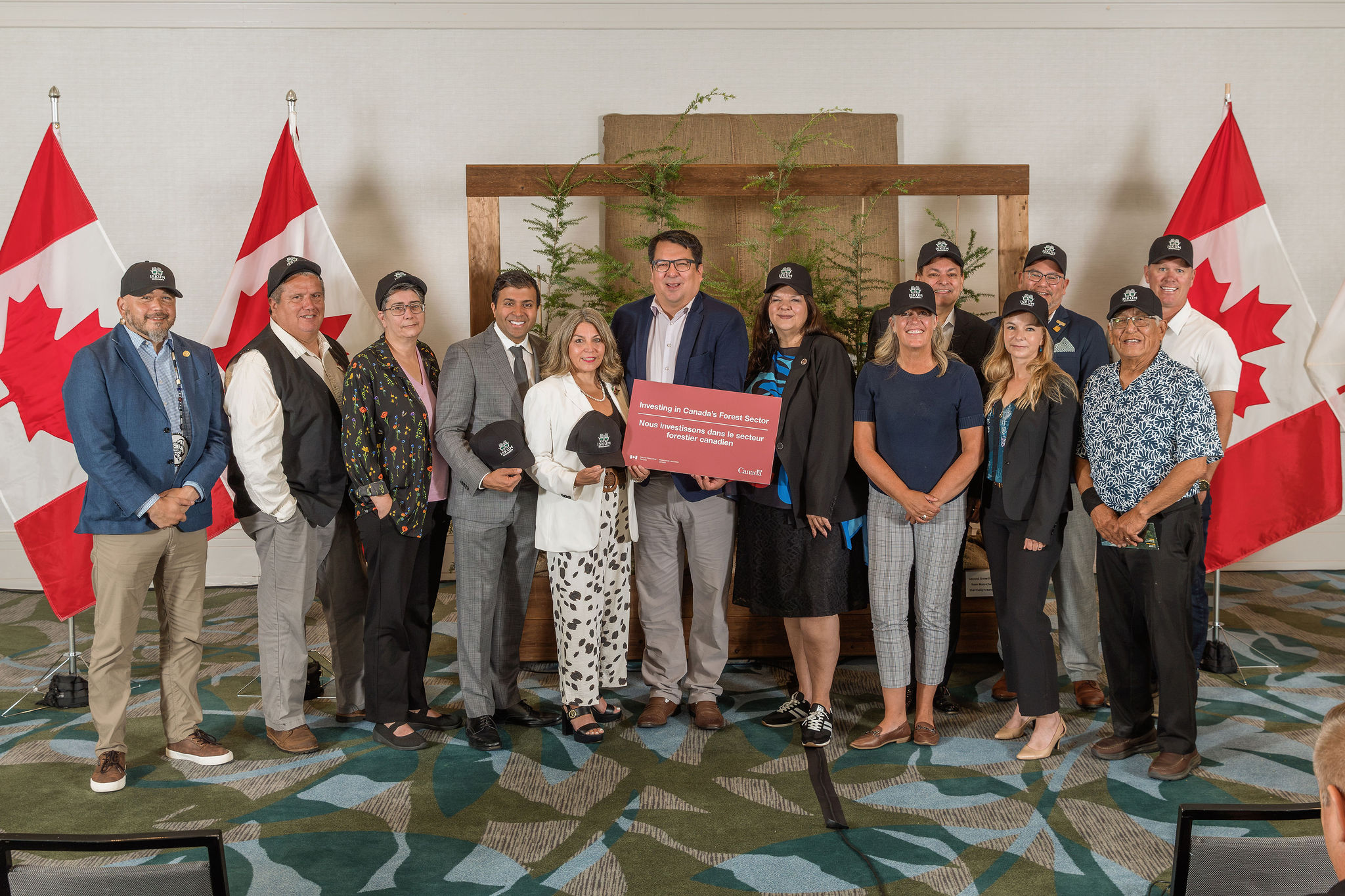
A coastal First Nations consortium is advancing a study that will look at the feasibility of building a state-of-the-art wood processing facility on the B.C. Coast.
Iskum Investments, a business partnership of more than 20 First Nations from Vancouver Island and the B.C. coast, is conducting a comparative analysis of three coastal locations for the proposed facility. No site has been selected, and the study will inform a future investment decision by Iskum’s partners.
According to a press release, the study aligns with the federal and provincial direction for the forest sector: create more value from B.C. fibre, support greater sector stability and expand access to global wood products markets. Iskum’s goal is to invest in the coastal forest sector to create lasting prosperity for First Nations, workers and communities.
“The purpose of the study is to carefully assess the technical, commercial and financial considerations associated with each location before Iskum's partners make any investment decision,” said John Jack, chief councillor of Huu-ay-aht First Nations and founding partner of Iskum Investments. “As that work progresses and we are in a position to share more about the potential locations, we will do so.”
A facility of this kind would be designed to strengthen the entire coastal economy, including supporting pulp and paper operations that are struggling to secure a reliable, economic supply of fibre.
“The challenges facing coastal forestry are exactly why we believe this work is important. The coast needs modern manufacturing capacity designed for the forests we have today and into the future,” Jack said. “The facility being studied would be purpose-built to efficiently process second-growth logs, principally hemlock and balsam, which together make up roughly half of the coastal forest. Today, much of that fibre either goes unharvested or is sold into log export markets rather than being manufactured locally.”
Wood processing facilities of this kind are the standard in the world’s most competitive lumber regions, Jack said.
“The opportunity we are studying is whether that kind of modern, globally competitive processing capacity can be constructed and operated competitively on the B.C. coast,” Jack said. “There are also advantages to bringing fibre and manufacturing together. Participating First Nations hold coastal forest tenure and would contribute fibre to the facility, while the facility could provide a long-term domestic market for that fibre.”
First Nations on the coast hold more than 200 forest tenures, equating to approximately 4.6 million cubic metres of allowable annual harvest.
The B.C. coast also has the advantage of tidewater and deep-sea shipping access, allowing a facility to serve both Canadian and international customers, Jack added.
The Government of Canada is contributing $1.275 million to the study through Natural Resources Canada’s Indigenous Forestry Initiative.
At full capacity, the facility should support more than 700 ongoing jobs across the coastal economy, including in operations, management, harvesting and logistics.
“We have established a highly skilled team and board and a lot of work has already occurred; that work looks positive,” Jack said. “We are now undertaking additional technical, commercial and financial work required before a final investment decision is made.”
Jack said there has already been a substantial amount of work completed, including preliminary facility design developed with experienced equipment suppliers.
“The study is about doing the work carefully and diligently to give Iskum's partners the information they need to make a well-informed investment decision,” Jack said. “No site has been selected and no final investment decision has been made.”
A modern wood processing facility would provide a steady, long-term source of the chips and residuals they need, while also creating a dependable domestic market for underutilized coastal species.
“A facility of this kind has the potential to create work for contractors, trucking companies, suppliers and trades. Nation-owned businesses are well positioned for that opportunity, as are the coastal companies and workers who have carried this industry through difficult years,” said Robert Dennis Sr., chair of Iskum Investments’ chiefs committee, in a press release. “The aim is to help keep that work here. When First Nations businesses grow, it strengthens surrounding communities, British Columbia and all of Canada.”
Ravi Parmar, B.C.’s Minister of Forests, said the province is working to restore confidence in the coastal forest sector.
“These communities have been the pillars of forestry – they’ve also felt the impacts of the immense challenges we’re facing,” stated Parmar in a press release. “This announcement brings hope to the region, with the potential of hundreds of jobs, greater fibre flow and a stronger local forest economy. We will continue to work alongside the federal government to support B.C. forestry workers.”


