Through an agreement with B.C.’s Ministry of Children and Family Development, the Huu-ay-aht are marking another step in ensuring that more of its youngsters stay with family and remain connected to the First Nation.
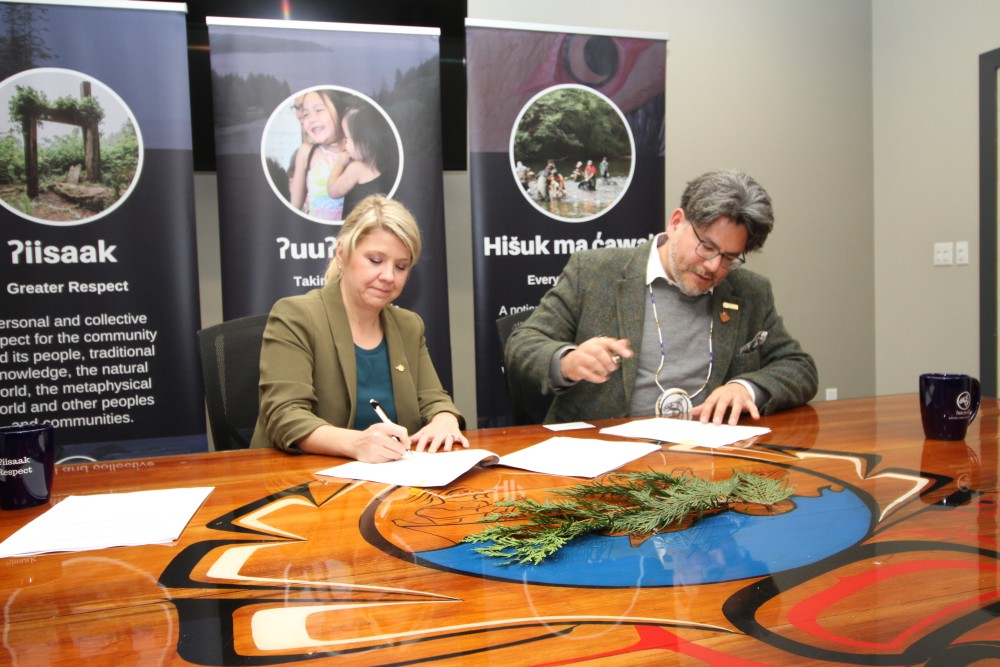
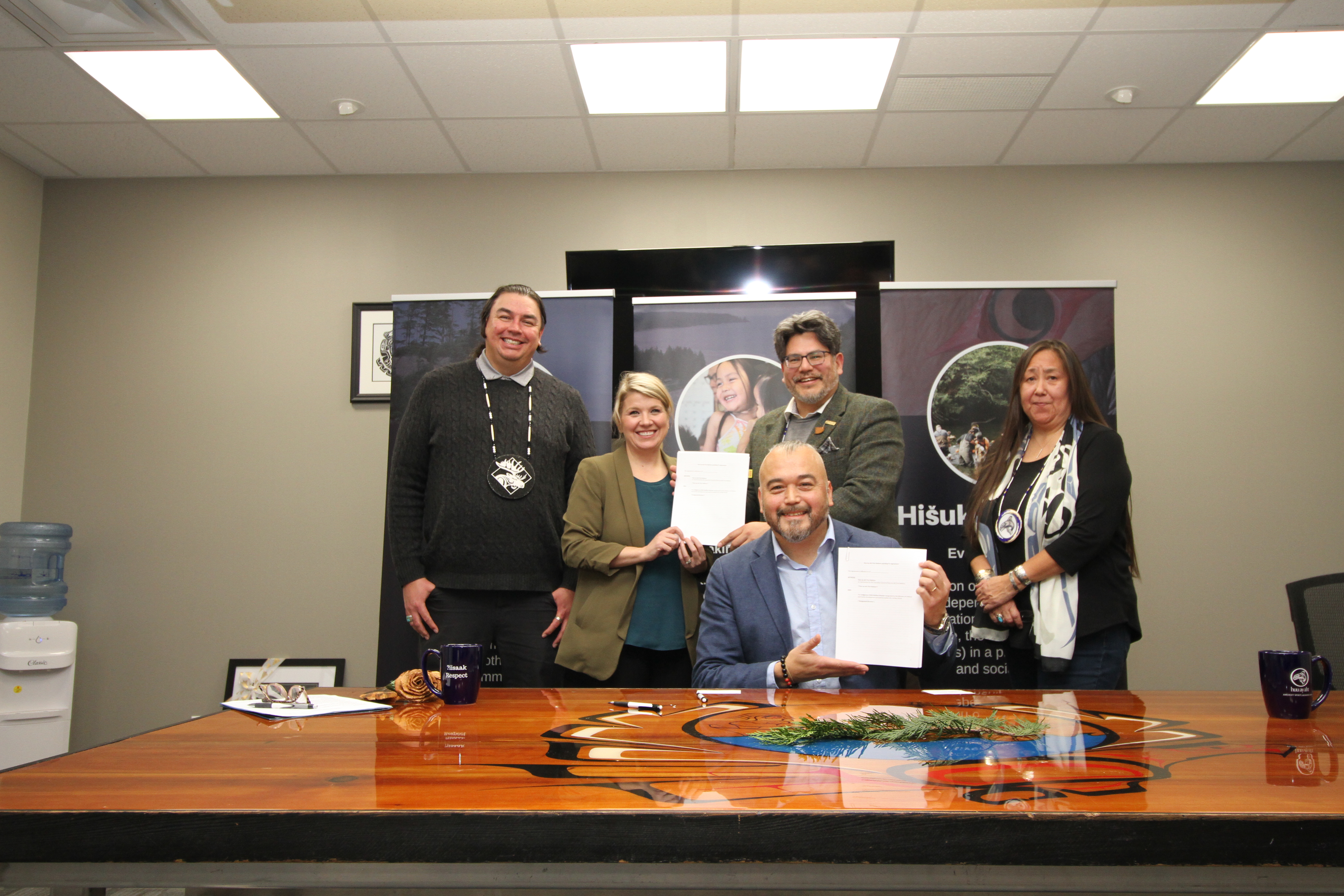
On Dec. 16 Huu-ay-aht leaders sat down to sign the yaaʔak̓apʷin (we are embracing) agreement with Minister of Children Jodie Wickens at the First Nation’s Port Alberni office. Effective on March 16, 2026, the agreement was developed to help guide child welfare decisions between the First Nation and the province. Language within yaaʔak̓apʷin specifies that Huu-ay-aht kids are to remain connected to their community and culture, while outlining that the First Nation will have “an enhanced involvement in decision making regarding their children.”
As part of the agreement, the province has committed $30,000 to support Huu-ay-aht jurisdiction in matters related to children in care.
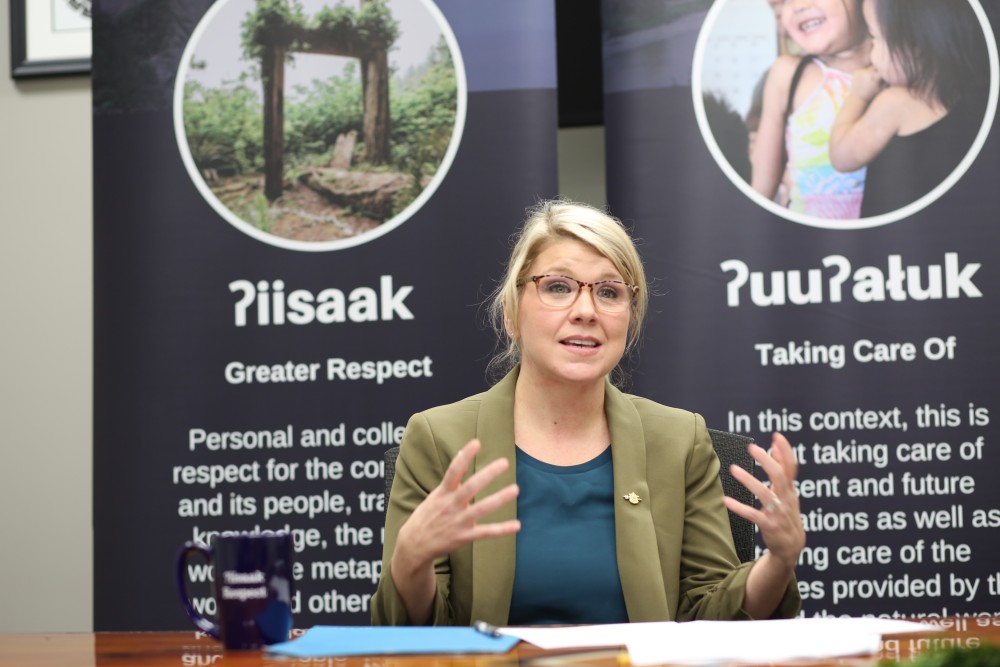
“What this agreement does is it outlines how we work together, and how the director must work with Huu-ay-aht to come to an understanding about what is the best situation for that child,” said Wickens. “This agreement really will ensure that Huu-ay-aht children and youth can remain safely connected to their families and to this community. That is so crucially important for them and for the community on a whole.”
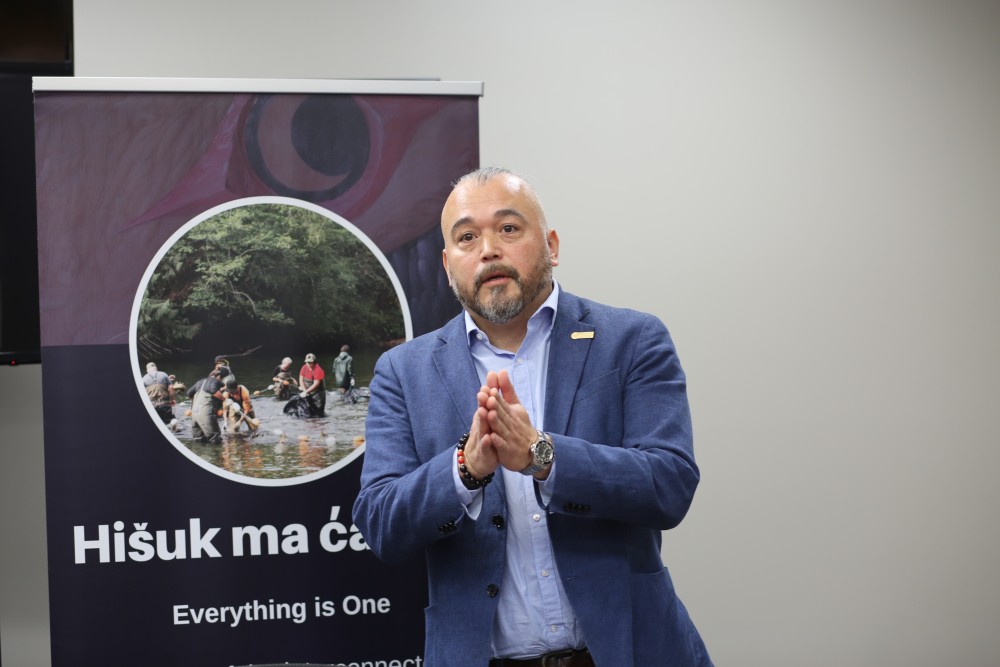
Before signing the document Huu-ay-aht Chief Councillor John Jack noted that this enhanced involvement would also apply to instances when a child is removed from the parents.
“In the event that it does occur, we want to make sure that we do those things to make sure that they stay supported, connected – not only to immediate family, but to their wider family and community as well,” he said. “No matter who they are, if they are citizens of this nation, no matter where they may live, no matter who may be taking care of them, we want them to be a part of our community. They’re our children, they’re our future.”
The agreement is the latest chapter in years of work by the First Nation to keep more of its children with family. Back in March 2018 the Huu-ay-aht declared a public health emergency when 47 of its children – representing 20 per cent of all youngsters in the First Nation at the time – were in foster care. Thirty-five of these children in care were living in non-First Nation homes – a startling fact that led some Huu-ay-aht leaders to see the workings of the child welfare system as a continuation of the historic removals that characterized residential schools.
In the previous year the Huu-ay-aht had launched the Social Services Project, which contained 30 recommendations from an independent panel. These stressed the need for “circles of protection” around families to prevent issues from escalating that would result in their children being put in care. After the public health emergency was declared, in August of 2018 the federal government pledged $4.2 million to help the Huu-ay-aht implement the Social Services Project’s recommendations over five years. This funding supported initiatives like a pregnancy support and baby welcoming program, a family support liaison worker, a protection support worker, parental education, anti-violence intervention, group conferencing for families in crisis, as well as transitional living supports for low income-households.
“It’s helped steer us to this moment, to be able to push and advocate for those changes,” said Huu-ay-aht Councillor Edward Johnson Jr., noting that the number of the First Nation’s children in care is currently 14.
The Huu-ay-aht now have a Children and Family Wellness Department equipped with 25 staff, including five positions specializing in measures to prevent the removal of children from their parents. This team navigates a complicated child welfare system, working with Usma Nuu-chah-nulth Child and Family Services, which is an Aboriginal agency delegated by the Ministry of Child and Family Development to ensure the health and safety of youngsters.
“There are some things that we need to do to ensure that some work that’s being done on the MCFD side, on the delegated agency side, is reflecting Huu-ay-aht values,” said Jack.
The chief councillor added that the new agreement will ensure that Huu-ay-aht staff can “advocate for both the children and the family and the community,” and that they “have a voice in and eyes into what’s going on.”
“The best people to care for children are parents and aunties and uncles and grandparents and community,” said Wickens. “A system where children and youth are taken away from that means that there will be outcomes that none of us want to see.”
The case of Chantelle Williams weighed heavily on those who developed the agreement over the past four months. The 18-year-old Huu-ay-aht member died on Jan. 28 this year after being found unresponsive on a Port Alberni street at 5 a.m. that morning. At the time Williams was under the guardianship of Usma and living in a supervised group home run by the Inside Out Corporation.
According to her family, Williams had been in the hospital the day before with cirrhosis, an alcohol-related liver disease. She was taken to the group home after being discharged, and a staff member had checked on her at 11 p.m., but by 1 a.m. she was missing with her bedroom window open, said Williams’ family members.
“That outcome that Chantelle Williams had shouldn’t happen to any child,” said Wickens.
“This is something that is heavy on our minds to make sure that we do right by our community – and by people who can ostensibly slip through the cracks,” added Jack.
Since 2002, the number of children in care has dropped dramatically in B.C., falling from 10,049 to 4,795 in early 2025, according to ministry data. The number of Indigenous children in care has also dropped – but not nearly as much as others in the system. In 2002 the number of Aboriginal children in care was 4,273, comprising 42.5 per cent of the province’s total. This year this number had declined to 3,260, but this now means that B.C.’s Indigenous youngsters now comprise 68 per cent of those in care.
For this reason Wickens is calling the yaaʔak̓apʷin agreement “an important step in reclaiming jurisdiction of family and child services.”
“This is really the most important work that the Ministry of Children and Family Development is doing and needs to do as we move forward to change the trajectory of child welfare services in this province,” she said. “We have an incredibly colonial system that we have been upgrading.”