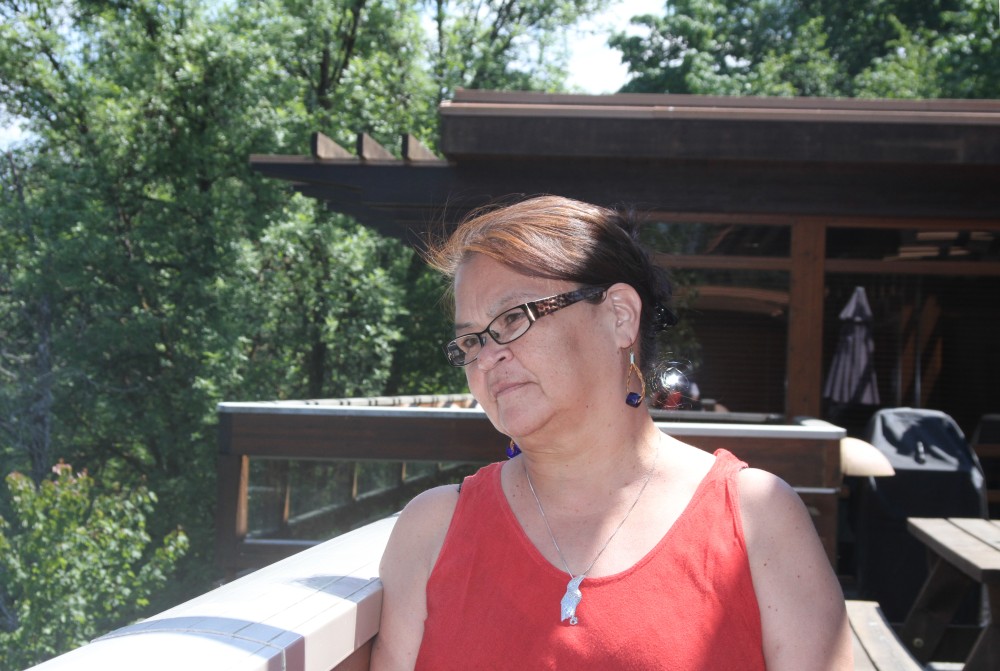
When Rita Watts reflects on British Columbia’s drug crisis, a young First Nations man she encountered one day outside of Port Alberni’s Shopper’s Drug Mart comes to mind. Watts noticed the fellow slumped over on the sidewalk as she stepped out of the store.
“I sat in my vehicle and cried, because this young man was just so wired, and he looked maybe 13, 14 years old, sitting there with a pipe in his hand,” said Watts. “He needs help, he needs guidance. Where’s his parents? If he’s in foster care, why is he sitting there?”
Watts is no stranger to the throes of addiction, as she used crack-cocaine for 22 years. She’s been clean for the past 13, a recovery that began after losing her brother, who was also struggling with drug use.
“I just started my journey then, and I didn’t turn back. It made me hate drugs even more,” said Watts, who sought counselling several times a week as she fought to change her path. “I did everything in my power to stay away, to stay clean. What really stuck in my head is, do I enjoy being treated that way? Do I enjoy being lied about? Do I enjoy being laughed at?”
After more than a decade of sobriety, Watt’s fight continues as she tries to support a son and daughter in their addiction struggles.
“Right now I hate it even more than anything in my entire life, because my son and my daughter are still out there, but for how long I don’t know,” she said. “The scream for help is pretty loud, but no one hears them.”
The spread of supervised sites
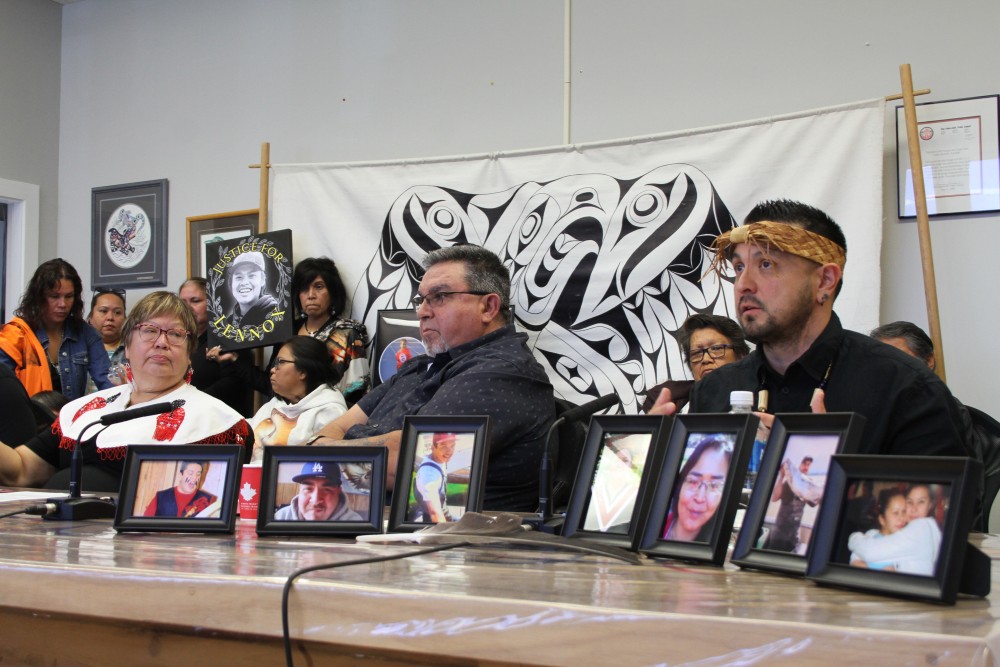
This April marked 10 years since the opioid crisis was declared a public health emergency in B.C. Since then over 18,000 lives have been lost to drug poisoning, with First Nations facing a fatality rate 5.4 times greater than the rest of the province, according to numbers reported by the First Nations Health Authority from the first half of 2025. First Nations women have died 8.5 times more than other females in B.C.
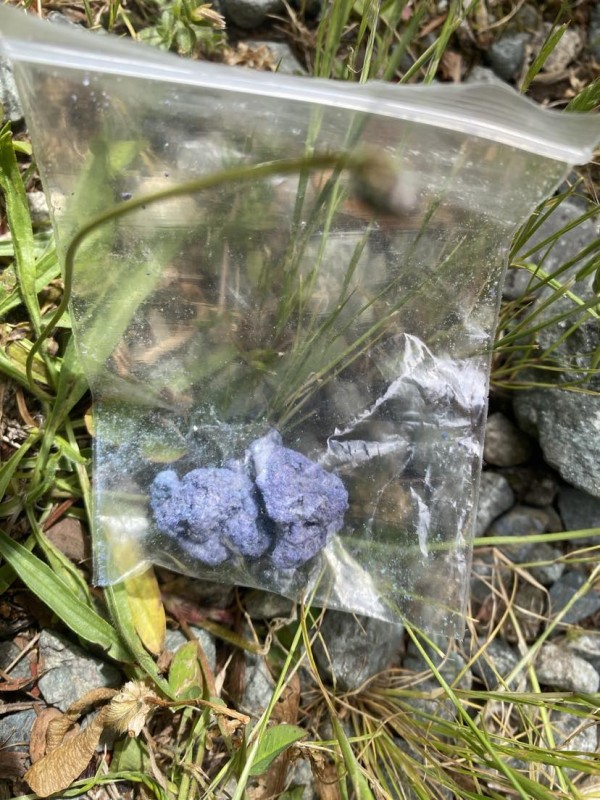
The rise in overdose deaths has coincided with the presence in the illicit market of fentanyl, a synthetic painkiller that was originally produced for medicinal purposes. Just a small amount of fentanyl can be fatal, and over 2023 – which was B.C.’s worst year for drug overdoses – the synthetic opioid was detected in 85 per cent of tragic drug poisonings. In that year an average of seven people died each day in the province.
This has since declined to 4.1 deaths a day, according to the B.C. Coroners Service’s most recent statistics from February. Fluorofentanyl, a modified analogue of fentanyl, was detected in 68 per cent of the drug-related fatalities so far analysed this year, with cocaine present in 57 per cent of cases, fentanyl in 56 per cent and methamphetamine in 54 per cent. Smoking (71 per cent) is by far the most common form of drug consumption.
Overdose remains the most common cause of unnatural death in B.C. - more than homicide, suicide and car accidents combined. But the 1,826 fatalities tracked last year show a 21 per cent decrease from 2024, and a continued decline from the peak of 2,591 deaths in 2023.
The province is crediting a combination of approaches to this downward trend, including the expanded prescription of less dangerous medical alternatives like methadone and hydromorphone to drug users. Overdose prevention sites have also opened in cities and towns across B.C. over the last decade, where users can legally consume illicit substances under the watch of trained staff. From January 2017 until the end of January 2026 there were over 6.6 million visits to overdose prevention sites across B.C. Over this time staff responded to almost 33,000 overdoses, which resulted in just two deaths at the sites.
‘A crisis of disconnection’
While these approaches appear to be helping keep more people alive, there’s far more that’s needed to alter the course of an addict’s life, says Rose Chester, who used fentanyl, heroin and cocaine for seven years. She’s been clean for over two years now since she left Vancouver’s Downtown Eastside to live in her home Ditidaht First Nation community on Nitinaht Lake.
“For me it was a spiritual, cultural connection, but when I came home I knew I needed help because of my heart,” said Chester, who had been taking methadone while she was using drugs in Vancouver. “I started seeing a doctor for my health, because my body was aching and my chest at times. That's when he told me my heart was fibrillating and that's a risk by taking the methadone.”
Chester ended up back in Vancouver, hospitalized and hooked up to an IV due to her body’s reaction to quitting the drugs, which brought risks of heart attack, stroke and seizures. Once stabilized, she returned to Nitinaht and was connected to a doctor in Port Alberni. Nurses in her remote community also helped guide Chester to mental health and addictions counselling.
It was a difficult period, and although family members were close by, they had trouble seeing the violent withdrawal symptoms that Chester was struggling with.
“If they have family lost in that world and want to help, people need to educate themselves,” she said.
The isolation addicts face is an understated part of the issue, says Nicki Love, a next-generation Nuu-chah-nulth elder who worked for years in harm reduction with the Nuu-chah-nulth Tribal Council.
“The toxic drug crisis is often framed as a crisis of substance. I believe that it’s a crisis of disconnection,” she said. “Disconnection from the land, disconnection from community, disconnection from identity.”
Love stresses the need for medical detox along with cultural support like counselling and land-based learning, an approach that “brings the connection back to call their spirit back.”
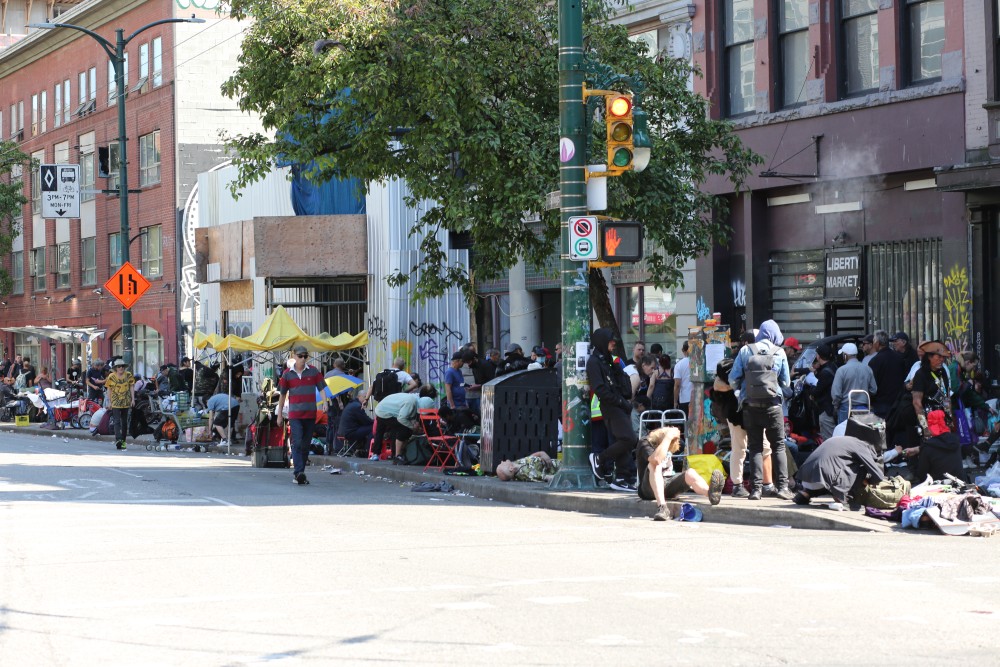
But the risk rises when Nuu-chah-nulth people leave their home to live in urban areas, says Love.
“It’s a death sentence when people leave our communities in Nuu-chah-nulth territories to go to Port Alberni,” she said.
Is the system enabling addicts?
Over the last decade health authorities have taken a harm-reduction approach to the drug crisis, while introducing measures intended to bring drug users out of the shadows so that they can connect with the necessary help. Not all initiatives have been successful, including the three-year decriminalization of illicit drug use. Introduced in late January 2023 to remove the social stigma that substance users face, less than halfway through the pilot project it became clear that things could be getting out of hand. Reports emerged of open substance use being permitted in hospitals, while opposition MLAs accused the ruling NDP of making British Columbia a social experiment for the rest of the country to watch. By May 2024 Premier David Eby announced that illicit drug use would again not be permitted in public places. Early this year Health Minister Josie Osborne announced that decriminalization would not be renewed after the project “hasn’t delivered the results we had hoped for.”
Watts fears that some of these approaches are enabling drug users to continue in the world of addiction.
“SIS is a safe injection site that helps them to do drugs,” she said. “Is that helping them? Not in my eyes.”
In Port Alberni, a small city that often serves as an urban hub for Nuu-chah-nulth, a central issue remains the lack of a medical detox facility for addicts who want to get well.
“You talk to any one of them, and there’s no where to go,” said Watts, adding that help needs to be available on the day that an addict seeks it, otherwise tomorrow might be too late.
“It only takes one night to go to sleep, you wake up and that anxiety is there again, that crave is there,” added Watts. “‘Do I or do I not? No one is calling me to help me out, so I’m just going to go’.”