Loneliness, fear, pain – those are some of the feelings children that attended residential school recall during that time they were forced away from the comfort of their parents’ arms and homes. But these frightened little children showed resilience and built connections with fellow students – bonds that would last lifetimes.
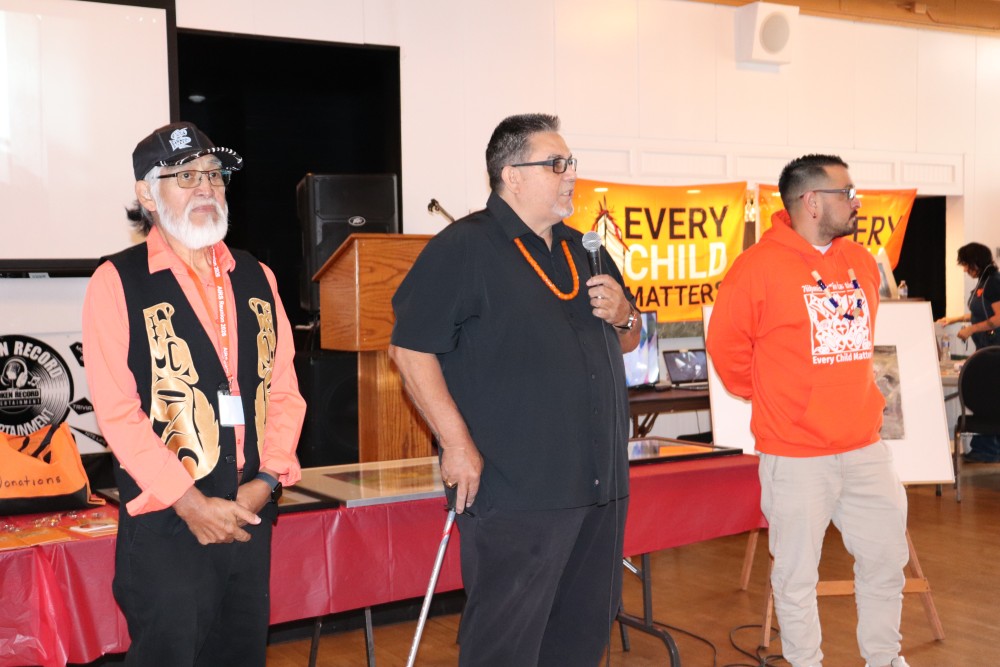
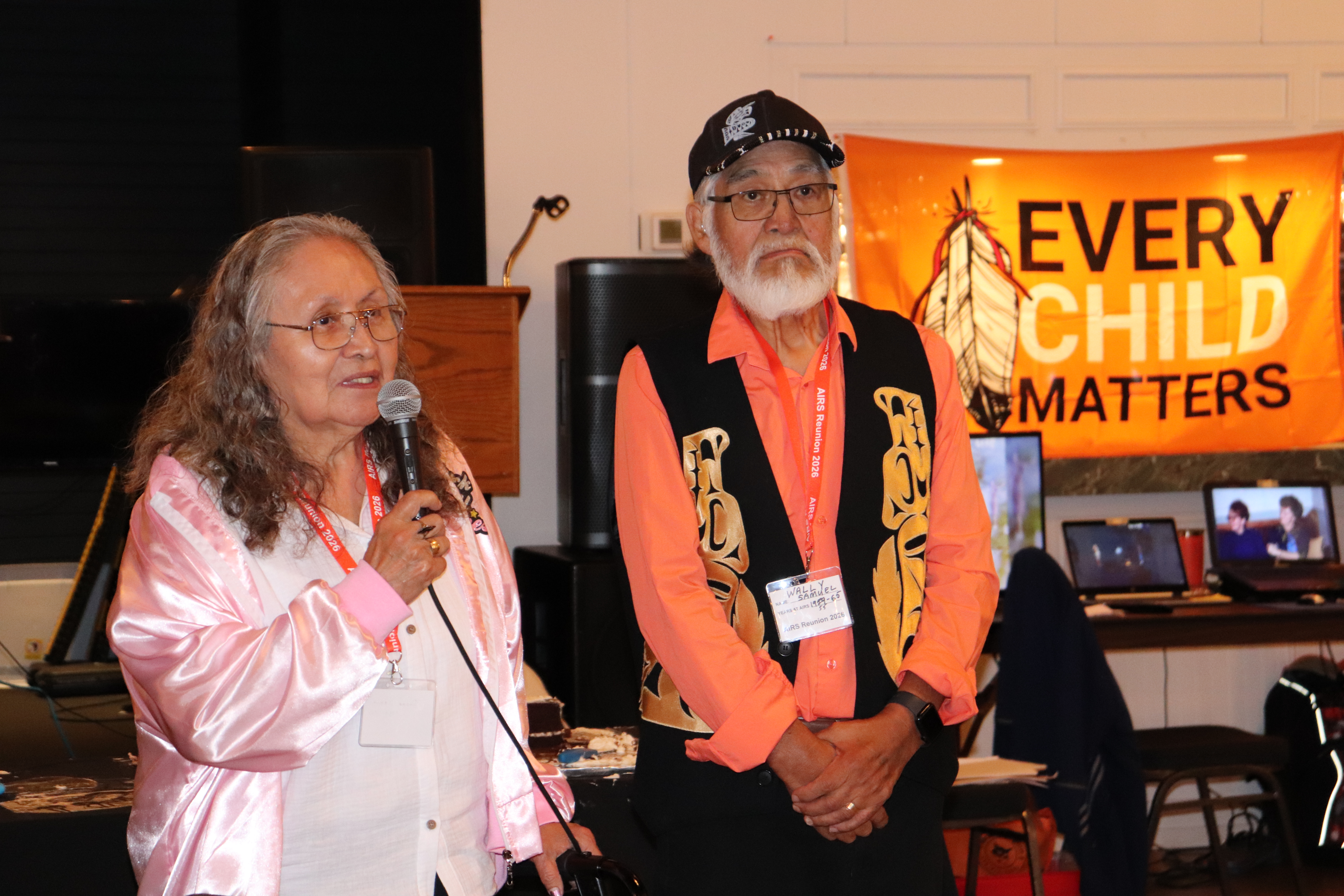
Ahousaht elder and survivor of Alberni Indian Residential School, Wally Samuel, said he organized the gathering to coincide with National Orange Shirt Day. At the gathering he credited a small group of local AIRS survivors for helping to coordinate events for the evening.
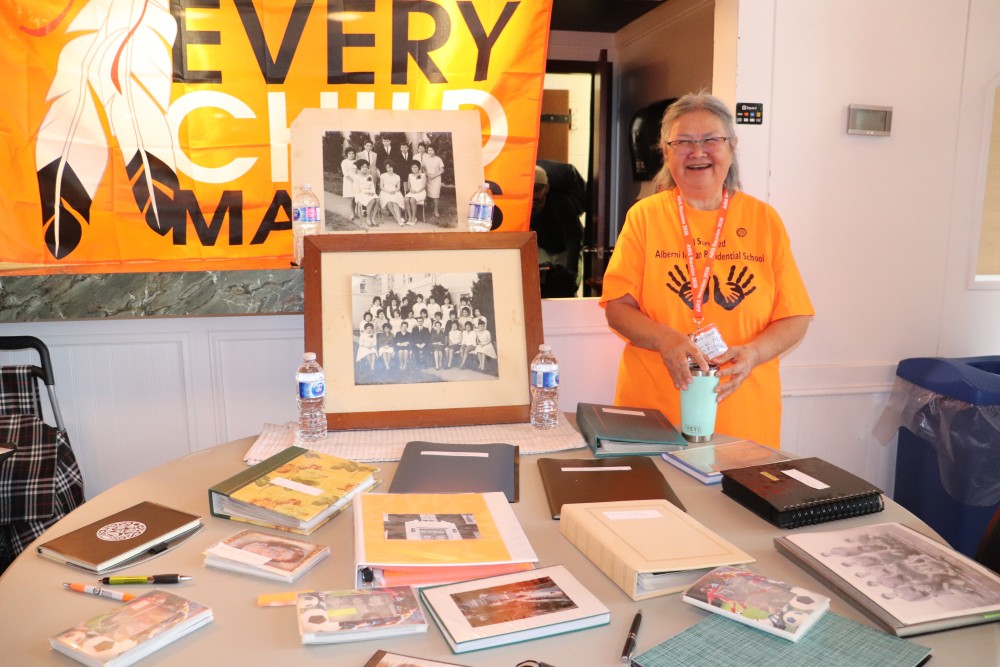
Together, the Alberni Indian Residential School Survivors planned a dinner, some displays. There was the display of AIRS students’ paintings, saved by art teacher Robert Aller, which has received national attention.
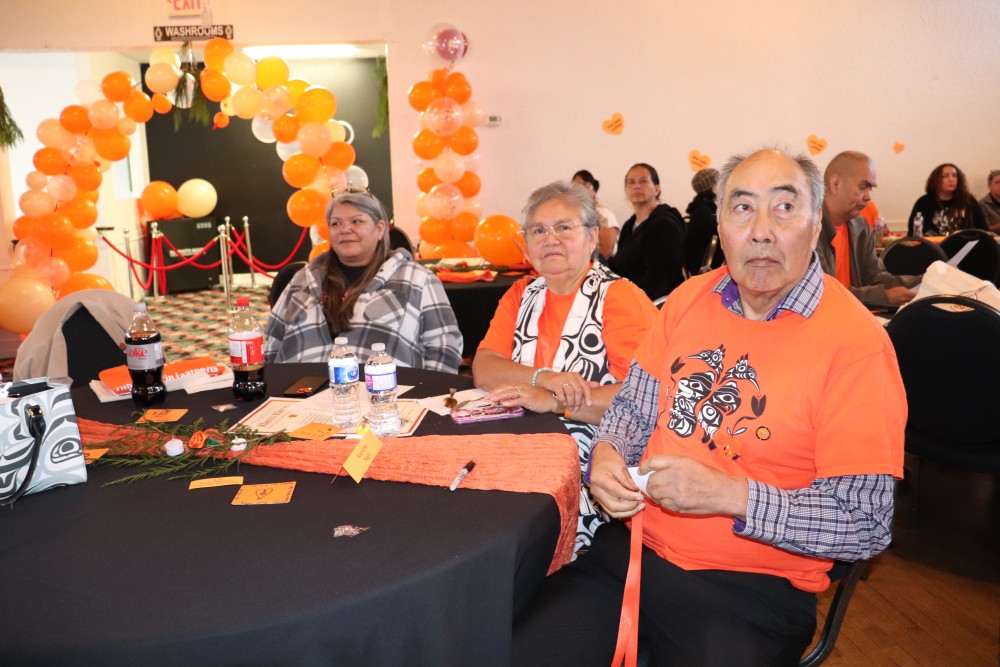
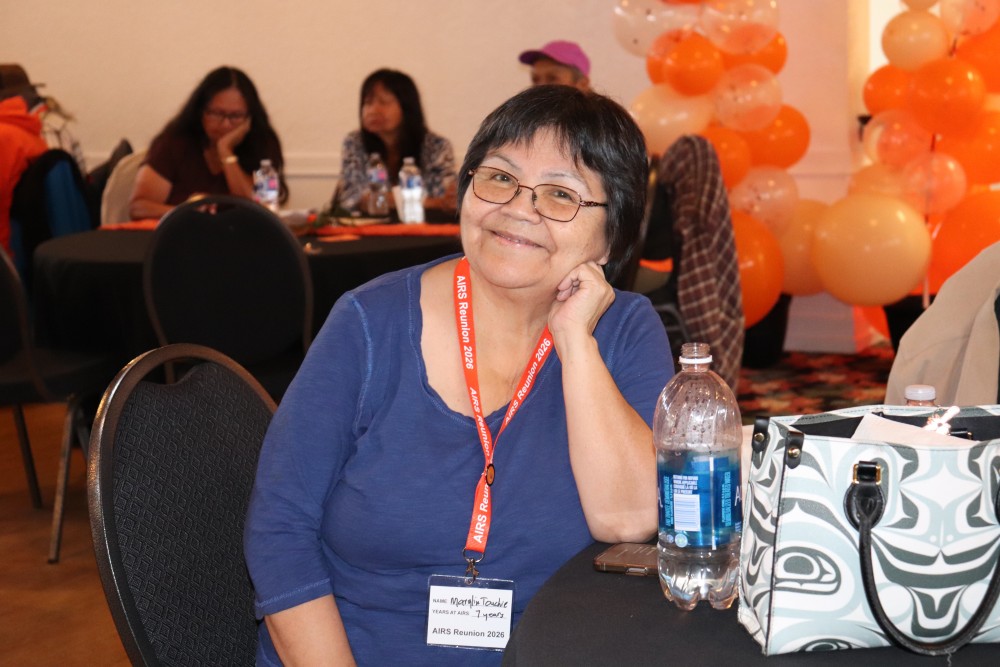
About 200 people attended the reunion at Port Alberni’s Italian Hall on October 1, the day after National Truth and Reconciliation Day.
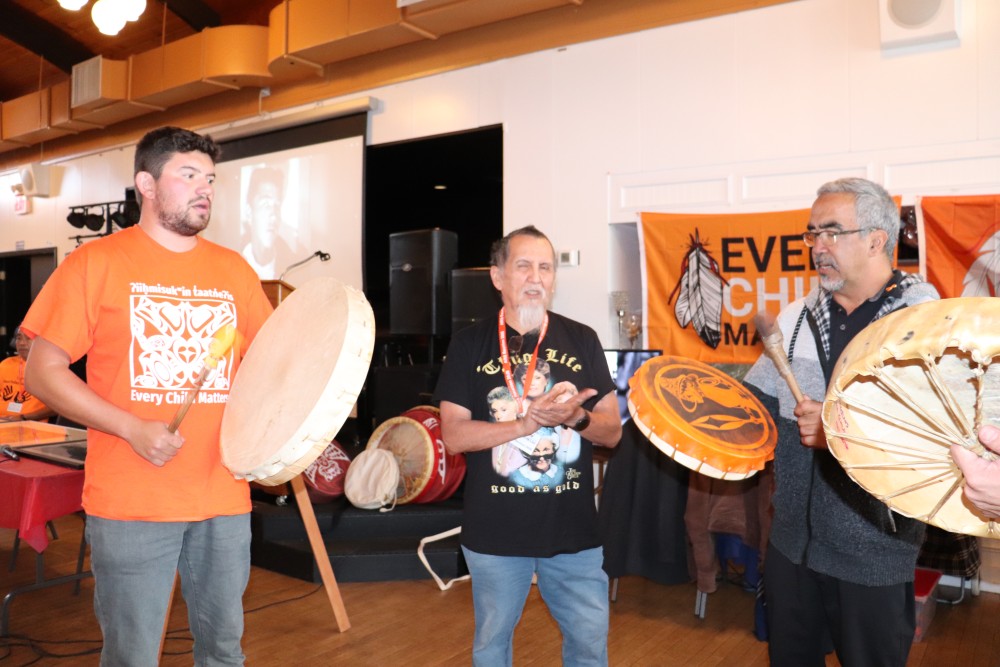
NTC Vice President Les Dioron, Tseshaht elected Chief Ken Watts and Port Alberni Mayor Sharie Minions were there to welcome the people. Tseshaht Jared Dick thanked the survivors for their resilience before drumming a song for them.
Mary Heatherington has lived and worked among Nuu-chah-nulth-aht for decades. She is the Alberni Valley United Church’s truth and reconciliation steward. On behalf of the United Church of Canada, she told the gathering that they don’t want secrets anymore. “We encourage you let the world know what happened to you,” she told the crowd.
She said she appreciates First Nations and how they were the ones there for her after an accident she and her husband had. Heatherington said she wants to help. “Your culture will survive, you will survive,” she told them.
Doiron said he never knew of his mother’s experiences at residential school until he heard the stories at her memorial potlatch. “I was pissed off, but the elders said she was protecting me by not telling me,” Doiron recalled.
He spoke of other family members and how he never understood their behavior at the time, but now that he knows what happened to them, he now understands. “It was tough to hear, to know, to learn.”
Chief Ken Watts told the group that said he saw 1,000 in orange shirts leaving the site of the former AIRS in Tseshaht territory. He credited his late father, George Watts, as being one of the drivers that had the institution shut down. George Watts along with former Nuu-chah-nulth leaders Nelson Keitlah and Simon Lucas went to Ottawa to demand the immediate closure of AIRS back in 1973.
Watts went on to deliver a report on Tseshaht’s ground search and the work his nation has done researching the AIRS children that never made it home.
At the direction of survivors and elders, Tseshaht scanned grounds of the former AIRS site, the buildings now mostly demolished. Due to the limitations of the LiDAR, some places could not be thoroughly scanned. Watts says that is because the LiDAR can only go where a lawnmower can go.
Even with that limitation, the LiDAR scan indicates that there may be 17 potential unmarked graves on or around the AIRS grounds. The Nation has researched 67 documented student deaths that occurred at AIRS.
“This is not new information. You’ve been saying it all along – children passed away at residential school,” said Watts.
Tseshaht has delivered their findings to the families of those lost. Records are being delivered to places like Sto:lo and Haida Gwaii, according to Watts.
The Maht Mahs gymnasium and the Caldwell Hall are the two remaining school buildings on the property and Watts said both are slated for demolition. Plans are in the works to build a new gathering place and a memorial sculpture designed by Tseshaht artist Connie Watts.
“We are still here. We know the history and we cannot change that,” said Roman Frank. But moving forward, history is ours to write, and we can work to make a stronger next generation.
AIRS survivor and Huu-ay-aht elder Jeff Cook was one of the child artists that made a painting in Robert Aller’s collection. Robert Aller taught art to AIRS students from 1958 to 1964. When he died, his estate turned over the collection of 35 or more paintings to UBC. They were then repatriated to the now elder artists and have been on display across Canada.
Cook says the paintings have helped the group of surviving artists heal. “As children, we knew kids disappeared from the village every September. Imagine what that would be like, a village with no kids,” said Cook. He asked people to think about what would be like for the parents, grandparents, who had no say over what happened to their children. It created social issues, said Cook.
The survivors spent the day socializing, reconnecting, talking about their experiences at the school and their lives afterwards.
Haida elder and artist Ron Wilson spoke of his dear childhood friends he called brothers. One brother named Mel died recently and his sister posted on social media that she planned to fulfil Mel’s final wishes and release his ashes at the Sproat Lake Petroglyphs, a place he loved.
“I wanted to be there with her,” said Wilson. He knew the ashes would be scattered at noon on that day. “At noon, I was just coming into the valley,” he recalled. By the time he got to Sproat Lake, Fran, Mel’s sister had already scattered the ashes and left.
“There was no wind, and I could see Mel’s ashes covering the water, quite a ways out,” said Wilson. “I thanked Mel for waiting for me.”
“And then the prettiest little breeze I ever felt came over me and around my head, then down to the water,” said Wilson. The breeze pushed the floating ashes into the shape of a feather. “Again, I said thank you,” Wilson recalled.
There was another gentle breeze that scattered the ashes. “The feather was gone and the ashes disappeared…Mel had waited for me, and I got to say goodbye to him,” said Wilson.
Wally and Donna Samuel met at AIRS in 1964. Back then, she was Donna Marsden, a Gitxsan from the village of Gitanyow, BC. Wally remembers that the principal of AIRS at the time tried to break the young couple up, firing off letters to Donna’s parents saying Wally is trouble.
The couple eventually married, had five children, 16 grand children and 20 great grandchildren. “It’s been a good life,” said Wally.
“We wanted to invite the principal to our 20th…our 50th anniversary but he’s long gone,” Wally chuckled. The couple has been married for 60 years.
The Samuels, along with fellow AIRS survivors, Jack Cook, Jeff Cook and Charlie Thompson wanted to get people together so that they could tell their stories. “To tell our truth, to educate people and make things better for our kids…we want to make sure that what happened to us doesn’t happen to them,” Samuel said.