
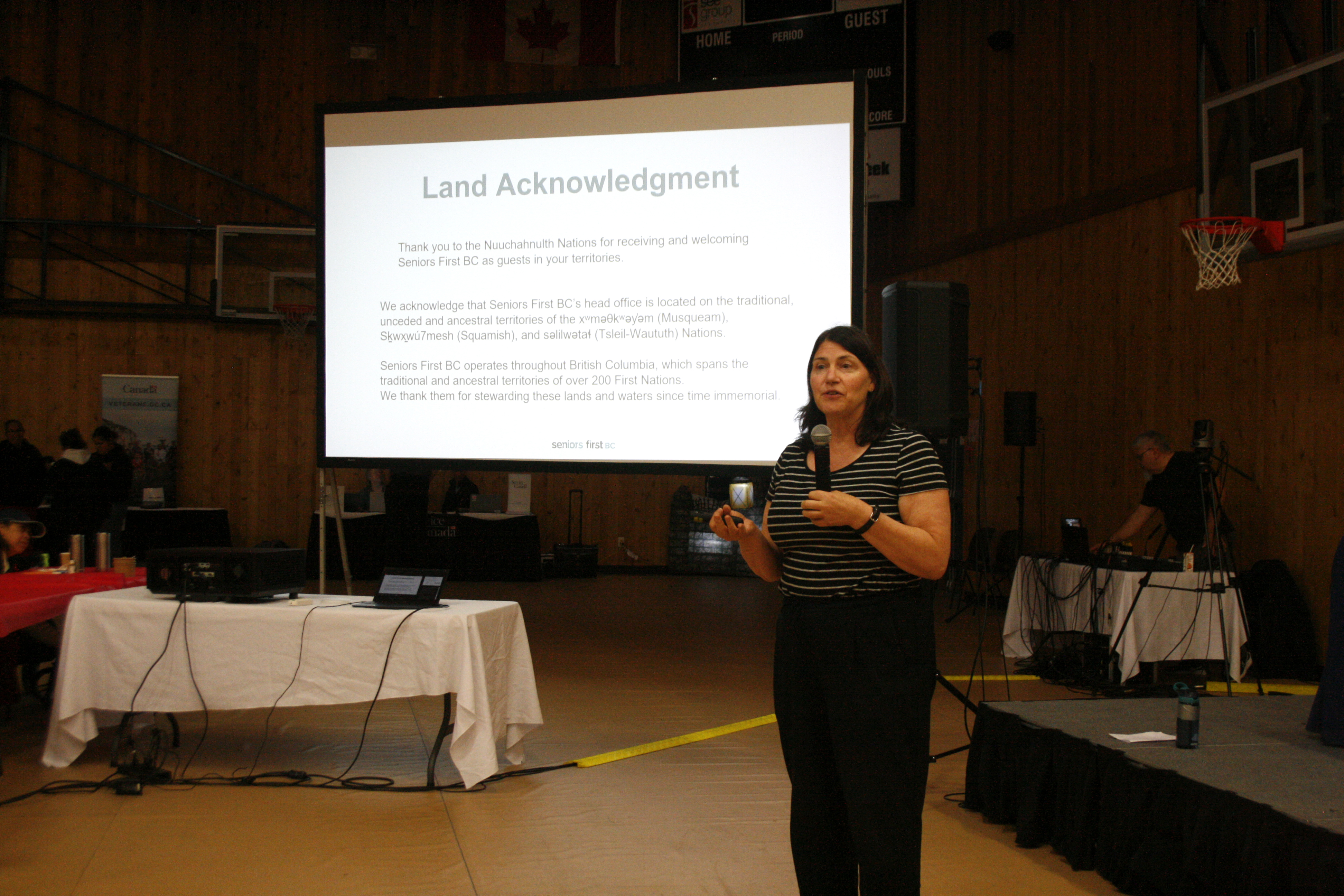
Once again, the community gathered for the annual DAAC Health Ability Fair, hosted by the Nuu-chah-nulth Tribal Council at the Alberni Athletic Hall on October 28th and 29th. Speakers shared insights into many different issues and topics, with the discussion of social isolation and loneliness standing out.
Presented by Linda Yauk of Seniors First BC, the topic brought forward the correlation between social isolation and a decreased well-being in our seniors.
A survey held by the National Institute on Aging found that 43 per cent of Canadians over the age of 50 are at a high risk of social isolations; while 57 per cent report feeling lonely. This report highlighted that there has been no improvement in rates since 2022, and social isolation is a complex issue that arises from a variety of circumstances, such as the loss of a life partner or spouse, a close friend, or aging factors like limited mobility and dementia. Often these factors that increase social isolation can be addressed by individual action, while others require community-based solutions.
As we age it is important to stay connected, but often this is easier said than done.
“Sometimes life keeps throwing awful curveballs, and not all factors are in our control,” expressed Yauk.
Living on a fixed income, access to transportation can play a large role in the quality of life for seniors. As we and our loved ones age it is crucial to plan for these changes. Options to keep our seniors connected to the world around them could be looking into a volunteer driver service or setting up schedules of when family and friends can visit. Many elders do not want to feel like a burden or hassle to their busy family members, and isolation can happen unintentionally.
Agnes Jack from Mowachaht/Muchalaht First Nation shared that when caring for her mother and aunty their first response to any activity was always a “no”.
"Sometimes elders just need a little persuasion to get up and be active," said Agnes. “They always ended up enjoying themselves once out.”
“I don’t have magic answers” said Yauk, “but some ideas for you to start with are through our own self-care – how you take care of you.”
This may be as simple as keeping a daily routine, which can add purpose and accountability. Waking up and enjoying that hot coffee or shower before the day begins, a simple act of completing a word game, doing something for yourself that brings enjoyment. Remembering that small actions can create big differences in connection, "We don't need to have 100 friends or 100 activities, we need a few to have regular contact with," noted Yauk.
Waving to a neighbour, saying hi to the mail carrier, setting a daily phone call or “check-in chain” are all small ways to make sure you have some connection.
Community groups often host senior-focused activities. Participation in different activities can encourage a feeling of belonging, and a sense of community. The Port Alberni Friendship Center is a great place to start with their elders group. You can reach them at 250-723-8281 or visit www.seniorsfirst.ca for more available resources.


