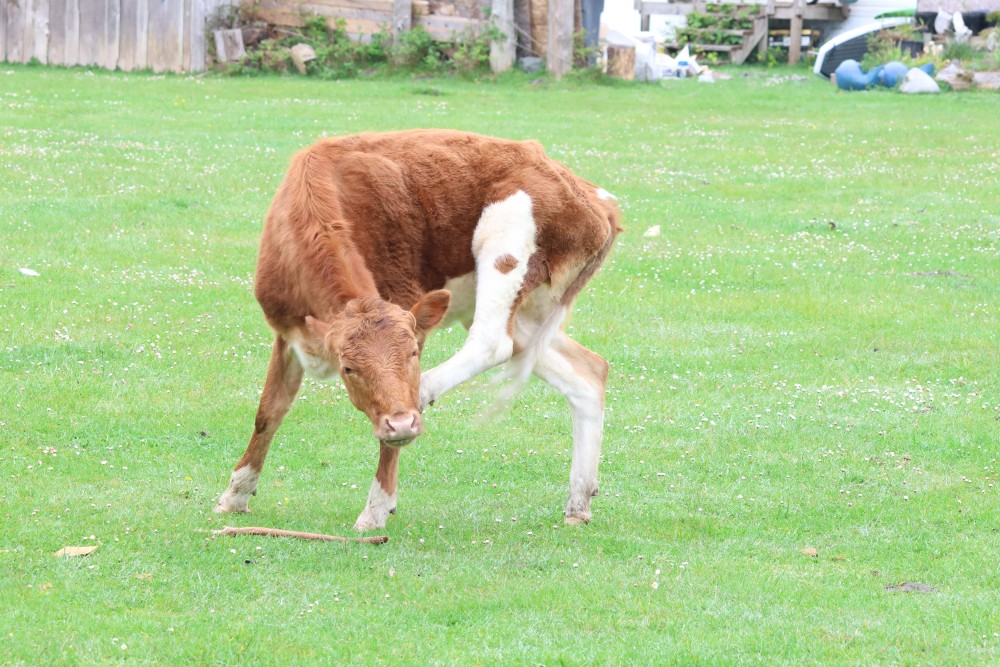
A cow research project is underway in the ancient village of Opitsaht within Tla-o-qui-aht First Nation (TFN) traditional territory on the west coast of Vancouver Island.
The multi-year study looks at why the wild cows, or muus muus as they’re called in TFN language, are so healthy.
Tla-o-qui-aht has partnered with researchers at the University of Lethbridge and Tsolum Mobile Vet for the project.
“There are some really interesting research questions surrounding the muus muus. They are a remarkable herd of cattle and I think they are a unique resource in Canada and around the world,” said Dr. Wade Abbott, a senior research scientist from Agriculture and Agri Food Canada involved with the study.
The cows have been roaming free on Meares Island near Tofino, B.C. since the early 1900s. They are a living relic of colonialism, having first set cloven hooves on Tla-o-qui-aht shores “around the same time all the priests came and started building residential schools,” says to Tla-o-qui-aht member and Opitsaht resident Deb Masso.
“There used to be some black ones, the bulls anyways. But now they are all just brown,” said Masso.
She says they are “constantly eating everything” - even trees.
Abbott said the University of Lethbridge is “weaving” Indigenous knowledge and western science to gather “clues” that could benefit cattle health across the country.
“For me, it’s really been a transformational process; having the privilege to work with the Tla-o-qui-aht on this project,” he said.
“Classically trained scientists, they are not trained to think that way. Confronting personal biases and learning to think differently and see things differently has been the focus of my journey and the whole research team,” said Abbott.
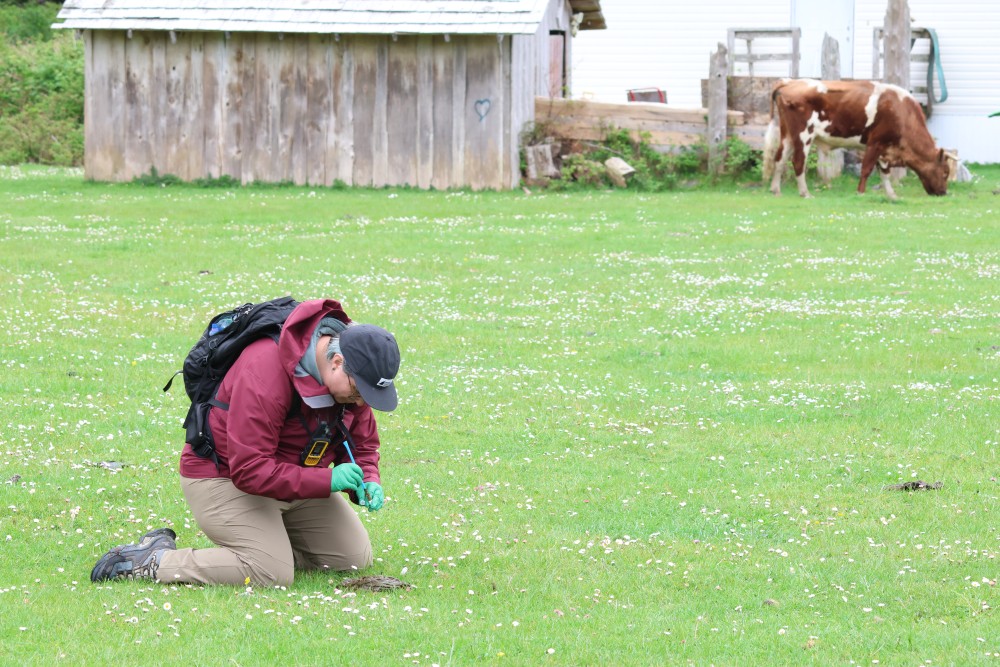
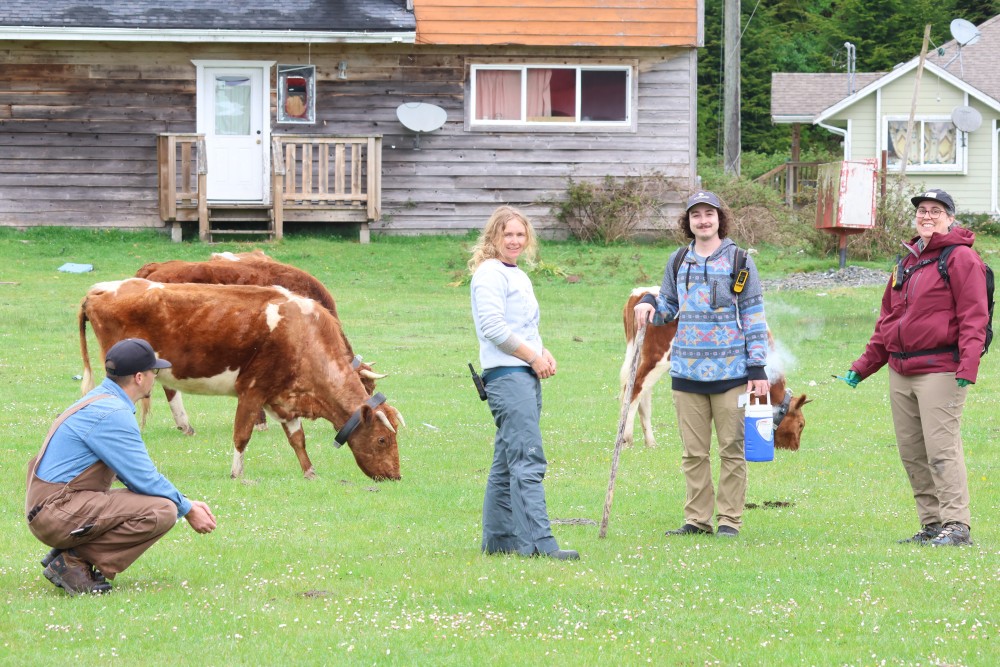
During an early May visit to Opitsaht, Agriculture and Agri Food Canada researcher Kristin Low and University of Lethbridge graduate student Michael Veltri collected plant samples and a total of 120 fecal samples – four poo samples from each of the 10 cows in the herd over three time points.
The fecal samples were frozen in liquid nitrogen immediately after collection and sent to the research lab at the University of Lethbridge.
“We are looking at the feces to track how they digest and what plants they are eating, and then correlating that with observations from the community,” said Low.
“I feel privileged, thankful and super touched to be part of this research,” she said.
The research team took OCAP (ownership, control, access and possession) training, which asserts that First Nations have control over data collection processes, Low said.
“Any sharing of information, we need permission from the nation,” said Low.
With the plant samples, the research team is using an artificial rumen system that mimics the cow gut to measure several things including methane secretion.
“What we saw is that several of these plants did decrease methane,” said Abbott.
“We are still processing, but we’ve seen some very promising, early results. You could imagine if the nation wants to harvest some of these traditional forest plants it could maybe be a product that could lower methane in feed lots in Alberta. You can ship the plants, but you can’t ship the muus muus,” he said.
The first muus muus research paper is currently under revision, according to Abbott, and should be published in fall 2026.
“One of the biggest questions is, why are the cattle so healthy? Some of the knowledge holders and elders started sharing that the plants that the (wild cows) eat have been used to treat (human) ailments since time immemorial,” said Abbott.
“Are the cattle managing their own health with these plants? We will see. We still have lots to do,” he said.
Hip Spot and Big Red
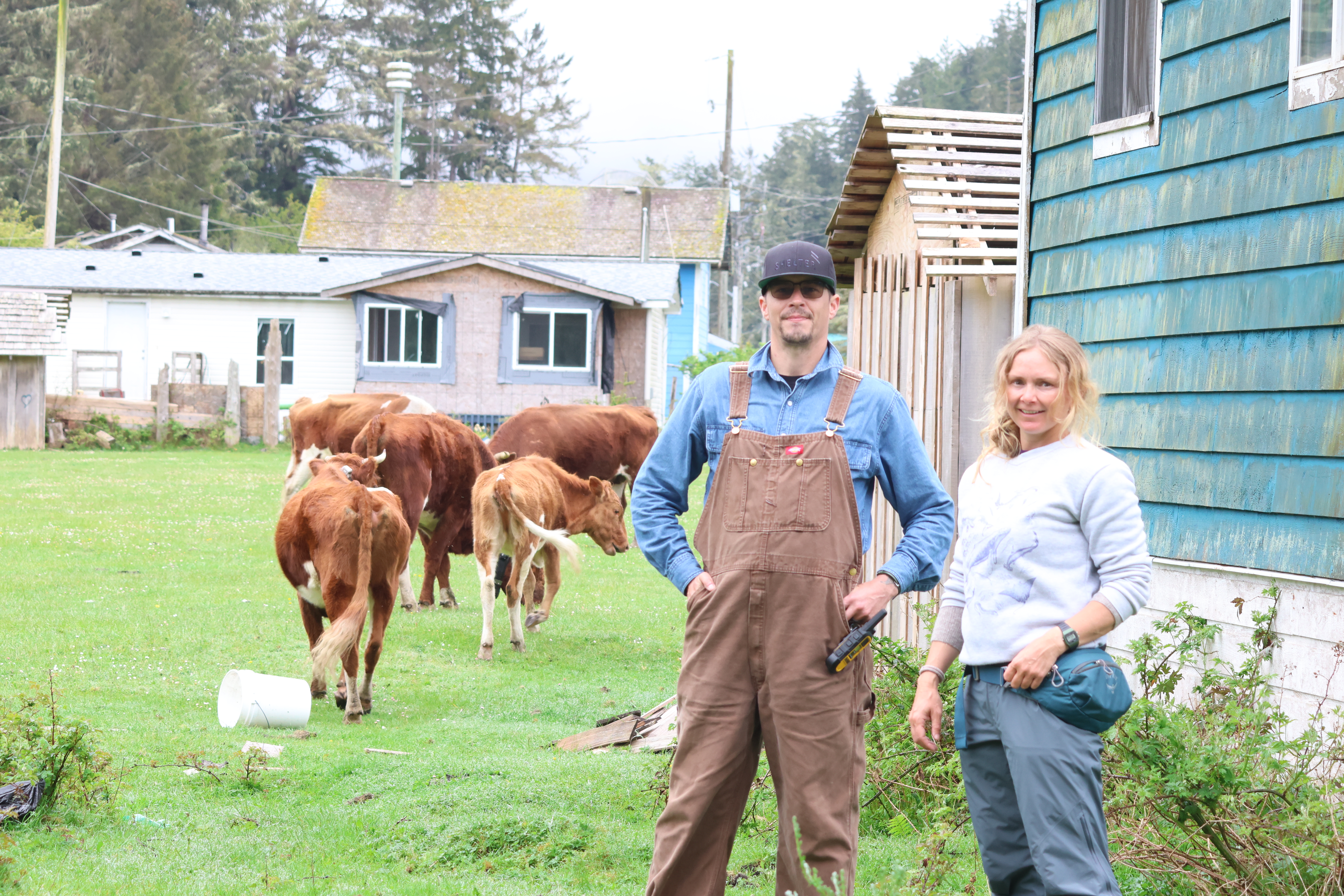
The researchers were guided on Opitsaht by wild cowhand technicians, Clay Weisschadel and Robyn Perritt. The cow techs were hired by the nation in October 2025 to collect data for the research project and to monitor what the cows eat.
The duo had the honour of giving each cow a unique name: Cinnamon, Buck N Lucky, Hip Spot, Italy, Florida, Bishop, Lover Girl, Wrench, Little Red and Clifford.
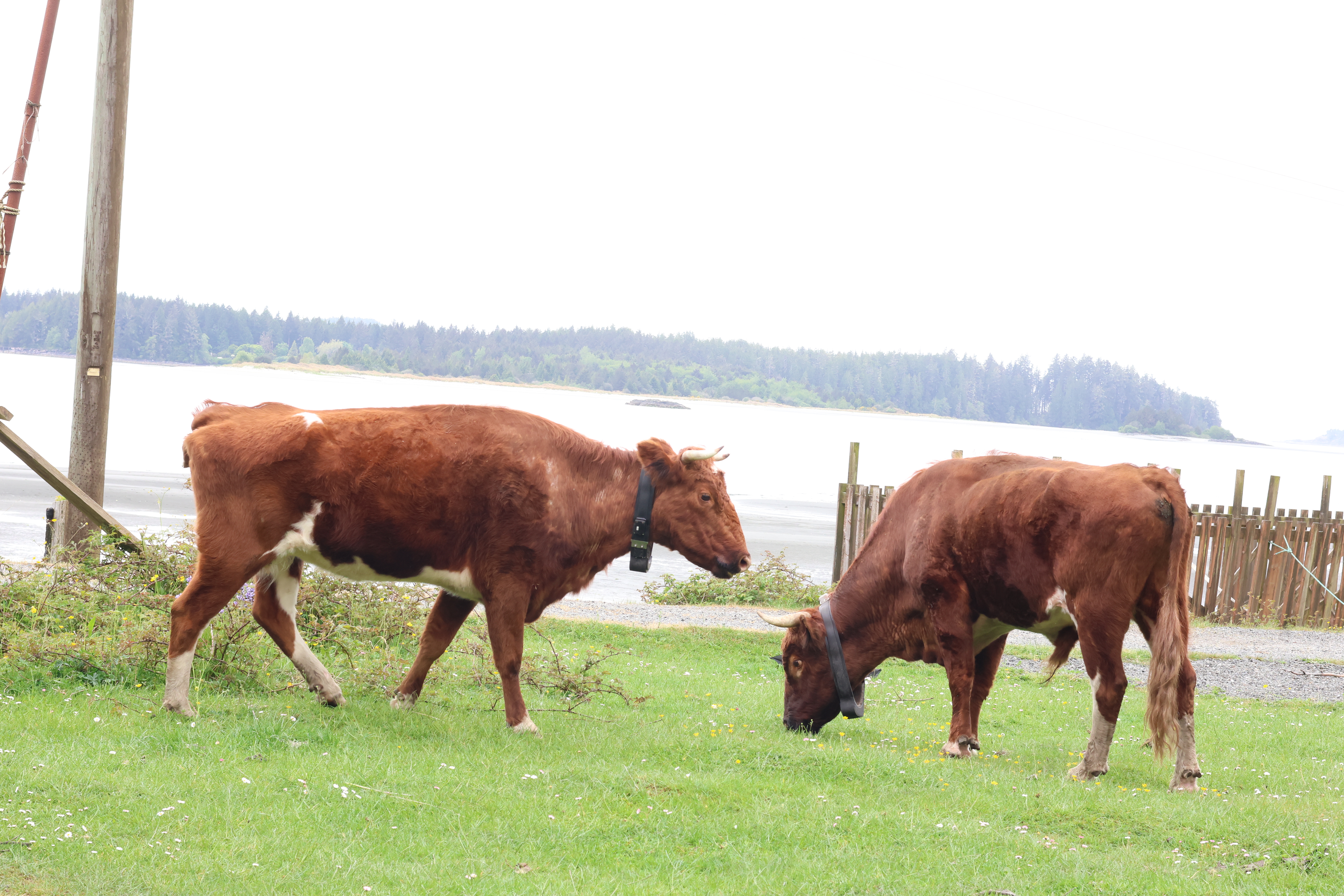
“Hip Spot is the matriarch,” said Weisschadel, who has called Opitsaht home for about nine years. “She yells at the other cows on the beach to tell them it’s time to go, go into the bush to eat. They generally stay together.”
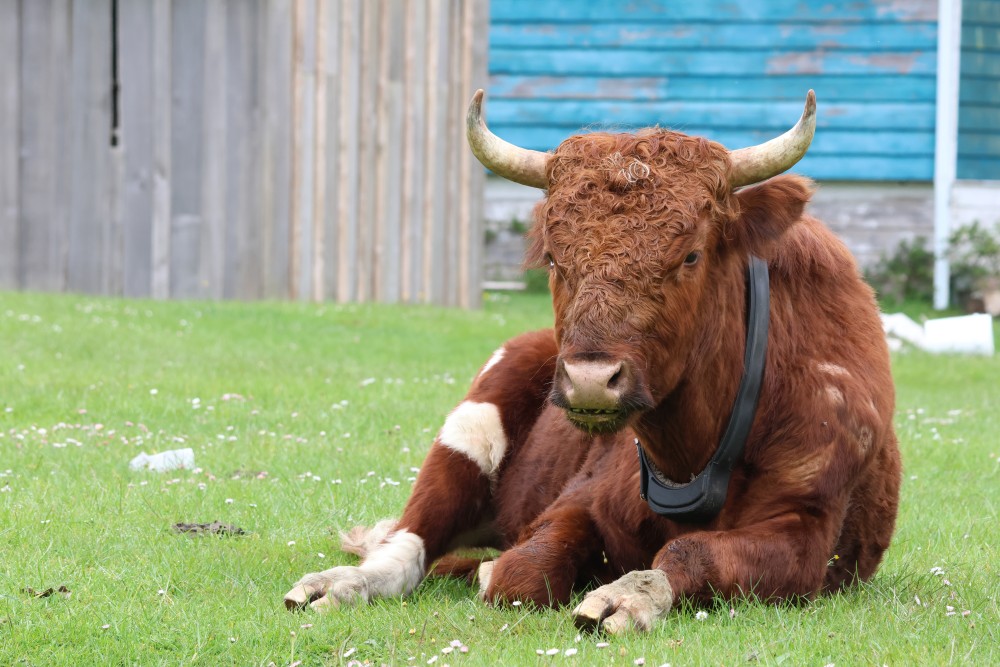
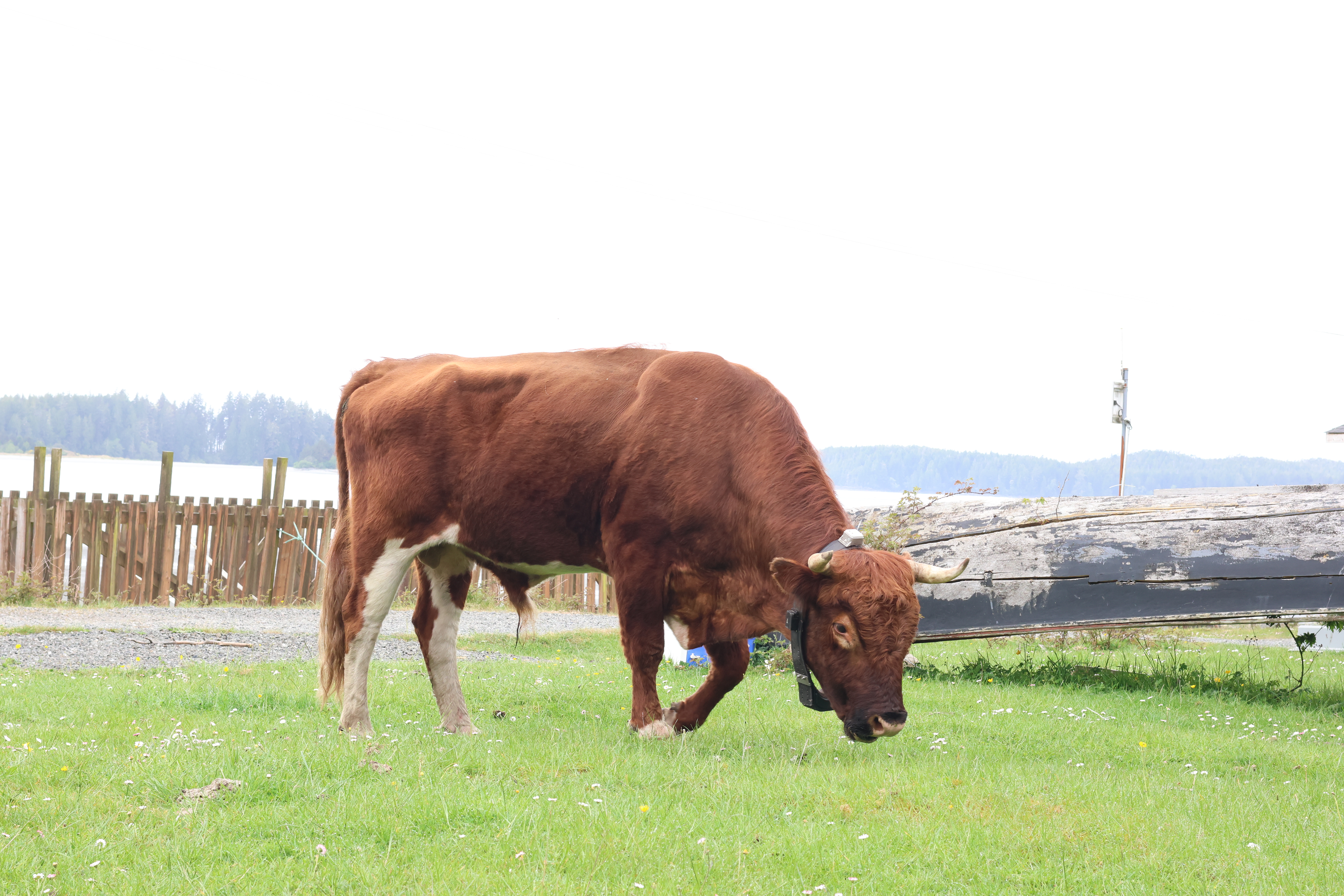
He said while there are six bulls in the herd, three were castrated to prevent fighting. Clifford (a.k.a. Big Red) is the alpha male.
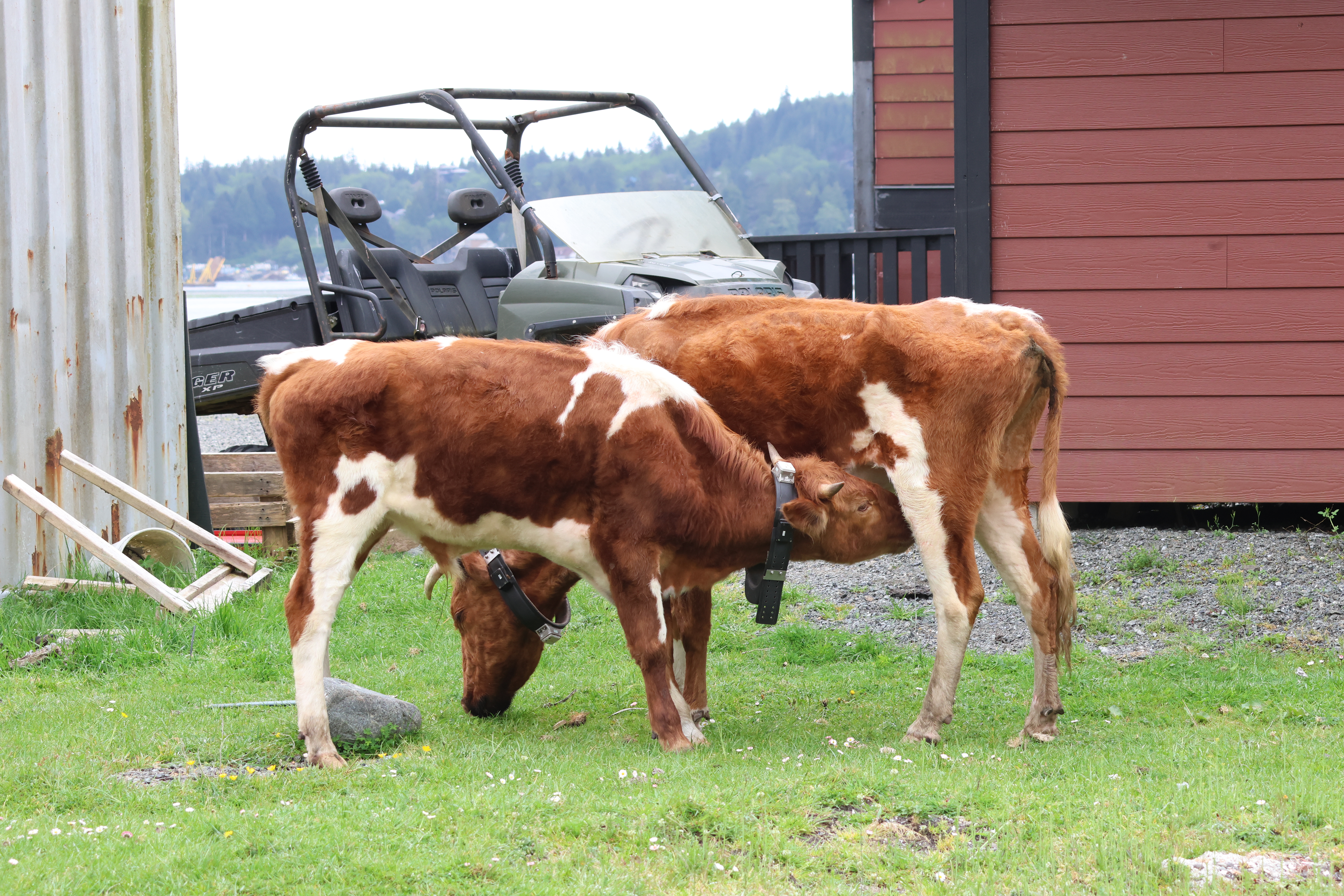
Cinnamon is the youngest in the herd and an orphan.
“She’s my favourite,” said Perritt, who catches the 8:45 a.m. boat from Tofino each day to watch the cows on Opitsaht. She says she treats the cattle a bit like a black bear, if one starts to come towards her, she’ll raise both arms and shout at it.
“For the most part they are docile. Children play around them,” said Perritt.
“(The work) has been a neat glimpse into how life goes on in an isolated community. Even if it’s a short boat ride, it is still a hurdle to travel. You’re separate over there and on a boat schedule, so people talking about going out and going to town, it’s a mission as is carrying your groceries from the dock,” she said.
For Masso, 76, the muus muus have always been part of the community. She shared that one of the bulls knocked over an elder once, which led to the animal being killed and its meat distributed to the community.
“Some people didn’t want to eat it because we think of them as pets, so the idea of eating them turned a lot of people off. But they are super healthy when you think of all the things they eat around here that is not toxic or sprayed,” she said.
“I hope they stay forever because we need them here. They keep the grass and all the plants healthy. If the cows were never here, Opitsaht would be overgrown. They are part of the lay of the land,” said Masso.
While most of the cows were collared for GPS tracking, the cow techs say they rarely need to look at the app to know where they are. They’ll be eating eelgrass on the beach at low tide, munching on plants in the forest, grazing on the lawn in the middle of the village or sometimes the herd wanders to Kakawis, the former site of the Christie Residential School.