A new study from the University of Victoria reveals that climate change has contributed to kelp decline in the Salish Sea longer than previously established, changing the timeline of kelp study forever.
“Kelp forests around the world are facing multiple problems. Sometimes it's just pollution. Sometimes there are urchin barriers,” said Brian Timmer, a UVic PhD student and the lead author of the study, available in Ecological Applications. “So, it's not that climate change is the only thing that's affecting kelp forests. But it is a very big problem, and it's expected to become more of a problem as the ocean keeps warming.”
According to Ocean Wise, 40 to 60 per cent of the world’s kelp forests are in decline, with ocean warming and urchin overpopulation as the main factors.
Usually, researchers focus on the loss of kelp forests caused by marine heat waves that stop the seaweed from gowing. However, the question of how long climate change has contributed to the decline of kelp forests remained unanswered.
Researchers looked at around 52 species in the seaweed community, with kelps and red algae as the two dominant species that prefer cooler conditions which historically had been more abundant in the studied zones.
As the ocean warms, warm-water species would follow warm currents up north — a phenomenon called tropicalization — to replace the cold-water species that would move away to follow the colder currents.
However, researchers noted that when cold-water species left, they weren’t replaced by any warm-water species, resulting in habitat loss, a phenomenon known as deborealization.
The issue is not only that the ocean is warming too fast for seaweed to travel up the coastline towards cooler currents, but it’s also the complexity of the coastline itself.
Up the Strait of Georgia, multiple indents and fjords create microclimates – small areas of warm water that heat up quickly – but are surrounded by colder currents that block warm-water species from replacing the cold-water species that have left or died.
Without an accurate historical baseline to measure from, scientists risk falling for the shifting baseline syndrome, where the true effects of climate change associated with environmental degradation aren’t completely accounted for. This means that community-level chances for restoration aren’t as effective as originally intended.
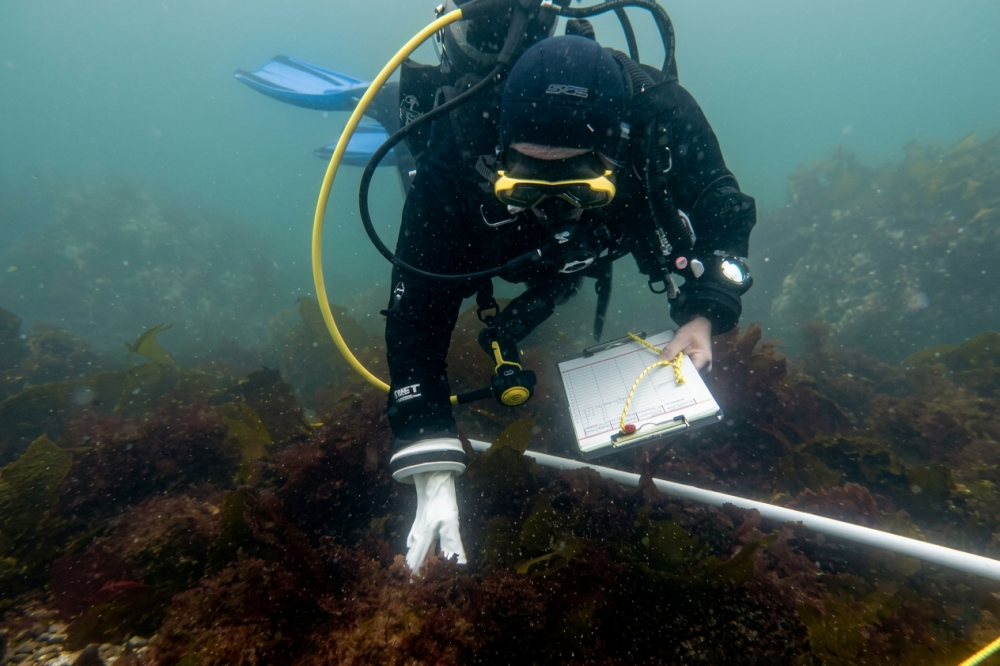
Around 1972, the government conducted aerial scans and scuba surveys in the northern Salish Sea to map out a species of red algae for commercial harvesting.
When the project didn’t continue, the data was shelved in the University of Victoria archives and across Canada. Even though kelp wasn’t the goal for the past study, Timmer said they could observe kelp in the photos and know exactly where the scuba surveys were taken.
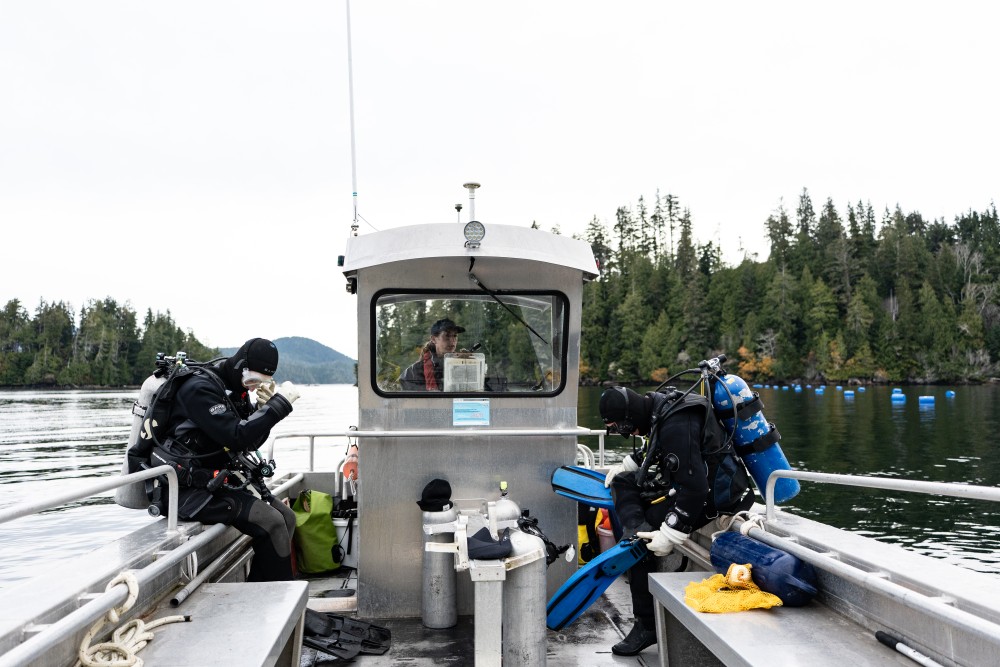
Using the historical records, the research team, with the support of the Hakai Institute, replicated the photos and scuba surveys in 2023 to compare the presence of kelp forests in the past.
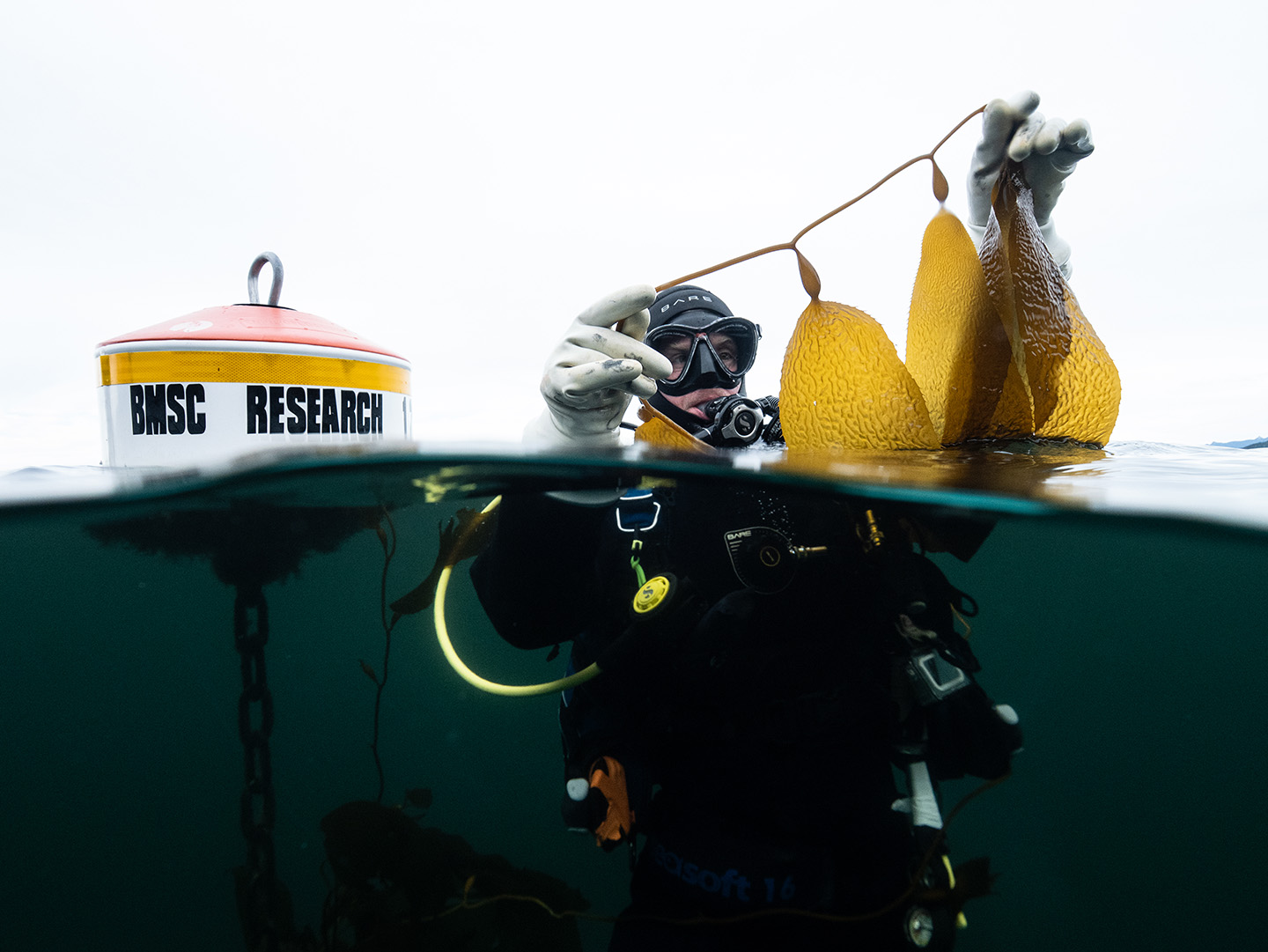
The result showed that decades ago, a massive size of kelp forest floated on the surface, spanning over 550 hectares on the Salish Sea near Comox and Denman Island. The previous baseline of kelp forest size in the region grew tenfold.
Today, none of those kelp forests remain, with satellite images showing most of the kelp was lost between 1972 and 1984. Timmer discovered that the dominant, cold-water species of kelp and red algae declined between 60 and 99 per cent, especially in shallow water.
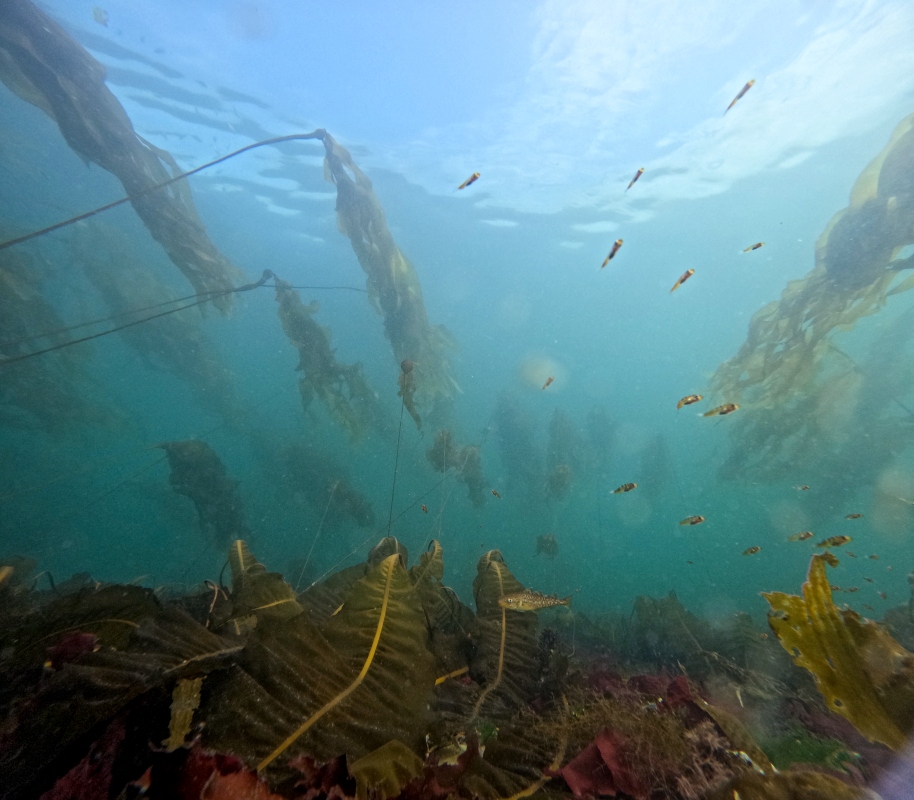
Kelp is a foundational plant and one of the most diverse ecosystems in the world. Around 350 marine species rely on it for food, shelter and nursery grounds for fish like herring, salmon, rockfish and invertebrate species.
“A kelp blade is almost like a conveyor belt, continuously growing and putting off material into the water that other things will eat. So it's not just homes for fish and invertebrates. It's also food for everything that lives in these near-shore environments,” said Timmer. “And when you lose [the kelp], the productivity of the ecosystem goes way, way down.”
Kelp also forms a giant underwater carbon sink, helping to mitigate the impacts of global warming. A UVic study estimated that kelp forests on Canadian coasts capture and export between 40,000 and 400,000 metric tonnes of carbon into the deep ocean every year.
Yet, researchers warn that kelp alone is not enough to completely solve the climate crisis without implementing drastic reductions in fossil fuel consumption.
Threat of sea urchins
Another variable in kelp decline is the threat of marine grazers like sea urchins. Sea otters are one of the main natural predators of sea urchins. But fur trade hunting in the 18th and 19th centuries caused a massive decline in the sea otter population. With no predators, sea urchins overgraze the ecosystem, leaving vast stretches of the seafloor to be stripped of kelp, affecting every species that relies on the plant.
After the reintroduction of sea otters on the B.C. coast over 50 years ago, it acted as a domino effect: the otters eat the urchins, so kelp can regrow and help restore balance in the ecosystem.
“A lot of that [kelp decline] in Nanwakolas territory was driven by the abundance of sea urchins. We’re learning from Bryan’s research that the declines may have actually started much earlier in the southern part of the Nanwakolas territory, [where] the temperature might be driving the change,” said Rebecca Martone, a marine science adviser for the Nanwakolas community and part of the Marine Planning Partnership (MaPP).
“Kelp itself is a really important species from a cultural perspective. People have been using it for food, baskets and for other types of cultural uses. It’s also an important habitat for a lot of other species that are ecologically, culturally and economically important,” said Martone.
“[T]he nations didn’t want to just crush urchins because they are also important species that we wanted to respect,” added Martone, noting that the urchins were havrested for food.
One of the outcomes of the projects was successfully training around nine guardians for the dive team to harvest sea urchins in overgrazed zones. A woman in the community even turned the shellfish into urchin butter, freezing urchin meat and using it later as a food source.
Ocean Wise, in partnership with Tseshaht First Nations and the Pacific Urchin Harvesters Association (PUHA), plans to lead a community-led urchin removal program to give kelp forest room to recover from overgrazing.
Part of the program involves training Tseshaht community members to harvest urchins sustainably, as they are a traditional food source, and sell the extra specimens.
Additionally, Ocean Wise announced the opening of a kelp nursery at the Pacific Science Enterprise Centre in West Vancouver to test out the plant’s seed production.
The research received funding from Fisheries and Oceans Canada, the Natural Science and Engineering Research Council, the National Geographic Society and the Royal Canadian Society’s Trebek Initiative.