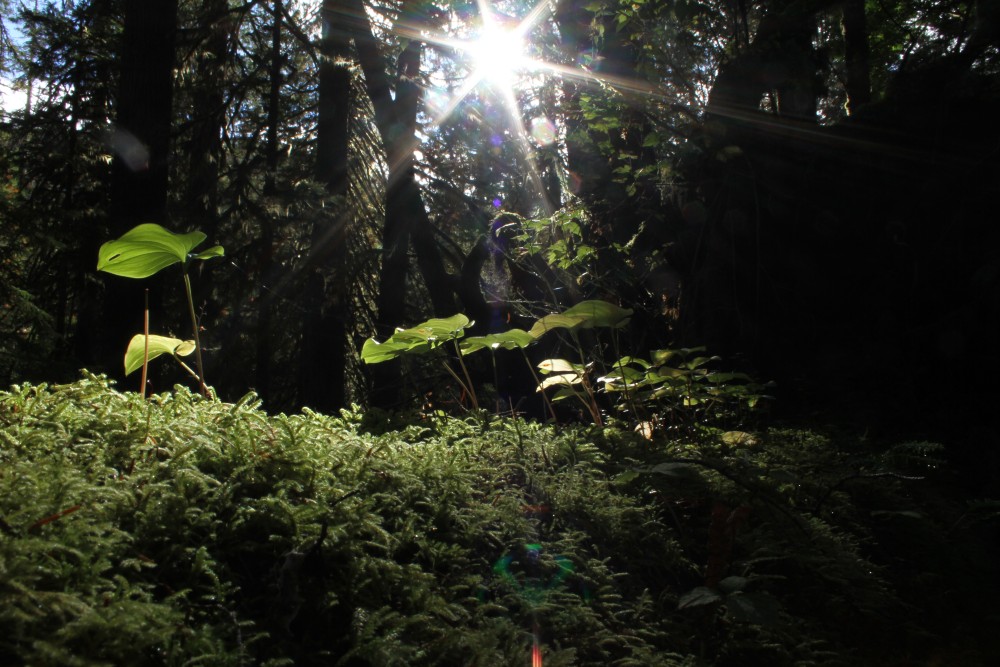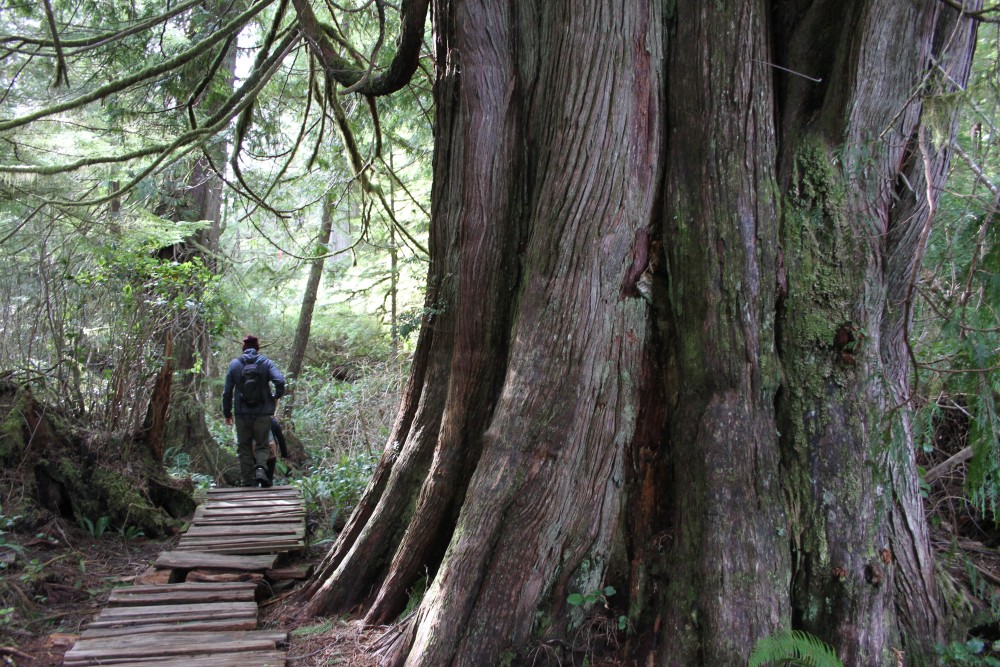
“The best salmon-making machine is an ancient rainforest,” according to those behind an initiative to collectively find a more holistic approach to managing First Nations’ territories.
“We need to carefully manage the resources in such a way that it doesn’t deplete our resources, it doesn’t create that imbalance that’s in societies,” said Terry Dorward, board president of the IISAAK OLAM Foundation, which promotes the establishment of Indigenous protected conservation areas. “We have a common denominator, which is working to heal broken lands and broken communities.”
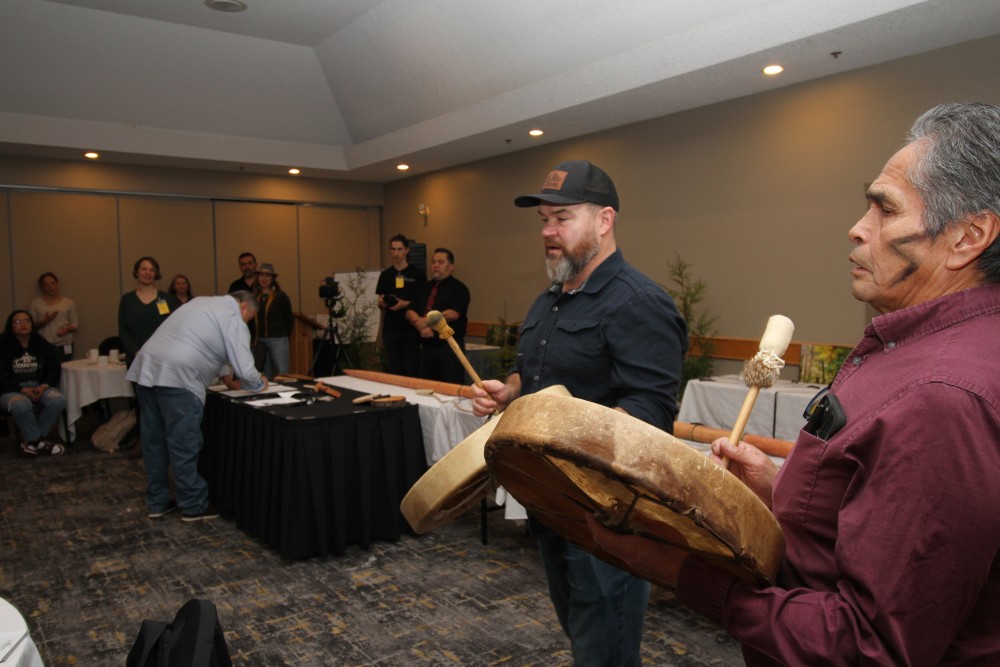
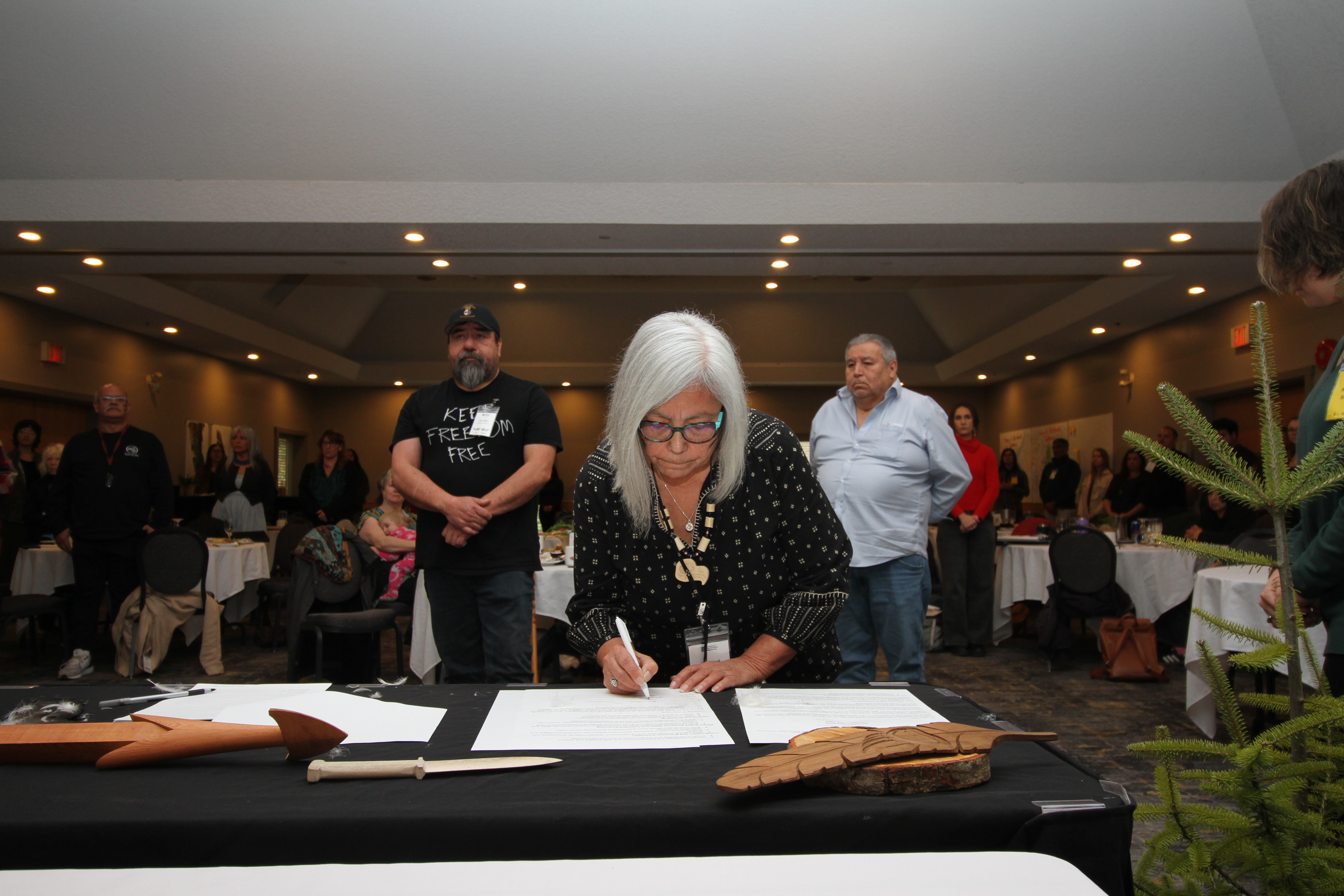
For a week in January the foundation hosted the Estuary to Old Growth Gathering in Parksville, bringing together a conference room full of representatives from Nuu-chah-nulth, Coast Salish, Kwakwaka’wakw and Haida nations. During the event delegates were presented with the Estuary to Old Growth Declaration, which outlines a commitment to protect and restore territories, as well as “care for cultural keystone species through shared stewardship and knowledge exchange”.
“We have an opportunity to start correcting course,” said Eli Enns, IISAAK OLAM’s CEO and board vice-president. “If we don’t do this, we’re just leaving a mess for our children and our grandchildren.”
A handful at the gathering signed the declaration, but many more put their names to an “intention to stand with the declaration in principle.”
“The statement of intent is for them to go back home to their leadership and talk to them, present the declaration,” explained Dorward.
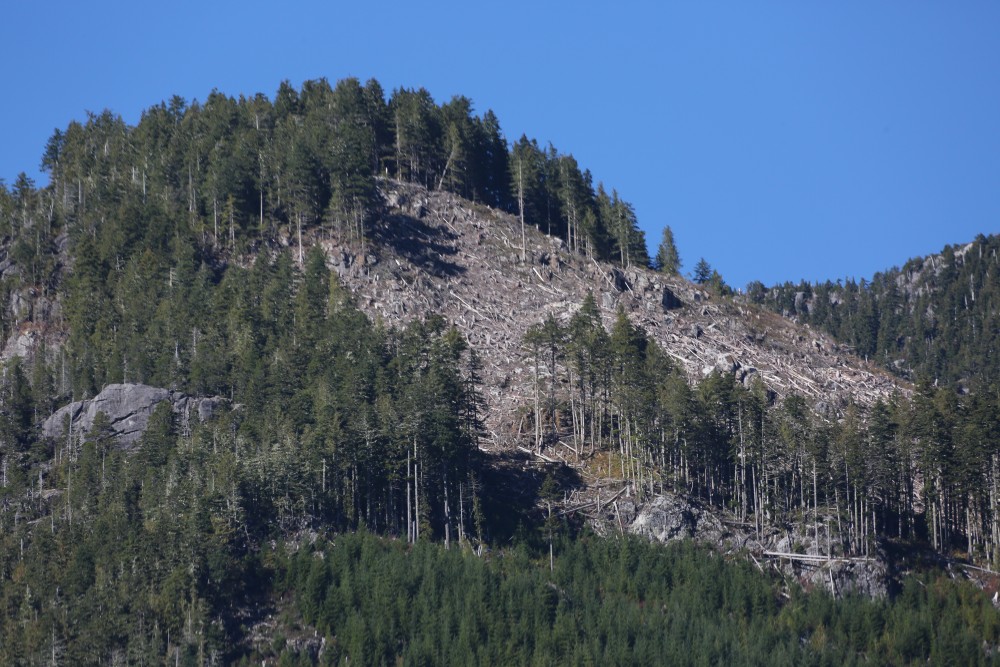
The declaration is intended to change the course from generations of unsustainable resource extraction that have left First Nations’ territories marked by large patches of clearcuts, while many of the salmon stocks they have long subsisted on have declined in abundance.
“We’ve suffered so much in boom-bust economies. I grew up when there wasn’t a lot of jobs anymore in fishing, in logging,” said Dorward, noting that at lower, valley-bottom elevations the remaining old growth represents three per cent of what was once stood on the B.C. coast.
“I think our people have always had a role in forestry, we will continue having a role in forestry - how we look at forestry needs to be considered,” he added. “There are other options, nature-based solutions, conservancies.”
A call to re-imagine forestry
But reconsidering forestry presents a challenge for many in British Columbia, which has long seen the industry as foundational to the development of the province. While the Estuary to Old Growth Gathering was being held in Parksville, the B.C. Natural Resources Forum launched its “Forestry is a Solution” campaign in Prince George on Jan. 20. This push seeks support for the logging and manufacturing sector, stressing the need to “speed up access to economic wood by expediting permits and approvals”. Many of the industry’s leading associations are backing this campaign.
“The coalition is asking British Columbians to voice their support for the workers and families that depend on forestry – a sector that is vital to the province’s heritage and its future,” stated the B.C. Council of Forest Industries.
Many First Nations also rely on the industry through revenue sharing agreements over what is harvested in their territories, as well as ownership stakes in forestry companies and members working on cutblocks or in mills.
But with over 70 per cent of B.C.’s lumber being exported to the United States, 2025 wasn’t a kind year for the province’s forestry sector. Over the course of last year US tariffs tripled to 45 per cent, while a succession of mill closures continued – the most recent casualty being the Crofton pulp mill in early December. Its owner cited a lack of available fibre and poor prices on the international market for the shutdown.
B.C.’s forestry has been in decline for years, with the 49,230 employed in the industry in 2023 representing a 12 per cent decline from the workforce a decade earlier – and 40,000 fewer jobs than in the early 1990s. In the 2023 - the most recent data available from the Ministry of Forests – the province-wide harvest totaled under 40 million cubic metres, a sharp decline from the over 70 million cut 10 years before and the lowest volume harvested since the early 1960s.
Not surprisingly, a Feb. 2 report from the Provincial Forestry Advisory Council stated that the days of “abundant access to low-cost fibre” are over. The report was presented as “a call to fundamentally reimagine our relationship with the land.”
“B.C.’s Forest Act—largely shaped during an era of industrial expansion— was designed for a reality that no longer exists,” wrote the advisory council. “The circumstances and approaches that once attracted investment and sustained large-scale operations are now outdated and insufficient to meet today’s complex ecological, social and economic realities.”
Finding a conservation economy
The Estuary to Old Growth declaration notes the intention to “heal our lands and waters through stewardship and restoration”, while First Nations “access nature-based solutions markets”.
This can be a viable alternative to resource extraction, says Steven Nitah, managing director of First 30 x 30 Canada. The organization recently received a $10 million US (worth about $14 million CAD) grant from the BHP Foundation to support Indigenous-led conservation efforts.
“We use the financing to bring technical and financial capacity to support Indigenous-led initiatives for conservation and land management within their territories,” said Nitah, whose organization is named after Canada’s international commitment to protect 30 per cent of its land and water by 2030. “In Canada, we’re about half ways there. The remaining 15 per cent represents the quantity of land the size of Manitoba and Saskatchewan.”
First 30 x 30 Canada is helping First Nations with feasibility studies for their conservation projects. The organization is currently working with Mowachaht/Muchalaht’s Salmon Parks, which aims to have nearly 67,000 hectares – representing one fifth of its territory – protected from disruptive industrial activity in four years.
There is opportunity in the global effort to de-carbonize, including selling offsets to corporations that pollute above the limits set by their countries, says Nitah.
“They’re only allowed to emit a certain amount of carbon annually,” explained Nitah. “Above that they have to pay a carbon tax. The alternative is to buy a carbon offset.”
Worth the equivalent of one tonne of carbon dioxide that would be emitted into the atmosphere, a carbon credit – or offset – is a tradeable commodity on the international market which acts like a permit for a company to release greenhouse gases. These credits are verified by lands stewards and technology before being sold to industrial emitters.
“Carbon offset is a competitive replacement of those revenues,” said Nitah. “It’s an opportunity for Indigenous peoples and public governments to use their processes to address the reconciliation agenda.”