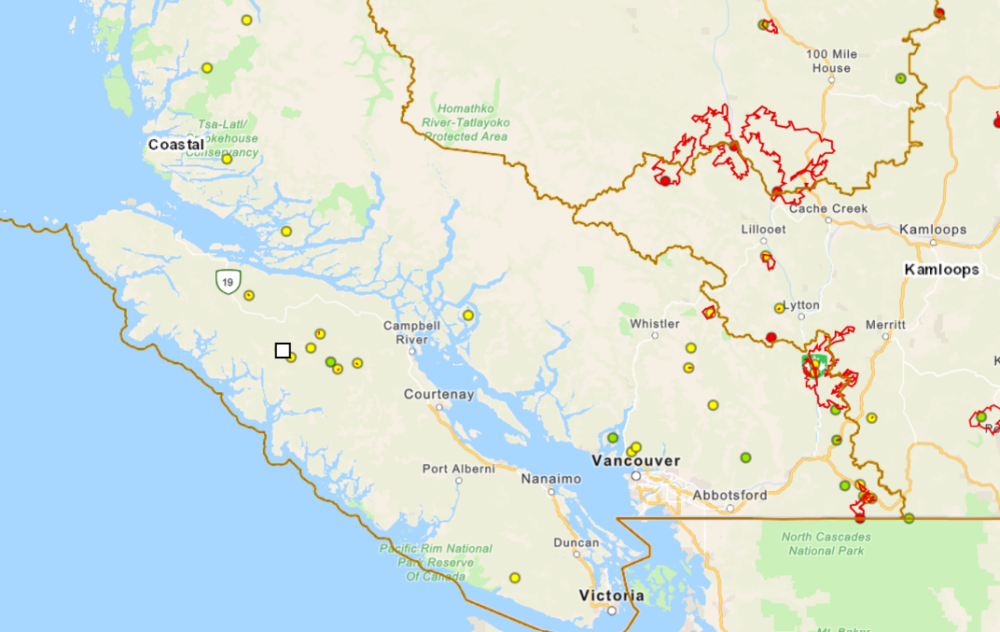
Since April 1 of this year, 313.5 hectares have burned on Vancouver Island due to 154 wildfire incidents.
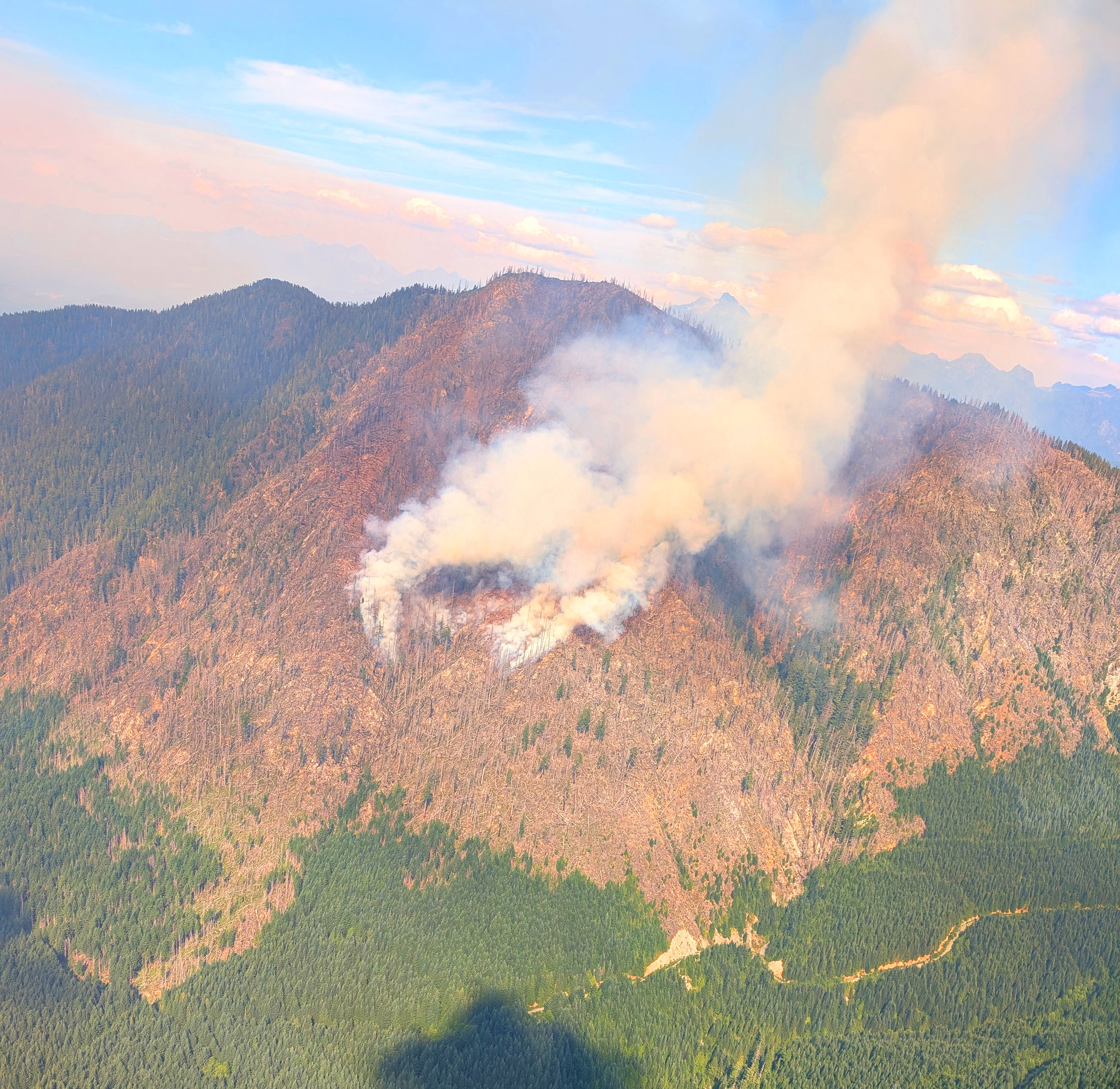
So far, this year’s fire season has been significantly milder than last year’s. According to Rick van Kesteren, fire information officer with the Coastal Fire Centre, last year 4,174 hectares burnt on Vancouver Island. This included the significant Mount Underwood fire that erupted on Aug. 11, 2025 south of Port Alberni. At 3,518 hectares, it’s the biggest wildfire ever recorded in the Alberni Clayoquot Regional District (ACRD).
Van Kesteren said although last year saw much more area burnt, particularity due to the Mount Underwood fire, there were less incidents at only 63.
“Fifty of these were human-caused wildfires, nine lightning-caused and then four were undetermined,” Van Kesteren said. “This year, you’ll see that we have around a 50/50 split between human and natural or lightning caused wildfires. The amount of human-caused wildfires stands at 68 while lightning-caused wildfires stands at 77. There are five undetermined causes.”
Reasons for human-caused wildfires could include open burning, industrial activity or downed power lines.
“When a wildfire is suspected to be human‑caused, we work together with the Natural Resource Officer Service (NROS) for the investigation,” Van Kesteren said. “Any findings are not released until the investigation is complete, which could take anywhere from weeks to months or even years. Once they are complete, findings may be shared publicly when appropriate and in accordance with any legislation.”
British Columbia was in a state of emergency for most of August due to wildfire risk. The provincial government declared a state of provincial emergency on Aug. 8 in response to significant wildfire activity in the Interior and widespread evacuations in B.C.
The state of emergency was lifted on Aug. 27, which has no effect on current evacuation orders, evacuation alerts or local states of emergencies put in place by local governments or First Nations.
Most local governments and First Nations affected by wildfires are now shifting into community-led recovery and the province continues to support that work.
According to the province, while most people have returned home, but thousands of people in B.C. continue to be on evacuation alerts and orders, and wildfire risk in the Okanagan region and other parts of the province remains elevated due to warm and dry conditions.
As of August 28, a partial ban on off-road vehicles on Crown land was lifted.
The ban, beginning on Aug. 10, applied to all-terrain vehicles, motorcycles, and off-road side-by-side vehicles on public property in the backcountry, with fire officials citing engines as a source of potential fire ignition during a dry summer.
Effective Sept. 3, Category 1 open fire (campfire) prohibitions in the Coastal Fire Centre’s jurisdiction were lifted in all areas.
Category 2 and Category 3 open fires remain prohibited throughout the Coastal Fire Centre’s jurisdiction with the exception of the Haida Gwaii Forest District. Category 2 includes the following activities and equipment: binary exploding targets, fireworks, burn barrels, controlled air incinerators, air curtain burners and carbonizers.
“While conditions have improved, we urge recreators to remain vigilant and follow all wildfire prevention regulations when engaging in any activity that could spark a wildfire,” the Coastal Fire Centre noted in a release.
According to the BC Wildfire Service, as of September 4, there are nine wildfires burning on Vancouver Island, all of which are being held or under control.