Journey to the small town of Ucluelet on the west coast of Vancouver Island and you’ll find a hardworking group of people in the vanguard of the circular economy movement.
Products in a circular economy follow a different path than a linear economy where the landfill is the final destination. In a circular economy, products are designed to be reused, repaired and eventually recycled into new products.
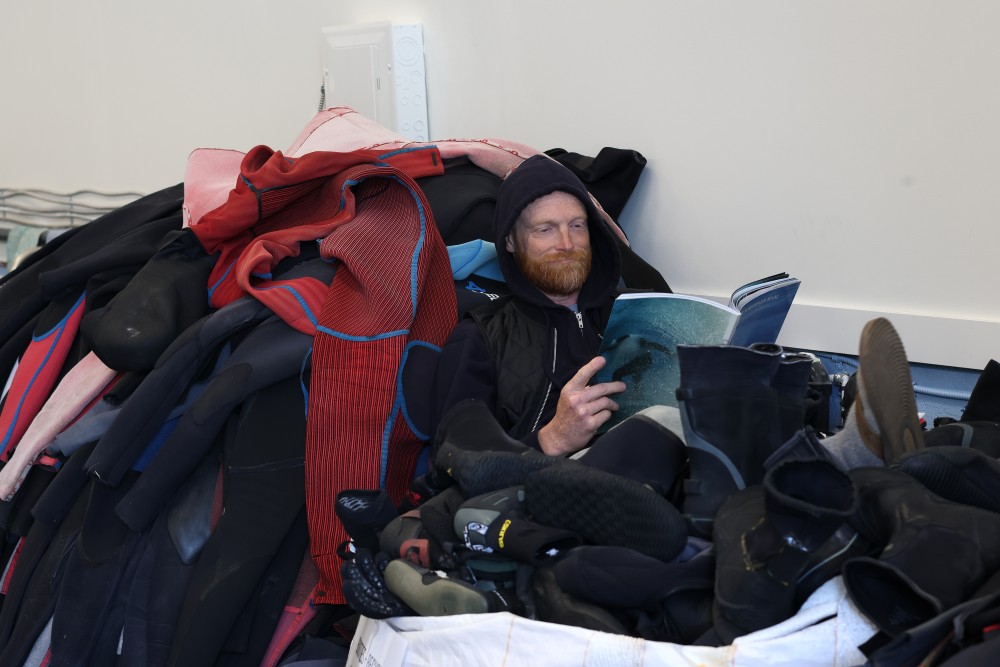
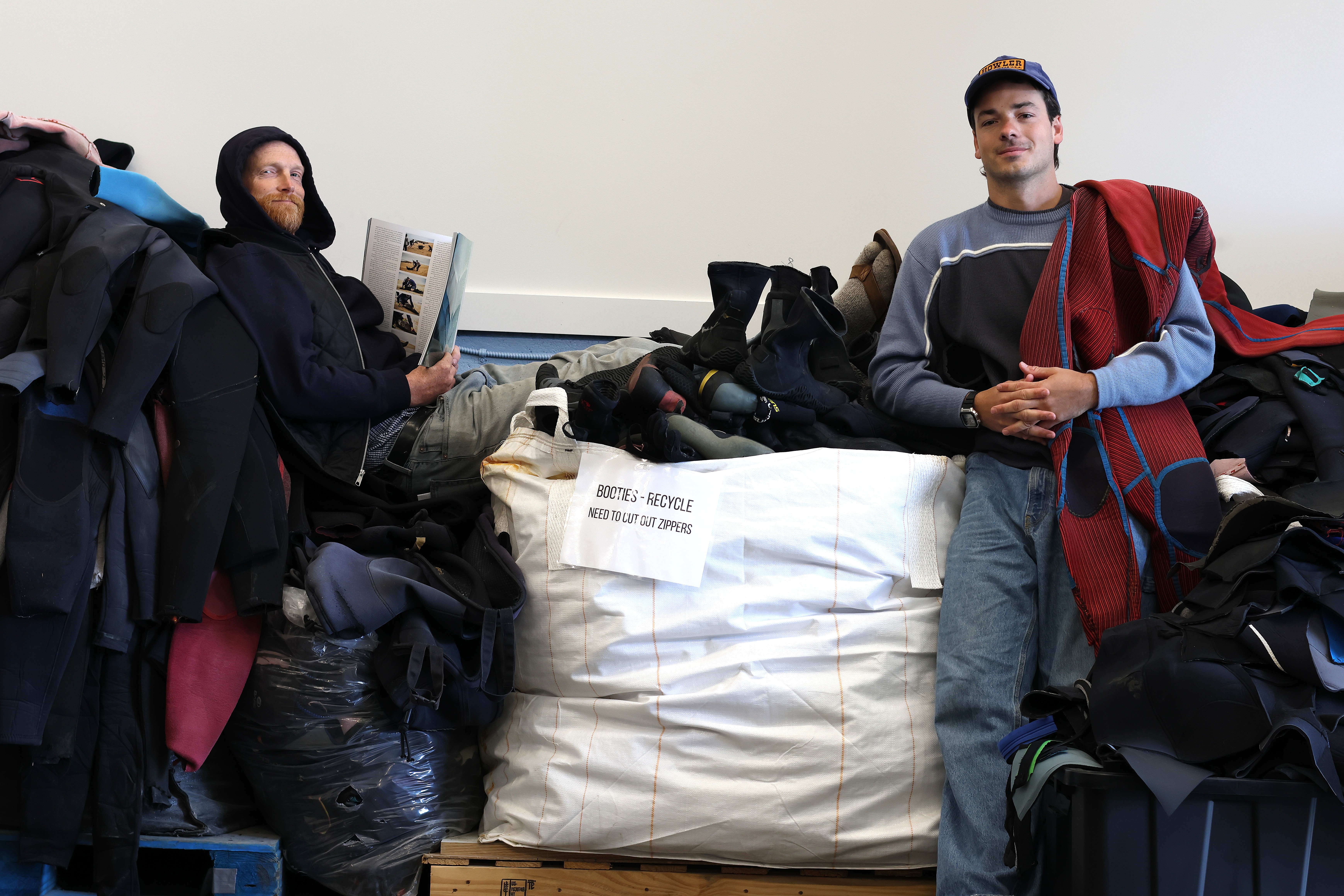
Leaning on a mountain of terminal wetsuits diverted from the West Coast Landfill (WCL), fix-it guy Adam-Edwin Dibb sets the vibe.
“Just about every weekend there is a truck that comes in that is half-full of wetsuits that were going to go to the dump and now they have a different place to take them,” said Dibb.
“By finding another use for this (wetsuit) that is not compostable, that isn’t of any use to the soil, it’s mandatory. I’ve always felt like that,” he said.
In May 2025, Surfrider Foundation Canada opened ReSurf, a 2,500-square-foot facility dedicated to recovering, repairing, and reprocessing surf products that would otherwise end up in landfills. The initiative was able to lift-off with $546,632 in provincial funding allocated from the CleanBC Plastics Action Fund.
The WCL is the “waste shed” for the District of Tofino, District of Ucluelet, Parks Canada, Alberni-Clayoquot Regional District (ACRD) Electoral District C - Long Beach and the First Nations communities of the Toquaht, Yuułuʔiłʔatḥ (Ucluelet First Nation), Ahousaht, Tla-o-qui-aht, and Hesquiaht.
Landfill capacity for these west coast communities is dwindling. According to the WCL 2024 annual report, the landfill will reach capacity near 2062. If the target waste reduction goal of 400 kilogram per person is met, the ACRD says the landfill lifespan has “the potential to extend to 2070 or beyond”.
“Prior to the point of full closure, the ACRD would need to either identify a new landfill site, establish a transfer station to move waste off the West Coast to another landfill, or arrange for shipment elsewhere—all of which can be very costly for taxpayers,” said Brenda Sauve, ACRD solid waste coordinator.
“The most effective approach is to reduce pressure on the landfill by increasing recycling, keeping organics out, reusing and repurposing materials where possible, and minimizing unnecessary consumption,” she said.
With the creation of ReSurf, Sauve says the ACRD is moving forward with a proposed wetsuit ban at the WCL. Most wetsuits are generally made from neoprene material, an ultra-stretchy rubber made from melted-down petroleum chips.
Program manager Daniel Raab has been with ReSurf since day one. He says they received 1,200 end-of-life wetsuits in the last 11 months, with 35 per cent of those wetsuits being repaired.
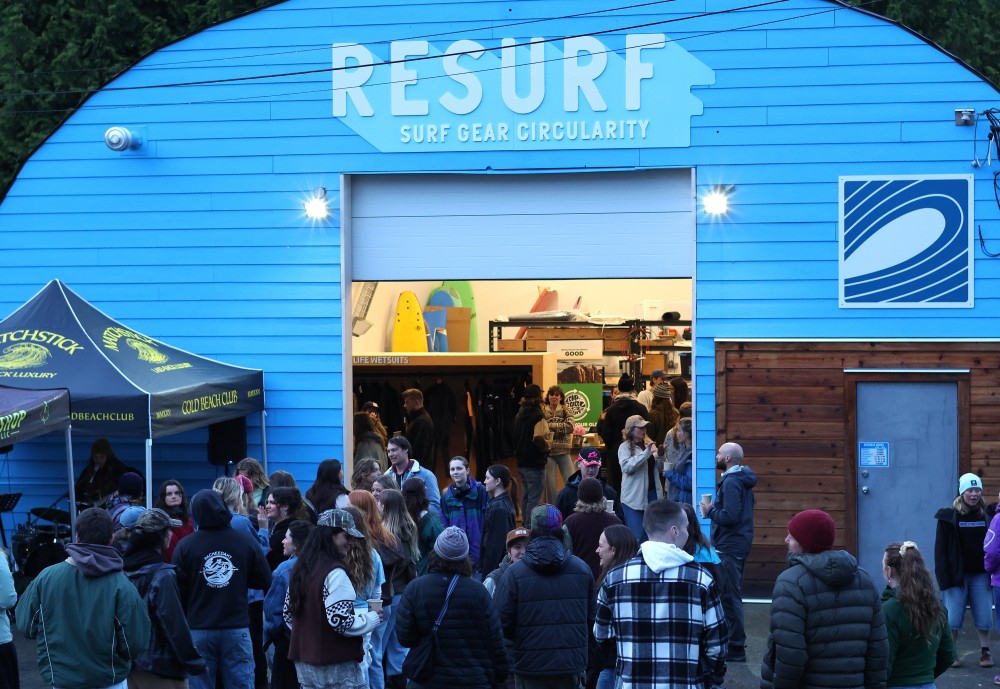
“A lot of the rubber was able to get back in the water. It takes a couple hours of repair time, but it allows us to get that suit back in the water, and that’s the best approach,” said Raab during their first anniversary bash on May 14.
After removing the zippers and Velcro, the wetsuits that aren’t worth repairing are used for patches or shredded on-site and transported to various industry partners in Vancouver for repurposing into something new.
“It basically goes into a melter and turns all that light, fluffy neoprene into solid little pellets. There are so many things you can do with it, like weaving threads for insulation or fabrics. It can be pelletized, which is what we are hoping for. We are trying all different sort of avenues,” said Dibb.
Raab says they’d like to get to a point where they are shuttling roughly one supersack a month of neoprene shreddings to the mainland. He says they are also actively exploring ways to recycle the material closer to home.
Island Coastal Economic Trust (ICET) recently partnered with ReSurf in February 2026 through a $150,000 investment from the Capital and Innovation funding program, under the Innovation and Technology priority.
“ReSurf is exactly the kind of innovative venture the Trust was built to support. By turning end-of-life surf gear into jobs, skills, and new products, ReSurf shows that a circular economy can be a driver of economic diversification for coastal communities,” said Brodie Guy, CEO, Island Coastal Economic Trust, in a media release.
Raab says the ICET funding provides the opportunity to grow the repair department and purchase vital specialized equipment for recycling.
“We’re grateful that we work with large industry surf brands that are helping us find solutions and giving us advice on what machines to buy to do these repairs,” said Raab.
He said the learning curve for recycling neoprene has been “slow”, but the progress is there.
Dibb agrees.
“I’m mowing through 25 wetsuits a week since I started. It hasn’t slowed down. It’s only picking up,” he said, adding that if folks were more enthusiastic about caring for their suits, they wouldn’t end up at ReSurf in the first place.
“When the suits aren’t taken care of, they are not worth repairing. They just hang on someone’s window, they sit on a rope in the sun for a couple weeks, you’ve forgotten about it in the back of your shed underneath a bunch of car parts; terminal,” said Dibb.
The environmental not-for-profit has partnered with 17 collection locations across B.C. and recently launched Canada’s first wetsuit collection and repair trailer, which they’re taking on the on the road this summer.
“People don’t want to mail suits, so we want to see if we can come to them,” said Raab.
Repair coordinator Lou Hamel and repair technician Erin Wai are excited to work with Nuu-chah-nulth youth from mułaa (Rising Tide Surf) on an upcycling neoprene project this summer too.
ReSurf’s Ucluelet shop at 1685 Peninsula Road is open Thursday, Friday, Saturday from 11 a.m. to 5 p.m.