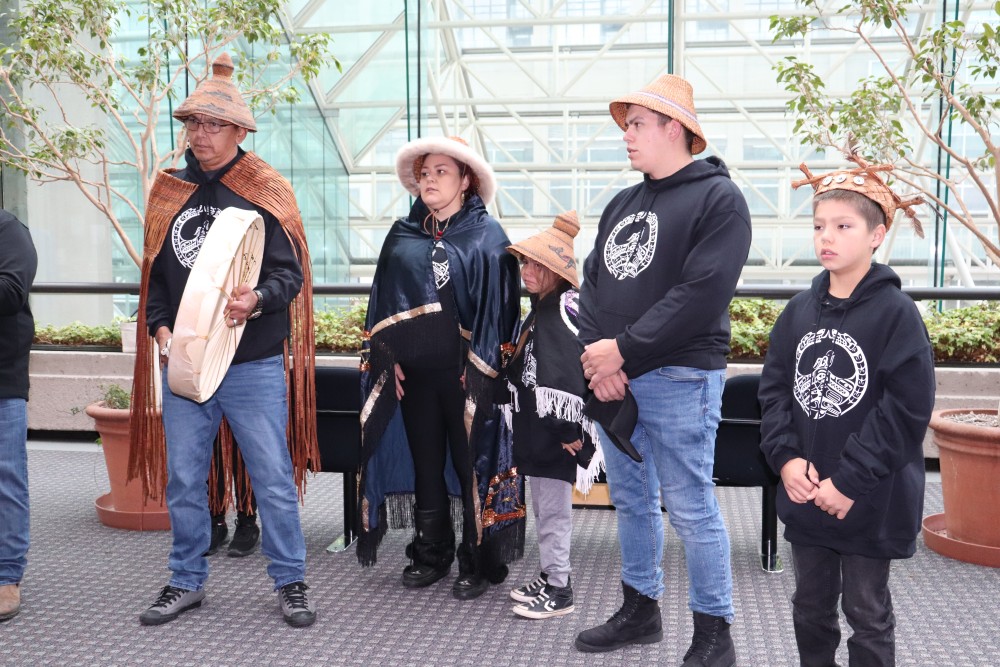
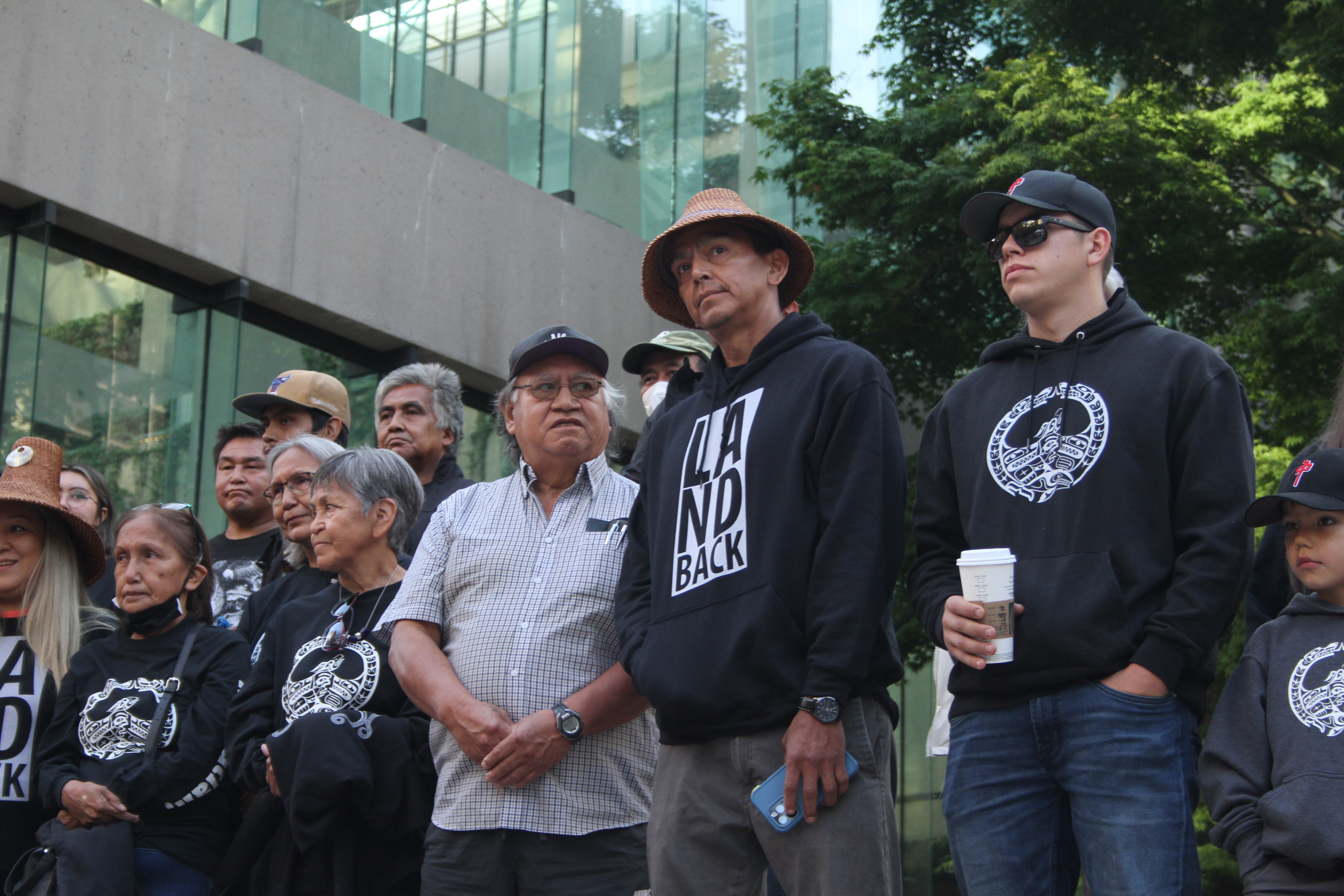
As the Nuchatlaht look at the future of managing their territory after a recent title victory from the B.C. Court of appeal, the possibility looms that their nine-year court battle may not be over.
The provincial government has applied to the Supreme Court of Canada to hear the Aboriginal title case that concerns 201 square kilometres on northern Nootka Island.
On April 2 the B.C. Court of Appeal granted the Nuchatlaht title to the entire claim area, after legal teams for the parties involved appeared before the panel of three judges for four days in Vancouver the previous October. Although this decision was unanimous, in its recent filing to Canada’s highest court the province said the appeal judges were loose with how they determined Aboriginal title should be granted.
“[T]he Court of Appeal’s loosening of the test for Aboriginal title could have significant practical consequences for the course of title litigation, the duty to consult, and First Nation treaty negotiations,” wrote the province in its submission to the Supreme Court of Canada.
That legal test was determined by the Supreme Court of Canada in 2014, when it heard the case of the Tsilhqot’in Nation. Despite calling the nation a “semi-nomadic” tribe that did not occupy a specific site year-round, the country’s highest court found that the Tsilhqot’in had earned title to 1,700 square kilometres in central British Columbia by demonstrating a historic and continual use of the land. This decision determined that title is not limited to a specific village site but can cover a broad territory that was used for hunting, fishing and trapping since British sovereignty was declared.
Unlike the Tsilhqot’in, the Nuchatlaht are primarily coastal people who traditionally rely on the ocean for sustenance and transportation, argued the province. It questions if this should be further considered by a higher court before ownership is granted to all of northern Nootka Island’s inland areas.
“[I]n recognizing title to the entire claim area, the Court of Appeal set the bar for sufficient occupation unduly low, via a broad brushstroke understanding of ‘regular use’,” wrote the province.
This spring’s Court of Appeal win marked a momentous change of course for the Nuchatlaht, after two previous rulings that granted title to small portions of the claim area. Through his decisions in 2023 and 2024 Justice Elliott Myers of the B.C. Supreme Court found that the Nuchatlaht had proved title to just 11 square kilometres of the claim, most of which was along a coastal strip that went inland below an elevation of 100 metres.
“[T]his case demonstrates the peculiar difficulties of a coastal Aboriginal group meeting the current test for Aboriginal title, given the marine orientation of the culture,” wrote Myers in his 2023 judgment. “For example, there will probably not be trails between one coastal location and another, given that the means of transport was primarily by canoe. This may be indicative of the need for a reconsideration of the test for Aboriginal title as it relates to coastal First Nations. That would be for a higher court to determine.”
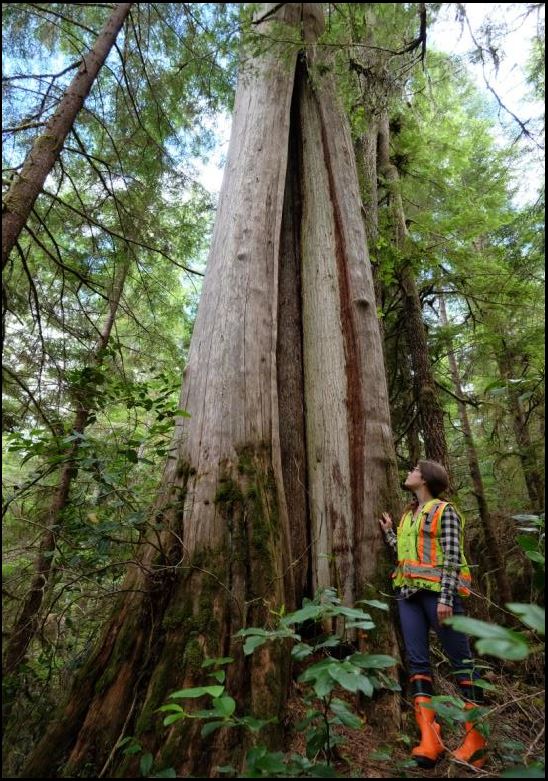
Thousands of culturally modified trees were identified in the trial, but Meyers was not satisfied with this evidence. Their average distance from the coast is one kilometre, while most are not formally dated to prove they were stripped before British sovereignty took hold in 1846, stated the judge.
The B.C. Court of Appeal found errors in this reasoning.
“[I]n allowing the modified title claim, he drew an arbitrary boundary that was not based upon the Nuchatlaht’s manner of life, material resources and technological abilities, or the character of the lands claimed,” stated the appeal court. “The undisputed evidence was that frequent travel into the forest above 100 metres was required for the Nuchatlaht.”
Managing better
Before attending residential school, Archie Little spent his early childhood at a village on the northwest of Nootka Island. Now in his 70s, he spends his days advocating for the First Nation as a councillor and house speaker. The court of appeal decision from April marked a milestone in his life.
“That was the first time I did not feel like a beggar in my own country,” said Little. “We own something, we can do something, we can make change. All we want to do is better.”
For most of the last century, the majority of the claim area has been Crown land managed under B.C.’s Forest Act. The area’s last tenure was held by Western Forest Products, whom the Nuchatlaht approached before court proceedings began. Little says himself and the late Tyee Ha’wilth Walter Michael met with Western representatives to ask them to stop logging sections of the Island.
“We went to Campbell River, we met with Western, we made some demands,” he said. “We walked out and went to court.”
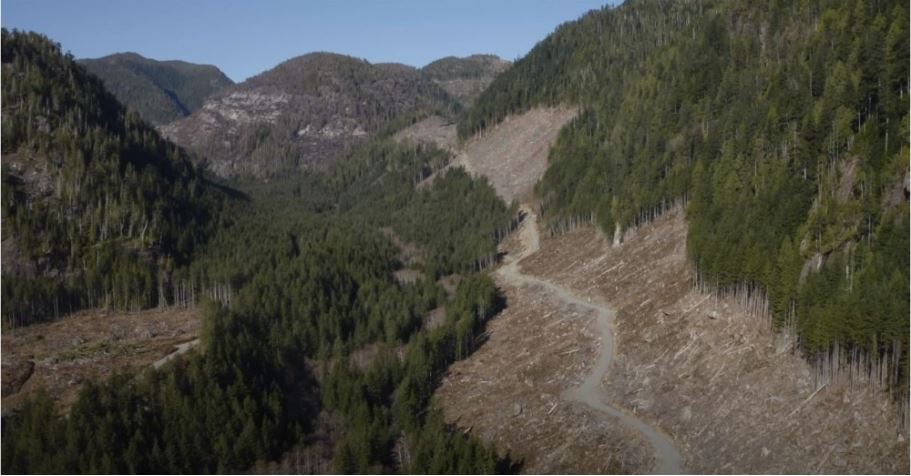
With large sections of the territory clearcut, the Nuchatlaht are assessing their options, but it appears that the forest will have more value being left alone, said Little. The First Nation is exploring the possibility of selling carbon credits. Worth the equivalent of one tonne of carbon dioxide that would be emitted into the atmosphere, a carbon credit is a tradeable commodity on the international market which acts like a permit for a company or government to release greenhouse gases. These credits could be generated by not logging forest on Nootka Island.
“With the area being logged so heavily, carbon credit seems to be the way to go,” said Little.
Included in the western section of the title claim is the Nuchatlitz Marine Park, a former provincial park that served as a remote destination for kayakers. The Nuchatlaht now own this land and plan to continue allowing visitors, although protocols will need to be in place, explained Little.
“We’re probably going to allow people to come on, but we’re going to have to be really careful and really strict with how they act on the land,” he said. “We now have to act like landowners. We make the rules and we make the policies.”
“The management has to be there” added Little. “Otherwise, why spend all of that money if nothing is going to change?”
A decision from the Supreme Court of Canada on if it will hear the province’s appeal is expected in October. If there is a trial, it would likely be in 2027, but Owen Stewart of the Nuchatlaht’s legal team is hopeful that the country’s highest court will not head in this direction. He said the Supreme Court tends to open up cases that involve “competing decisions” from other courts in the country.
“That’s when the Supreme [Court of] Canada weighs in, if the law is going in two different directions within the country,” said Stewart. “We don’t really have that in this circumstance.”
The other matter is if the court is ready for another Aboriginal title case, as this may not be relevant to much of the country that is covered by treaties east of the Rocky Mountains. Two of the judges who ruled on Tsilhqot’in in 2014 are still on the Supreme Court of Canada.