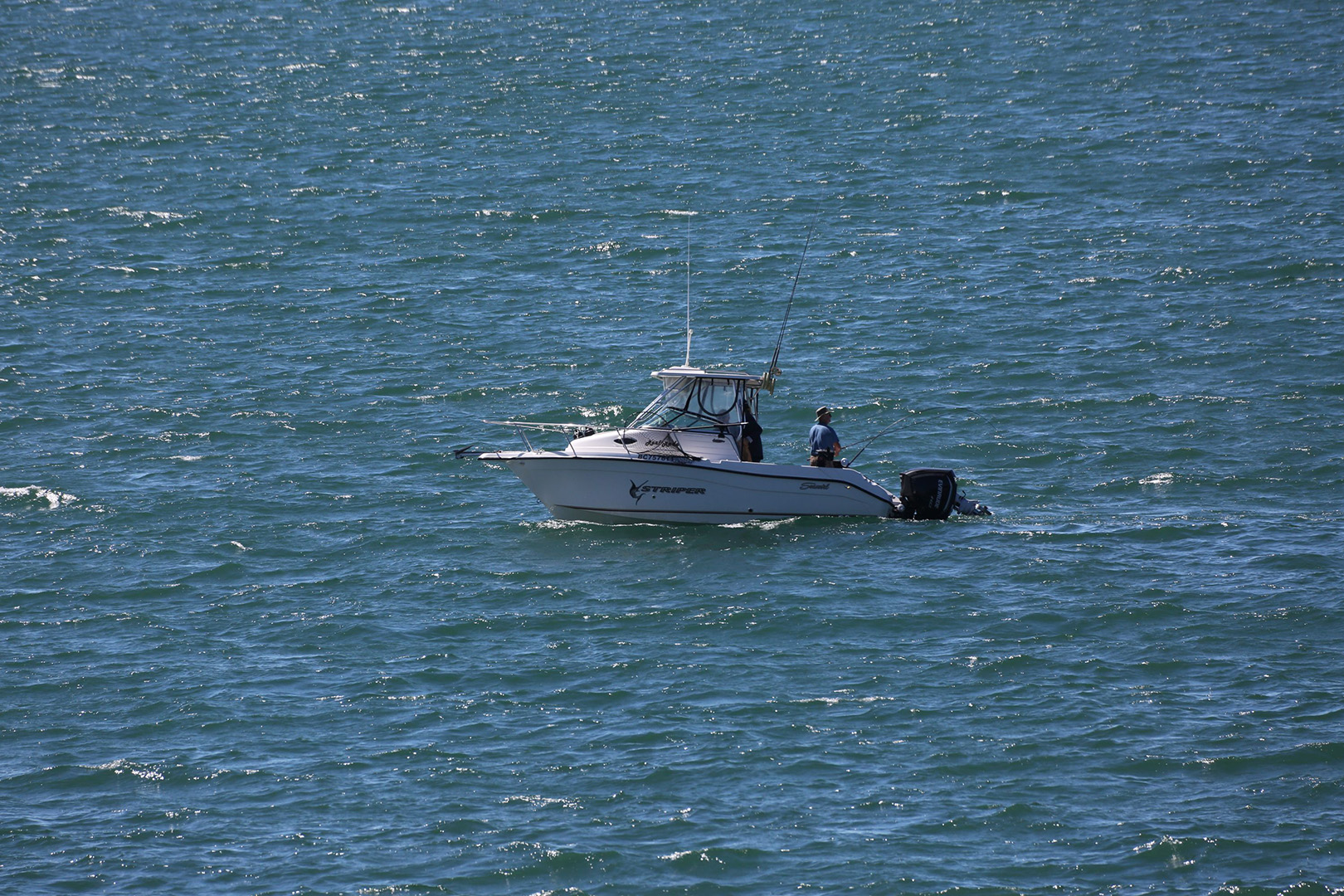
Nuu-chah-nulth representatives are appealing for tensions to ease before this year’s recreational fishing season opens, as a campaign continues to warn anglers that their right to fish is “under threat” by upcoming revisions to B.C.’s Salmon Allocation Policy.
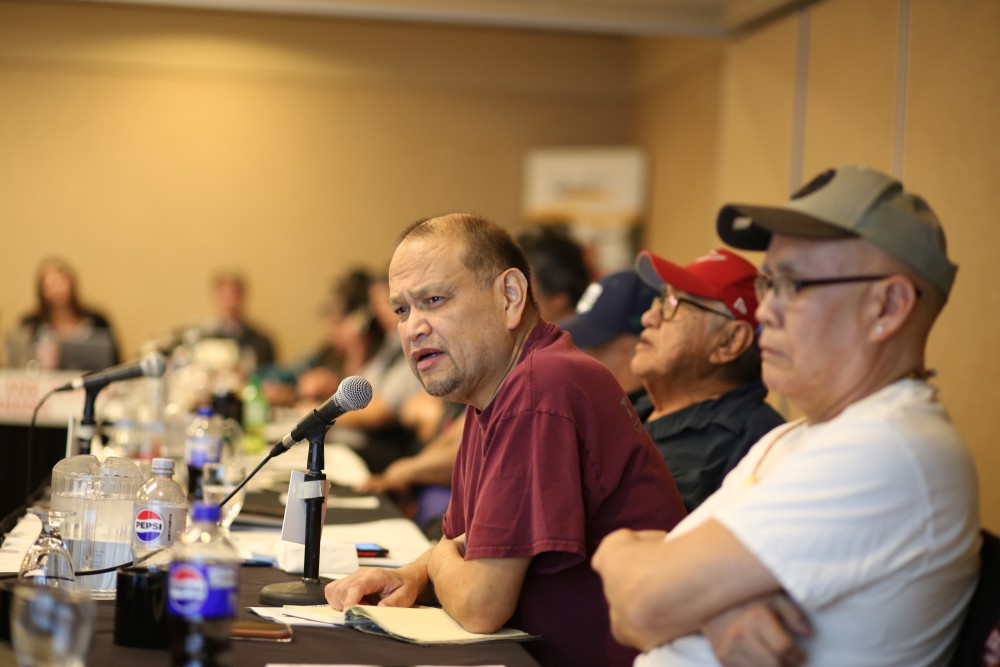
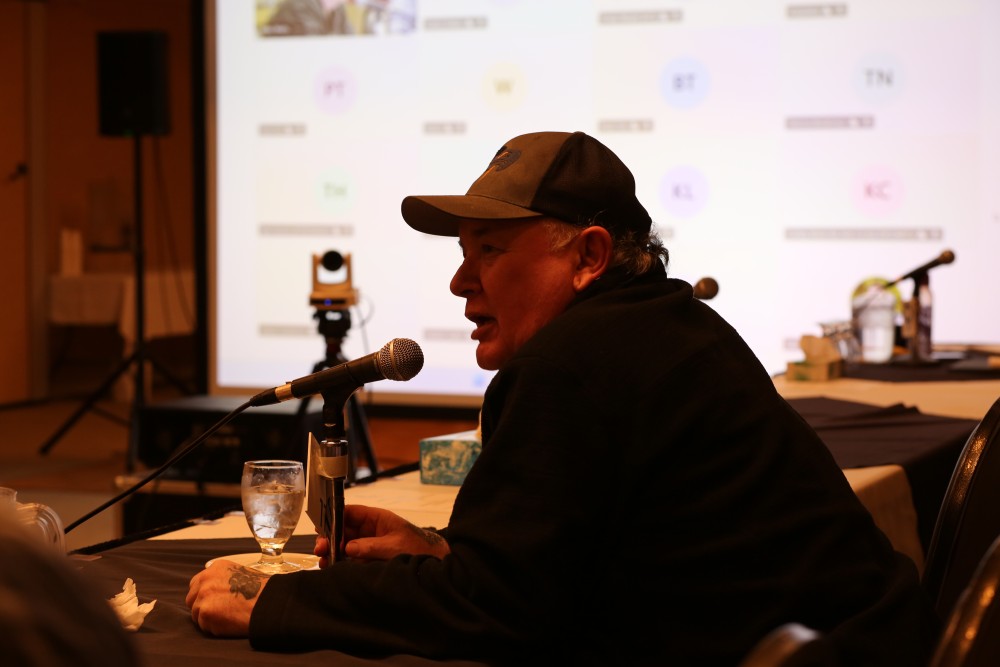
The issue arose during a recent Council of Ha’wiih Forum on Fisheries, which was hosted by the Nuchatlaht First Nation in Campbell River Feb. 18 and 19 on the traditional territory of the Wei Wai Kum and We Wai Kai. During the meeting Nuu-chah-nulth delegates shared concerns about messaging currently coming from sports fishing advocacy organizations.
“The public fishery in B.C. is under threat,” states a campaign being promoted by the Sports Fishing Institute of B.C. and the B.C. Wildlife Federation. “Extreme policy” changes that are actively being explored by Fisheries and Oceans Canada could severely limit the public’s ability to catch salmon, says the Fishing Rights campaign.
“Under the proposed changes, the public would lose priority not only to recognized First Nations fisheries but also to all commercial fisheries,” warns the material. “The public fishery would come last, being reduced to seeking ‘leftovers,’ and YOU would have less predictable opportunities and less time on the water.”
This messaging has ignited a conflagration of online rhetoric against First Nations, according to Nuu-chah-nulth participants at the recent fisheries forum.
“We need Canada to step up to do its part to counter all this misinformation, the bigotry that’s been allowed run rampant,” said Remi Tom from the Tla-o-qui-aht First Nation.
“We’re the recipients of that racism and hatred, so we’re asking the ministry and fisheries to help us educate the public that we have rights, that we have a priority right and that we are not trying to do away with the recreational fishery,” added Nuu-chah-nulth Tribal Council President Cloy-e-iis, Judith Sayers.
The Ahousaht judgement
The issue has arisen as the federal government prepares to revise the Pacific Salmon Allocation Policy. In place since 1999, the policy guides how much of each salmon species can be harvested by various groups in B.C. According to the policy, the conservation of salmon species is the highest priority, followed by the right of First Nations to catch the fish for food, social and ceremonial purposes, as well as harvesting according to treaty obligations. For chinook and coho salmon, the recreational fishery is next, while commercial fleets are prioritized over sports fishers in their access to pink, sockeye and chum.
But this needs to change, according to a 2018 ruling from the B.C. Supreme Court. The judgement found that the Ahousaht, Ehattesaht/Chinehkint, Hesquiaht, Tla-o-qui-aht and Mowachaht/Muchalaht First Nations were unjustifiably infringed upon by the Salmon Allocation Policy in their ability to catch and sell fish from their own territories. This means that the relatively small-scale commercial T’aaq-wiihak fishery should be given a higher priority to exercise this right within nine miles of the five nations’ home shores.
Many sports fishers expect that this direction to change the policy could cut into the rec catch, which has by far accounted for the largest portion of the chinook harvest off the west coast of Vancouver Island. According to the most recent catch numbers collected by the Pacific Salmon Commission, in 2024 the sports fishery caught 47,656 off the west coast of Vancouver Island – nearly half of the 96,128 total chinook caught in the region that year. Commercial troll fleets caught 24,154 chinook, while Taaq-wihaak harvested 17,267, Maa-nulth treaty nations caught 3,506 and another 3,545 were taken in for First Nations food, social and ceremonial purposes.
Despite the court ruling, the sports fishing campaign argues that the sector has the greatest economic value to British Columbia, supporting thousands of jobs as coastal communities offer tourism drivers like guide operations and fishing derbies. The DFO reports that over 370,000 recreational fishing licences were issued in 2023 – the vast majority held by B.C. residents. In that same year people spent $604 million on sports fishing in B.C., with 61 per cent of this going towards salmon fishing.
‘Common property’
Since the Ahousaht decision came in 2018, DFO has been directed to update its Salmon Allocation Policy. Years of meetings followed, engaging a working group with representatives from the various sectors tied to the resource.
In December DFO released a discussion paper outlining how things have progressed. The policy’s identification of salmon as a “common property resource” has been a major sticking point; First Nations want this reference removed due to concerns that it is a “colonial concept” that harms Indigenous communities, salmon and the surrounding ecosystem.
The Sports Fishing Advisory Board recommends keeping the “common property” language.
“Salmon fishing must remain an assured common law right, not a “privilege” to be granted or denied,” states the Fishing Rights campaign. “Removing the language defining salmon as common property would create uncertainty, plus a lack of clarity and transparency regarding intentions for future ownership, management, and public access to salmon.”
But this goes against the concept of a chief’s Ḥahahuułi, a foundation that governed Nuu-chah-nulth society for millennia.
“I, as a First Nation person, owner of the resources and the land that I live in, watch all the commercial fisheries go by the bay, while I’m told that I can’t fish,” commented Mowachaht/Muchalaht Tyee Ha’wilth Mike Maquinna during the recent fisheries forum.
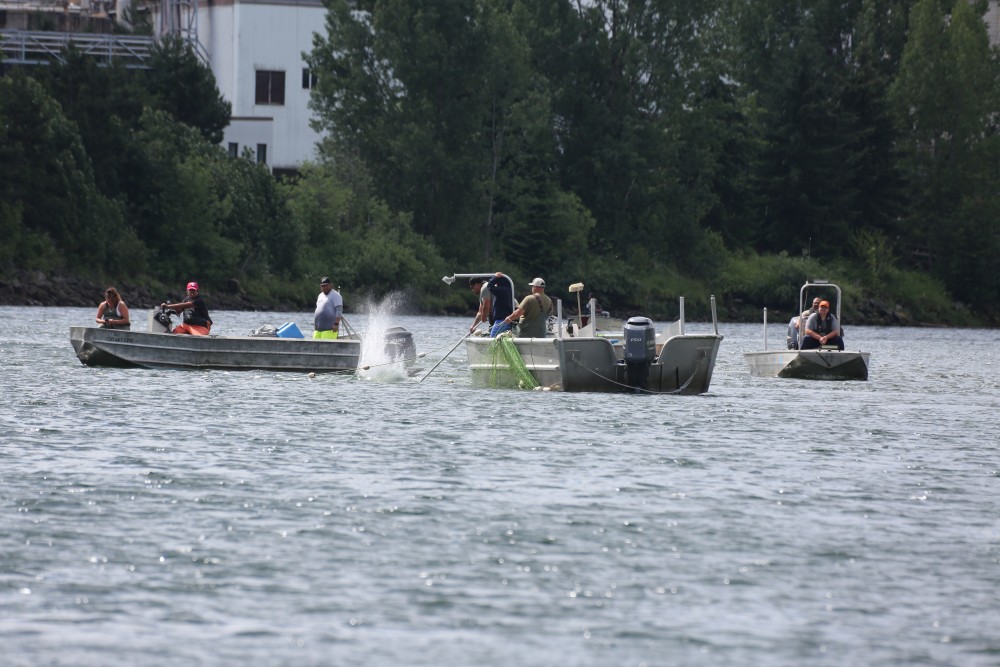
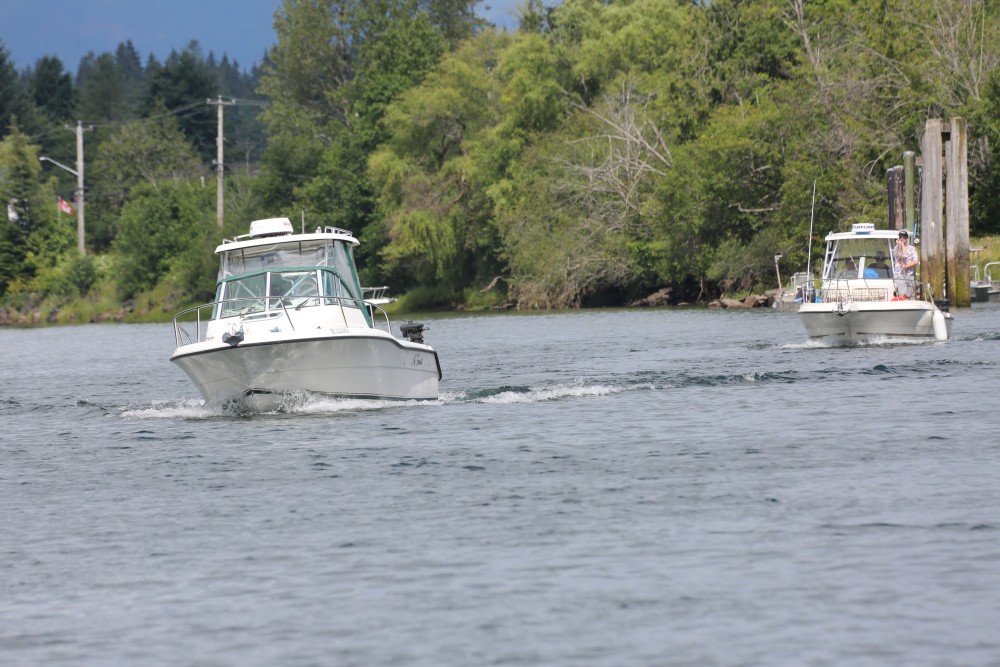
“We need more information out there,” commented Tla-o-qui-aht Fisheries Manager Andrew Jackson. “I’d hate to see some sort of confrontation on the water.”
Alice Cheung is the regional director of Policy and Economic Analysis for the DFO’s Pacific Region. Her department has “been getting thousands and thousands and thousands of emails” about the Salmon Allocation Policy.
“Our response in all of them include re-affirmation of why the SAP needs to be revised,” said Cheung on Feb. 19 while presenting to the Nuu-chah-nulth delegates. “That includes, front and centre, the Ahousaht decision, front and centre the need to acknowledge and put in place the priority right of First Nations. That is in all of our responses.”
First Nations participating to the SAP discussions have recommended more “regional allocation boards” that can make decisions on catch numbers at a more local level. This is already happening on the Somass River and Alberni Inlet, where the Area 23 roundtable meets weekly through the fishing season to discuss the most recent monitoring data and adjust the catch limits and fisheries openings.
It’s a collaborative management process shared by representatives from Tseshaht, Hupacasath, the Maa-nulth treaty nations, the sports fishery and commercial fleets, says Tseshaht Councillor Les Sam.
“We work in harmony quite well. We do have our disagreements, but we manage the stocks and escapement really quite well and we’re hopeful that it continues like that,” he said during the fisheries forum. “I think DFO needs to do the right thing, stand up and showcase things like the Area 23 table and the good it’s doing.”
The DFO has scheduled a series of committee meetings in March, but it has not been specified when the next Salmon Allocation Policy will be completed.