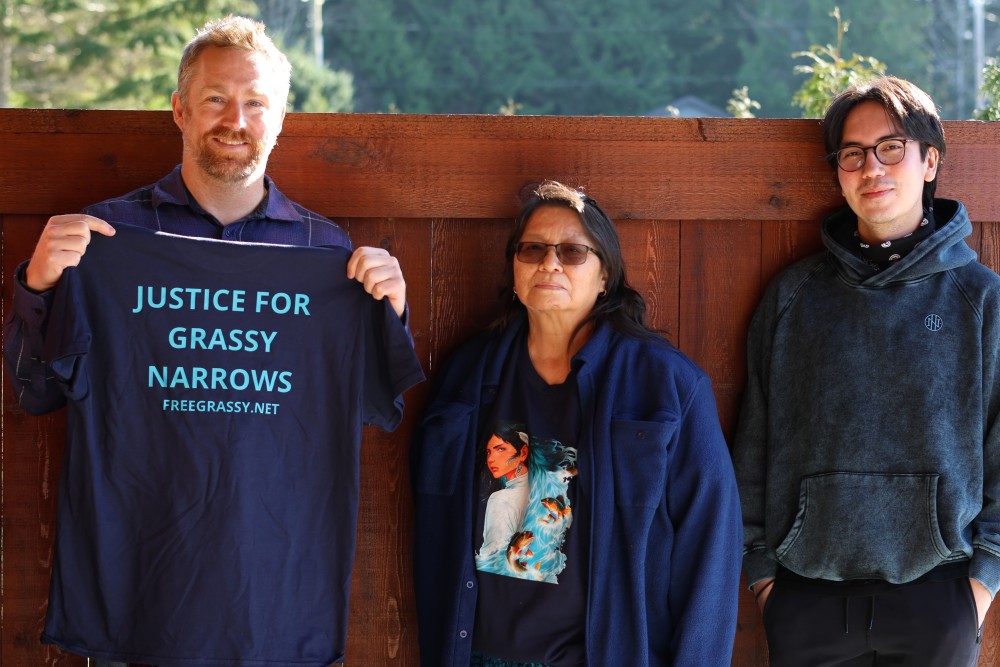
Judy Da Silva’s eyes light up as she forks a piece of wild smoked salmon into her mouth.
“It’s like a privilege to me. To me, it’s like gold. It’s good medicine for our spirits when we have our traditional foods,” said Da Silva at the Tin Wis Resort on Feb. 11.
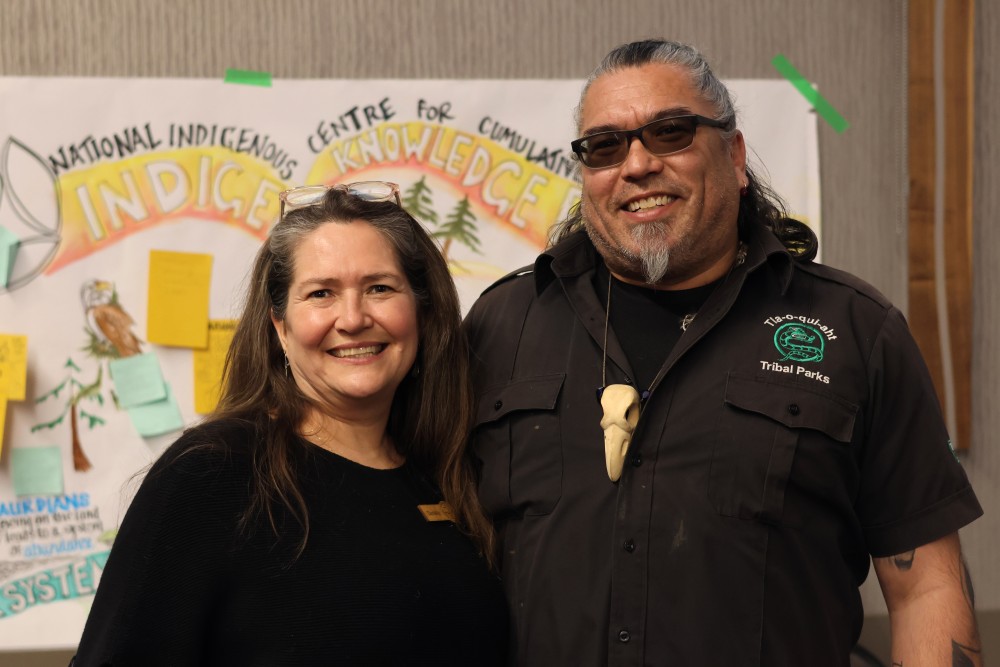
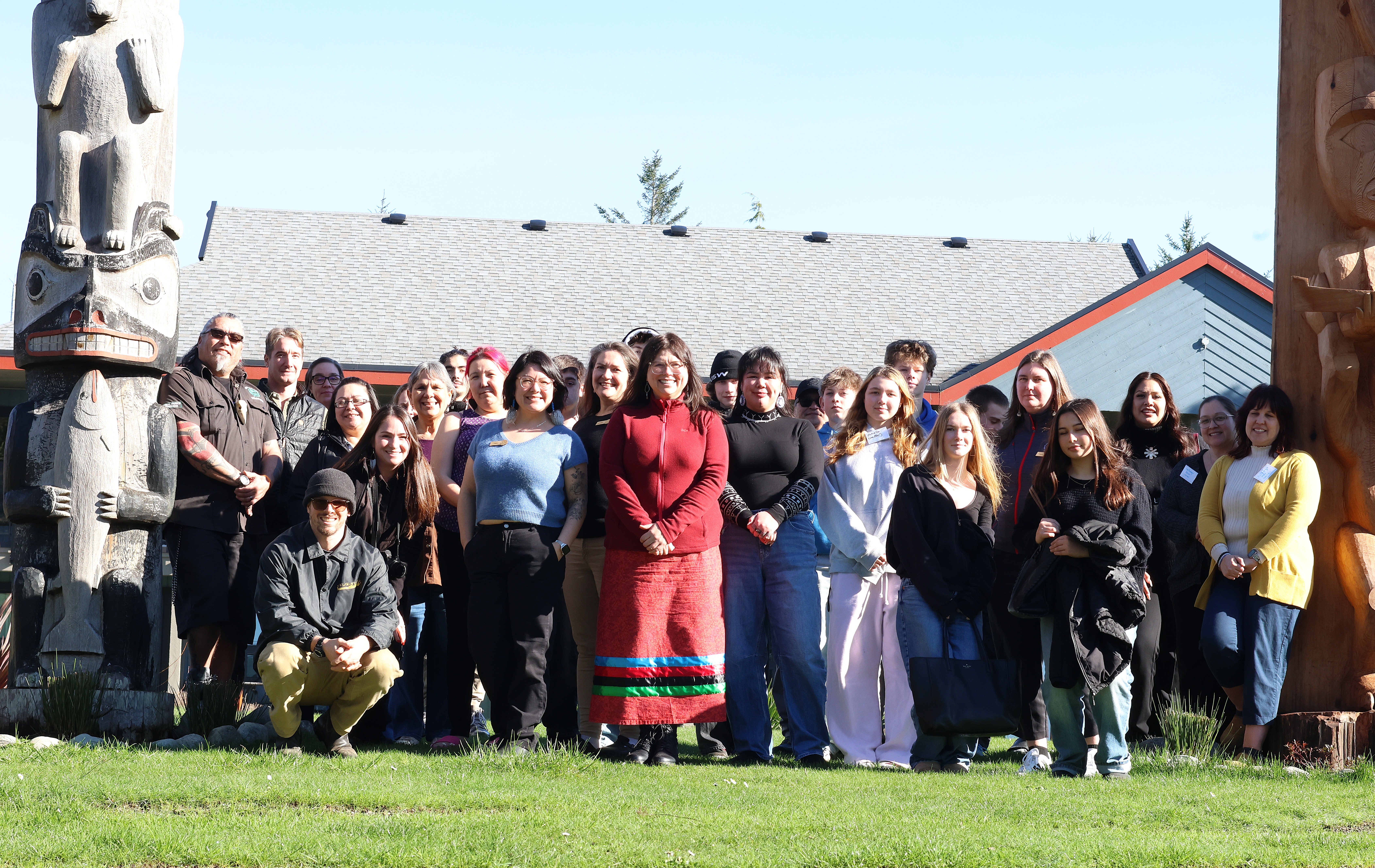
A Grassy Narrows First Nation elder, Da Silva travelled from northwestern Ontario to Tla-o-qui-aht First Nations territory on the west coast of B.C. to share her knowledge with Indigenous representatives from across Canada during an inaugural multi-day gathering hosted by the National Indigenous Centre for Cumulative Effects (NICCE) with support from Tla-o-qui-aht.
Da Silva has spent her whole life suffering from the effects of mercury poisoning.
Between 1962 and 1970, the Dryden Chemical Company’s pulp and paper mill discharged roughly 10 tonnes of mercury into the English-Wabigoon River system, which flows into Grassy Narrows, or Asubpeeschoseewagong Netum Anishinabek territorial waters. Research shows the water system is still polluted to this day.
Before the discharge of the mercury, Grassy Narrows was an active commercial and subsistence fishery. After the mercury was discovered, the Ontario government shut down the commercial fishery; unemployment rates in Grassy Narrows went from five to 95 per cent, according to a community advocacy site. Some members continued to fish for subsistence.
“We get poisoned by eating the fish. Mainstream society will say, ‘Why do you eat poisoned fish?’ It’s our traditional foods. It’s what we learned as a people,” said Da Silva.
Today, Da Silva says almost 90 per cent of the 800 members that reside in Grassy Narrows suffer from mercury poisoning symptoms.
“Mercury is a neurological toxin. It attacks the stem of the brain and it slowly eats away at the brain as you age,” she said. “There are all these hidden truths we never would have found without our advocates out there.”
In collaboration with the Tla-o-qui-aht Guardians program, NICCE gathered representatives from Tłı̨chǫ Government in the Northwest Territories, Athabasca Chipewyan First Nation in northern Alberta, Tŝilhqot'in National Government near Williams Lake, B.C., Wabun Tribal Council, Denesuline and York Factory First Nations, Arctic Eider Society and Grassy Narrows for the inaugural knowledge exchange.
One of the main goals for the gathering was to establish an Indigenous network of people working in the cumulative effects realm, says NICCE executive director and Tla-o-qui-aht member Danielle Wilson.
“Cumulative effects are unique to each community, but it’s ultimately that seven generations thinking. What are the means that we need to preserve to make sure that our future generations live and thrive in the same conditions that their ancestors did?” she said.
“I hope there are connections made and that communities can lean on one another for support and guidance,” Wilson continued.
Saya Masso, Tla-o-qui-aht’s natural resources manager, said the networking opportunity has been “amazing”.
“I’ve been enthralled to learn about what’s going on up North,” said Masso.
While the North is struggling with declining Caribou herds, Masso said the West Coast is faced with the cumulative effects of over fishing, plastic pollution, forestry impacts and even tourism.
“It’s so important to try and understand impacts so that they can be managed better. Everyone should have the environment in mind and try and have the best plan to mitigate and manage for abundance regardless of what the industry or infrastructure is. It should always be done better,” said Masso.
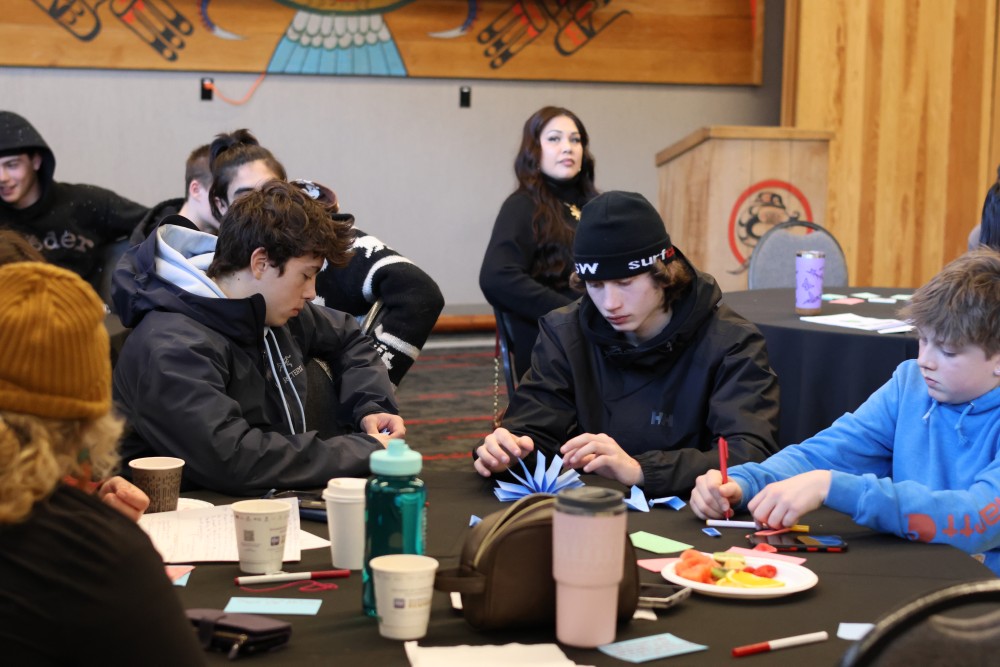
A highlight of the NICCE gathering was the inclusion of the land-based learning cohort from Ucluelet Secondary School on Feb. 11.
“I was really excited with how much they were engaged,” said Sheena Charleson, an Indigenous support worker from the school. “I was overwhelmed with pride that they were so involved and willing to participate, and also just how powerful their voices are.”
Training more guardians to take care of the land and bringing more youth on the field was noted as a high-priority during the knowledge exchange.
“The more immersed people can be in experiences and time on the land, the more they will be able to see the effects of what is happening,” said teacher Arran Jackson.
“You can’t want to save things you haven’t experienced or care about. You have to have that connection in order to draw a desire to care,” he said.
Da Silva offered some advice to the youth:
“Don’t take mainstream society’s answers as the golden truth,” she said. “Be able to question things and dig deeper into the truths. Listen to the elders, the hunters, the trappers and the land users. They are the ones that are on the land and they see the indicators of something that is not right. They may not be doctors or lawyers or engineers, but they have true knowledge of the land, the water, the air - even bugs.”
To learn more about cumulative effects in Indigenous communities across Canada visit: www.icce-caec.ca.