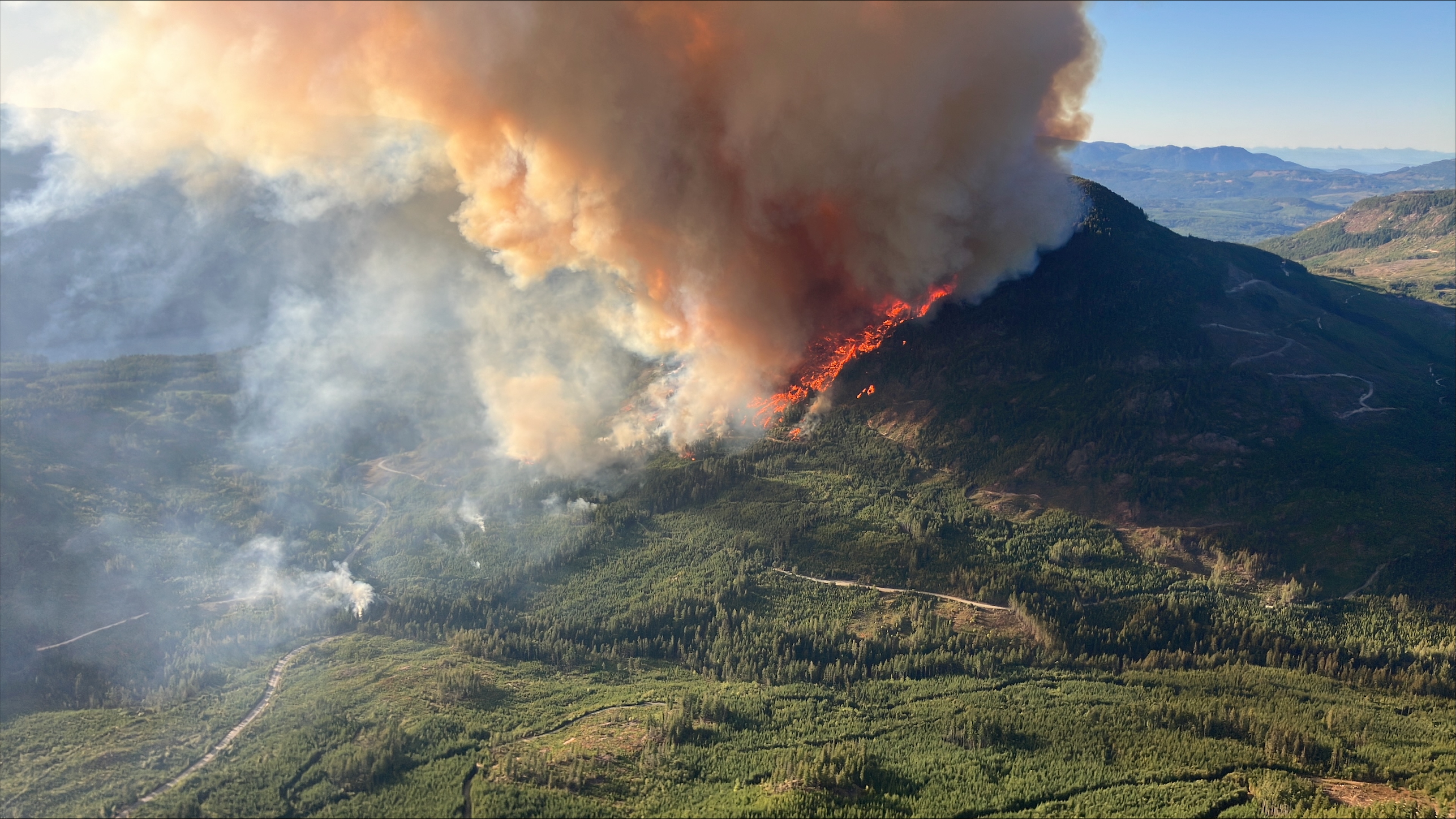
While it wasn’t the worst fire season in B.C. history, the 2025 wildfires of central Vancouver Island impacted the lives of far more residents than in previous years.
The two wildfires near Port Alberni proved that west coast communities are vulnerable when it comes to road access. While one fire burned at Cameron Lake another fire broke out on Franklin River Road, cutting Port Alberni off from the provincially-established emergency detour route.
In the end, Highway 4 remained open, allowing travellers to use the main route throughout the summer. And as the fired burned, the communities came together, proving that kindness and generosity among neighbors exists.
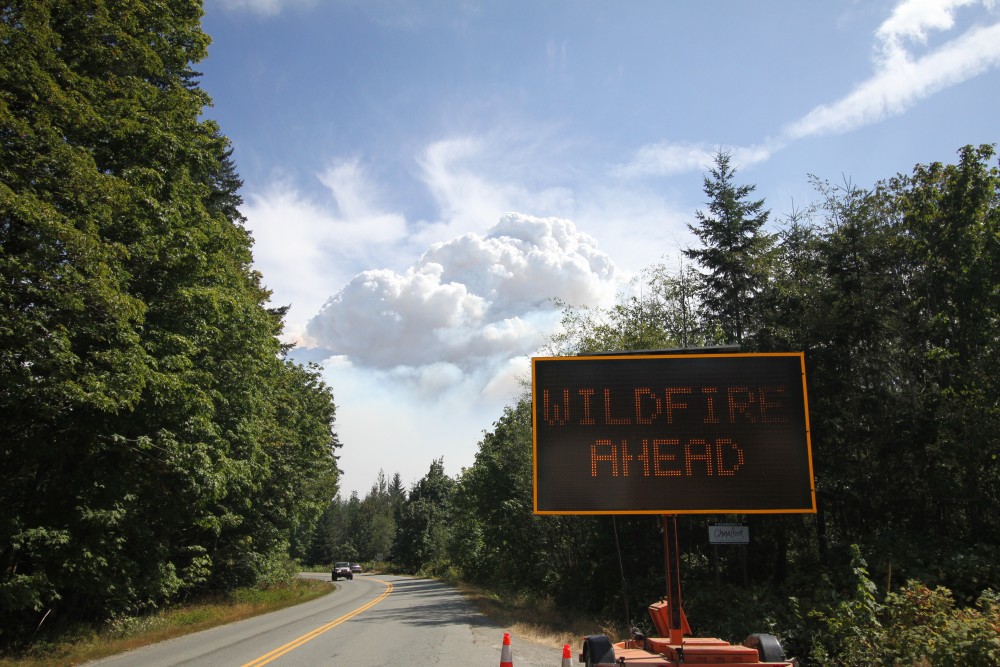
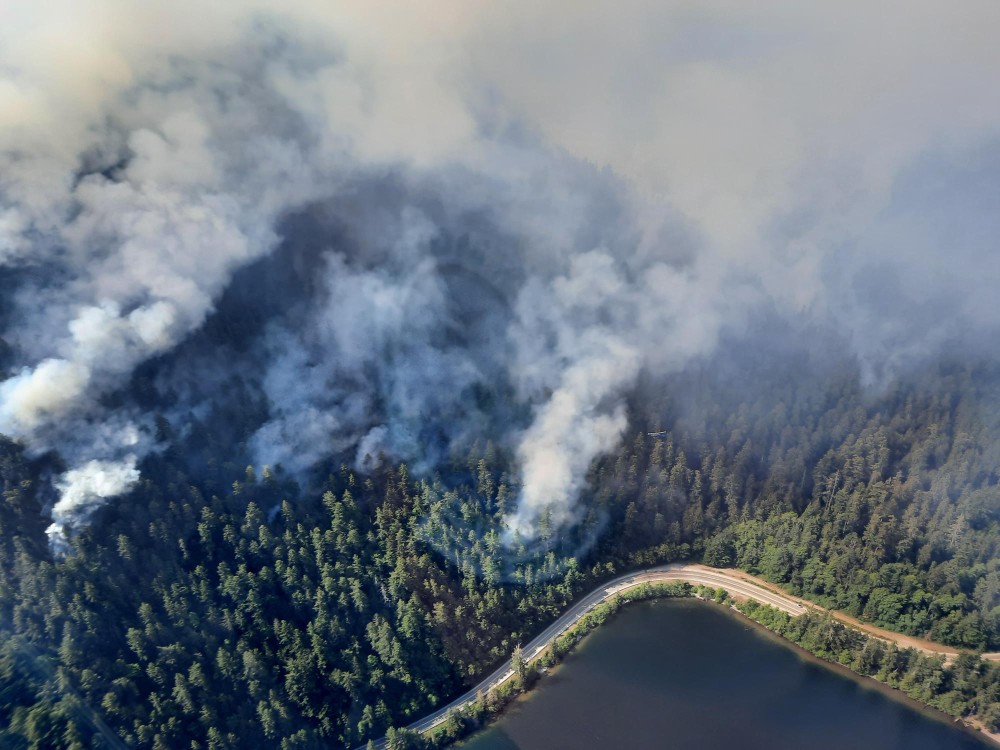
The region’s first major wildfire of summer 2025 started at Cameron Lake, across the water from another blaze that burned up the mountainside in 2023. The Wesley Ridge wildfire, as it was called, was discovered July 31, 2025. The wildfire spread on the north side of the lake to the east end, where it threatened to close Highway 4.
When the Wesley Ridge fire crested the mountain, nearby residents there were forced to evacuate. The growing fire raised fears of extended road closures similar to 2023, when the Cameron Bluffs wildfire burned on the opposite side of the lake.
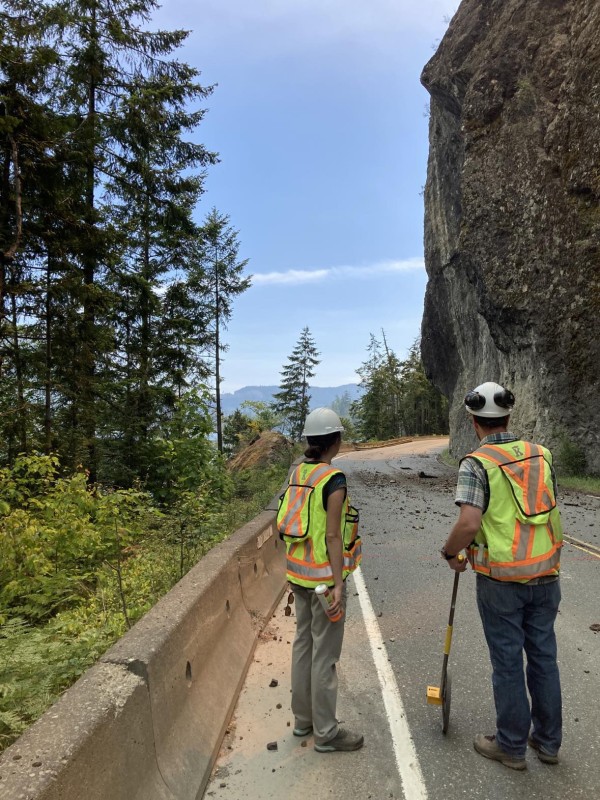
The Cameron Bluffs fire burnt the steep slopes above Highway 4, eventually reaching the roadway. Discovered June 3, 2023, the fire forced the closure of Highway 4 on June 6. It was difficult to extinguish due to the steep terrain. The road was closed for weeks, and significantly delayed for almost all of the summer due to the active fire and falling rocks and debris.
The closure cut Port Alberni and western communities off from the rest of Vancouver Island. Vehicle travel could only be done by detour through a long, winding, rough industrial road that runs through Youbou. The long trip over the rough road added three or more hours to a normal trip between Port Alberni and points south.
Two years later, the Wesley Ridge wildfire consumed sections of the railroad trestle, burning up the mountain and to the east end of Cameron Lake where it meets Highway 4. When the fire crested the ridge, 42 properties were evacuated while 91 others were issued evacuation alerts. Fortunately, there was no loss of life or property thanks to the efforts of fire fighters.
Mount Underwood’s explosive growth
Less than two weeks after the start of Wesley Ridge, an explosive fire broke out near China Creek Marina on Franklin River Road on August 11, 2025. The fire grew rapidly on the steep slopes of Mt. Underwood, just 12 kilometers from Port Alberni. The fire quickly spread to the road leading to Bamfield, Nitinaht and Youbou, prompting the immediate evacuation of the China Creek Campground.
The Mt. Underwood wildfire exploded through the dry forest quickly – smoke could be seen and smelled from Port Alberni. Evacuation alerts were issued for residents at the southern end of the city, with some campers and south Port Alberni residents closest to the fire directed to evacuate.
The Alberni Clayoquot Regional District said it was the worst wildfire in their history. They credited the strong relationships the Emergency Operations Centre developed for bringing in help from around the province and beyond.
In addition to the road closure, power to the western communities of Anacla, Bamfield and Nitinaht was cut for 12 days, as crews worked to safely access the area to repair the fire-damaged poles and power lines.
The Franklin River Road closure forced residents of these coastal communities to use the Youbou detour. But the road was so rough, and the Ditidaht First Nation was denied propane delivery until road conditions improved. Without propane, Nitinaht residents faced the risk of losing water.
With two fires burning south and east of Port Alberni, things could have gotten far worse for western communities than they were in 2023. The Mt. Underwood fire effectively cut access to the Youbou detour between Port Alberni and southern cities. Ditidaht, Huu-ay-aht and Bamfield communties relied on the Youbou detour between August 11 and October 24, 2025, when Franklin River Road finally reopened to the public.
Consideration of alternate land route
Highway 4 between Port Alberni and Parksville remained open despite the Wesley Ridge wildfire burning close to the road at the end of Cameron Lake. Had it closed like it did in 2023, supply lines for Port Alberni, Tofino, Ucluelet and offshore communities would have been severed completely.
Even before wildfires and road closures, Port Alberni residents and First Nations leadership have been calling for a secondary access route to the city for decades. Both Nuu-chah-nulth Tribal Council President Judith Sayers and Ditidaht First Nation leaders have called on government to make improvements to the Youbou detour route to make it safer.
The BC Ministry of Transportation and Transit is exploring alternate emergency routes out of Port Alberni. In their Highway 4 Emergency Detour Route Options report, last updated July 2025, the ministry presented findings for four routes that have been studied.
The options were assessed for safety and viability. Two routes that go from Port Albenri to Horne Lake and Comox Lake have been ruled out due to safety and poor road conditions.
The remaining routes run from Port Alberni to Cowichan Lake, with one on North Shore road running through Youbou and the other on South Shore road going through the village of Lake Cowichan. These are the preferred routes because they are in better condition and safer than the other industrial roads that are often inactive and therefore not maintained.
The report indicates that the Youbou and Lake Cowichan routes are favorable and can be activated during an emergency within three days. Does this mean the routes will be improved? Maybe even paved or chip-sealed?
Wildfire Service buys more night vision helicopters
With two major fires in as many years, central island residents would welcome much-needed improvements to the alternate emergency route, as wildfires have become the norm.
With more than 1,350 wildfires last year, these incidents are a reality on the landscape in British Columbia and across Canada, says the B.C. Wildfire Service.
In 2025 more than 886,360 hectares burned in the province. This isn’t even close to 2023, the worst season in the past five years, when 2,293 wildfires burnt 2,840,104 hectares.
But for Canada, 2025 was the second-worst wildfire season with more than eight million hectares burnt. In the Prairies the situation was so bad that the provinces of Saskatchewan and Manitoba declared month-long states of emergency at the end of May.
“This wildfire season has been especially devastating for First Nations across the country, with at least three out of every five people evacuated from First Nations communities,” stated Mandy Gull-Masty, Canada’s minister of Indigenous Services on Oct. 30. “I witnessed courage and resolve in the face of extraordinary conditions.”
In December a national wildfire symposium was hosted in Vancouver, bringing together government leaders, local and international experts, Indigenous partners and industry. Their goal was to improve wildfire resilience across the nation.
Besides exploring new technologies like fire growth modeling, the BCWS is increasing the number of year-round, permanent staff.
“Ahead of the 2025 season, BC Wildfire Service had more than 600 year-round positions to enhance operational readiness,” they stated.
In addition, two more night-vision capable helicopters have been purchased. The expanded fleet of four helicopters with Night Vision Imaging Systems will allow crews to safely carry out operations in the dark.
When it comes to risk reduction, last year the BCWS carried out 16 prescribed burns over 2, 440 hectares of land.
The Wildfire Service says last year was less destructive than in previous seasons. Still, it affected many of people, but community resilience is improving.
“We’re coming off our second-worst wildfire season in Canadian history,” said Ravi Parmar, B.C. Minister of Forests. “From technology to equipment and training, all to protect people and communities, the BC Wildfire Service has shown us that they are a global leader in wildfire work.”
And when smoke fills the Alberni Valley, the people always step up to help. With heavy smoke blanketing the Valley, some Nuu-chah-nulth nations supplied air purifiers to elders and people with breathing difficulties.
Volunteers were there offering to move campers from danger areas, food and water were donated to fire fighters, evacuation centres were prepared, while water taxis and other vessels brought people to Port Alberni from Bamfield.